I was up earlier than I needed to be on Saturday - even after the MIT party of the night before - so headed across to the Giardini della Biennale in very good time for the 11am opening.
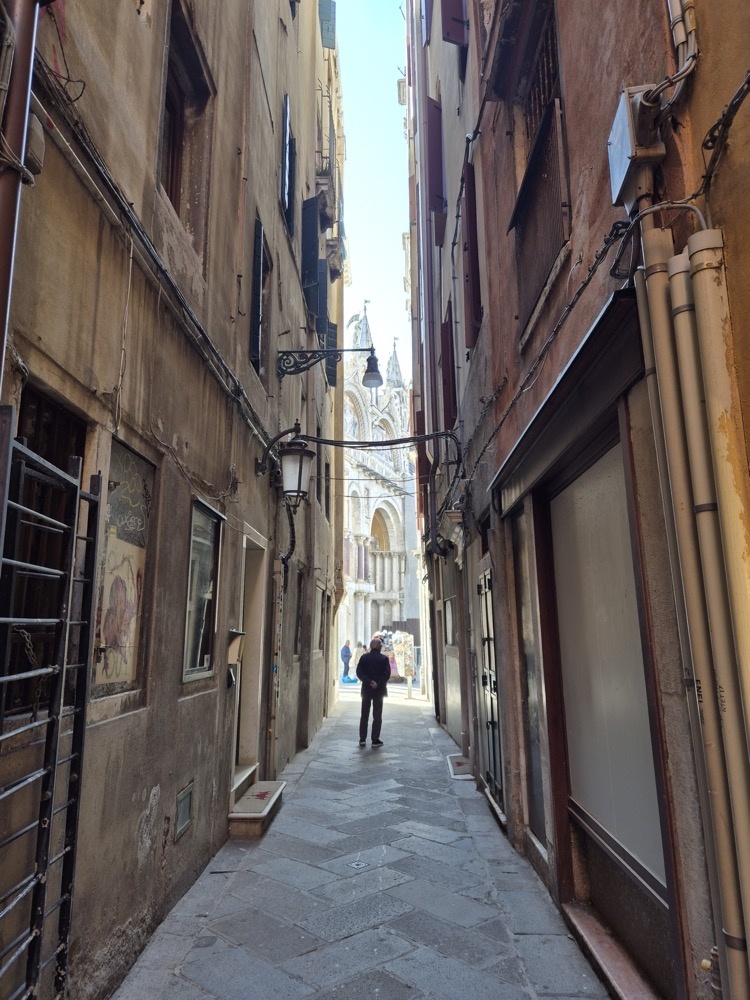
It was a very nice walk along the main waterfront.
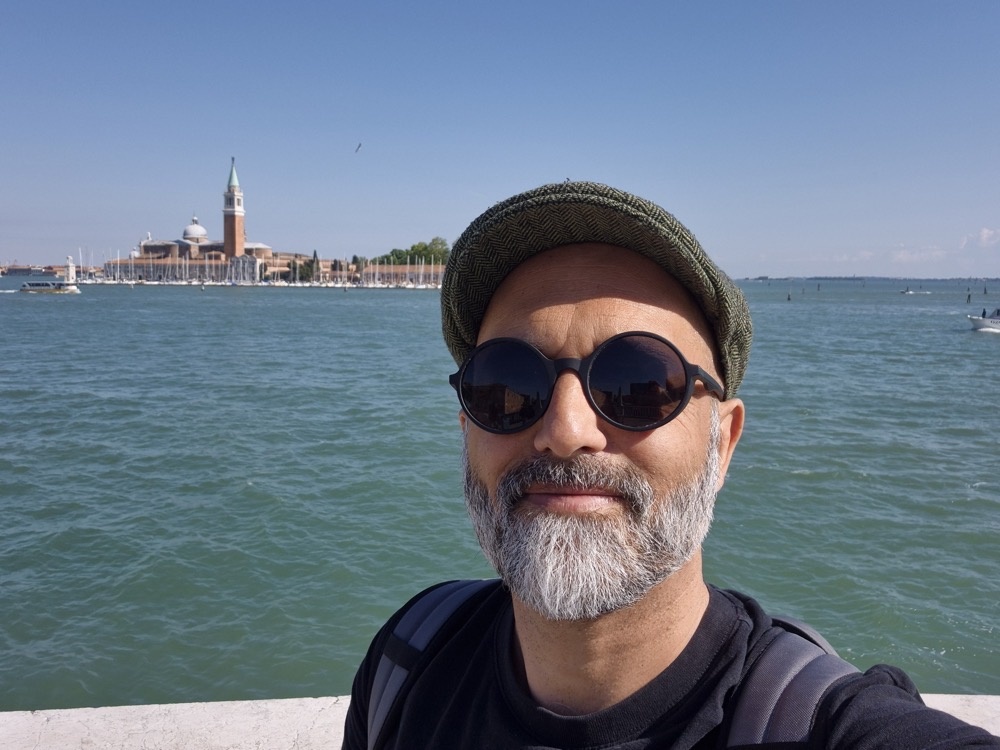
I decided to stop nearby for breakfast. If I'd known at the time that this would be the last thing that passed my lips until getting to the airport, I'd definitely have eaten more.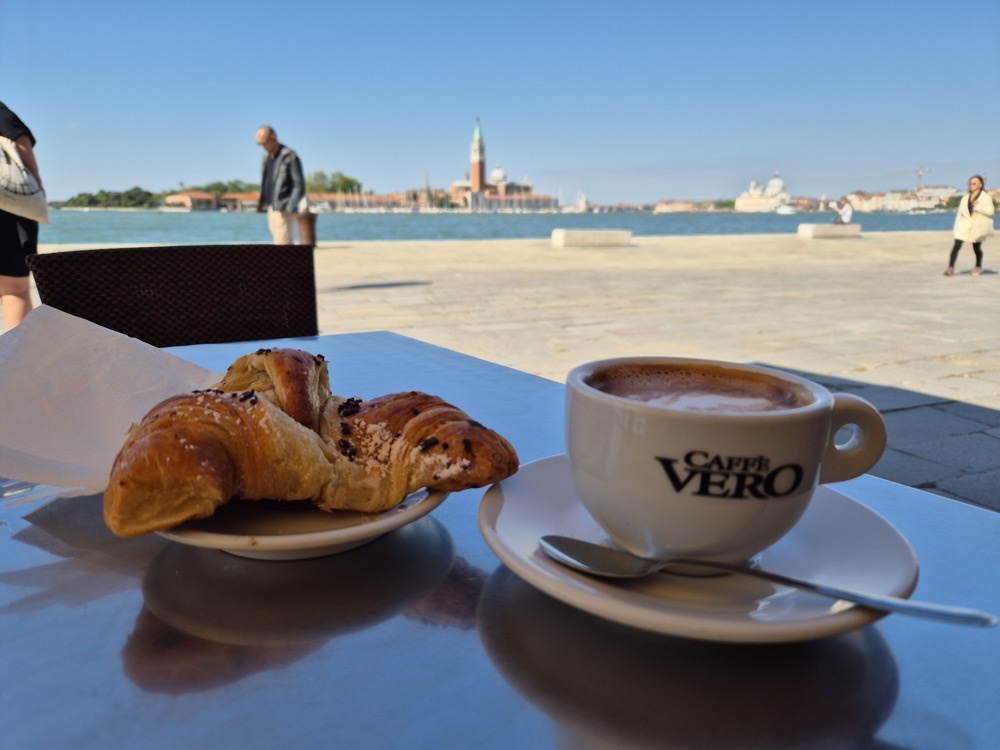
I walked through a very nice park with an arts & craft market just being set up.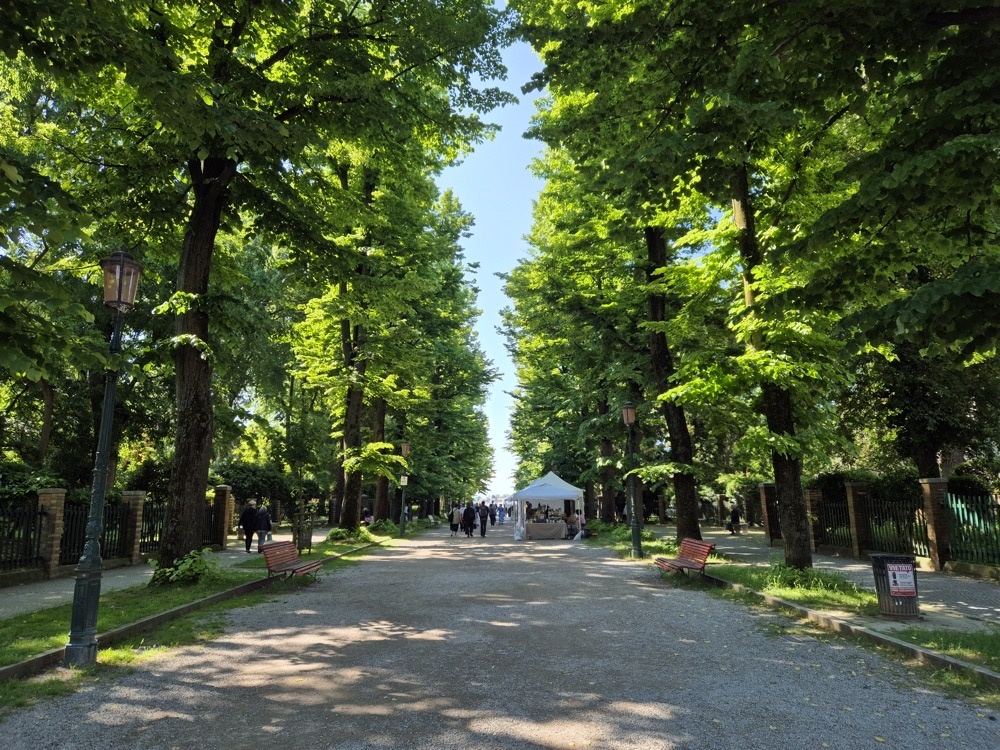
I actually arrived at the gates of the Biennale at around 10:30am, just as the queue was starting to form. Before I knew it people were lining up for all the way along the water. I was happy to be in relative shade.
There are lots of really interesting people visiting the Biennale, it turns out. While in the queue I had a great chat with someone managing the planning for several hospitals in Berlin.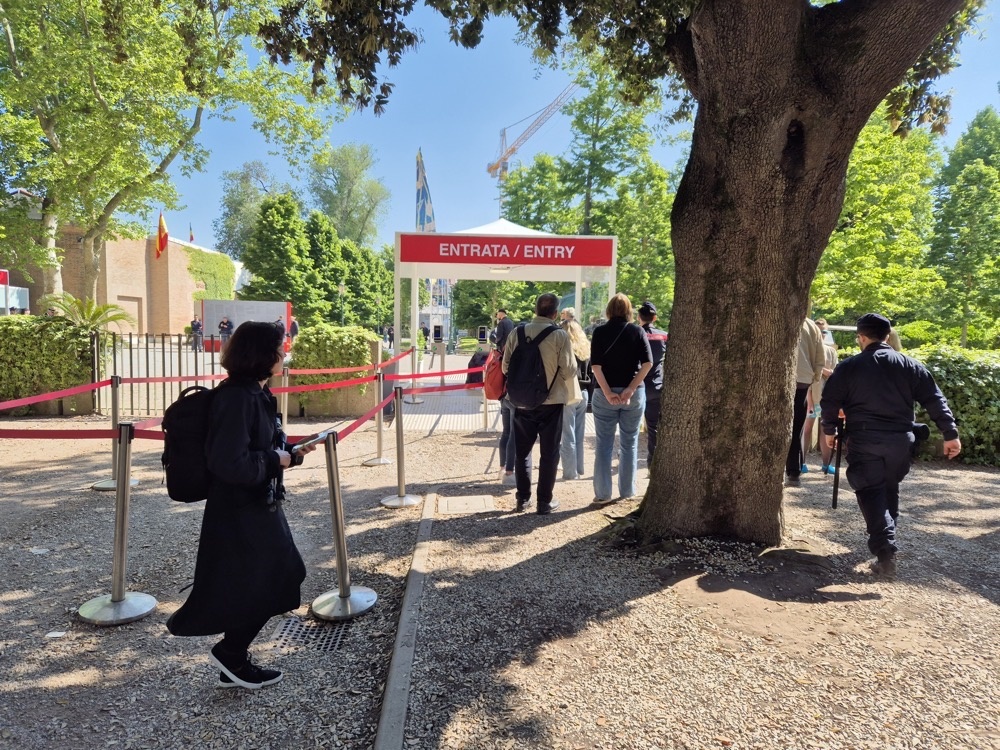 What follows is my account of heading to several national pavilions at this year's Biennale. I've decided to keep my pictures from the Arsenale for the next post.
Something that's worth noting for both these posts: the Biennale is really big. I only had 2 hours to visit both the Giardini and the Arsenale - and there's a 10-15 minute walk between each site - so I went around really quickly. I was happy that a fellow student on the Neuroscience and Design class, Ehab Mokhtar, joined me on this 2-hour sprint.
Which basically means that any opinions I express are based on very little information: I didn't have time to stop and read the context. If you want deep analysis, please look elsewhere. While I'm at it, I may very well poke a little fun at the pavilions that I thought were less obviously compelling. Feel free to skip forward if this irritates you.
The first pavilion to the right on getting through the gates is from Switzerland.
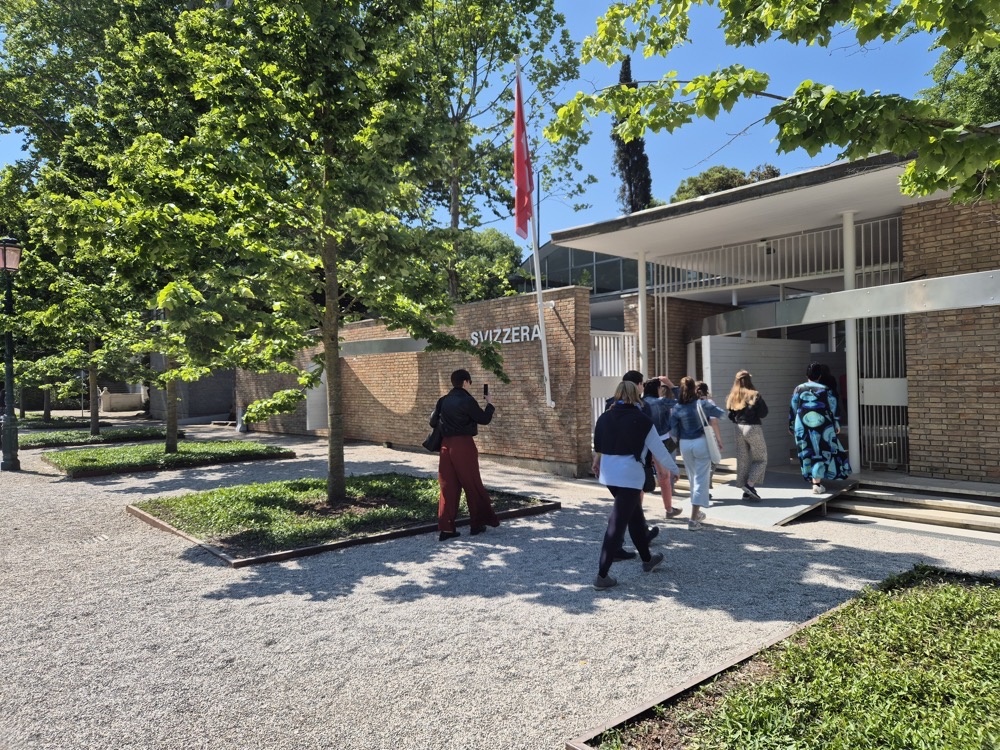
I wasn't fully sure whether they'd finished setting up, to be completely honest.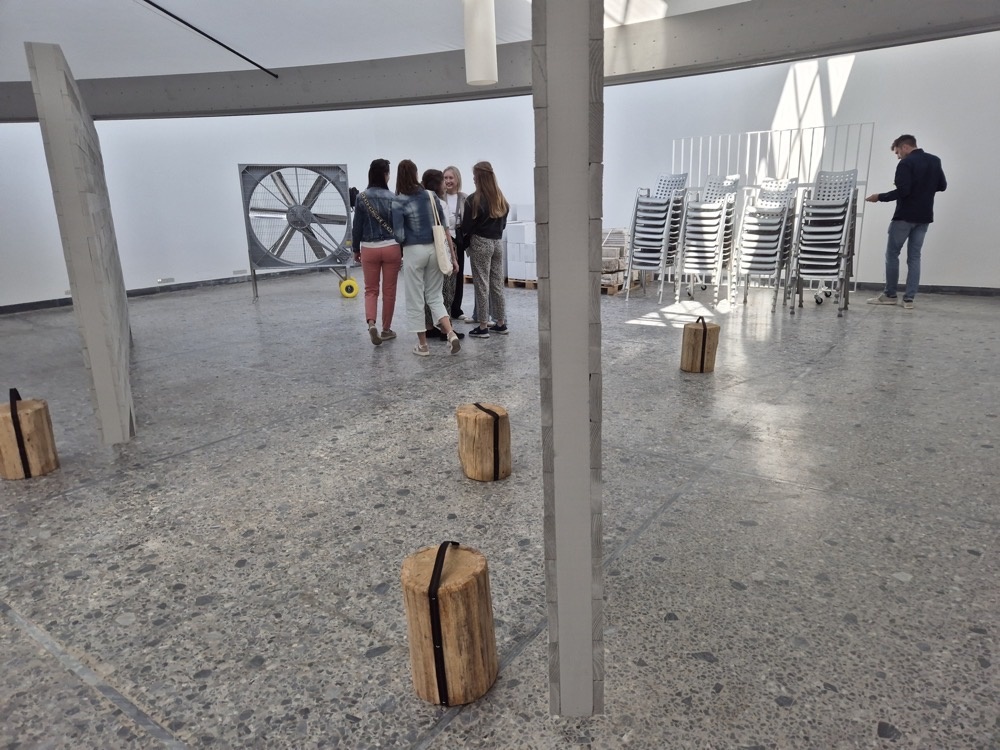
Next was Denmark.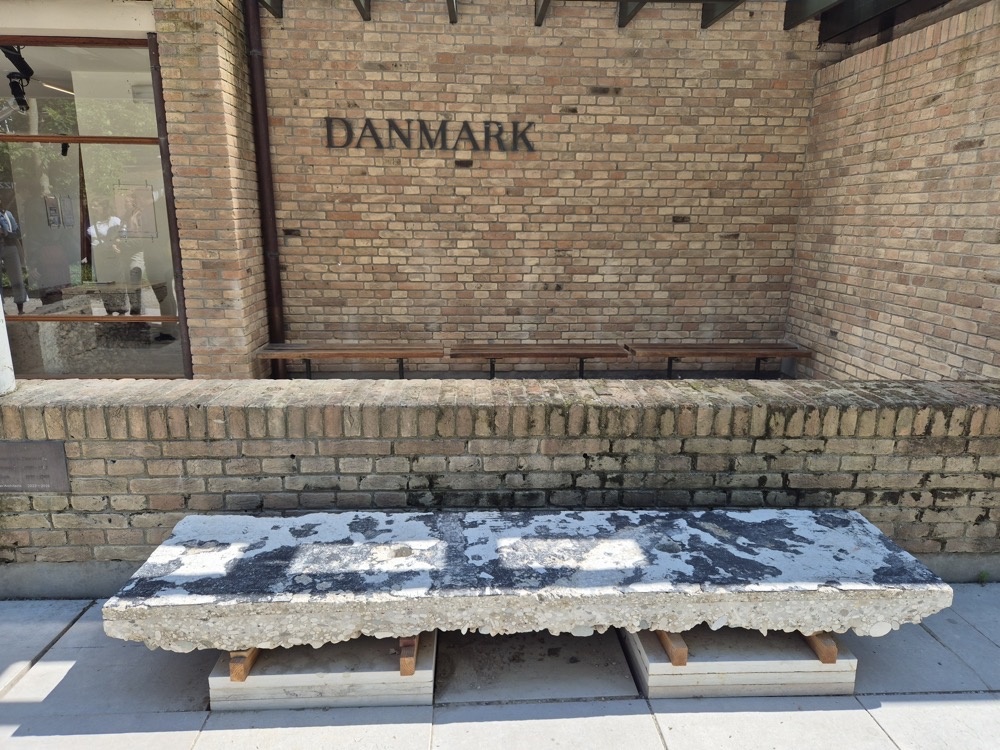
This one looked more like a place they were storing the remains of a demolition project.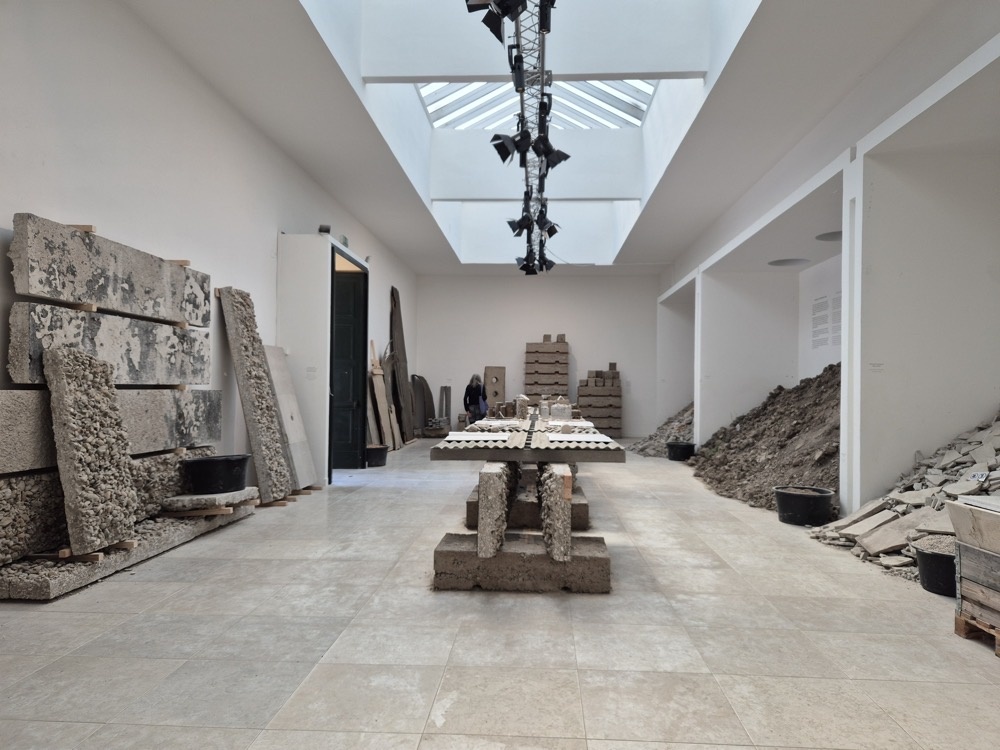
After this we visited the pavilion for Finland, Norway and Sweden.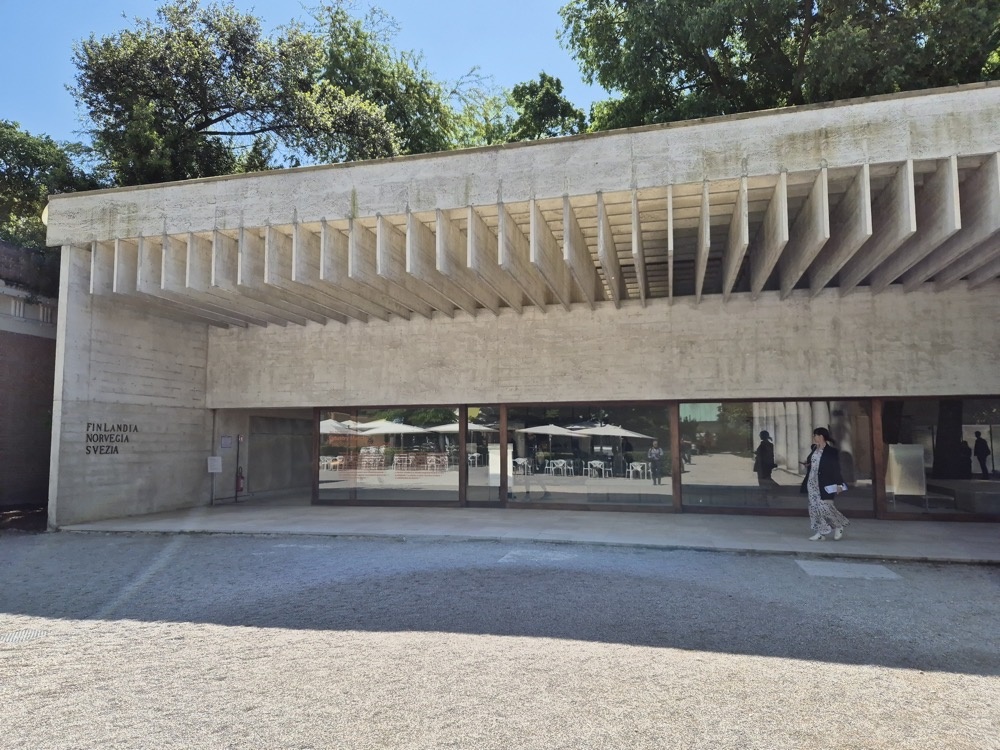
This one was more visually interesting, at least.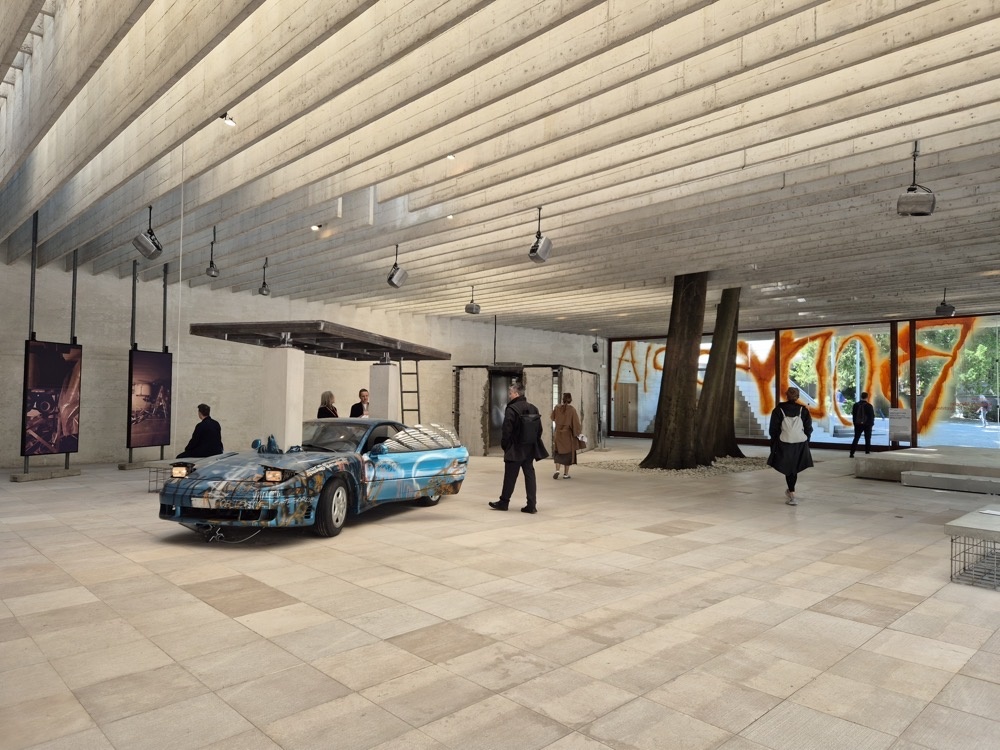
Our next stop was at the American pavilion which was focused on "the porch", a very American concept that I believe to be worthy of this exploration and even adoration.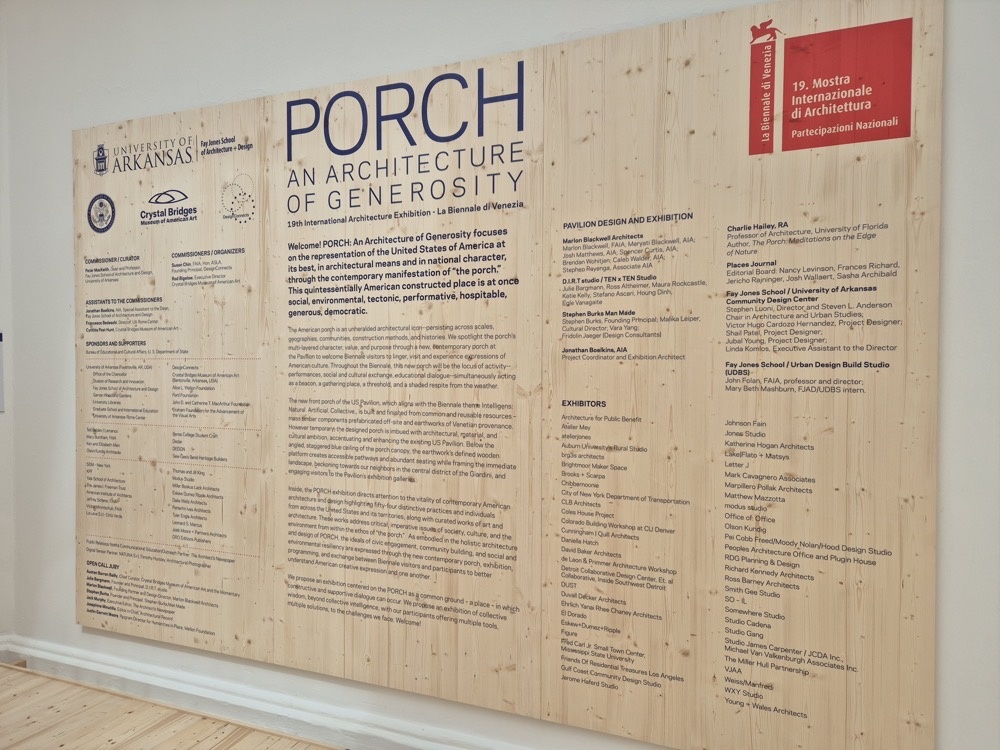
I liked this pavilion.
There were various student-driven studies on display.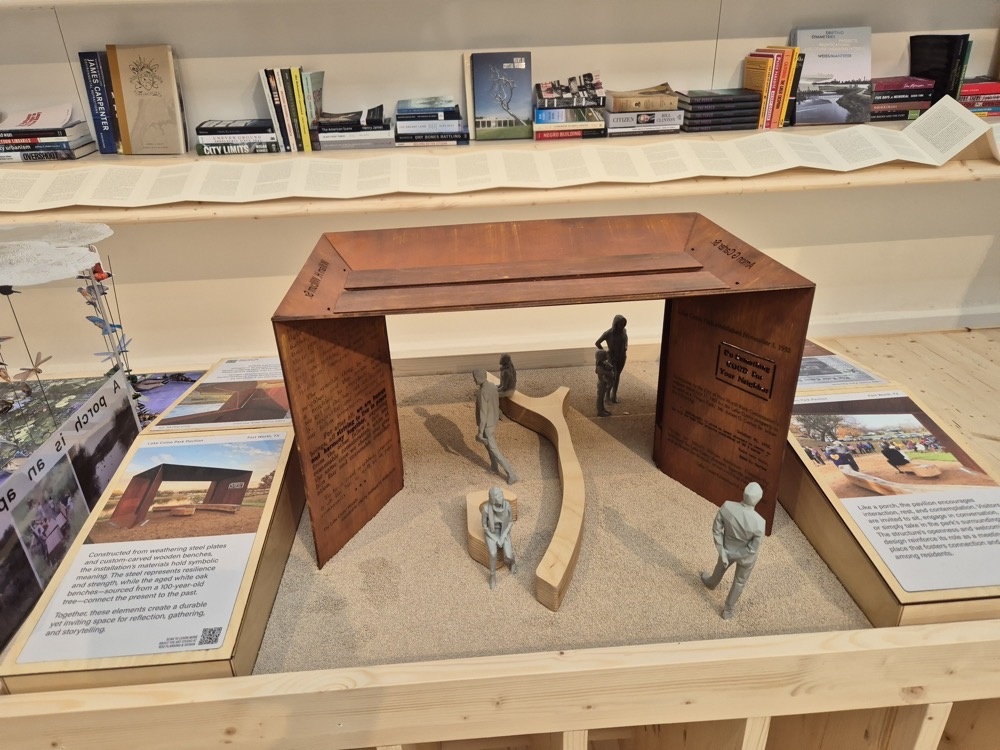
Next was the Japanese pavilion.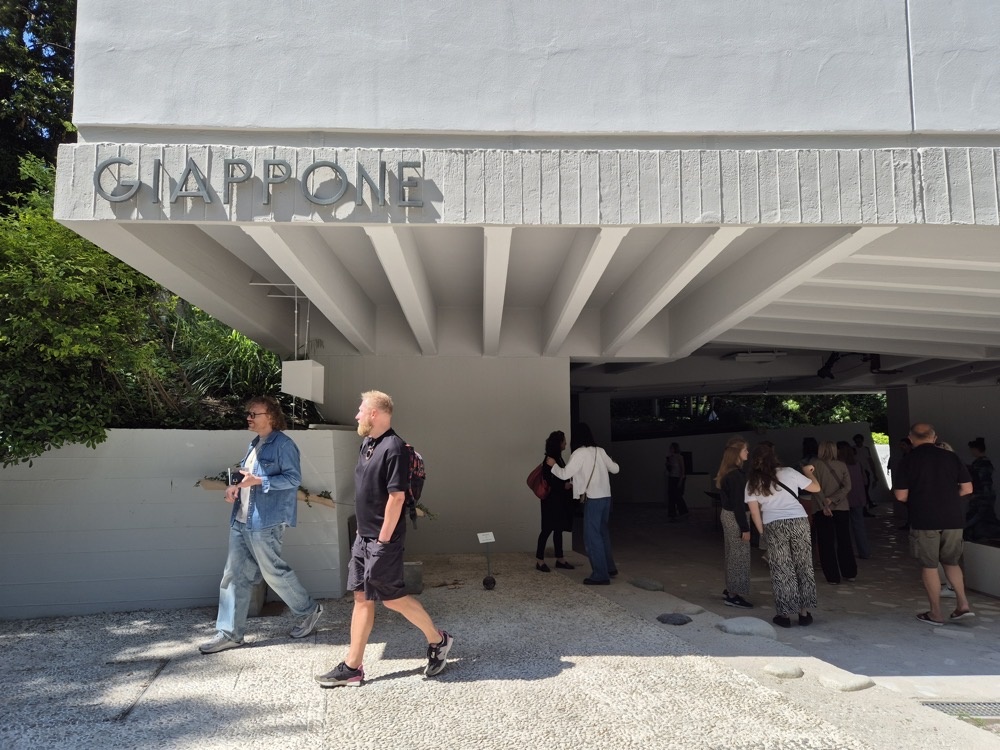
And it was very Japanese indeed. Which I liked.
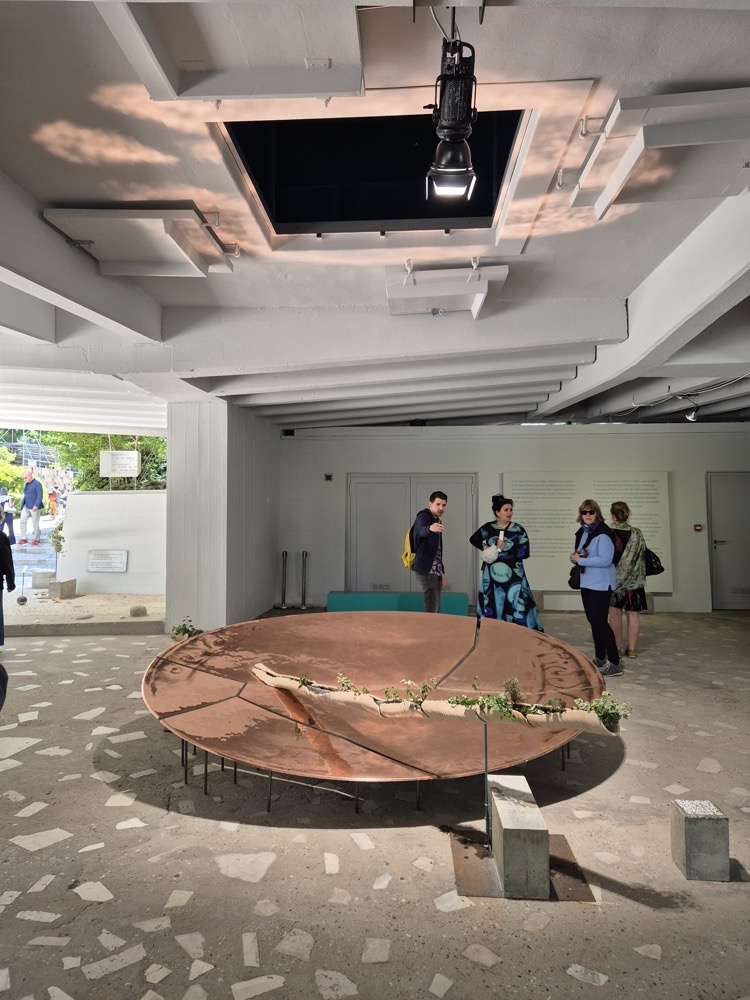
A huge beaten copper dish reflected light upwards to the floor above.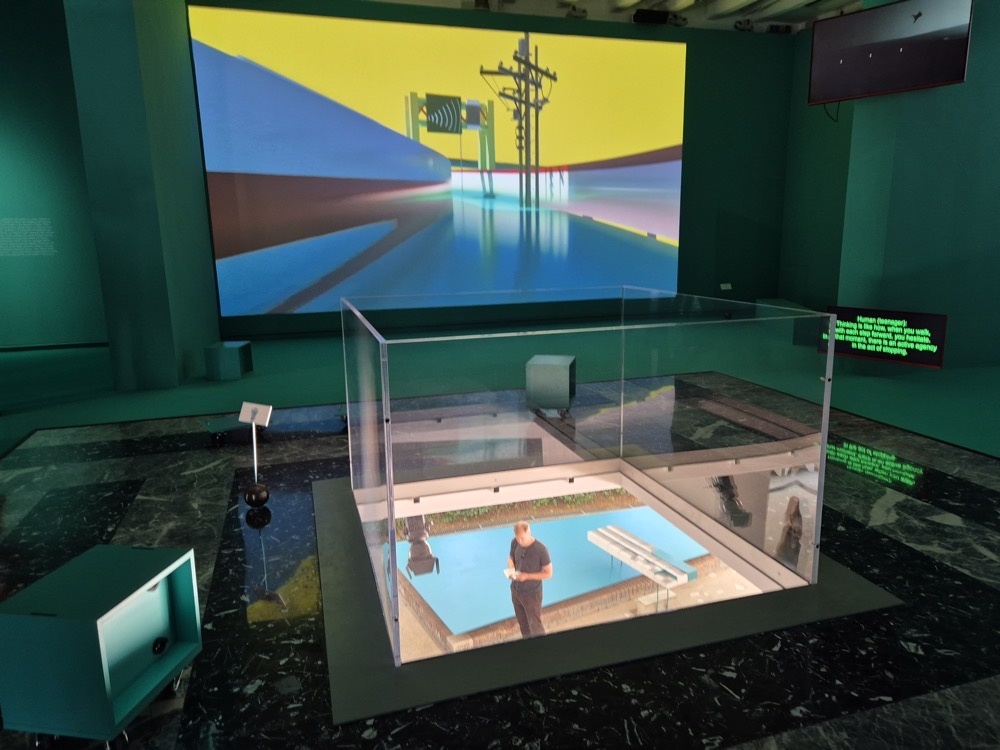
Onwards to Korea.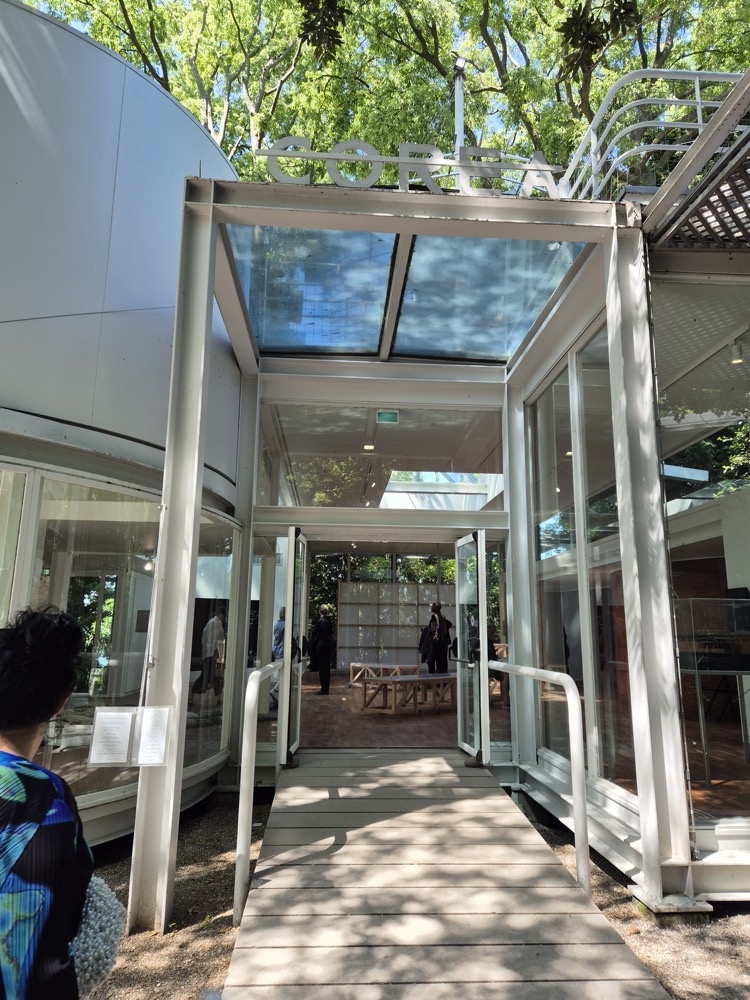
I think there was something here relating to the connection between the North and South of the country. Not sure, though.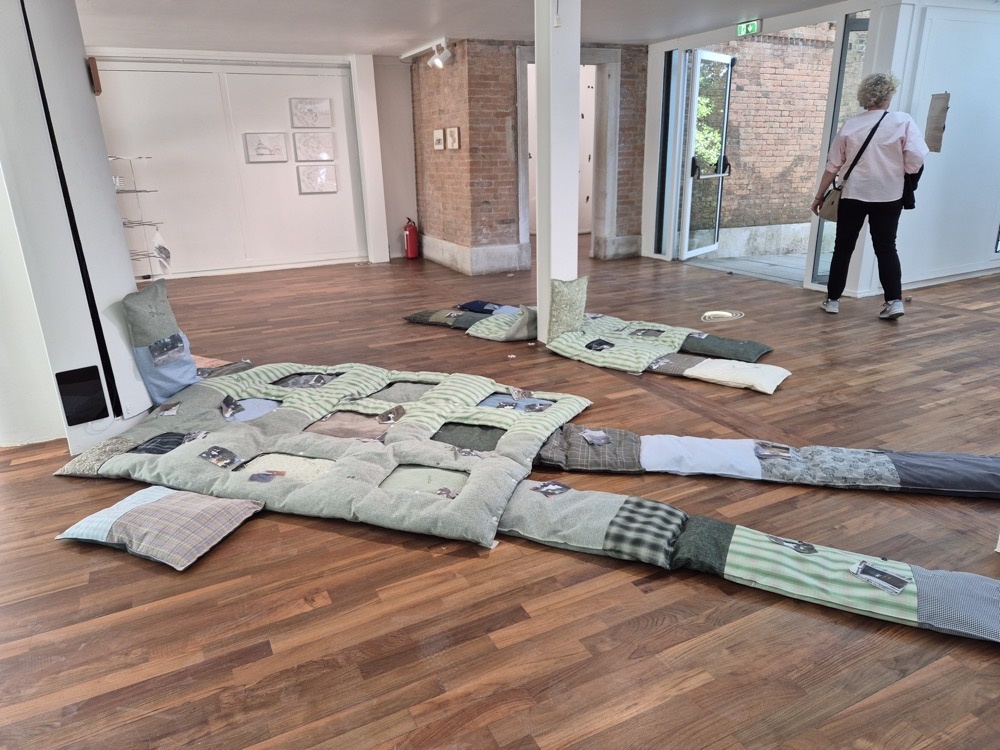
There was a room with a big inflatable ball in it.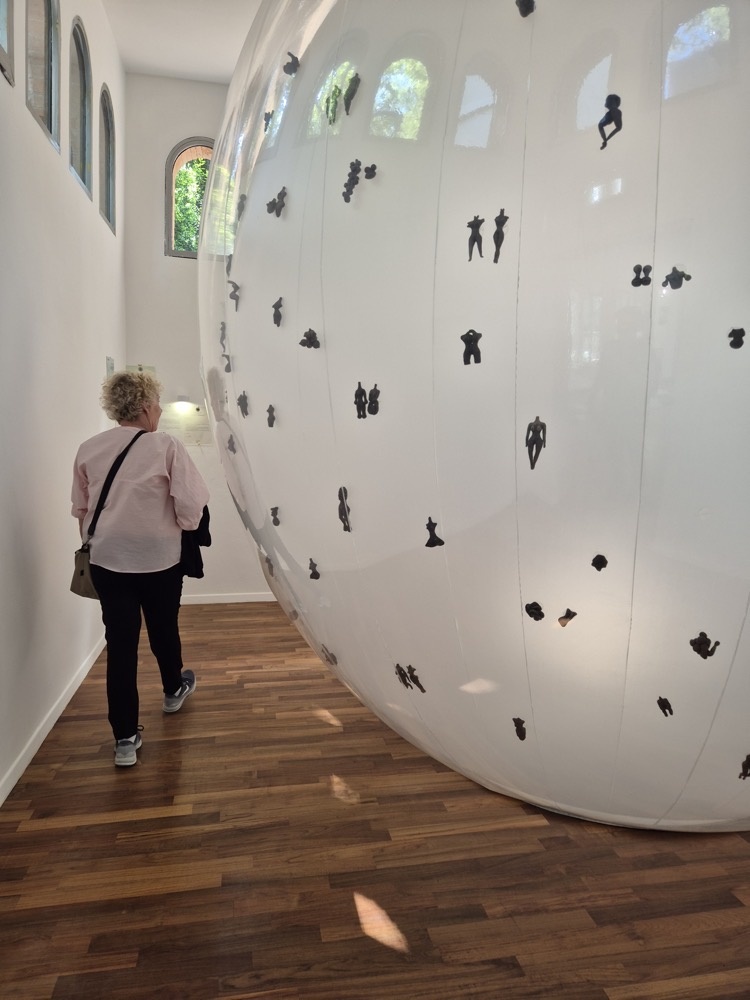
The next pavilion we visited was the German one. This seemed to focus on heat, including thermal cameras feeding large screens in real-time.
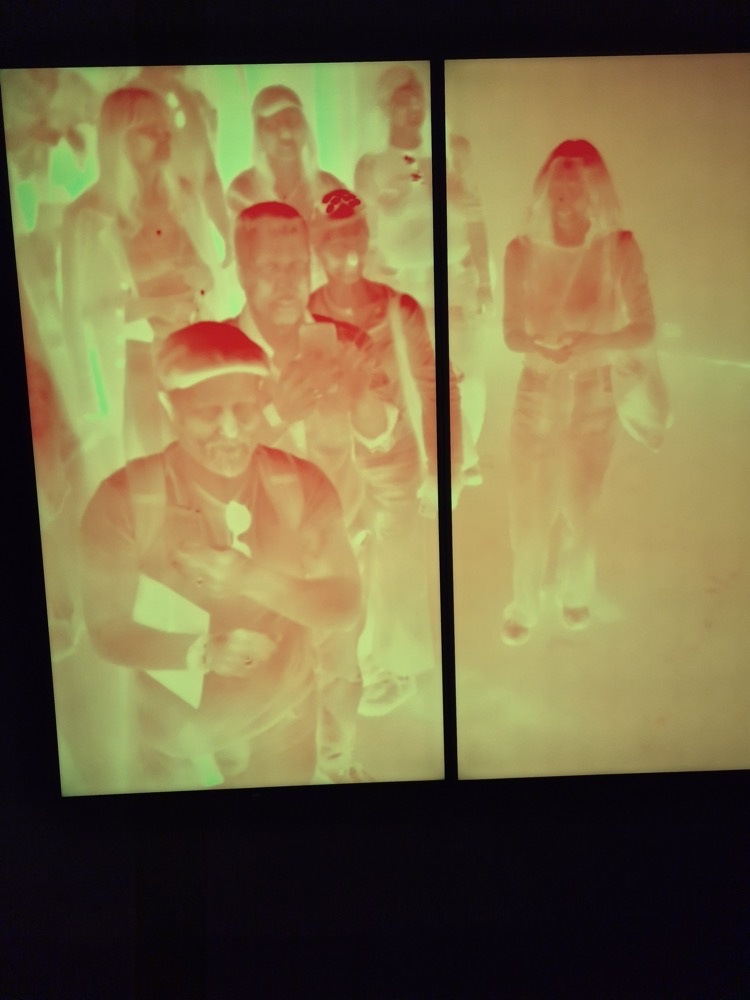
The broader message related to the warming climate, of course.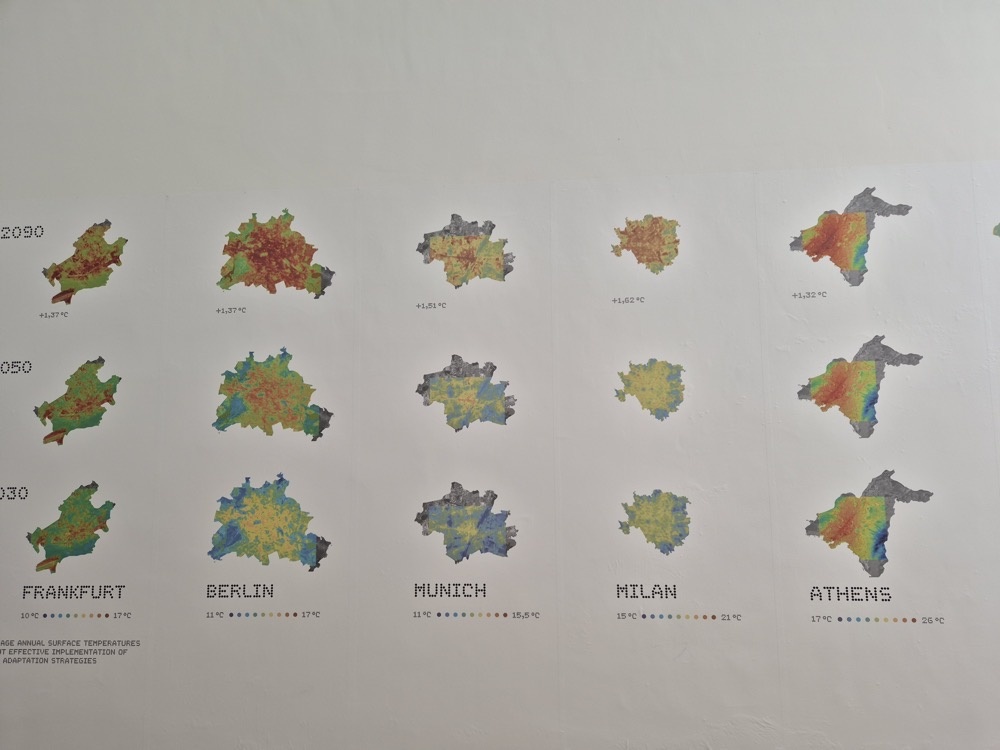
Next was the Canadian pavilion.
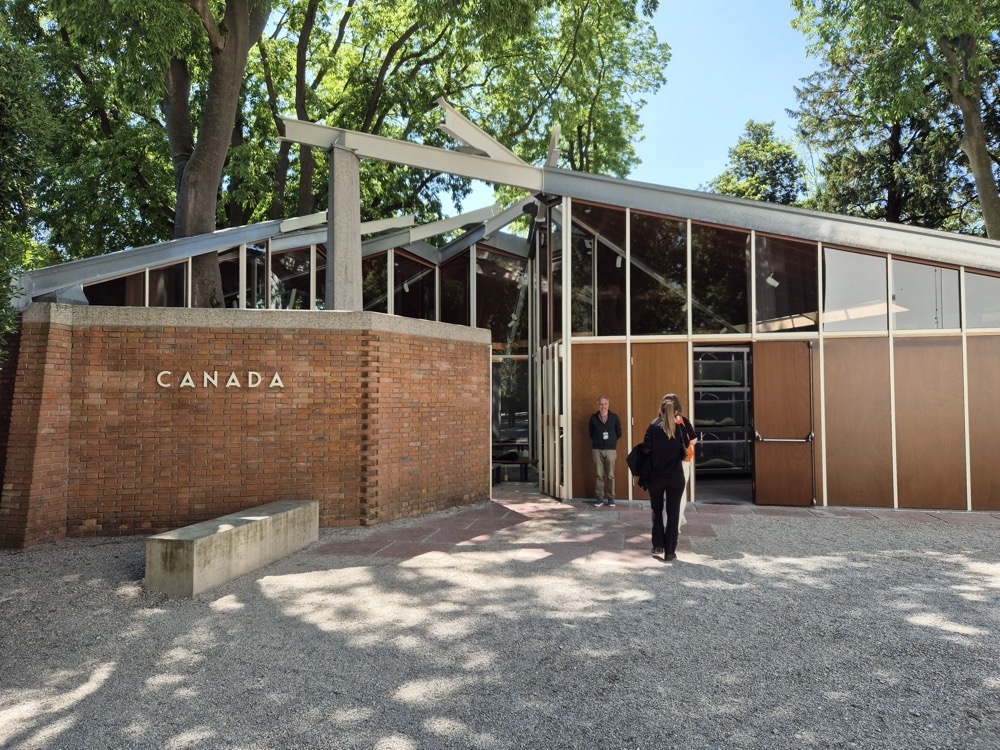
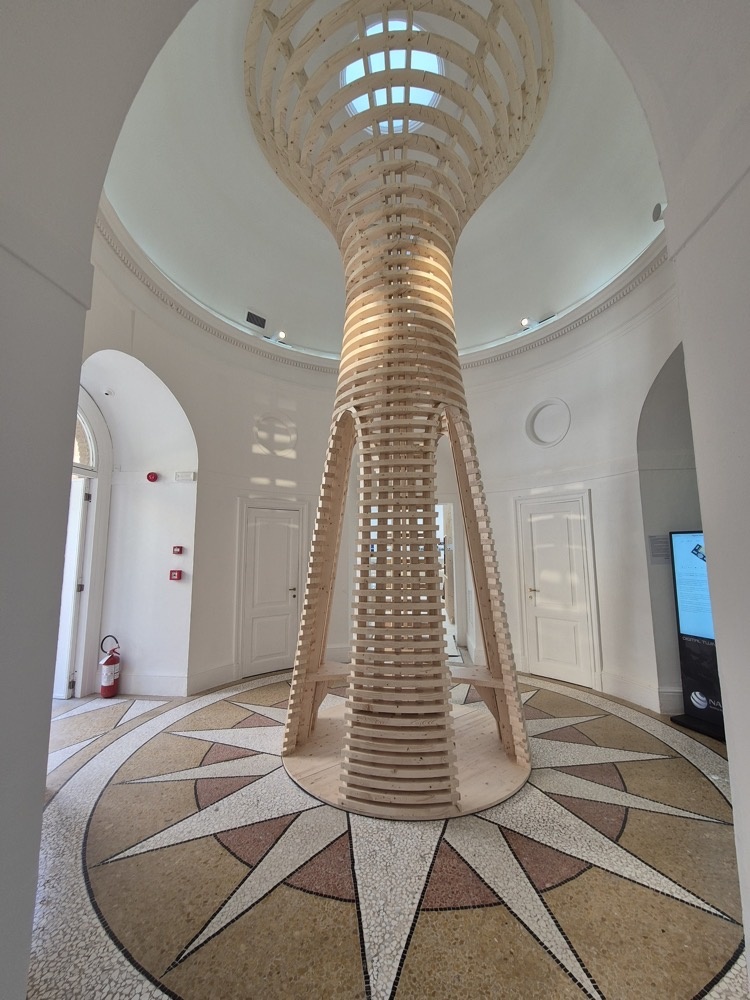
I really liked this one. They had a huge tree-like structure made (or grown?) using picoplanktonics.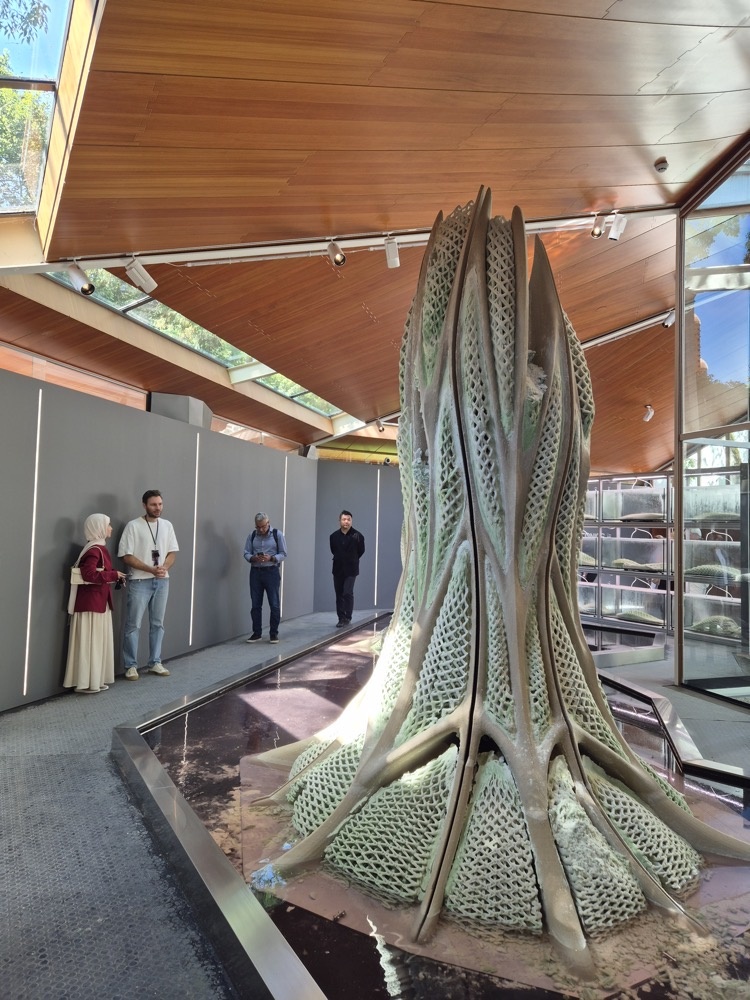
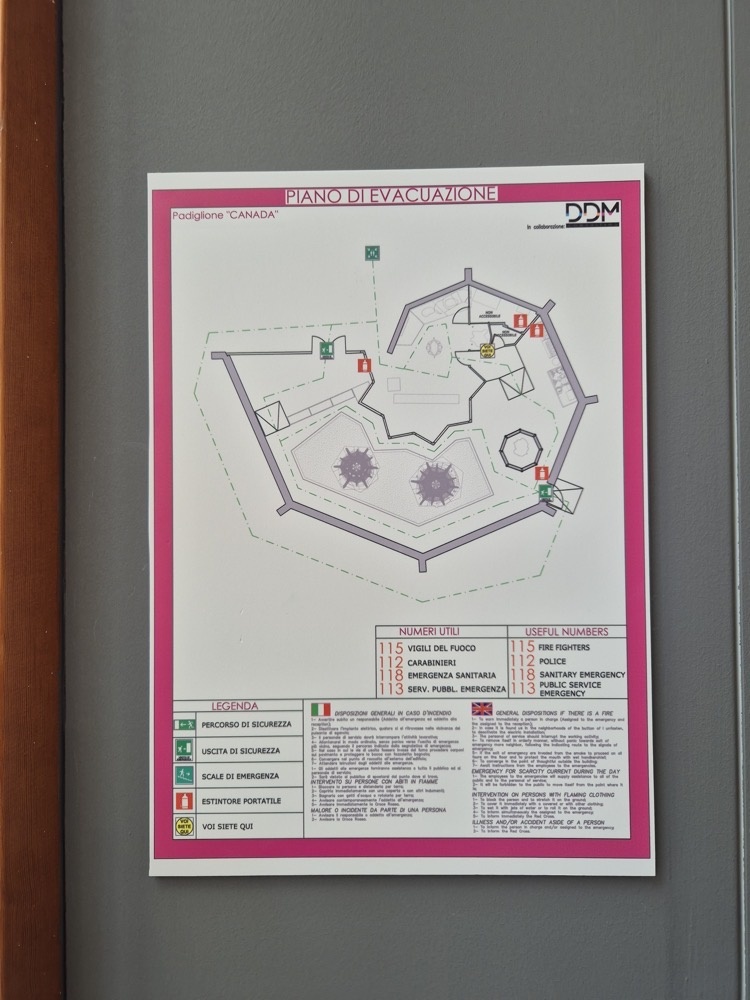
A researcher explained that the exhibit would change through the course of the 6-month exhibition depending on (among other things) the particles absorbed from the visitors to the space.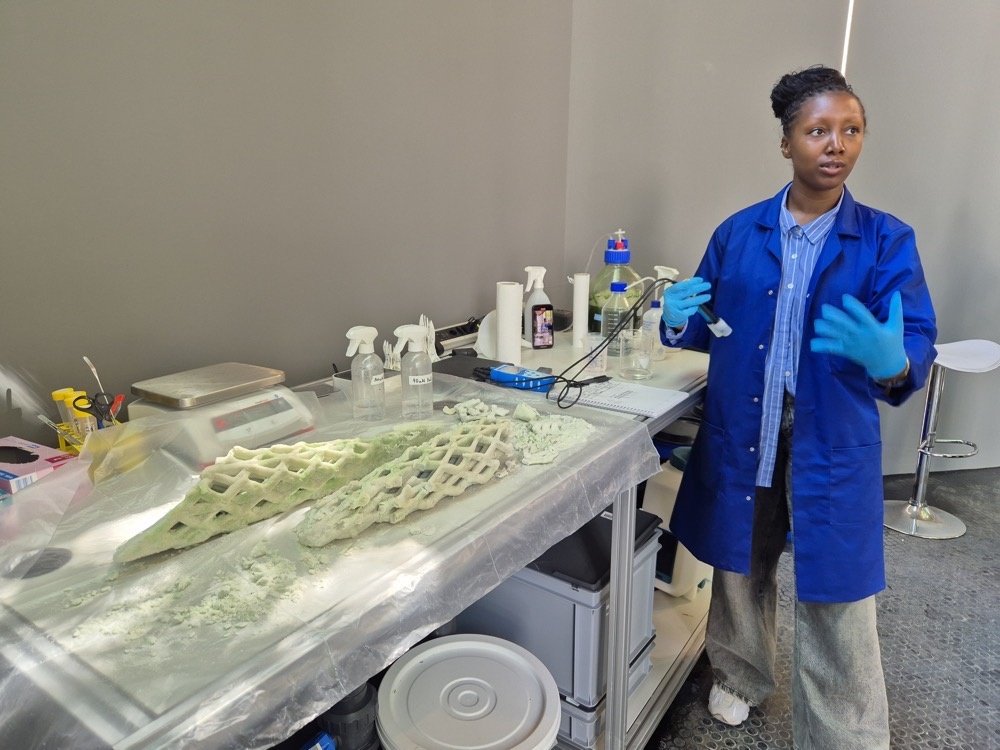 I even appreciated the layout of this pavilion, which was obvious from the evacuation plan.
Then came the British pavilion.
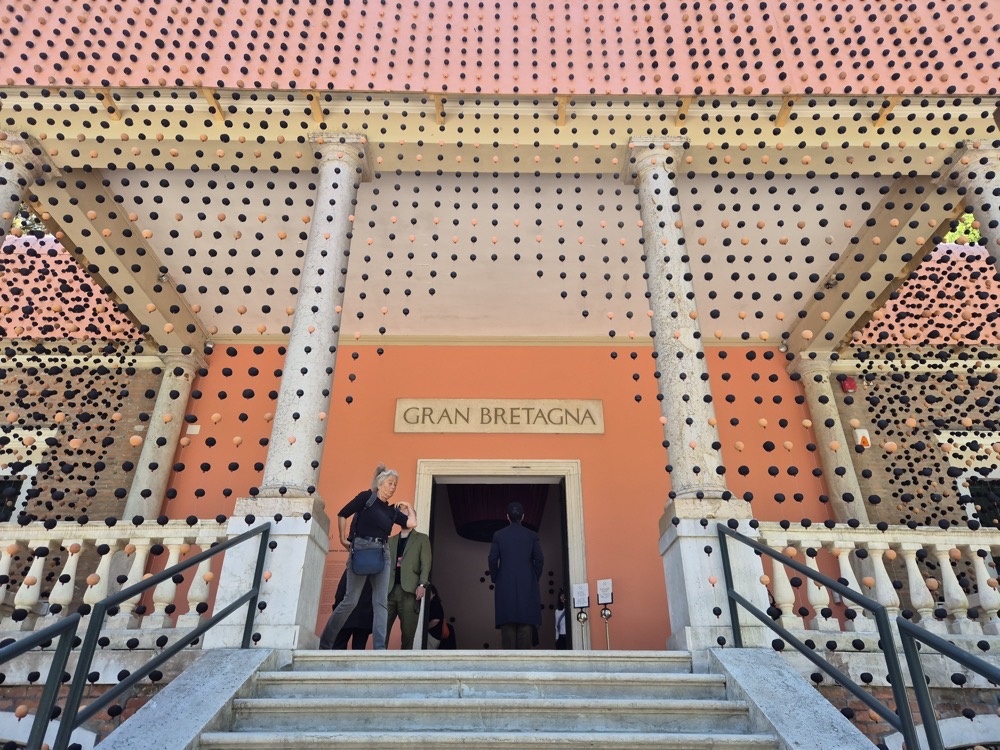
This one was highly visual.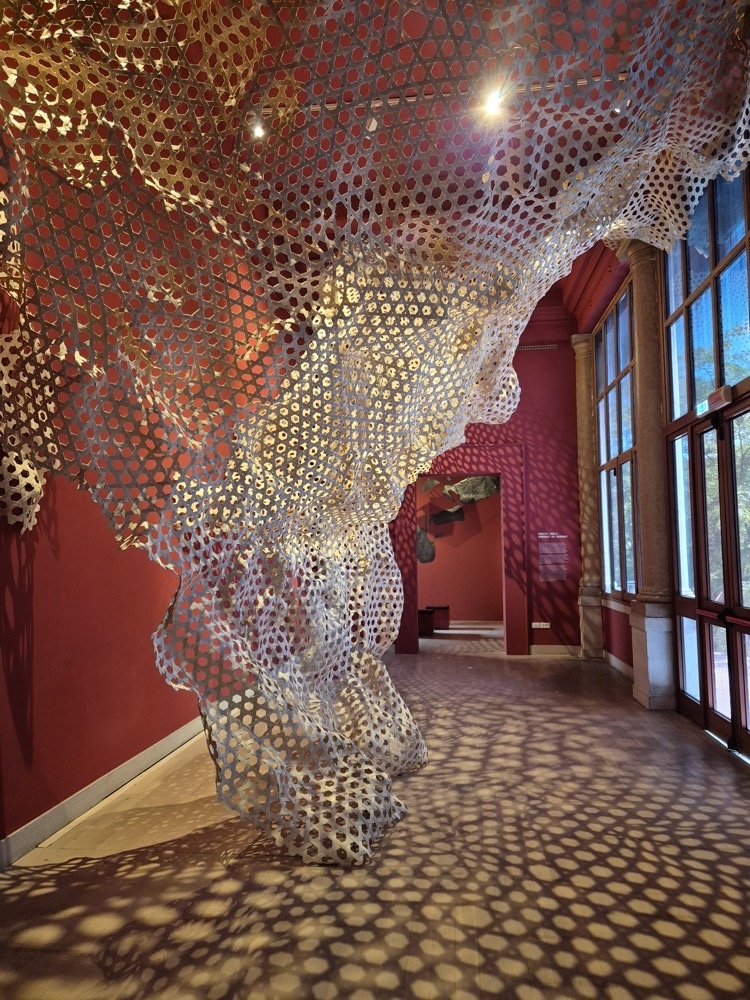
I appreciated the various different spaces.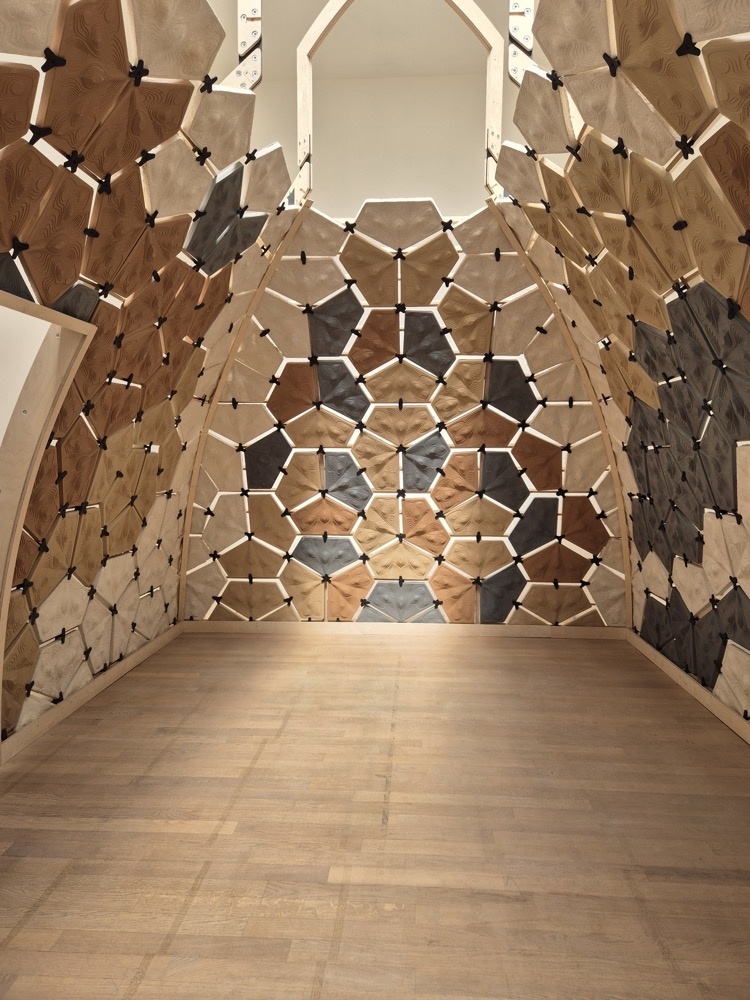
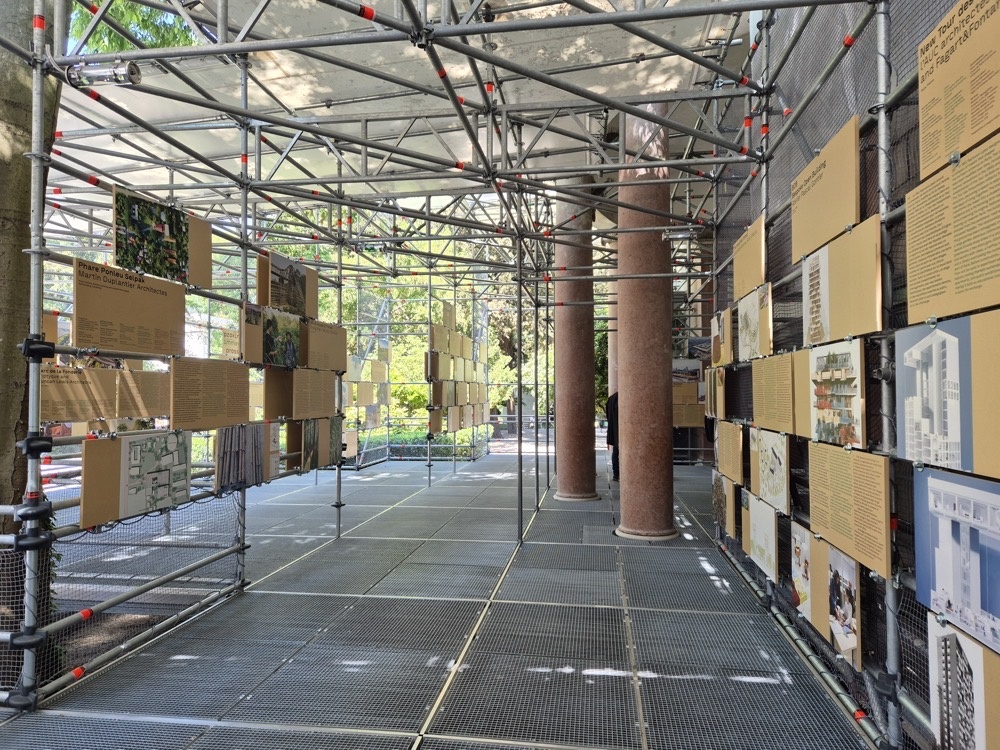
The French pavilion was more exposed to the elements.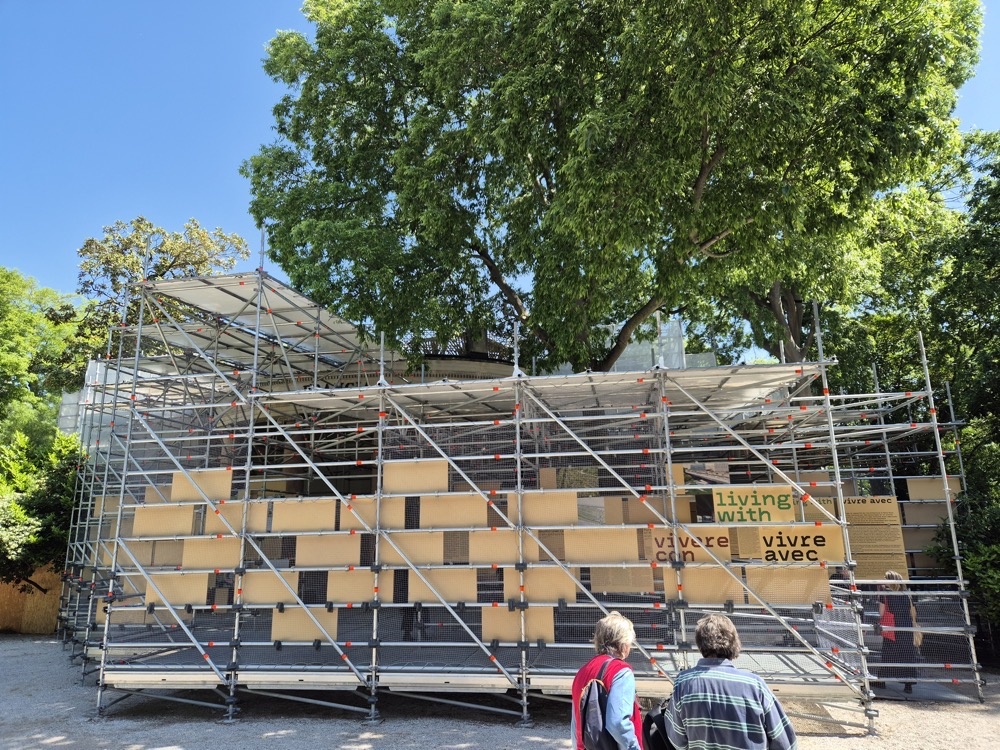
As this mainly seemed to be a set of printed descriptions of various projects - which I didn't personally have the time to read - I found this one less than thrilling.
Next was the Australian pavilion.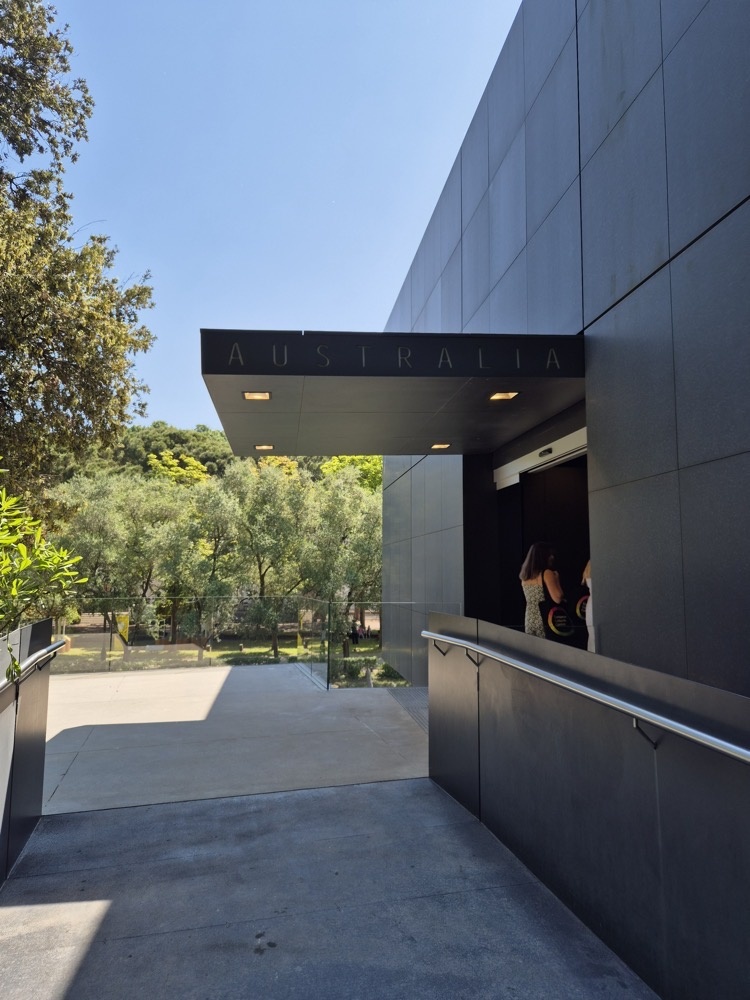
This space was very interesting, with a central area - where people were going barefoot to feel the sand - and an outer exhibit shelf.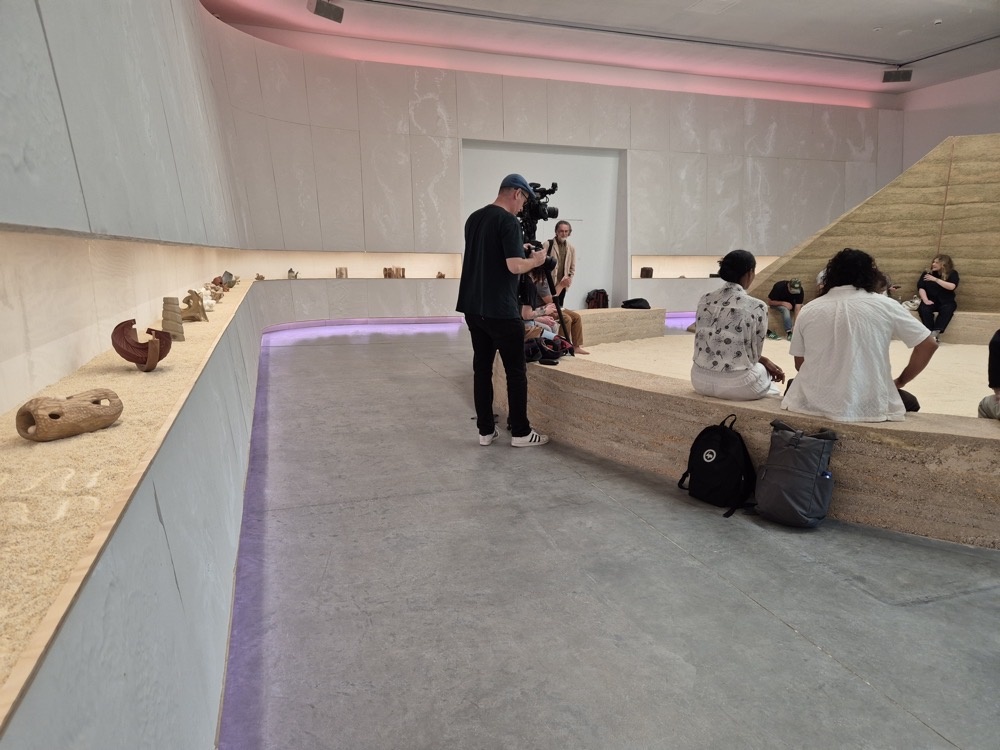
From here we crossed the canal to see a separate set of pavilions.
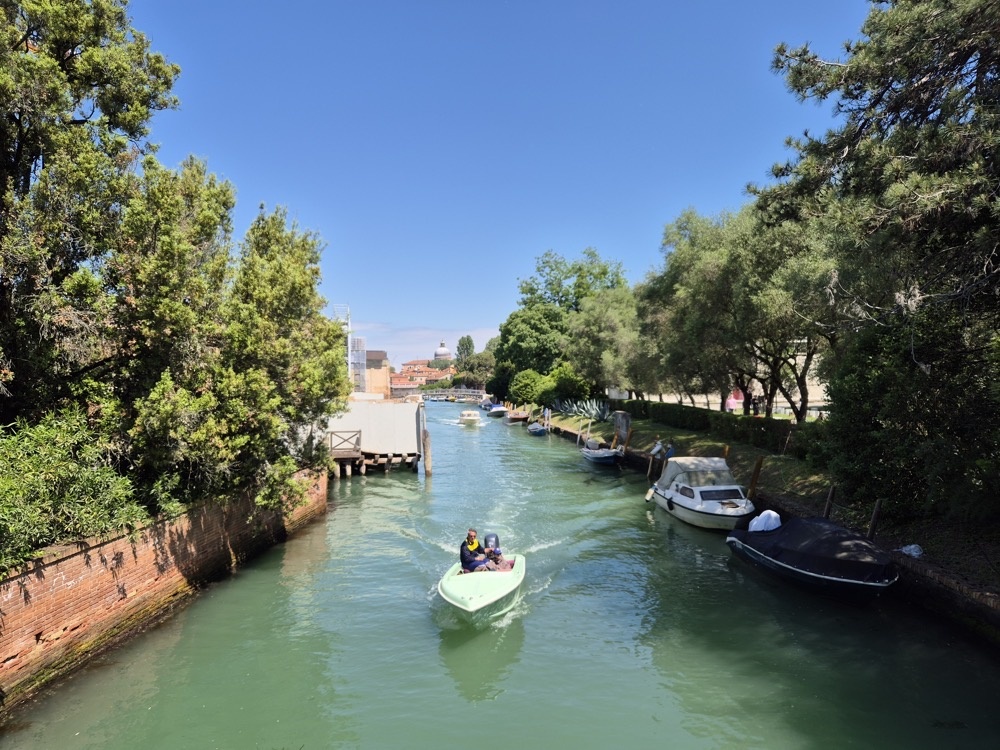
We stopped by the Brazilian pavilion next.
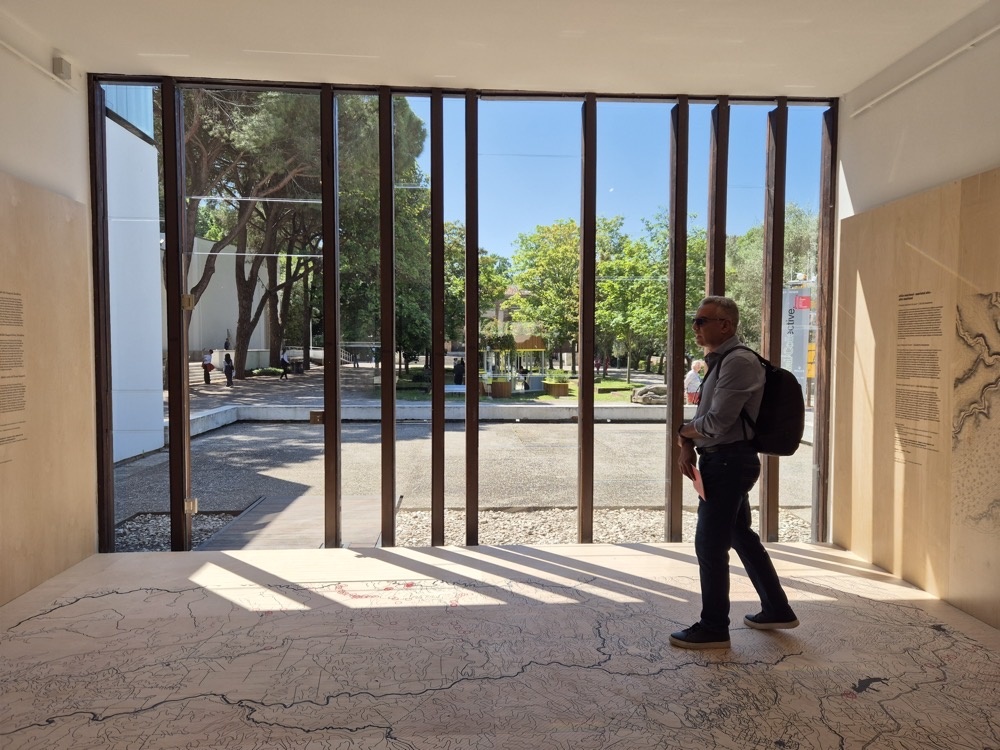
While also presenting lots of project information, it was done in a visually appealing way.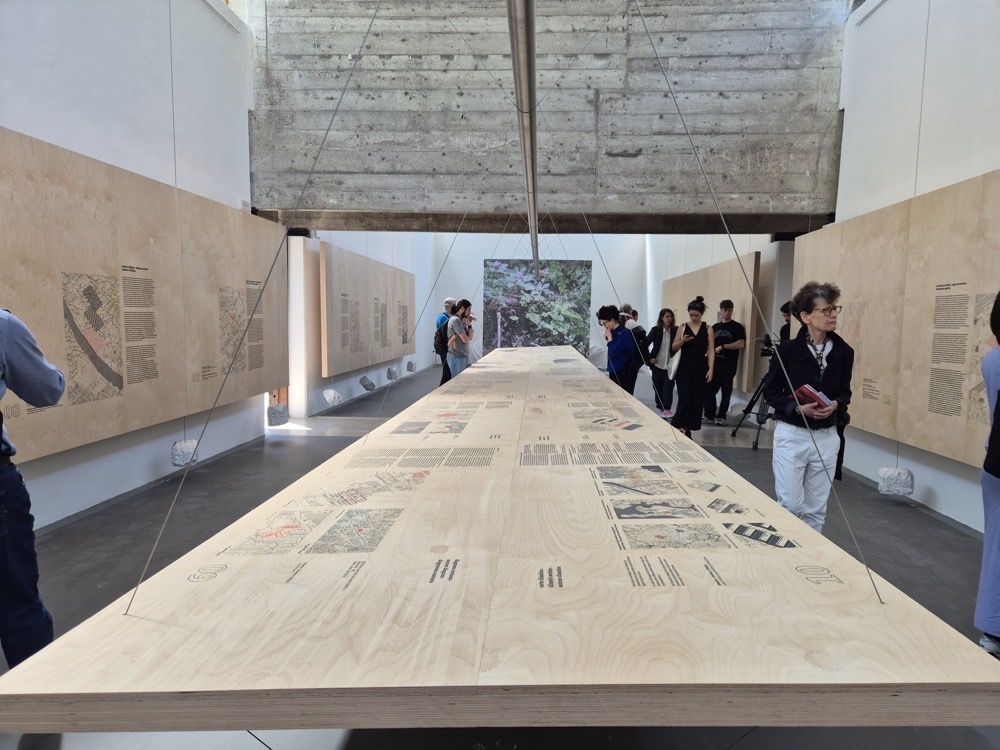
Out the back towards the Venice pavilion was an interesting garden space.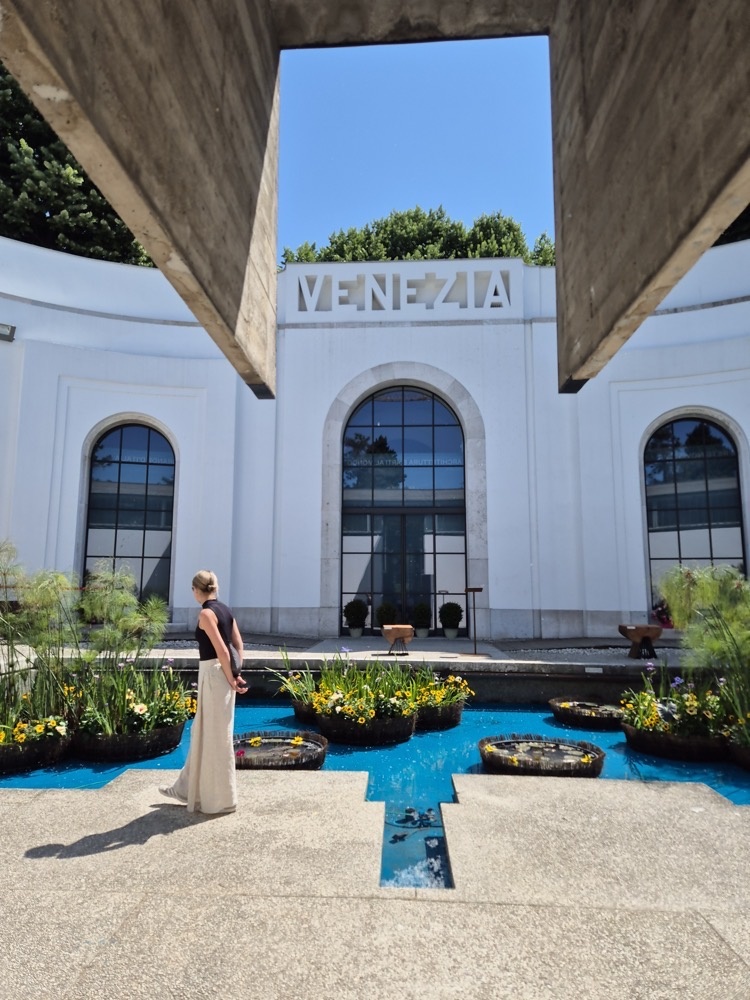
My friend Ehab knows the team behind the Egyptian pavilion, so we had a nice chat with them before entering. The core of the exhibit was a long table balanced on a central pivot. You can move boxes around and see how things can quickly get out of balance. An exploration of decision trade-offs, I suppose.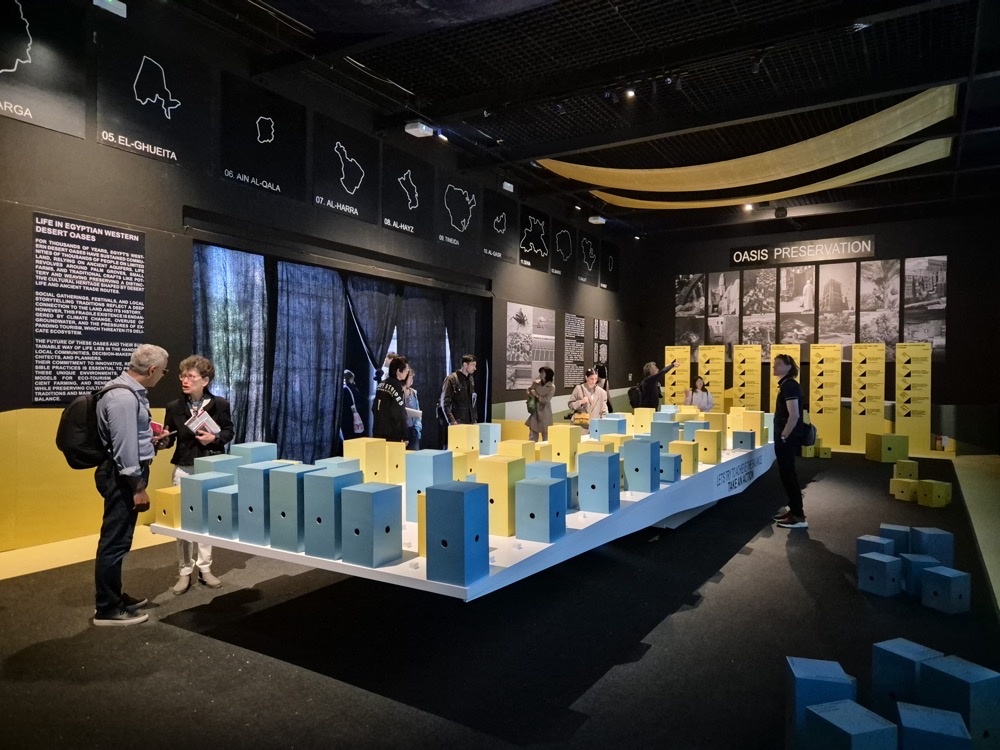
We stopped next at the Serbian pavilion.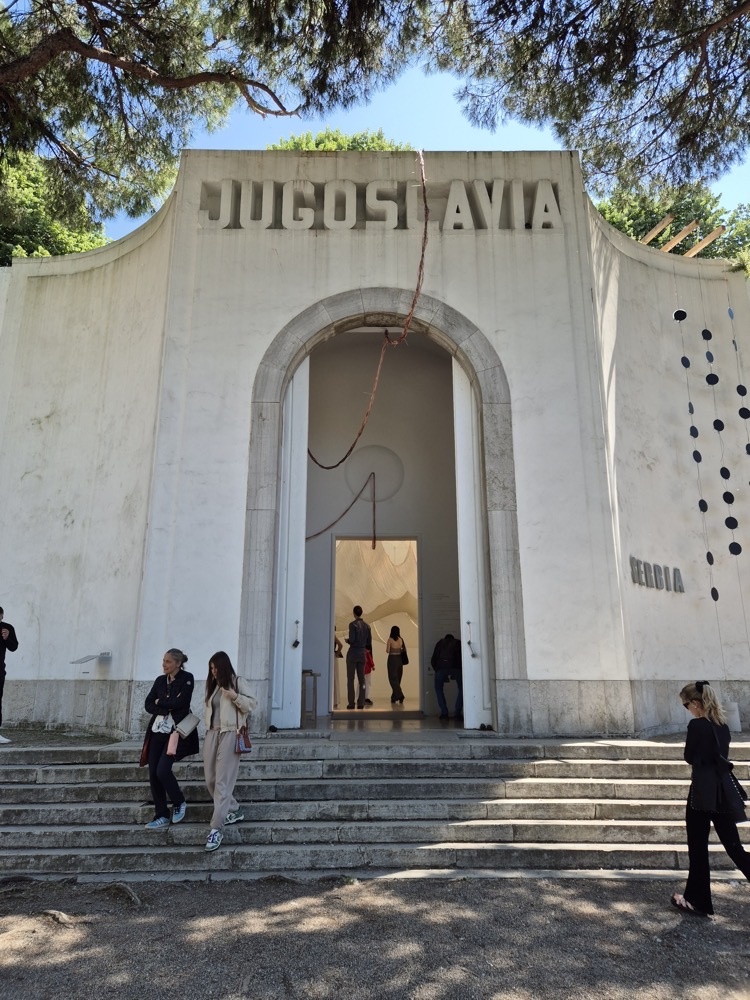
I really liked this large hanging cloth sculpture.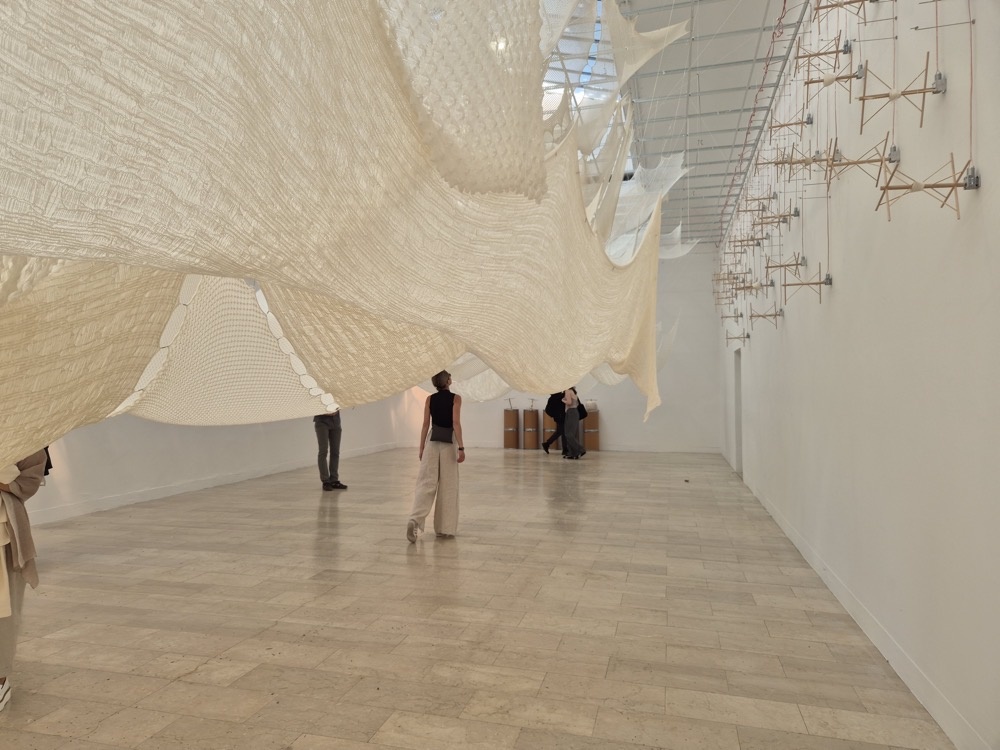
The Austrian pavilion was next.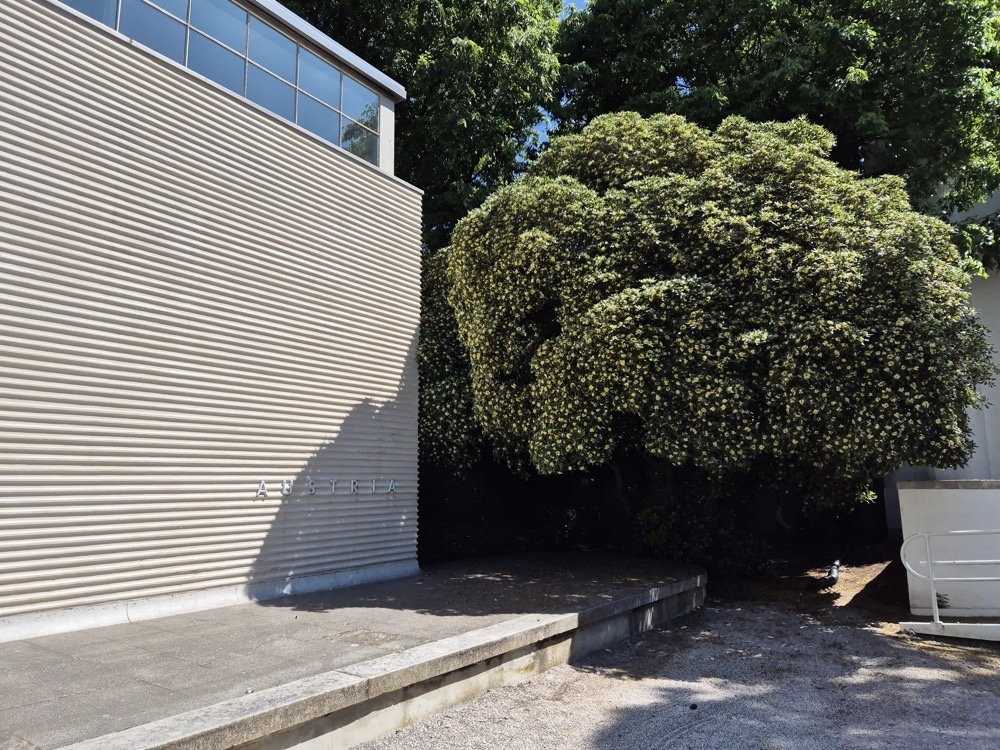
There were two sections, once focused on Vienna….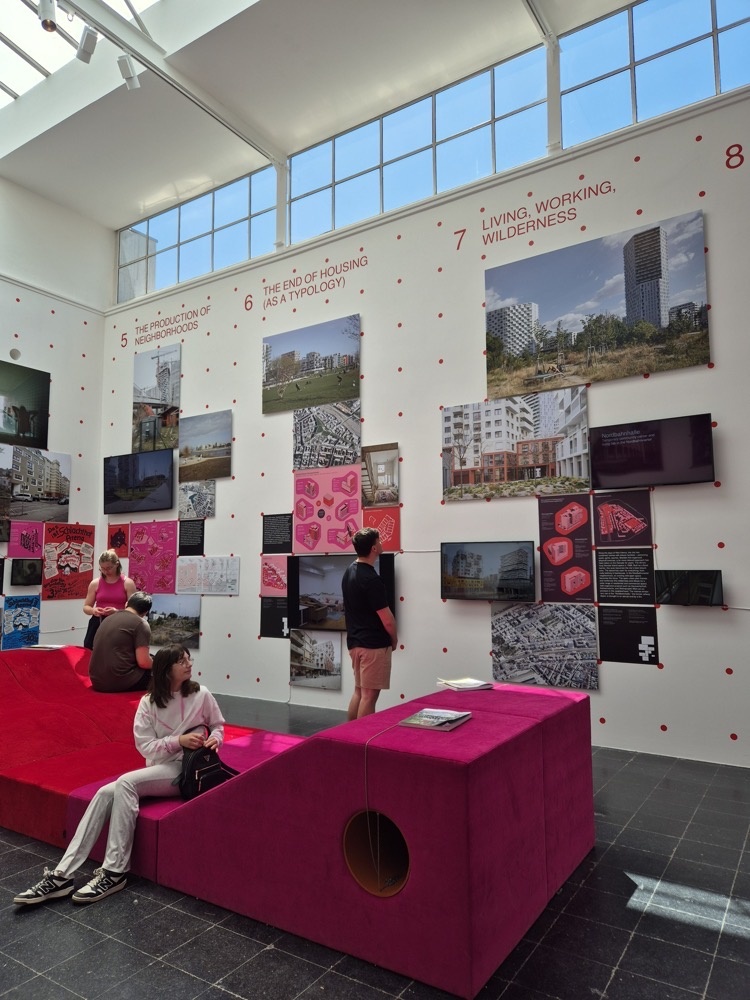
... and the other on Rome.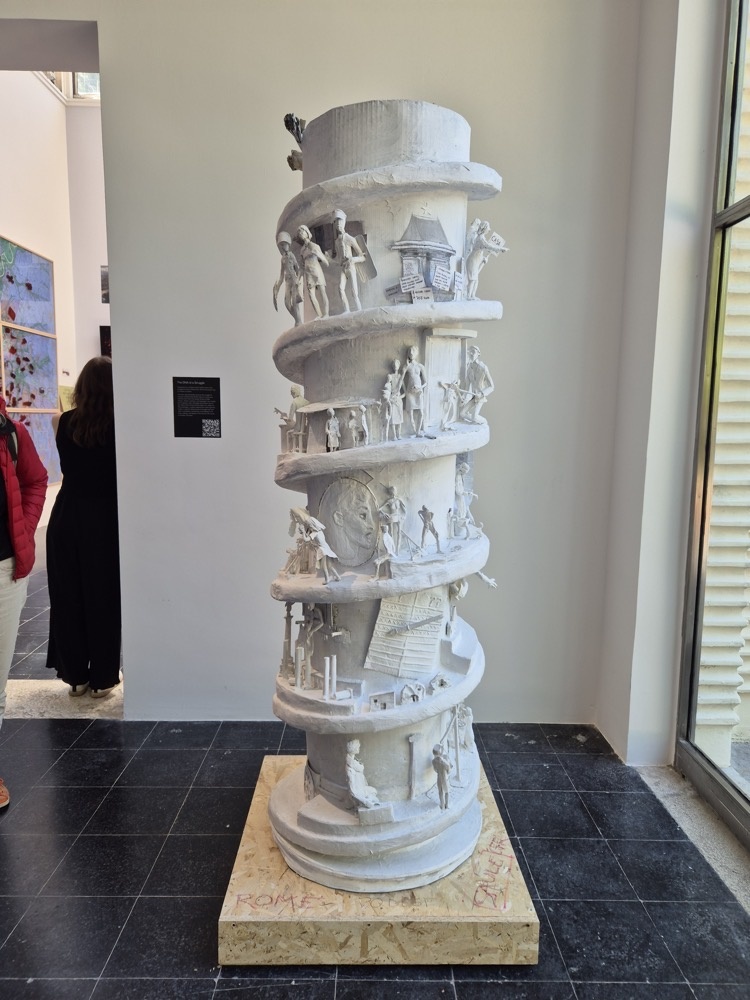
Our last stop before running across to the Arsenale was the Polish pavilion.
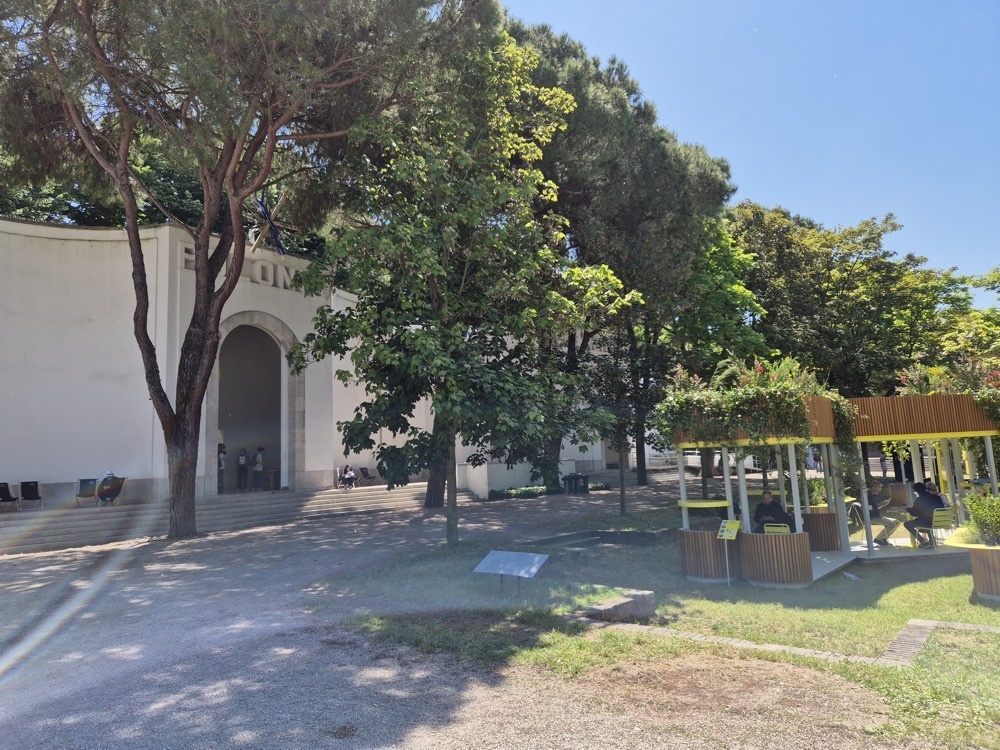
This was more like a modern art exhibition. I liked what I saw in the 30 seconds I stayed there.
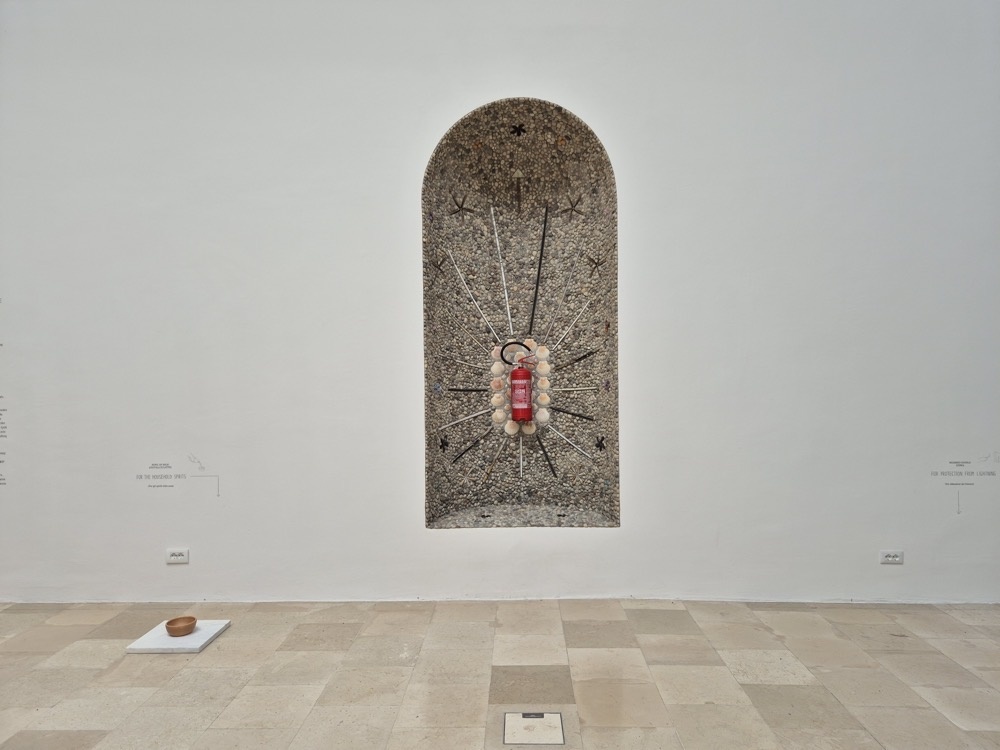
It's one I would have liked to spend more time in (this is actually true for all the pavilions, to be fair).
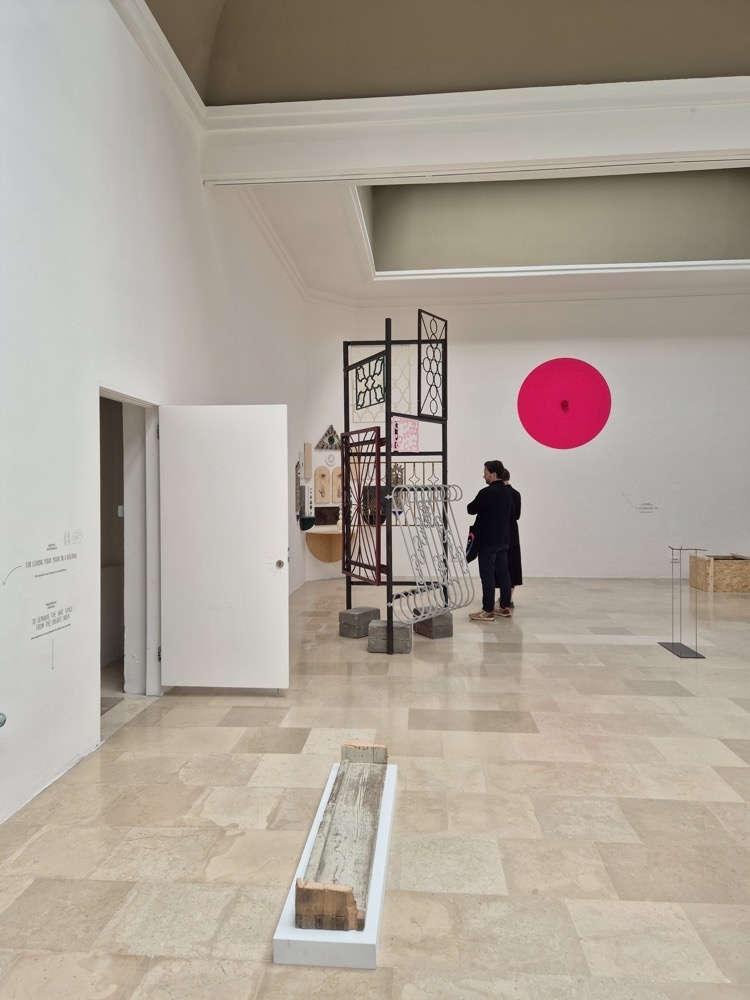
We rushed past the Quatari pavilion - which I later learned served really good coffee - but I didn't go inside.
To find out more about our time in the Arsenale - which honestly comprised of me running through the space taking photos while trying not to flatten people - you can check the next post.
We arrived back just in time for the real reason for my trip to Venice: the debate between Davide Ruzzon and Thomas Heatherwick that was a large part of the closing session of the Neuroscience and Design class I've been attending over the last three months.
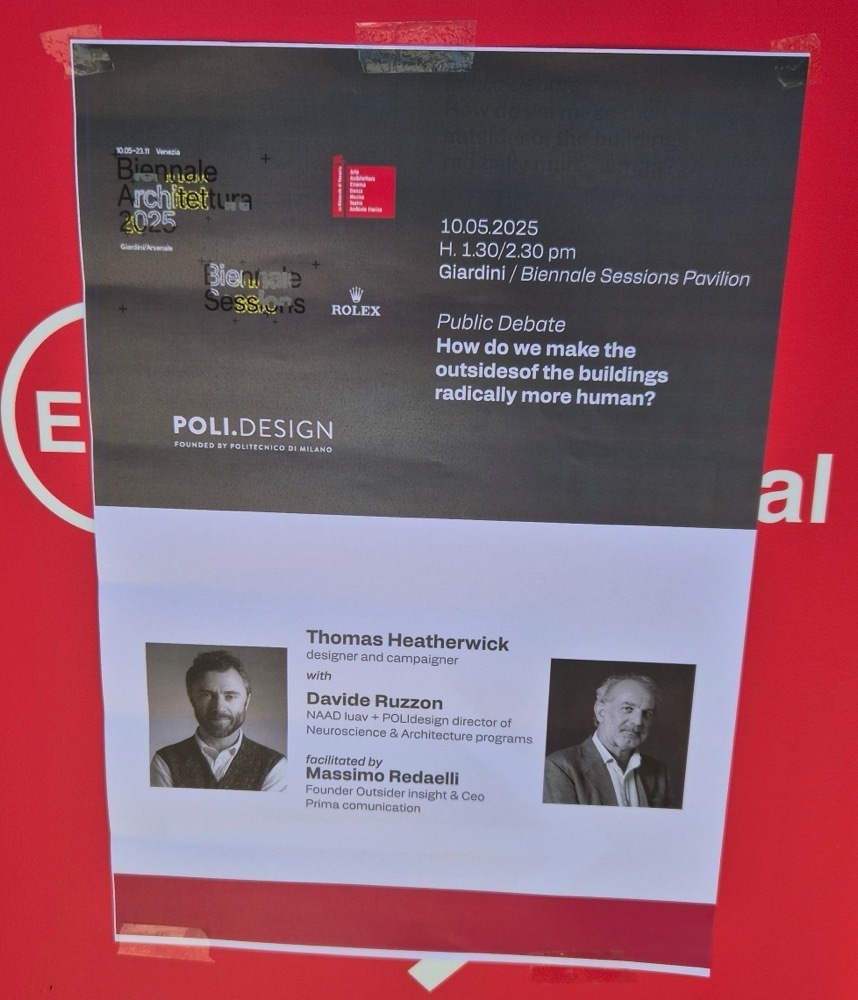
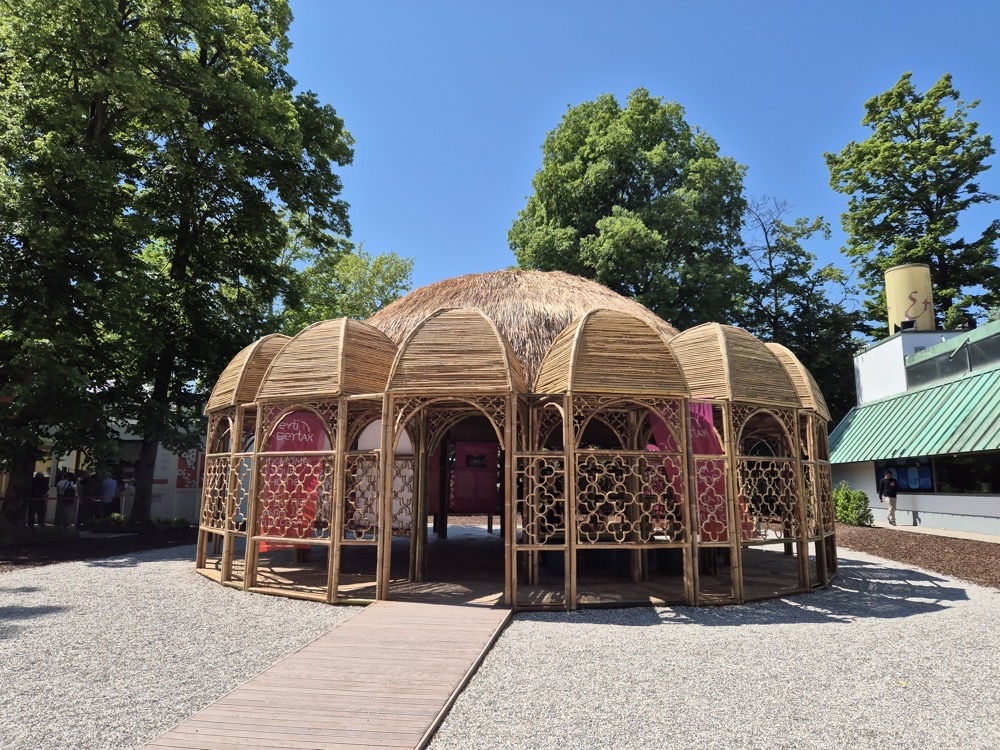
The debate was held in the former Russian pavilion, which has been repurposed for educational sessions at the Biennale.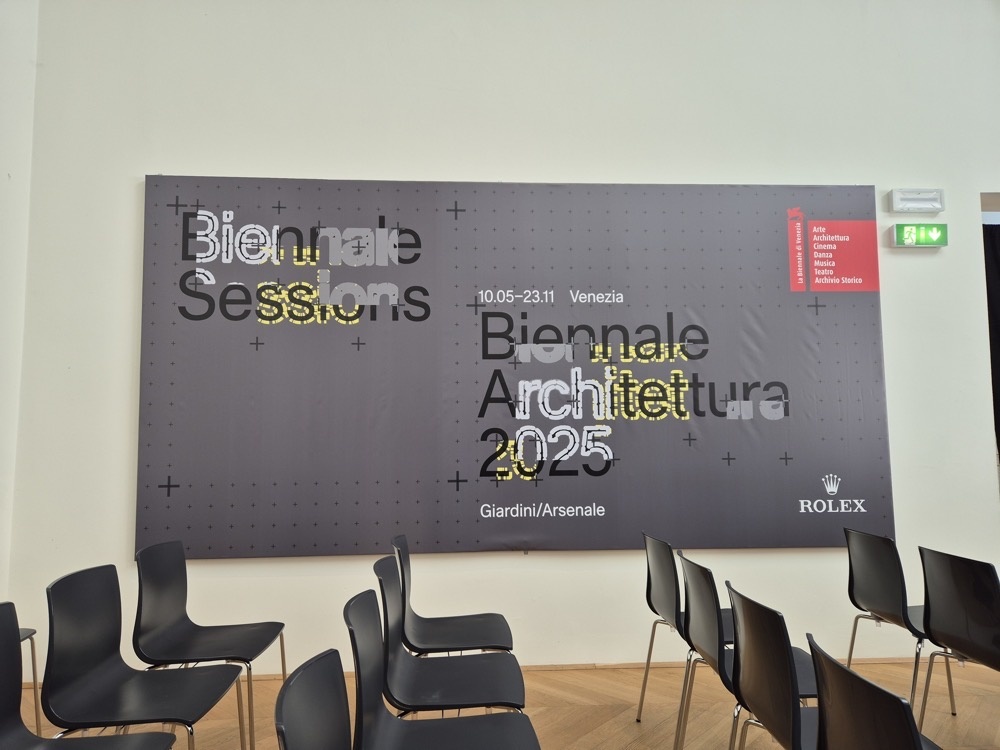
It was fantastic to hear from both Davide and Thomas in this setting.
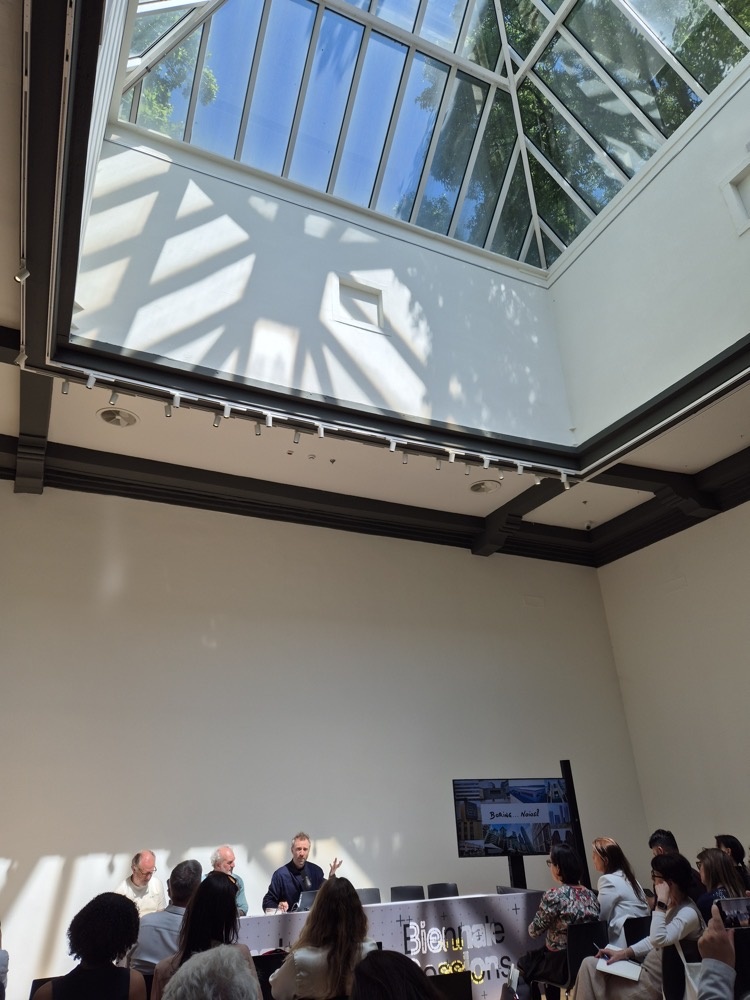
Thomas spent quite a lot of time talking about the concepts shared in his Humanise book, the Kindle version of which I've managed to read the first two thirds. It was really aligned with our research interests, which is just fantastic.
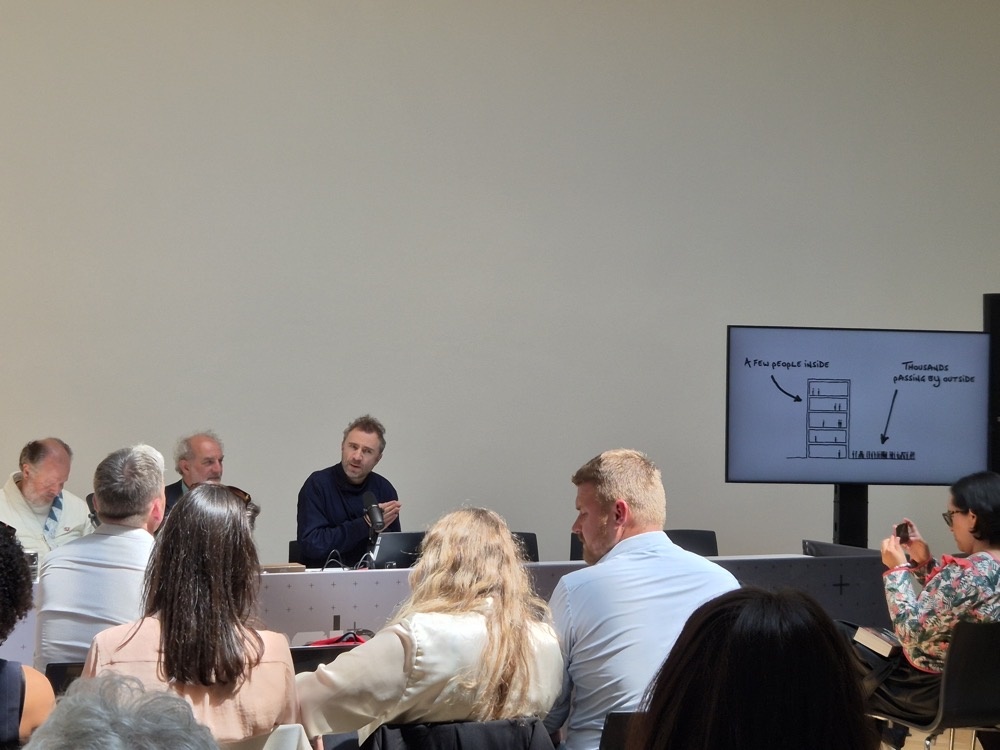
Interestingly - and this gives him a unique position to comment on the profession - Thomas isn't actually an architect, and he used to drive a 2CV back in the 90s. So we have at least two things in common (beyond both being British).
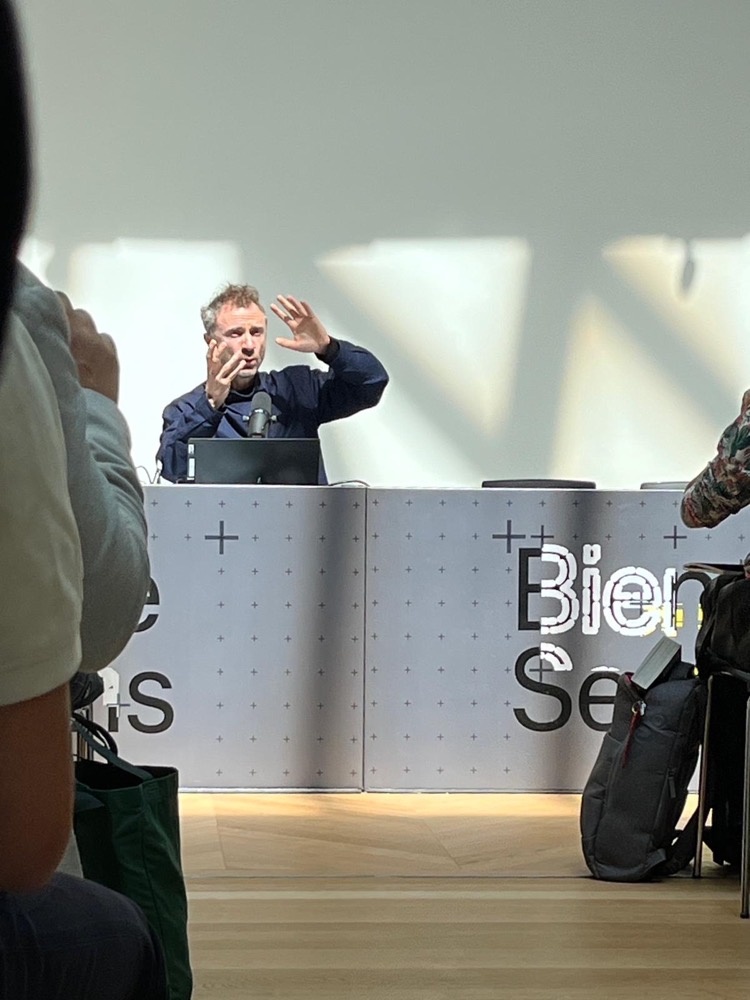
I had the chance to ask a question, so asked how Autodesk tools might support the Humanise effort to create buildings that are less "boring" (a term used a lot in Thomas's book).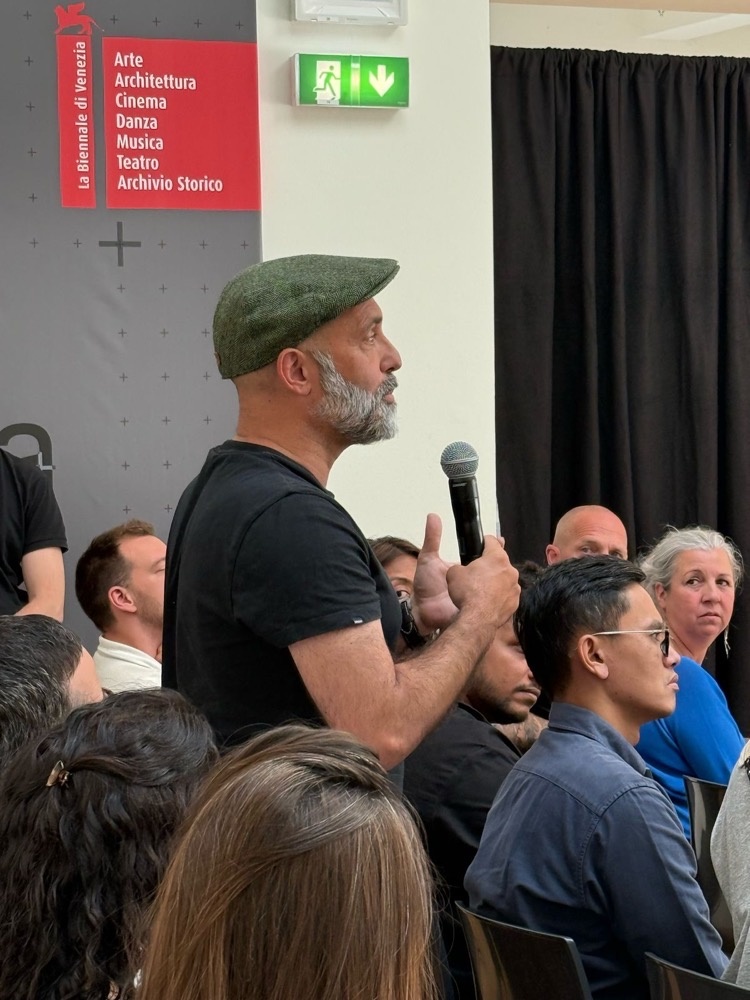
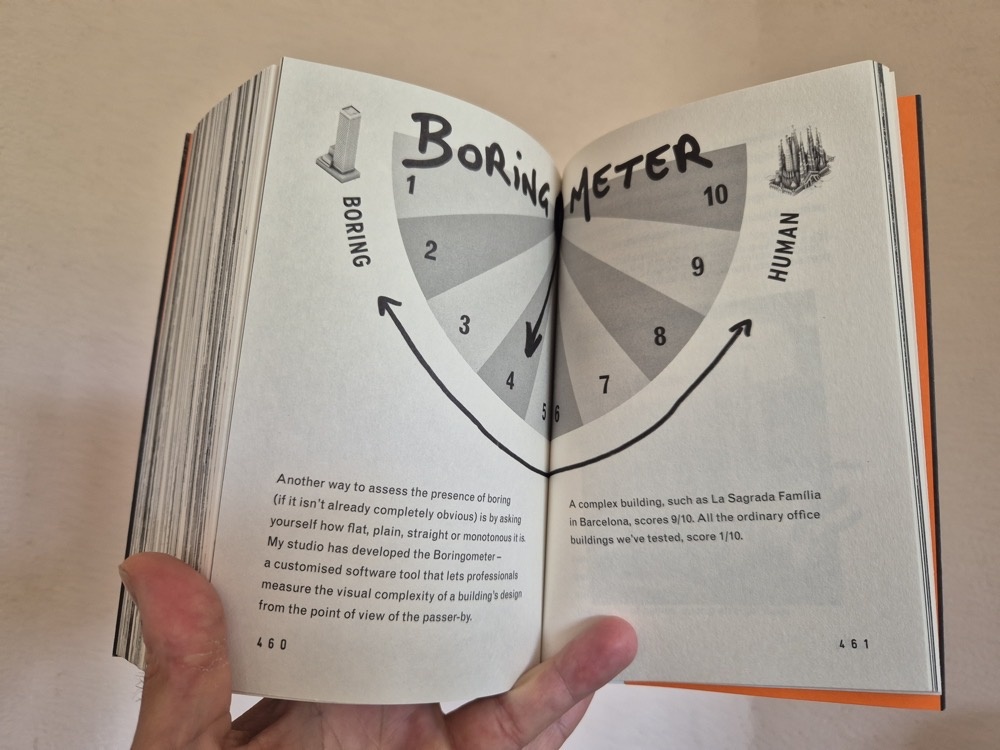
Thomas mentioned the Boringometer, a software tool Heatherwick Studio has developed to help assess how boring a building is likely to be for passers-by.
Matt Bell from Humanise kindly gifted me a hardcopy of Humanise, which meant I could look it up and take a photo. It was - of course - in the last third of the book, which is why I hadn't yet seen it. (Frankly this was a good thing - otherwise I might not have asked the question!)
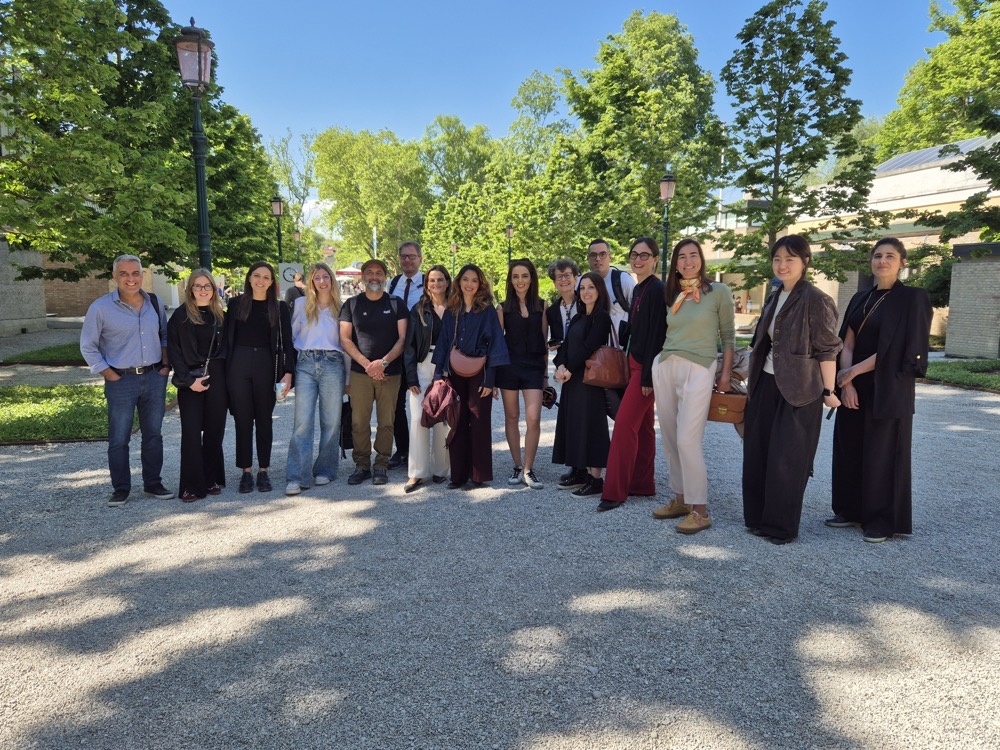
As the session closed we headed outside for a class photo. I really enjoyed the time I spent with this group of people over the last few months: I do hope we manage to stay in touch.
After this there were a few project shareouts from students currently completing their Masters in NAAD (Neuroscience Applied to Architectural Design) from the University of Venice. I had to leave a bit early at 4pm to leave enough time to get to the hotel for my 7:25pm flight.
I'm glad I left so much time: it took me 20 minutes to get back to the hotel to pick up my bag - so far so good - but from there everything went downhill. I tried to navigate through the city on foot while carrying my suitcase, but at some point along the way managed to end up on a path that involved taking a boat. (The recalculated navigation was really not clear this had happened… there aren't many bridges over the Grand Canal, and I ended up a long way away from any. Argh.)
As I was a bit panicked, I rushed to get a ticket for the next boat but somehow ended up with a full-day pass. I then realised I could get a boat directly to the airport, but it was from a different company.
So I ended up taking two separate boats with my day pass to get to the bus that goes to the airport.
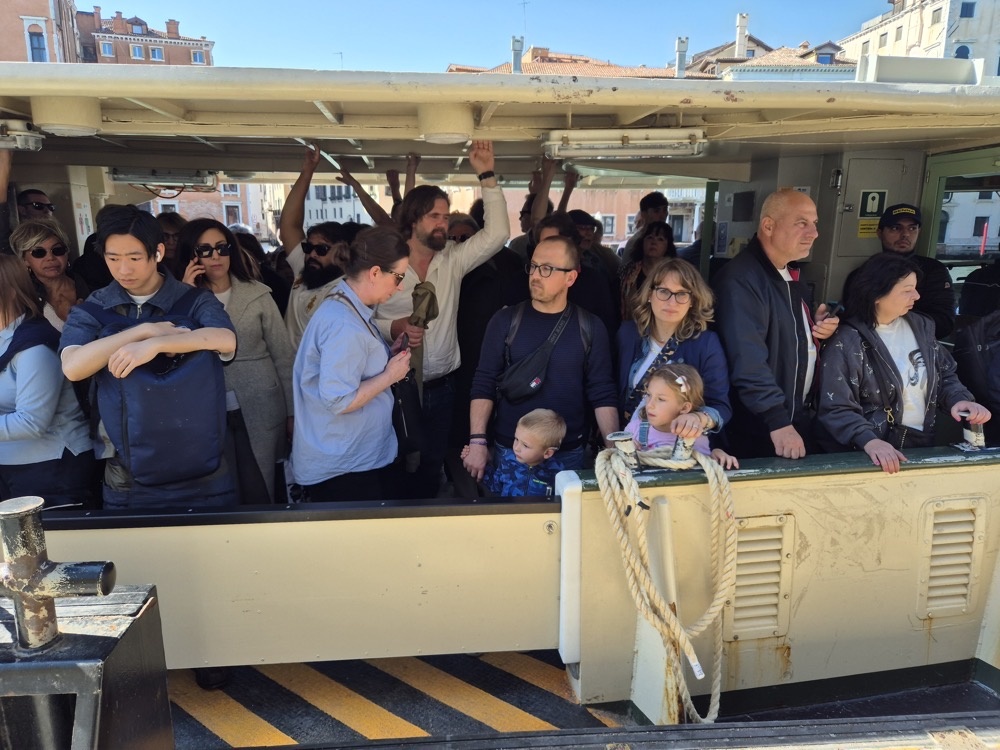
At least the view from my side of the boat was nice.
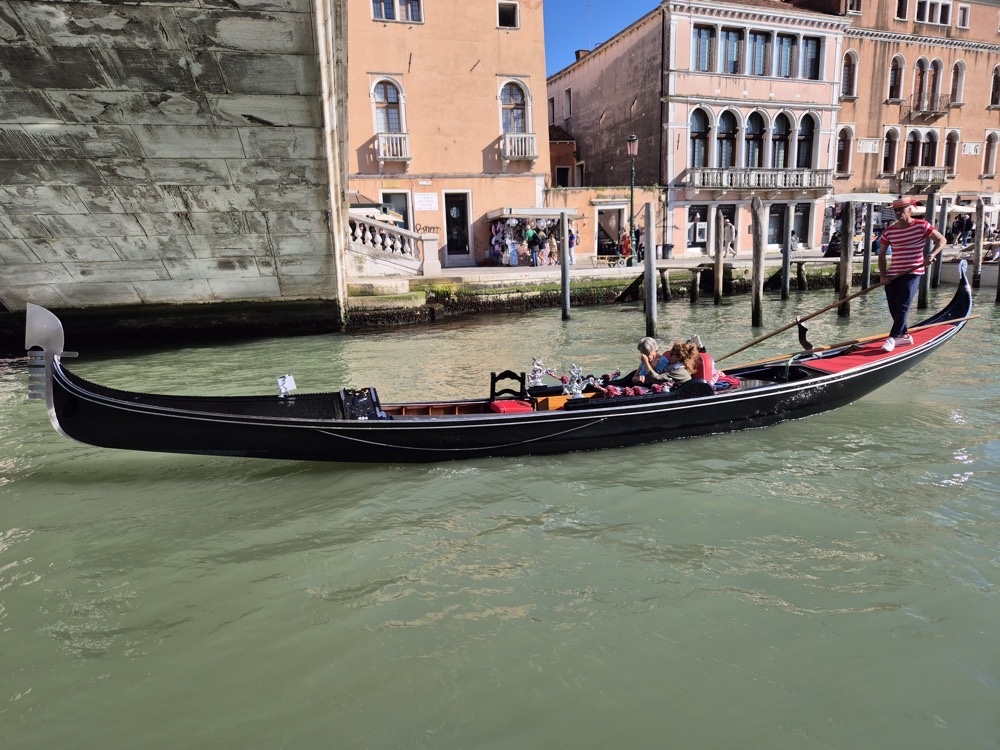
We went under the Constitution Bridge - famously designed by Santiago Calatrava - which is the bridge I wished I'd found a way to walk over from south to north, rather than taking all these boats.
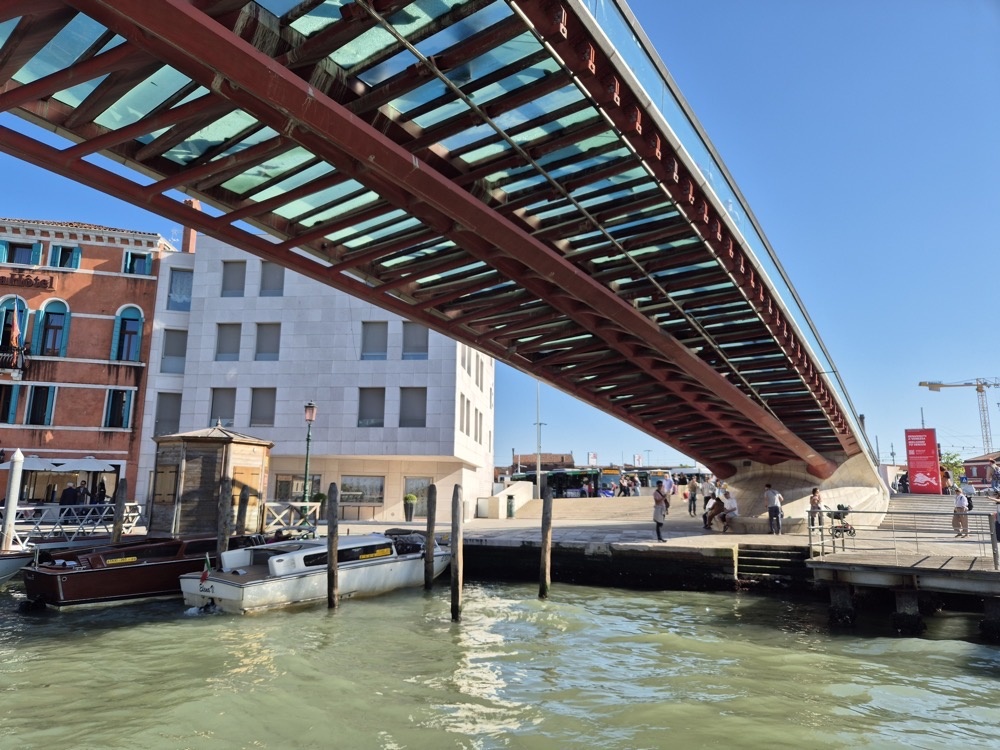
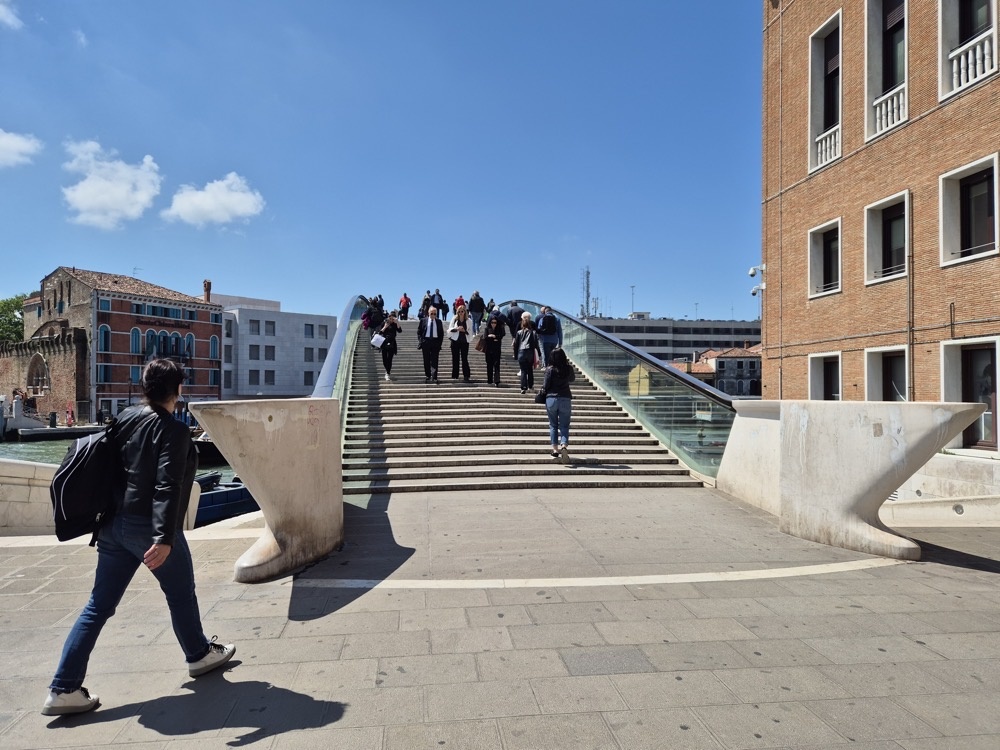
Marco had helped me walk across it from north to south the day before, which is when I took this photo.
Anyway, to cut an already-too-long story short, I had a quick calming beer while waiting for the bus, then finally got to the airport after 2 hours of struggle from the Biennale, and grabbed a couple of slices of pizza before boarding my flight to Zurich.
While getting on to the flight I spotted Matthias Kohler from ETH Zürich, and we chatted briefly before finding our seats. So that was something.
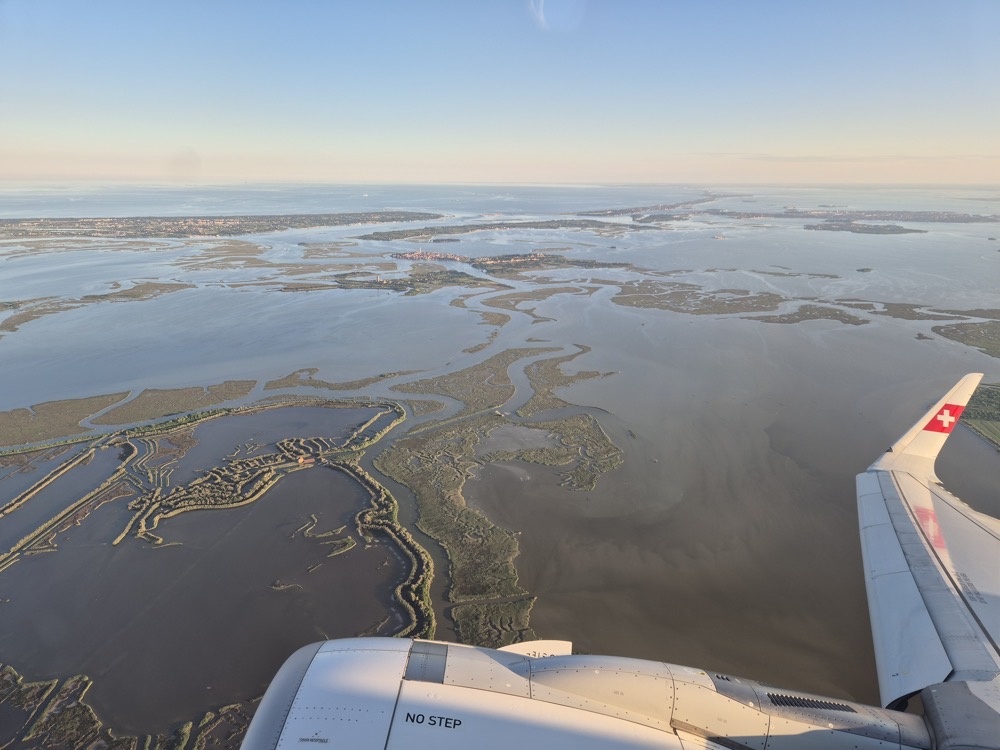
The flight was uneventful, although having a window seat gave me an interesting view over the Venetian Lagoon. It looked like one settlement was recently flooded, but having looked at it on Google Maps this doesn't seem like a new situation.
I got home at 11pm, tired but (by this point) happy. It was a really great experience to visit Venice for the opening of the Biennale! I hope next time I manage to get invited to the "industry preview" days which would allow time to visit before the opening proper.
In the meantime I still have a couple of days on the pass given as part of my course - which I can use anytime before the closing in late November - so I hope I'll be able to make it back before then to visit things a bit more peacefully.
Leave a Reply