This is a topic I can't quite believe I haven't covered at any point during this blog's existence, as I'm such a huge fan of a) the Neuchâtel region and b) vintage computing.
This year marks the 250th anniversary of the creation of the world's first programmable computer, which also happened to be the world's first programmable robot. This might be a bit confusing to some, especially those who associate this concept with Babbage, Turing, etc. The world's first "computer" was a mechanical automaton that translated a "program" into (mechanical) hand-written output. So no, it's not a general-purpose computing device, but it's still way more than a glorified printing press.
The device is an automaton built in the early 1770s in la Chaux-de-Fonds by the Jaquet-Droz family. It's called The Writer, and sits alongside The Musician and The Draughtsman in the Neuchâtel Museum of Art and History. (There's apparently a missing fourth automaton, called The Cave, which may well be sitting in someone's private collection or otherwise gathering dust in an attic… how exciting it would be to discover that!)
These automata apparently inspired the one shown in the movie Hugo (something I've mentioned a couple of times in the past).
Every first Sunday of the month the Jaquet-Droz automata are demonstrated to the public. I went along with my family on Sunday, as it had been a long time since the last time.
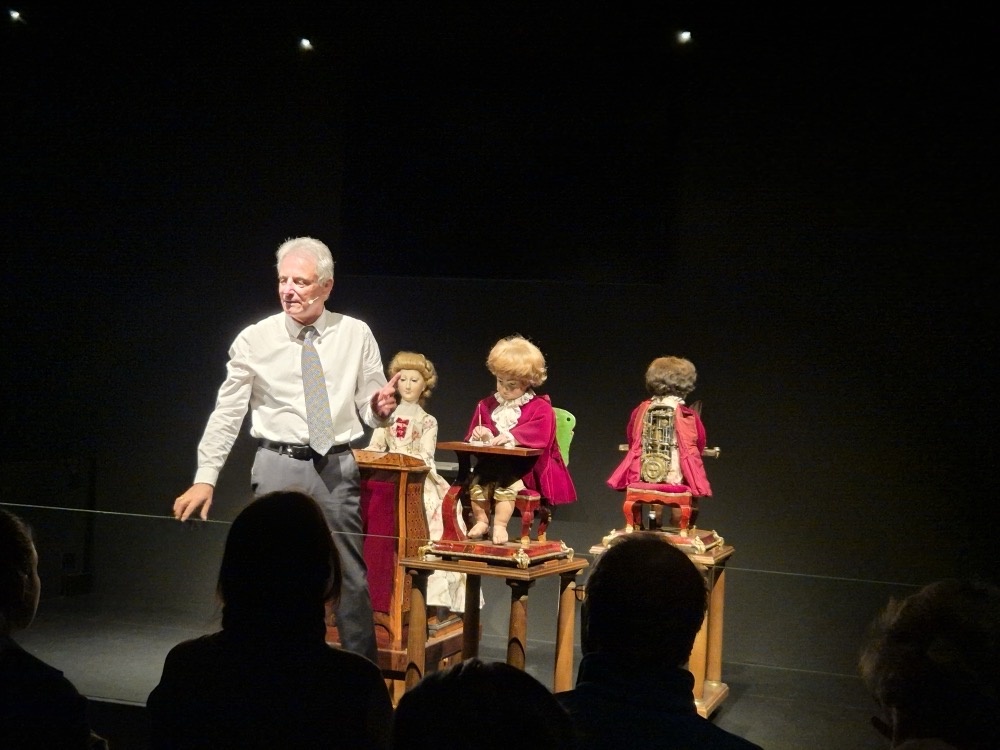
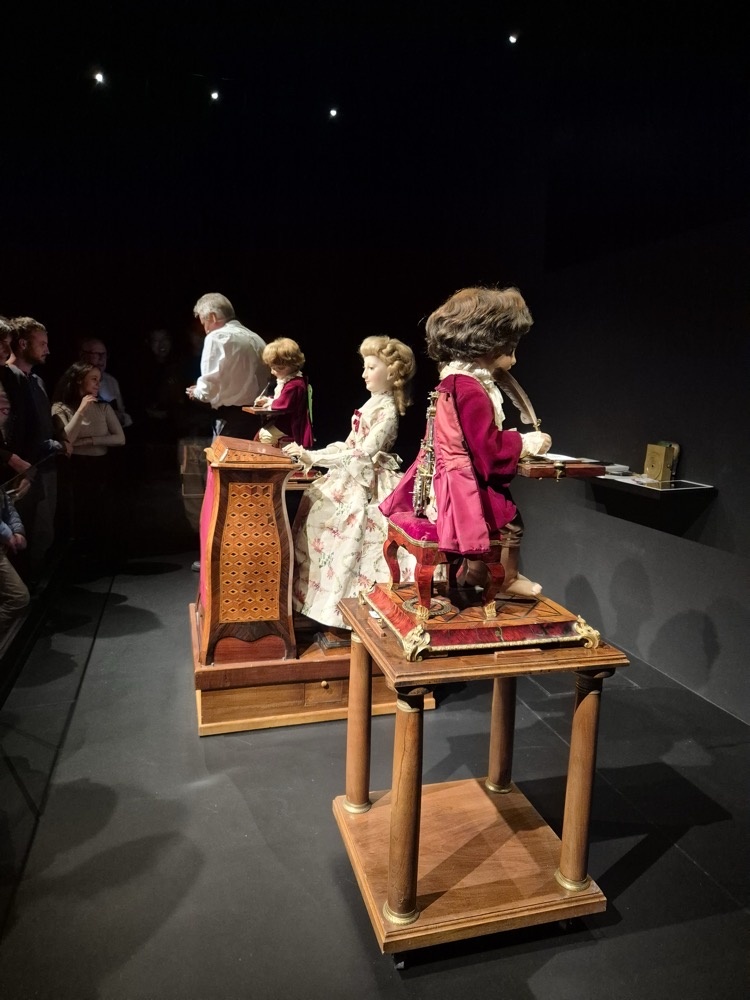
Unfortunately The Writer needs to have a piece replaced to be back in working order, but we did see the other two in action, and it's still impressive to see its internal complexity.
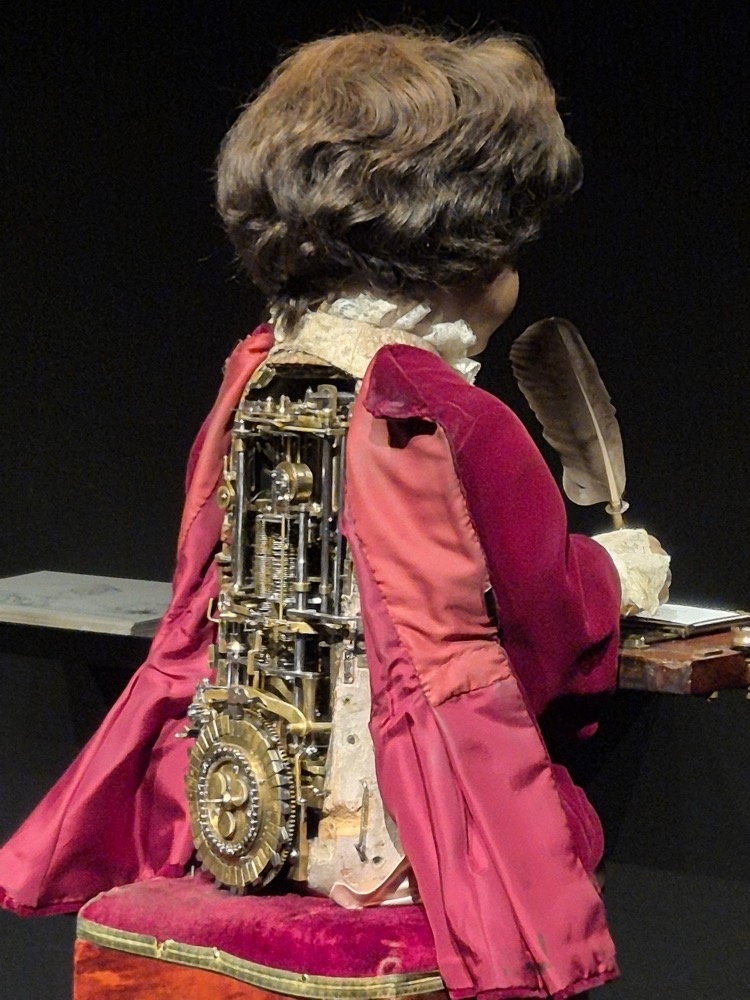
There are a few videos on this topic worth watching, to help understand the genius behind these incredible pieces.
The first is the one shown when you visit the museum, and captures views of the internals of each of the automata from a (recent?) cleaning they received. The Writer's segment is at the end, starting at the 12m30s mark.
The next is a BBC show called Mechanical Marvels - Clockwork Dreams. I could only find this posting of the full episode, with the relevant segment starting at 28m30s.
There is another posting of just the segment on The Writer, in case the above one disappears by the time you're reading this.
The last video I suggest watching is this one showing the history of the Jaquet Droz company.
In fact the automata - despite being truly impressive in their own right - were primarily used as a business development tool: they allowed access to new markets (crossing international borders "easily", albeit on horseback and over a period of months) and attracted a clientele who might then buy Jaquet-Droz watches.
It's astounding to think that these wonderful objects are still in working order after 250 years. The Neuchâtel region is still known for its precision engineering - with watch-making and micro-electronics remaining important specialties of local companies and academic institutions - which is in an important sense the other real legacy of these early innovators.
Leave a Reply