Retro computing
-
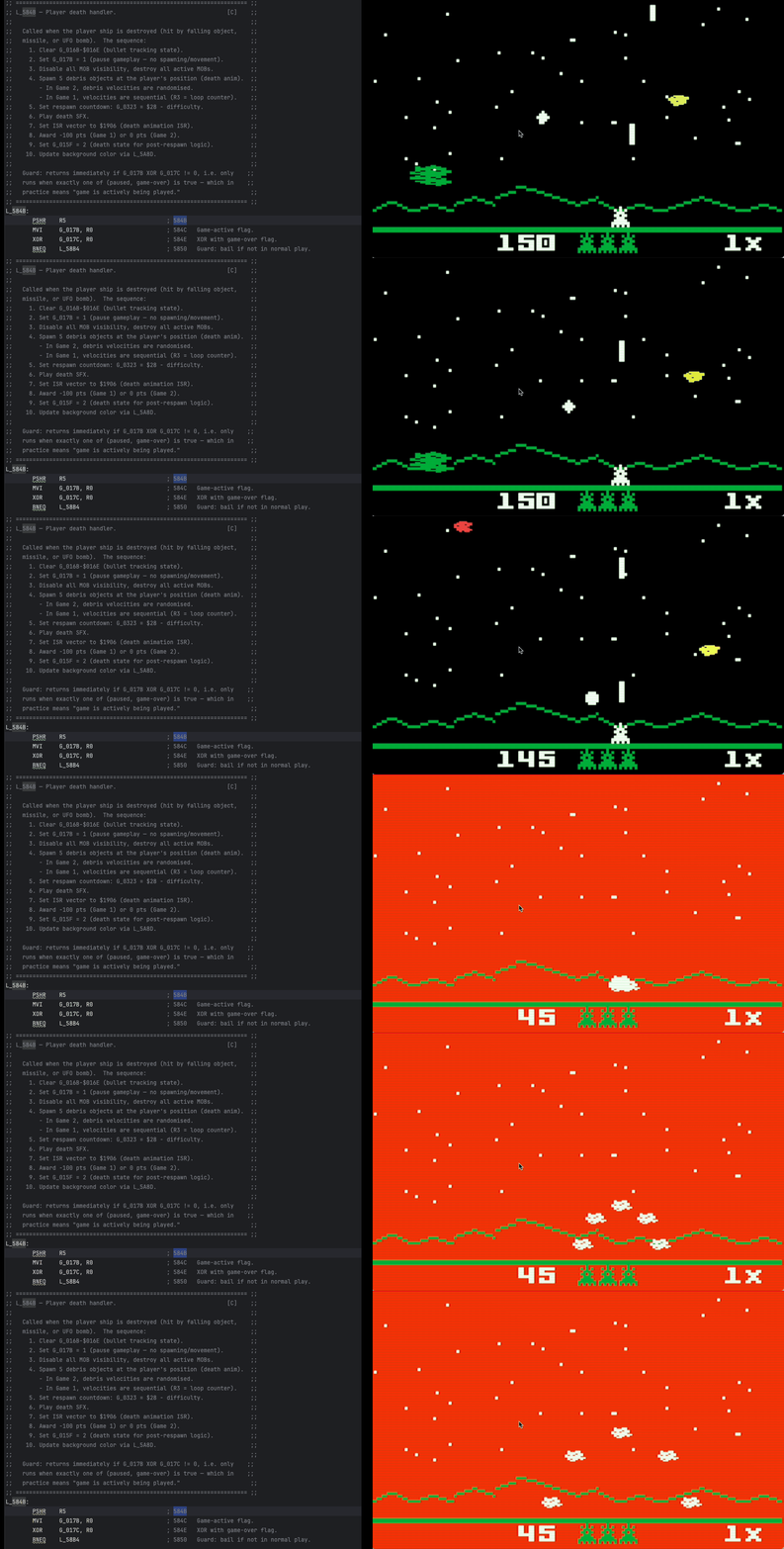
Here's another fantastic guest post from Patrick Nadeau. Enjoy! This is Part 3 of a four-part series on working with a coding agent for the first time. In Part 1, I described how I used a coding agent to build a retro game emulator in 36 hours. Hardware emulation is notoriously unforgiving, and in Part 2, I looked at what made that feat possible: a test oracle that collapsed the AI's degrees of freedom, allowing it to generate code freely, while testing its output against a reference implementation. In this installment, I use a similar approach along a different dimension.…
-
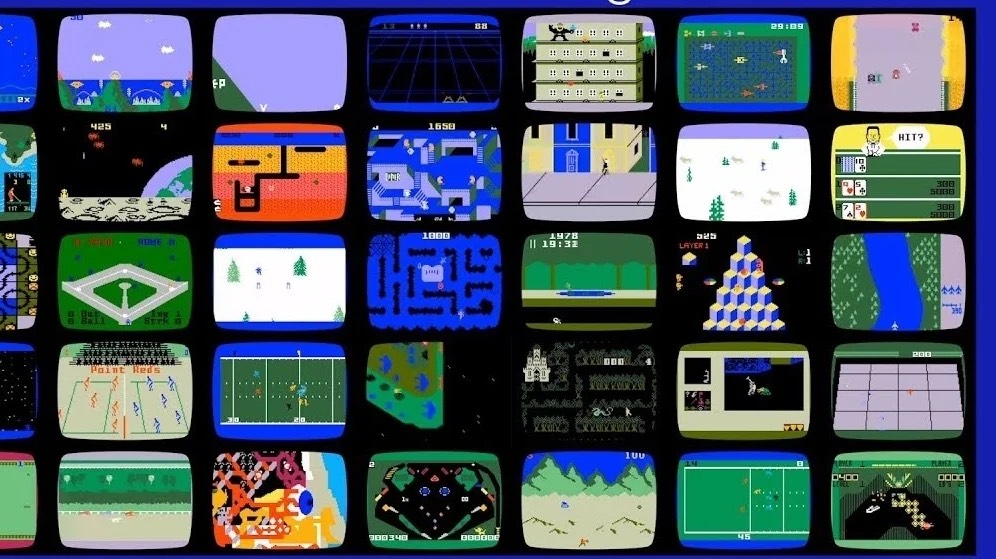
We have another guest post today from Patrick Nadeau. Image © Eurogamer.net In my last entry, I wrote about resisting, then finally trying agentic coding for the first time. If agentic coding is the new way, then the new way is going to be fast. I bootstrapped a working emulator — three simulated microchips and a bus, timing included — in 36 hours. But I have to admit: I didn't write the emulator alone. We wrote it. And there was also a hidden third character in that story: the test oracle. The speed enabled by coding agents plays out in…
-

This is the first part of a guest series by Patrick Nadeau, a member of the Research Engineering team based in Canada. I mentioned it in this recent post. Patrick is a great writer and a very experienced developer who gives a personal, nuanced perspective on his explorations of using agentic coding tools to solve a really interesting programming challenge. When I was a kid, there were only two computing devices in the house: the Intellivision game console and my Apple II computer. Decades later, when I wrote code with a coding agent for the first time, those were the…
-

This is a topic I can't quite believe I haven't covered at any point during this blog's existence, as I'm such a huge fan of a) the Neuchâtel region and b) vintage computing. This year marks the 250th anniversary of the creation of the world's first programmable computer, which also happened to be the world's first programmable robot. This might be a bit confusing to some, especially those who associate this concept with Babbage, Turing, etc. The world's first "computer" was a mechanical automaton that translated a "program" into (mechanical) hand-written output. So no, it's not a general-purpose computing device,…
-
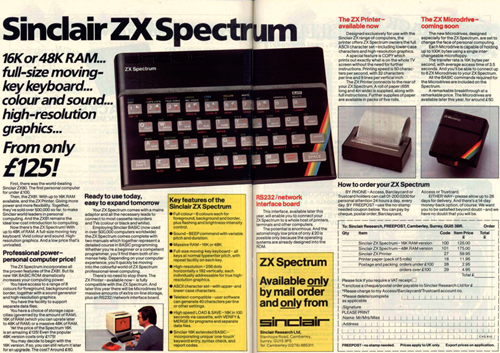
On Saturday the ZX Spectrum turned 40. Does that make anyone else feel old? When first released on April 23rd, 1982, Sinclair Research's ZX Spectrum had 16K of RAM, a horrible rubber keyboard and some very quirky colour graphics. In fairness, though, it was a quantum leap (another Sinclair reference for the astute observer) beyond the ZX81, which had – unexpanded – just 1K of RAM, a truly grotesque membrane keyboard and low-res black and white graphics. Both of these devices changed the world: the Spectrum went on to become the UK's best-selling microcomputer, launching an industry and many, many…
-
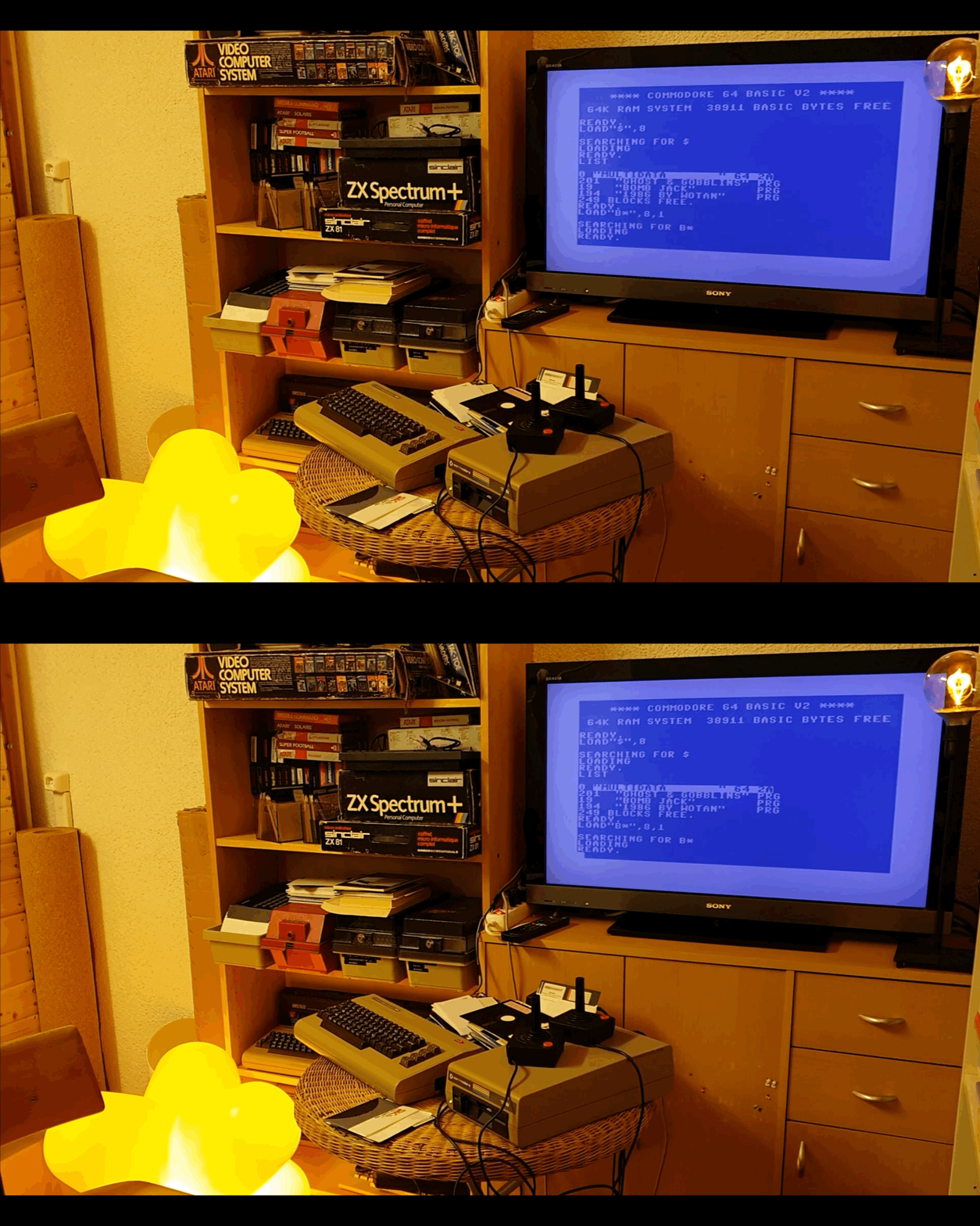
As I mentioned last week, Autodesk turned 40 yesterday. In anticipation of this milestone, Shaan Hurley and the Autodesk Community team organised a fun online get-together on Friday for people to join and get nostalgic about the good old days. Shaan asked me to prepare something Floppy Friday-related, so I went and created a Floppy Friday Zoom background that I used during the event. Here's a GIF version, in case you're interested. At its peak there were around 70 people in the call. It was so nice to reconnect with people after such a long time. It would have been…
-
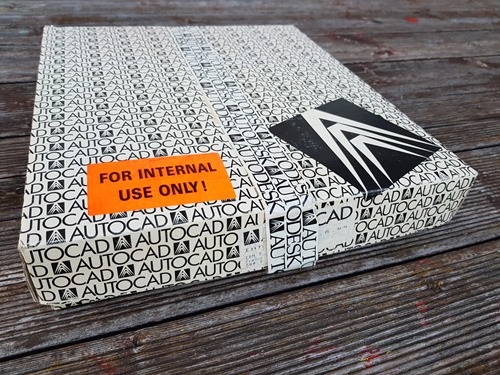
As many of you will have heard on social media, Autodesk turns 40 this year. More specifically this coming Monday, January 30th, is the 40th anniversary of the original organizational meeting held at John Walker's former home in Mill Valley, California. (You can find details in this recent post from John.) The anniversary of Autodesk's official incorporation and initial stock distribution is on April 26th, but Autodesk as an informal entity already existed from the end of January. Although the company wasn't called Autodesk at that point, as that wasn't fixed until some time in April… among the other candidate…
-

Well, this is it. Floppy Fridays – at least for now – have come to an end. For some time I've been saying I'd stop at episode 64 – as the main focus of the series is the awesome Commodore 64 – and this episode has come around, finally. And, despite me following basically my usual random approach for selecting games for this episode, it was a really good way to end the series, with a wide range of very interesting games. We kicked off with the classic Turrican II - The Final Fight – a game we'd played the…
-

In this week's episode – the first of 2022 – we take a look at five Commodore 64 games, although we only get to play four of them. We start with Bomb Jack, then (once again!) fail to load Test Drive, before playing Ace, Pitstop II and wrap things up with another Hewson Consultants classic, Eliminator. Here's the cover art from this week's selection: Now for a couple of reviews from Zzap! 64 magazine. Here's one for Bomb Jack from issue 14: And here's a much more positive one for Pitstop II from issue 2: See you next…
-

So here it is, the last episode of 2021. The first game we attempted to play – Super Huey – in many ways set the scene for the rest of the episode. Here's a quote about the game from one of its reviews, as per its Wikipedia entry: "For those desiring an 8-bit helicopter flight simulator, Super Huey and its sequels fill the bill. For those desiring excitement as well, it would pay dividends to look elsewhere." Ouch. After not even being able to take off, we moved on to Crystal Fever (which I failed to find a level disk…