This post contains a "call to action" for the community and presents an opportunity for people to start using Generative Design in the context of a global pandemic. Please do read (or skip) through to the end!
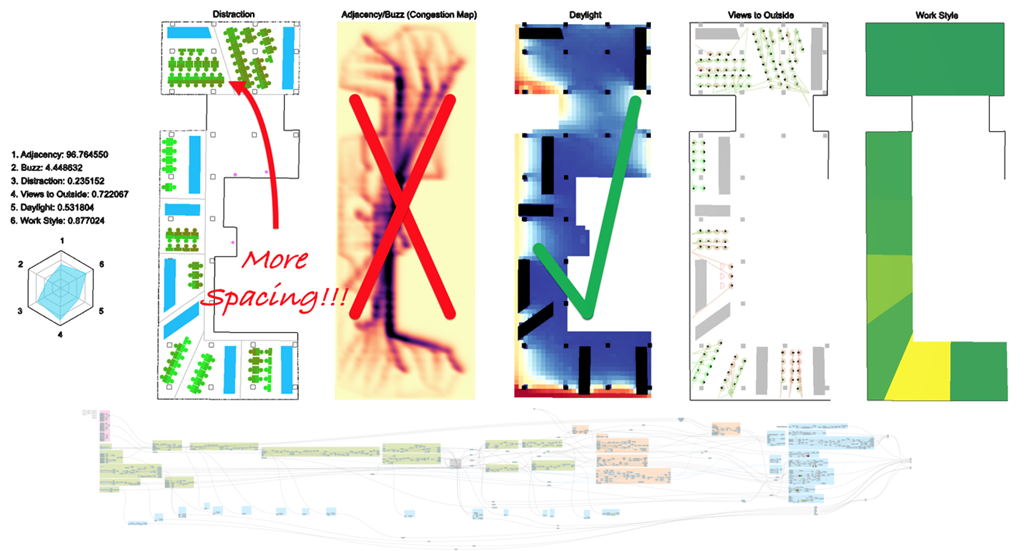
I've been really encouraged by the energy people have focused on helping others since the beginning of the COVID-19 pandemic. Just inside Autodesk there have been a number of COVID-19-related projects proposed and started, and all four of our Technology Centers are cranking out personal protective equipment (PPE) for healthcare workers. A special shout-out should go to our former Maker-in-Chief, Carl Bass, who is at the forefront of making and donating PPE in the Bay Area (their crowdfunding has nearly reached their goal of $60K and has been complemented by donations of baseball caps by the SF Giants and the Golden State Warriors). But all this is just the tip of the iceberg: lots of companies and individuals are working to improve the lives of people being impacted by the crisis.
While much of the near-term effort is around solving the PPE and ventilator shortage problems – which are issues with manufacturing and supply chains – people are also thinking about how to improve the design process for the built environment.
Clearly the near-term problem in the AEC space is around the design of emergency medical facilities, whether tent clinics, conversions of existing facilities – such as BDP Architects helping transform the future AU London venue, the ExCel, into the NHS Nightingale Hospital – or even whole new hospitals, such as the ones we saw constructed in China.
Slightly longer term I'd expect the focus to shift towards the redesign of transportation hubs and offices for the post-COVID world.
My old friend Shaan Hurley reached out a few days ago. In his new role in Autodesk Consulting, Shaan has been in contact with various customers who are talking about their need to redesign spaces post-COVID. Shaan was curious about the applicability of Generative Design to this problem, as many of the companies he's talking to are currently using very manual approaches (such as drawing circular perimeters around desks to map out potential infection zones).
My thought was that the process used in Project Discover (the redesign of the Autodesk office in Toronto, performed by my colleagues in The Living), could certainly be adapted to this problem. And the good news is that during Project Rediscover we published a Dynamo script that shows exactly how this was done. To understand more about this process – and the graph itself – I suggest checking out this class from AU 2019 in Las Vegas:
The MaRS graph (as we call it) could be a really helpful starting place for redesigning offices post-COVID.
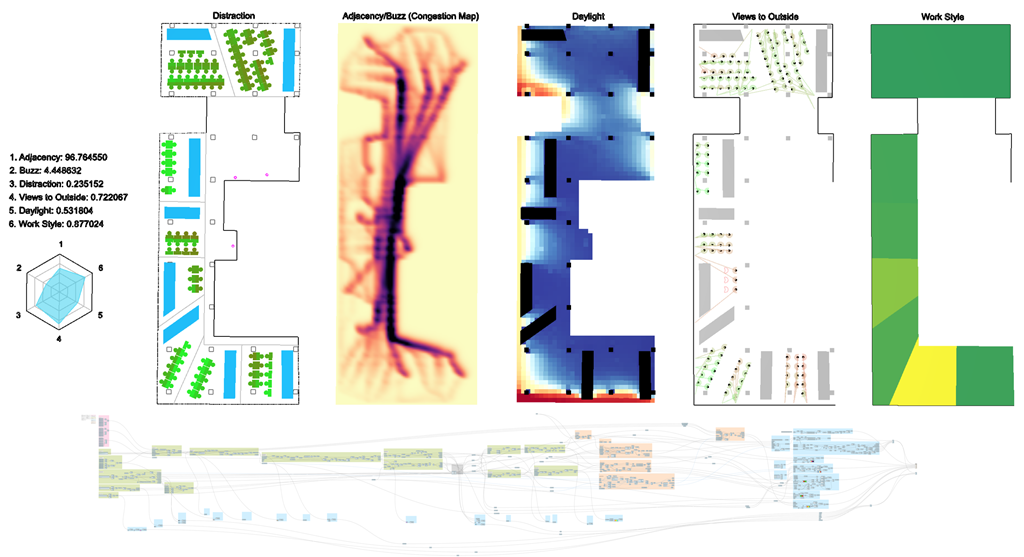
Here are the goals that drove the original generative process:
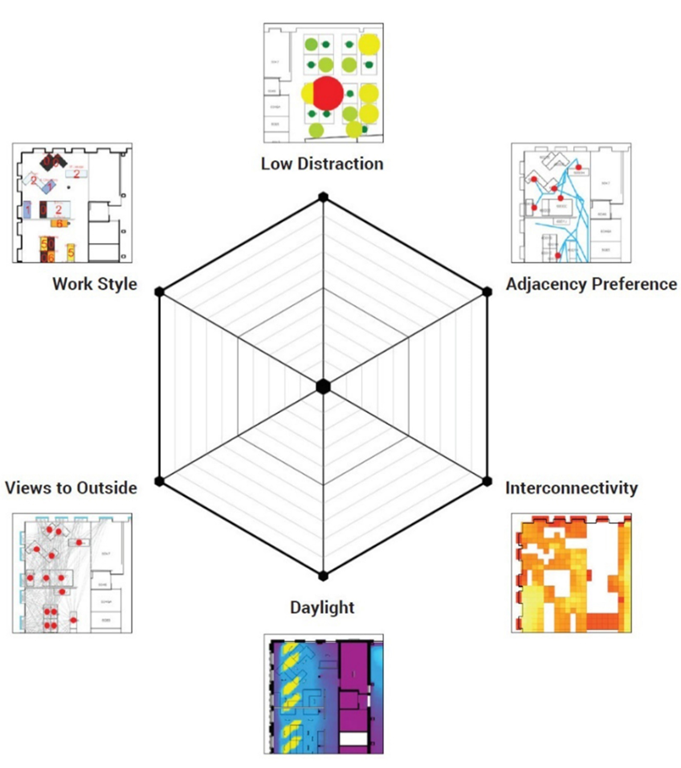
It's interesting to think that the "Buzz" (shown here as Interconnectivity) metric – intended to encourage serendipitous encounters as people use common routes through the office – may want to be minimised (rather than maximised) in our post-COVID future.
When thinking about future design considerations, I found this article (and its accompanying research paper) to be of great relevance. Here's a summary video that was referenced in the paper, although its focus is a little more residential:
Thinking about the changes that could be made to the MaRS graph to support the needs of future office environments, some may actually be relatively simple to implement:
- Increase minimum desk spacing
- Focus on access to amenities in the Adjacency goal rather than other desks
- To help with the need for regular handwashing
- Emphasize Daylight as a goal
- This is known to be an effective killer of the virus
- Create a metric focused on infection risk
- Perhaps related to the existing Distraction metric?
I could easily expect additional aspects being useful, too, that would perhaps take more work to implement:
- Design for circular people flow, to reduce people crossing paths
- Consider ventilation *
- Design for hands-free/no-touch access through doors, etc.
- This is probably not really a GD thing, but hey
* For ventilation, I don't think it's feasible to run CFD within the context of the MaRS graph, but it might be beneficial to consider the building's HVAC system – and the flow of air through the space – when placing desks. CFD – run in advance of the GD phase – might help identify risk areas, for instance, which could then be considered/deprioritised by the desk placement algorithm or infection risk metric.
An additional
factor that relates to ventilation is the ideal of maintaining humidity at 40-60%. Again, it's not really something that would be part of the GD process, as such, but could be monitored and controlled (I'm thinking about Dasher, even if the tool is not focused on controlling building systems).
I haven't yet found the time to start making any of these changes to the MaRS graph: I was hoping to get started this week, but other things came up. I did think it's worth sharing these thoughts, though, and possibly starting some kind of discussion. What additions could you imagine being made to the process, whether by modifying the graph's geometry system or its goals? Do you have thoughts on how they might be implemented (or are interested in working on these yourself)?
If you're interested in contributing to this discussion – or the implementation work – then please reach out (post a comment here or on Twitter or LinkedIn). The base MaRS graph is available today for people to hack apart and extend, and it would be great to have people contribute their expertise to this effort. And with Generative Design (the former Project Refinery) now available inside Revit 2021, the tools to implement and extend this workflow are now widely available. Maybe a good topic for a virtual hackathon!
Thanks to Adam Arnold and Rhys Goldstein for providing links that appeared in this post.


Leave a Reply