Generative design
-
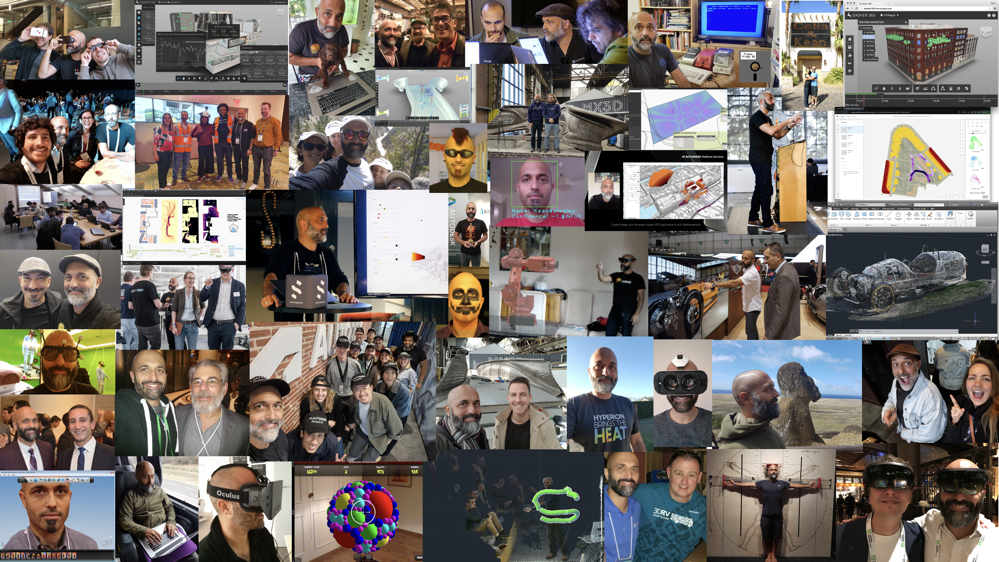
During my recent travels I managed to be away for a couple of anniversaries. My youngest child turned 17, and this blog turned 20. A definite "how did that happen?" on both fronts. So yes, on June 19th, 2006, I posted for the first time to "Through the Interface". It was actually an experiment that came out of a brainstorming the Autodesk Developer Network team had gone through some weeks earlier, where one of the ideas that was proposed (OK yes, it was by me) was to start a developer-centric Autodesk blog. By this time Shaan Hurley had been blogging…
-
Last Monday I left my son in Baltimore and headed back to Dulles for a short flight to Toronto to attend internal meetings with our research team. I didn't feel like fighting public transport for 3+ hours to get from Baltimore to Dulles, so took the easy (and much more relaxing) path of taking an Uber. I was there in less than 90 minutes - a not insignificant time saving. I really wish it was more convenient to take public transport here. The flight to Pearson was short - a little over an hour in the air - and as…
-

[My apologies for the click-baity title. I do actually have a list of 5 cool project ideas, if you scroll down the post. So it's not completely dishonest, at least.] In the last post I mentioned a few classes you can sign up for (and that I'm directly or indirectly involved in) from the Tuesday to Thursday of the AU2024 week (October 15th-17th) in San Diego. I now have something to recommend for the Monday of that week, too! In the past we've often had pre-events at AU2024: I wasn't sure whether there would be one this year or not,…
-
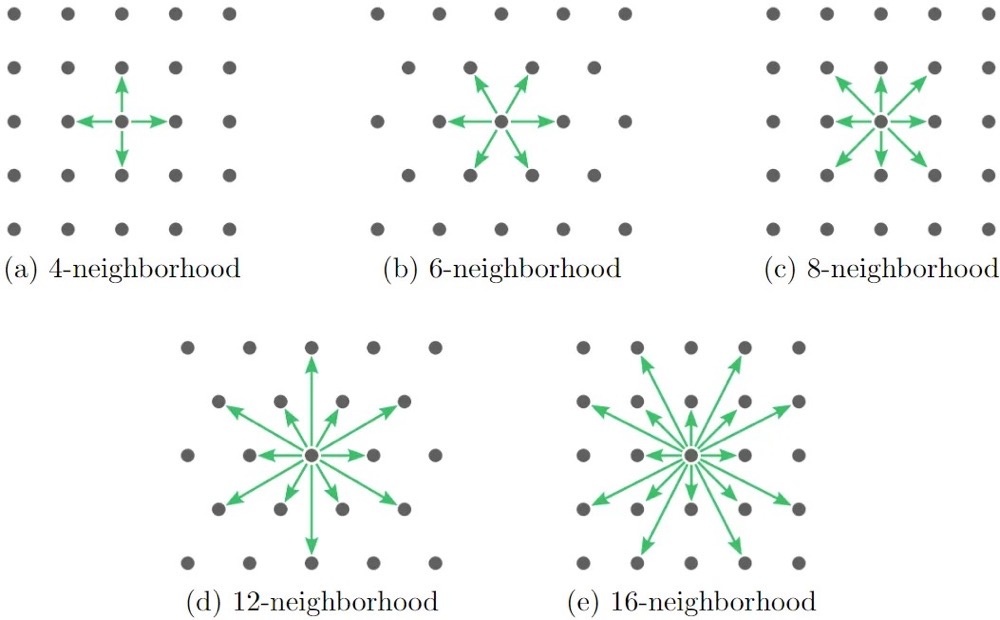
Rhys Goldstein has had one more excellent article published in Towards Data Science. This is the third - and he says final, I hope he's wrong - article in the series. Here they are, along with my accompanying posts: A Short and Direct Walk with Pascal's Triangle Explaining how path counting helps simulate natural navigation A Quick and Clear Look at Grid-Based Visibility Visibility in Space Analysis: an explainer A Sharp and Solid Outline of 3D Grid Neighborhoods This post. 🙂 In this latest installment, Rhys explores one particular aspect of what it means to go from a 2D pathfinding…
-
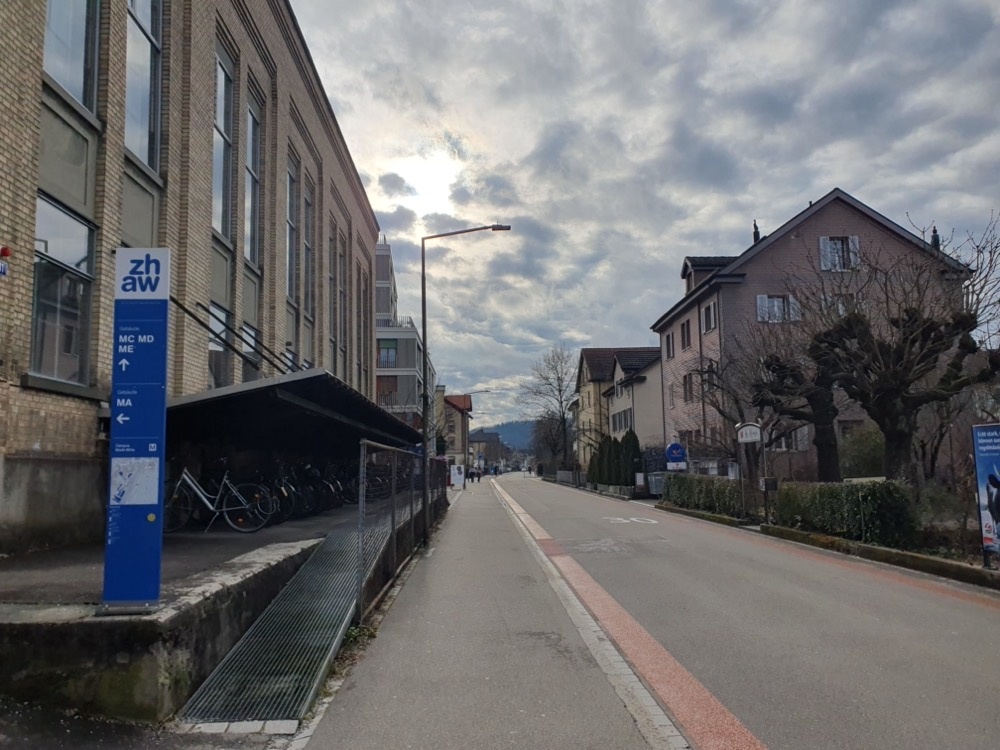
As I mentioned last week, on Friday I headed across to this year's AEC Hackathon Zurich Edition in the city of Winterthur, about 2 hours from my home. The event was held in one of the buildings on the ZHAW campus. The space was fantastic: an old factory that was once used to maintain trains (it's just next to the train tracks going through Winterthur). I was only able to come for the first evening of the weekend's event, as I had a prior personal commitment during the rest of the weekend. Friday had a number of talks focused on…
-

After yesterday's post pointing folks to the material for my first class at AU 2023, here's the material for the second one, which I co-presented with Pete Storey. I only have this photo from outside the classroom for this session: But I did get to hang out with Pete before we flew back to our respective European ports on the Thursday after AU was over. Here's the summary without audio: Here's the material posted for the class on the AU website: Class recording Presentation slides Handout
-
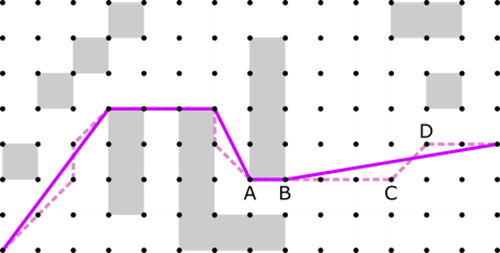
I've posted in the past about work done by Autodesk Research – in particular by Rhys Goldstein – to implement a more natural-seeming (but still direct and efficient) pathfinding algorithm. This is the algorithm at the heart of our Space Analysis package, and you can find details on how it works in these previous posts: A paper on our space analysis algorithm in the Journal of Artificial Intelligence Research Explaining how path counting helps simulate natural navigation Visibility in space analysis: an explainer The above posts reference these articles/papers that have been published elsewhere: Path Counting for Grid-Based Navigation A…
-
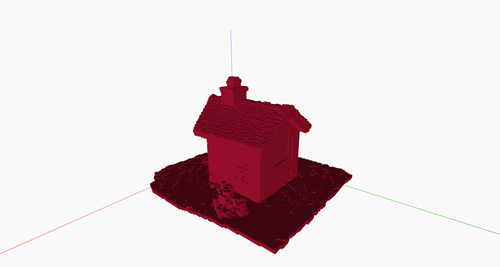
Last week we saw a Dynamo graph that imports a point cloud from an ASCII-based format to specify the initial locations for a fun flocking simulation. This week we're going to look at a graph that uses a similar import technique but rather creates a voxel model based on the point cloud: The main difference from the previous import code is that rather than returning a list of Point objects, we've tweaked the code to return 9 doubles for each point that are taken as triangle definitions. The little secret is that the triangle's vertices are coincident: we use the…
-

For the last few years I've been on the scientific committee for a conference called CAAD Futures. My involvement began with the 2021 edition of the conference: I reviewed several papers submitted to the conference and also ended up being invited to talk during one of the conference's workshops (it was called Beyond generative Computer Aided-Architectural/Urban Design (CAAD/CAUD) and was hosted by Todor Stojanovski). That last edition was held in Los Angeles – and the workshop hosted in Stockholm – but I only participated remotely. This year's edition is being held in Europe, at TU Delft in the Netherlands, from…
-
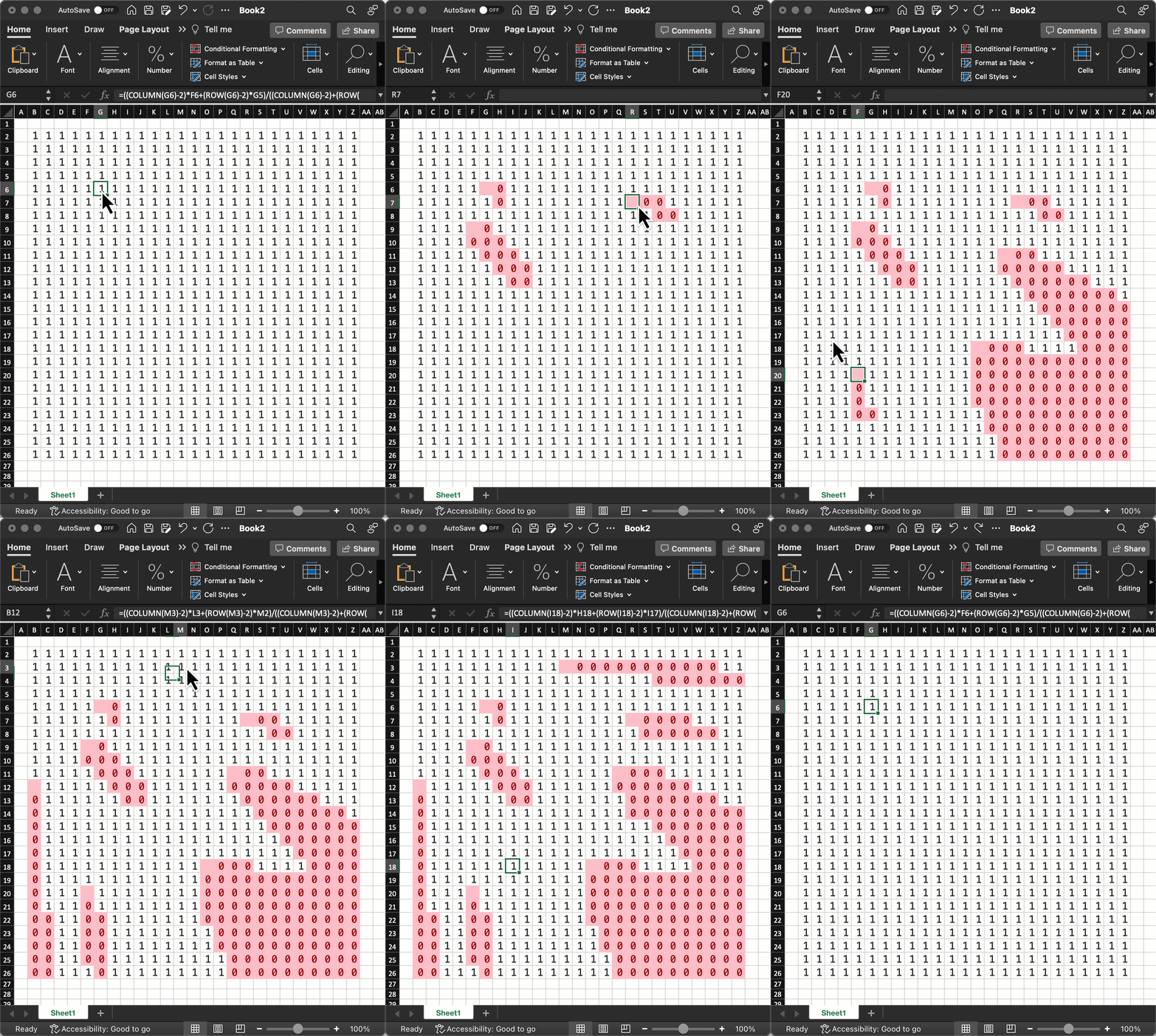
Our resident spatial-analyst-in-chief, Rhys Goldstein, has gone and done it again. After his very well-received Medium post explaining grid-based pathfinding was published in Towards Data Science, Rhys has now had a follow-up post published that explains our work on visibility. And it's fantastic! Assessing visibility and pathfinding in 2D and 3D spaces are really cornerstones of our work to assess how occupant-centric prospective building designs are likely to be. This is a critical capability for us in our day-to-day work, but it's also very interesting from an algorithmic perspective and Rhys's article helps create awareness of these techniques with people…