When I was in Prague recently I spent some time with Alex Vinckier and Kris Riemslagh from hsbcad, an ADN member and provider of software for the offsite construction industry. I've corresponded and spoken with Alex and Kris a number of times during my time at Autodesk, but this was my first opportunity to meet them in person. They suggested I coordinate with another member of the hsbcad team – Alex's twin brother, Karel – to visit to one of their best customers, who happens to be based just 40km from my home.
So it was that Karel and I met (again, for the first time) yesterday afternoon at the factory of JPF-DUCRET in Orges. We were welcomed by Jean-Marc Ducret, who took the time to present the company and then give us an extended tour of the facility.
JPF-DUCRET have been using AutoCAD in conjunction with hsbCAD to build some incredible wooden structures such as the Refuge du Goûter on Mont Blanc. Their latest project is to replace the wood for the Globe of Science and Innovation at CERN.
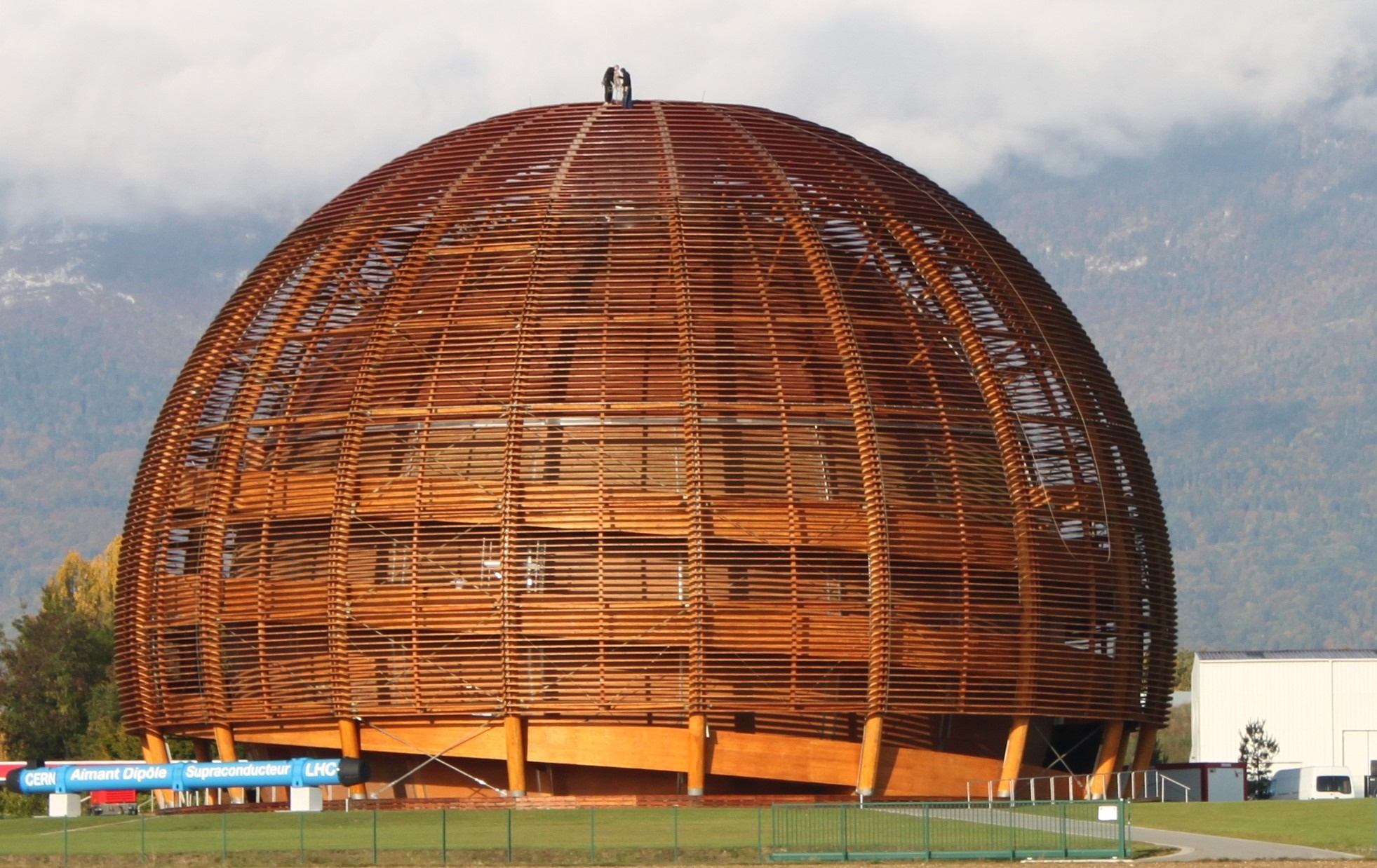
photo credit: Renovations proceeding at the Globe via photopin (license)
I visited the Globe when I attended TEDxCERN, last year. Interestingly the Globe – which is apparently one of the most-visited tourist destinations in Switzerland – started its life at Expo.02 in Neuchâtel as the "Palais de l'Equilibre". Ducret-Orges was involved in the original manufacture of the Globe.
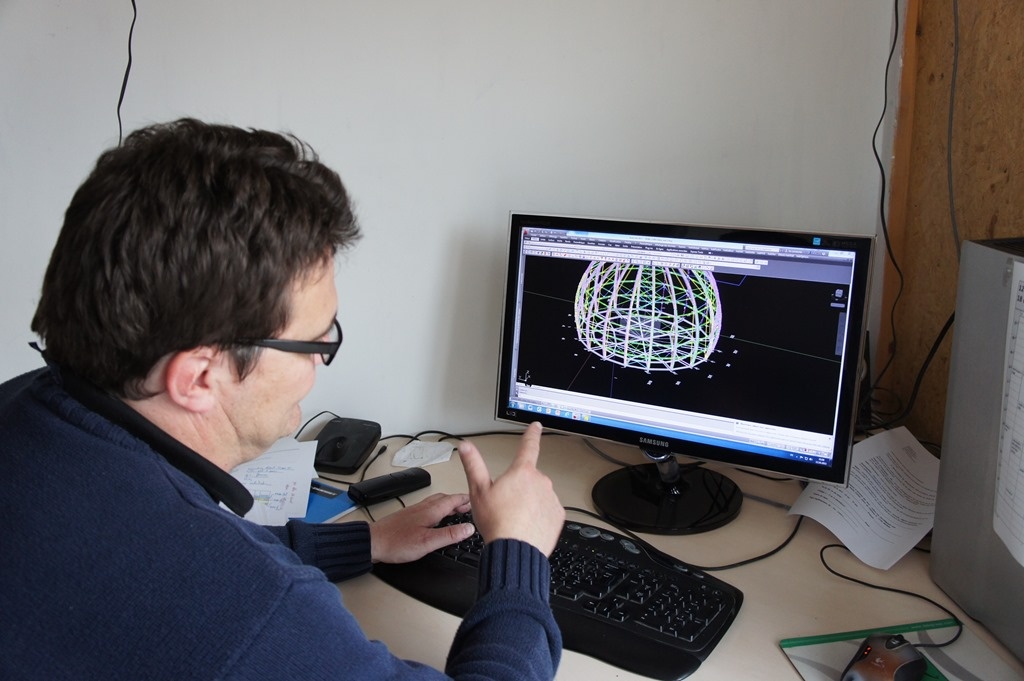
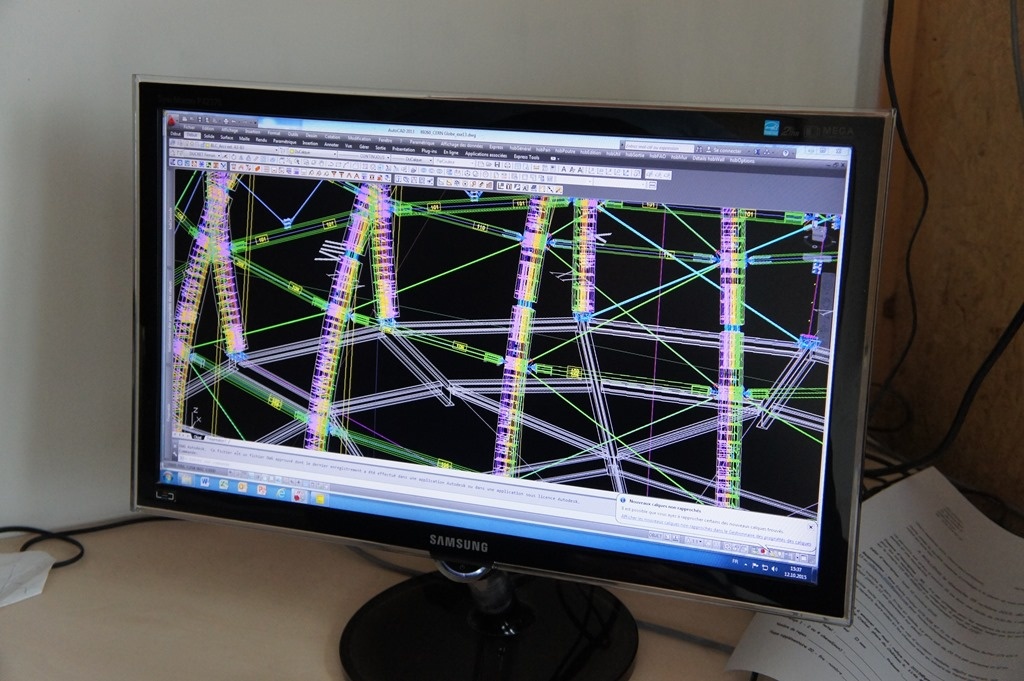
Jean-Marc showed us the model of the Globe inside AutoCAD:
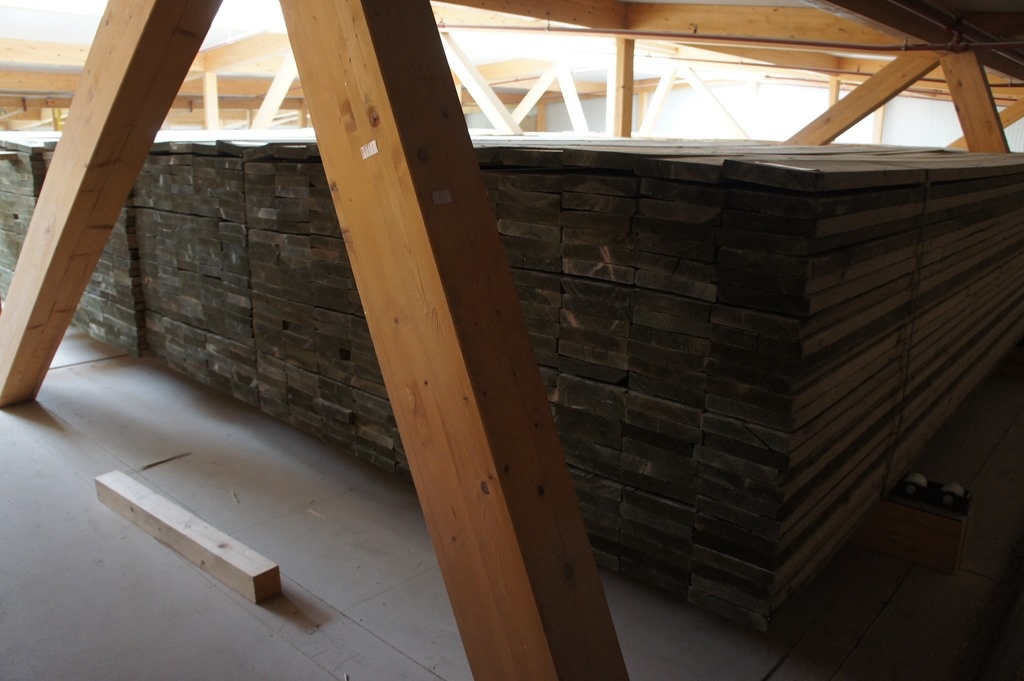
Touring the factory, we saw the progression from raw materials to finished product. JPF-DUCRET's use of locally sourced wood allows them to maintain a relatively small amount of stock – this is enough for about 4 days of production, for instance:
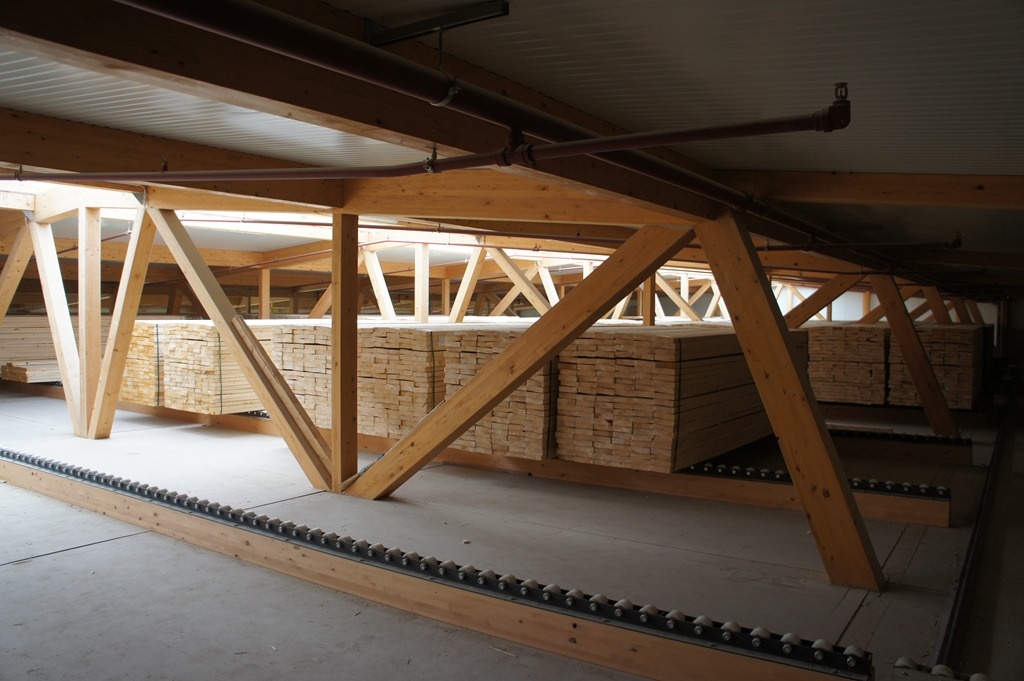
The wood used for the Globe is actually a bit different; it's been impregnated, giving it a greenish appearance.
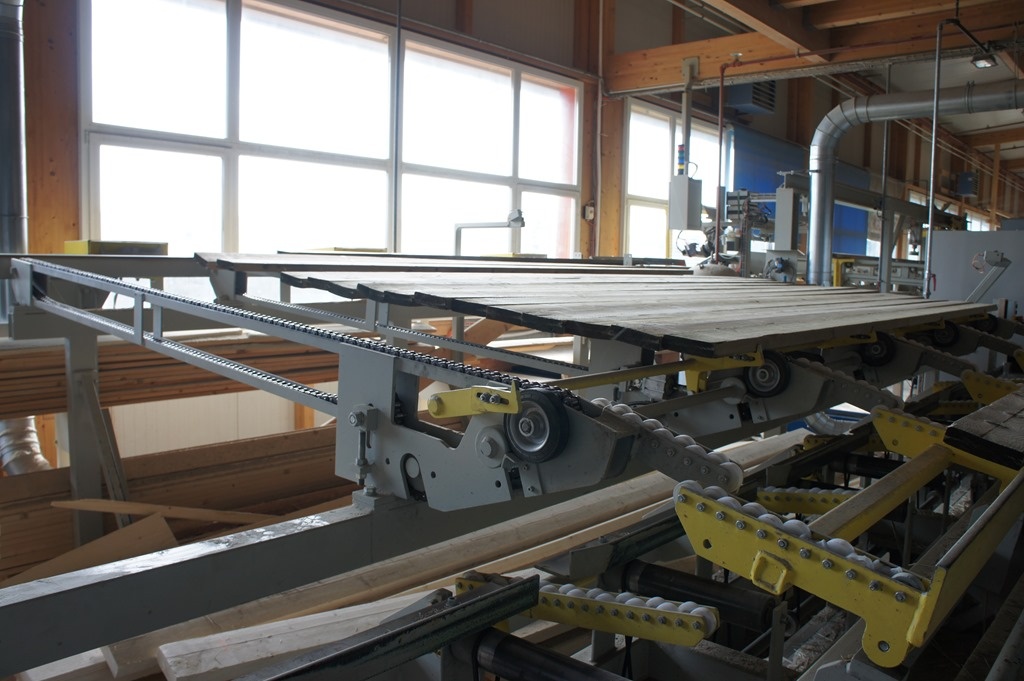
After leaving storage, the wood gets scanned automatically using X-rays and humidity sensors, allowing it to be sorted and used appropriately.
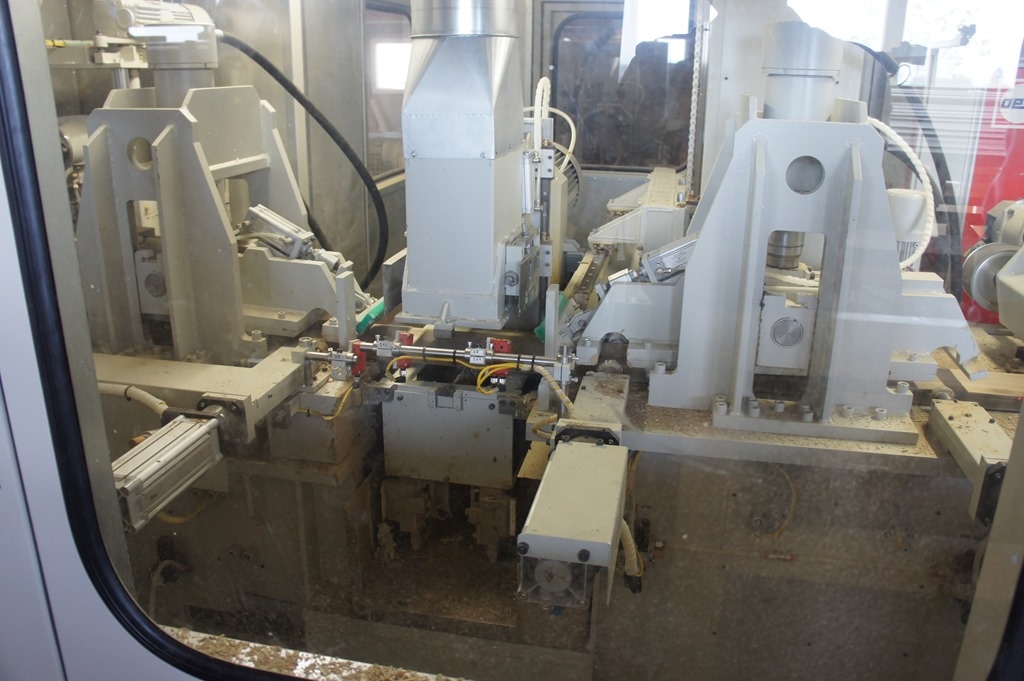
The wood gets marked with a special pen at appropriate locations, allowing another machine to cut it automatically, ready for gluing. Here's where the pieces are glued into longer planks:
The resultant planks are long.
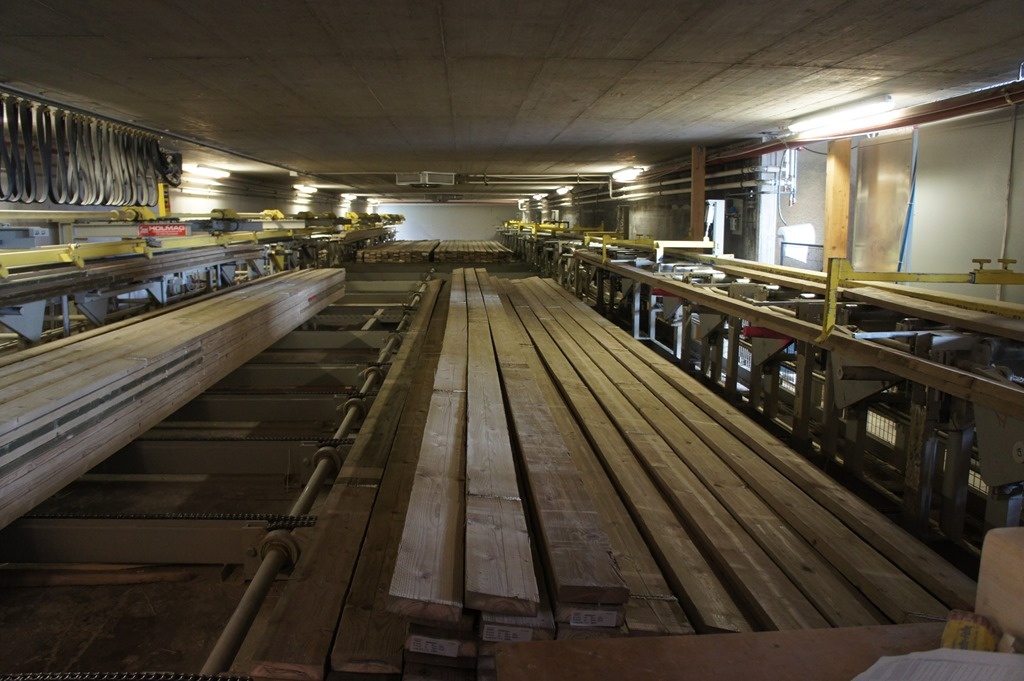
These planks get sprayed with more glue, this time for lamination:
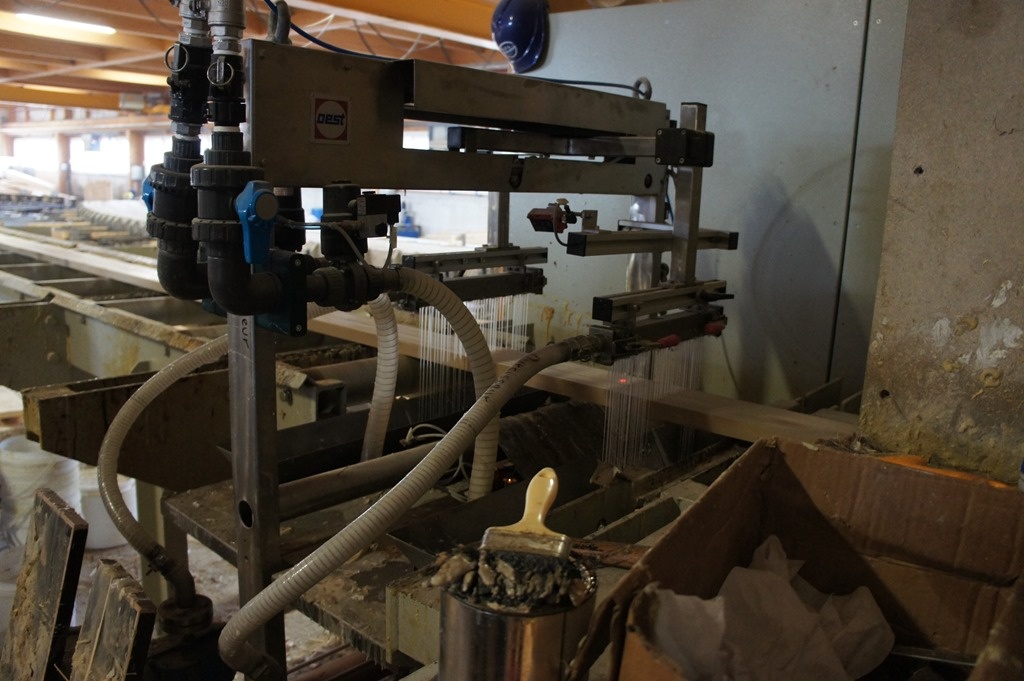
The glue-covered planks are then placed together according to the target form.
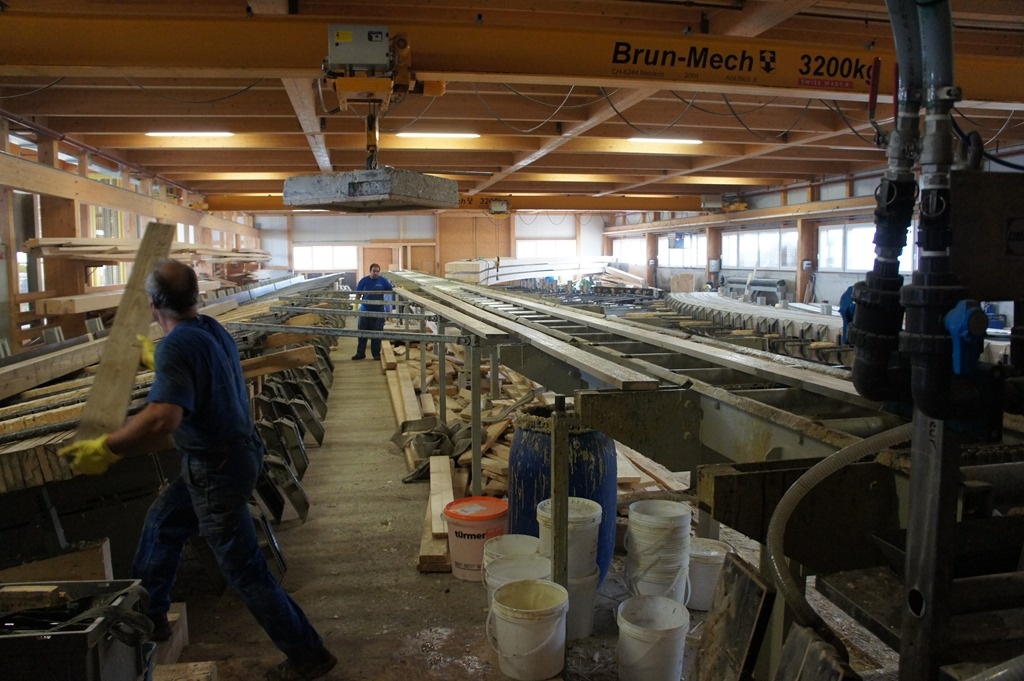
Lamination is performed by massive, manually positioned jigs. Technology exists – that hsbcad can drive – to automatically position such jigs, but Jean-Marc explained that this is one area that didn't justify the technology investment for JPF-DUCRET: at the scale at which they work it's more efficient to make use of skilled, manual labour to move the components of the jig to the required positions.
Here's an empty jig, ready to be filled:
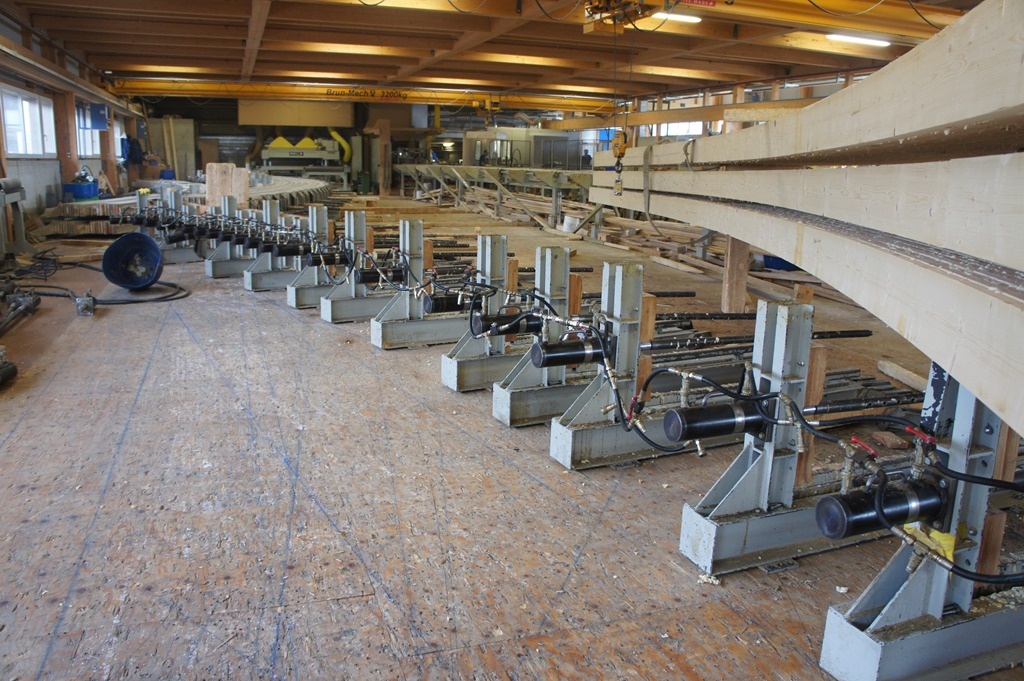
Here's a view of another – this time full – jig from the opposite end of the factory… a really impressive sight. It reminded me of my trip to the Morgan factory in the UK, although at a very different scale.
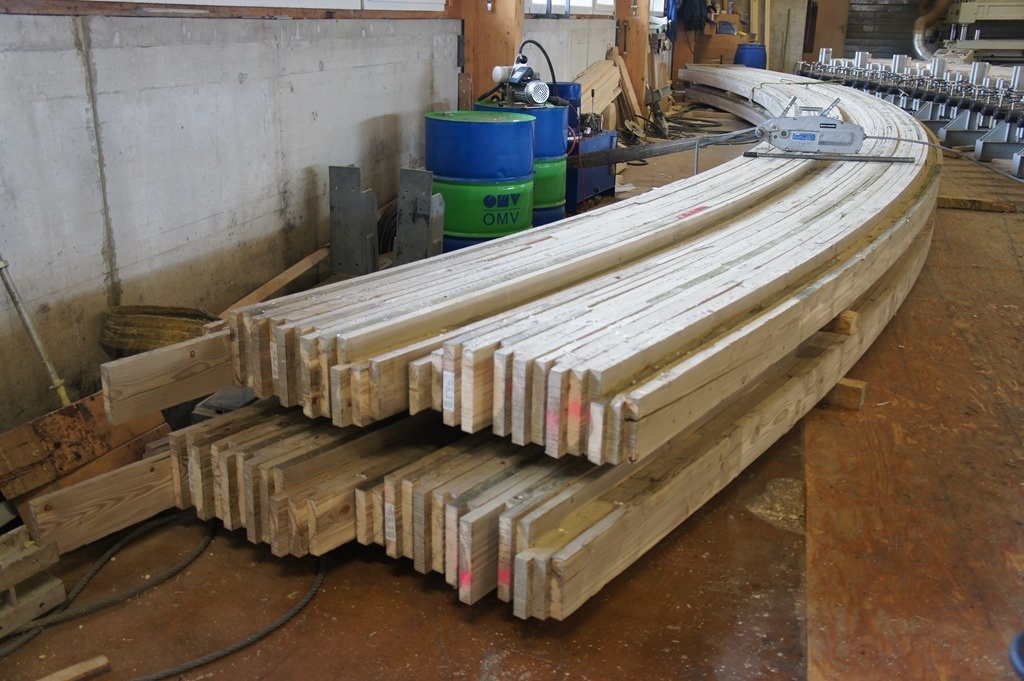
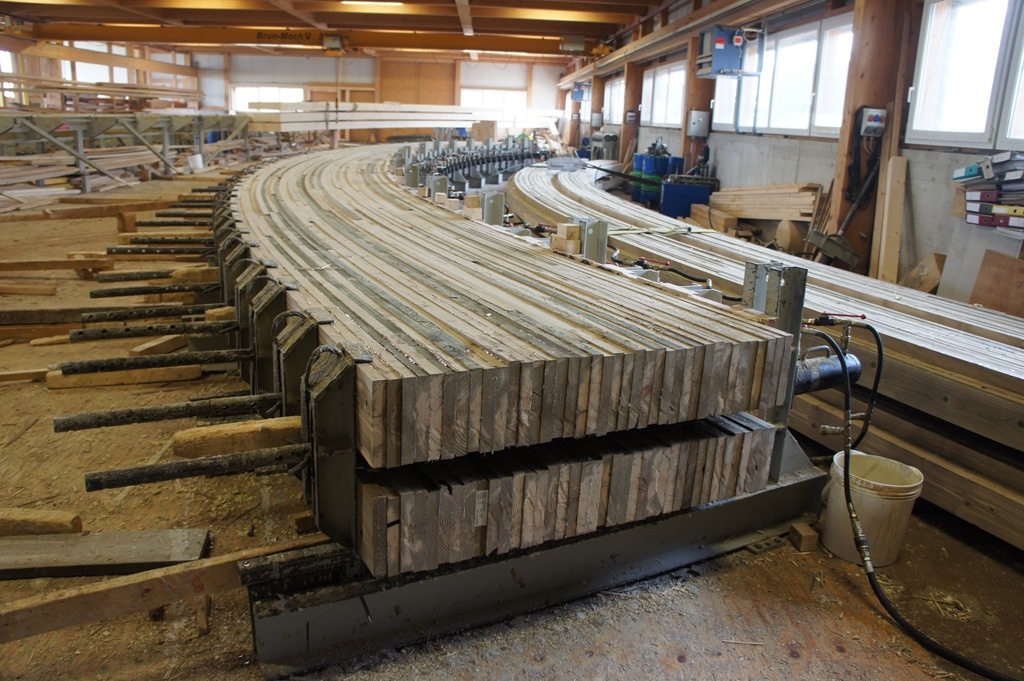 It's possible to see the profile of the resulting beams in the laminated planks: to optimise the use of materials, the below planks have been placed ready to for machining down to particular profile.
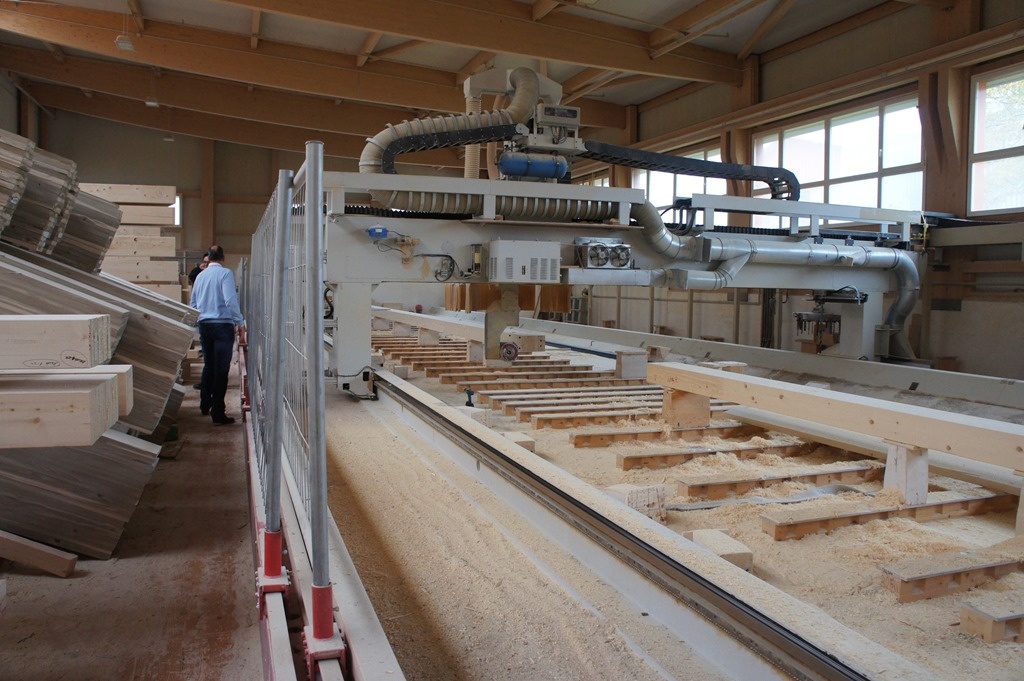
JPF-DUCRET have a couple of 5-axis mills that machine the wood to match the model generated using AutoCAD and hsbcad. The mills are driven using DDX tools.
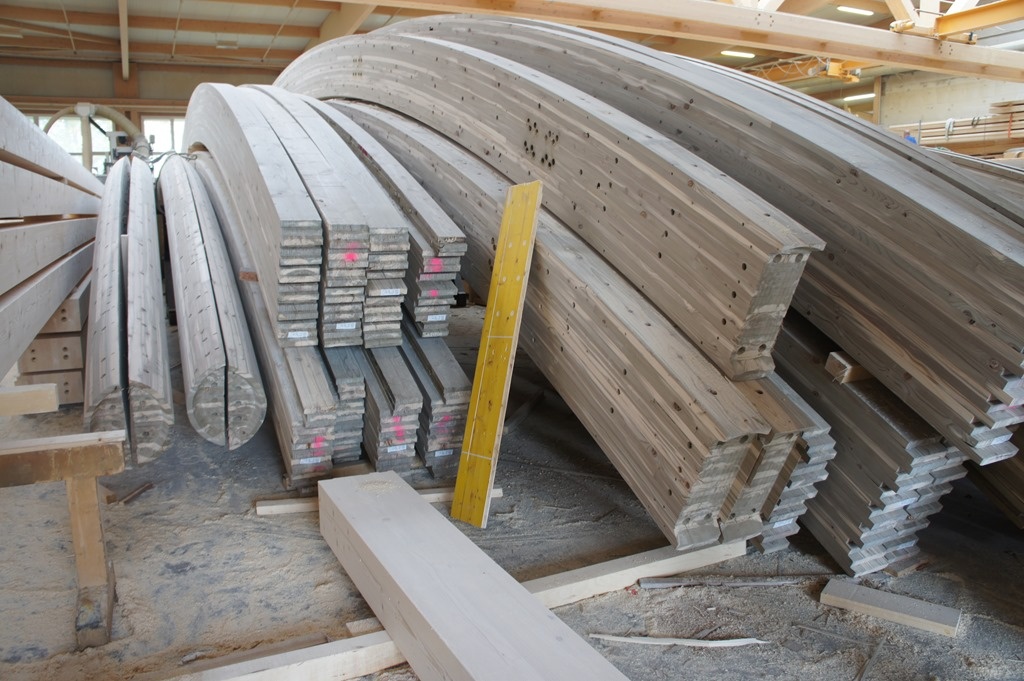
 Here are the beams once they've been machined. I had thought the beams shown previously were destined to be rounded – like the beams on the left of the below image – but I now suspect they ended up looking like the beams to the right (which will be combined with rounded ones to create larger beams with a circular profile).
Again, all of this is at an impressive scale:
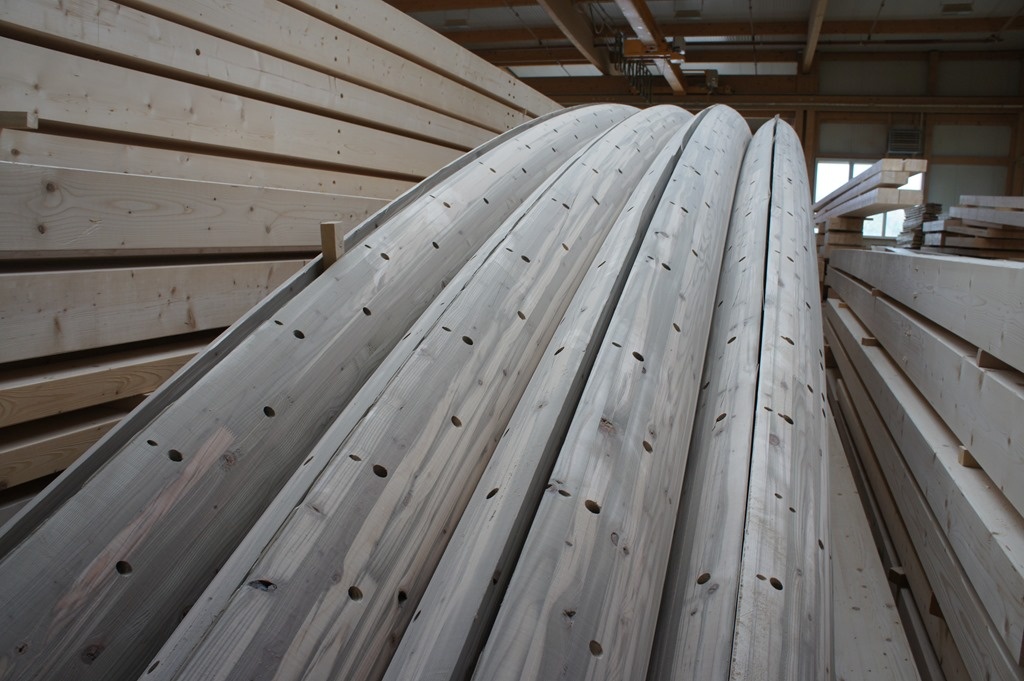
After a few more steps, the beams are finished. Here are the first ones ready to be shipped off to CERN:
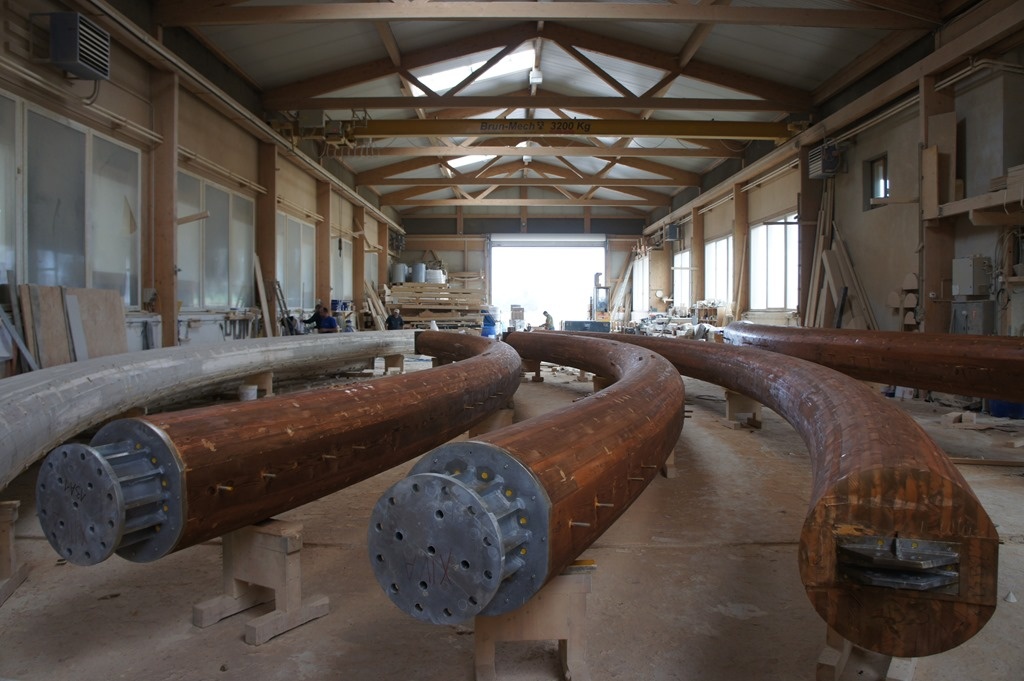
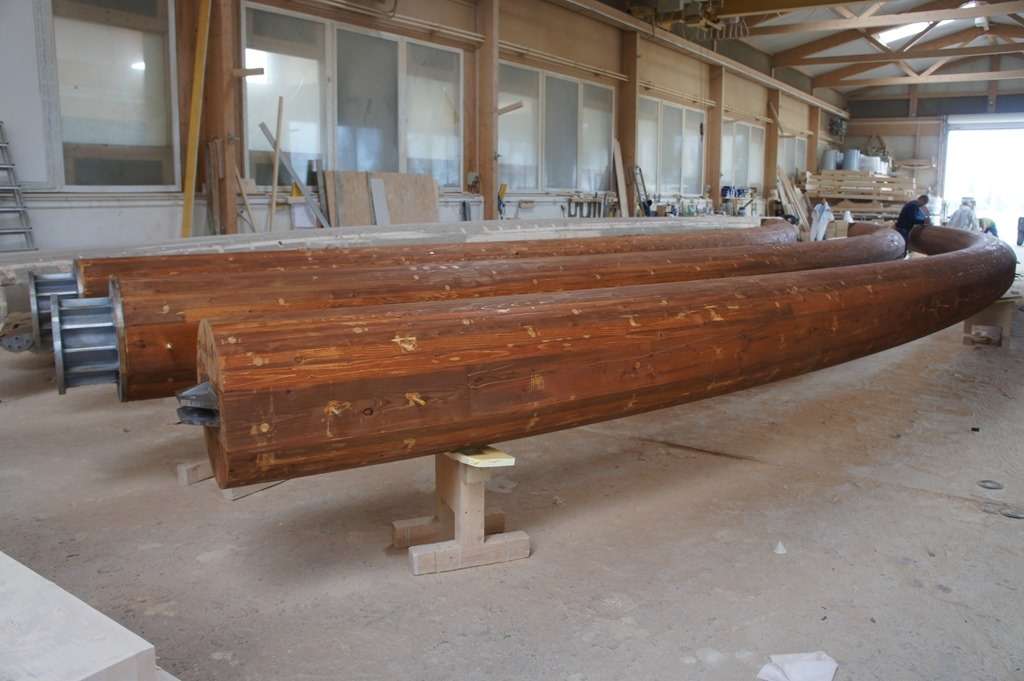
I hope this post helps give some sense of how interesting this trip was. I've always loved wood as a material: for me it was a genuine wonder to see how companies such as JPF-DUCRET use software tools to deliver projects such as this.
It's clear that people working in this area of the industry are genuinely passionate about what they do, whether they're working on high-profile projects like the Globe or building schools and homes (JPF-DUCRET also use hsbcad to build much more conventional structures, even if both companies tend to be associated with challenging, highly complex projects).
And it's great to see decades of patience and dedication paying off… the increased emphasis on sustainable development is helping wood come back into its own as a building material. Which has to be a good thing for both companies.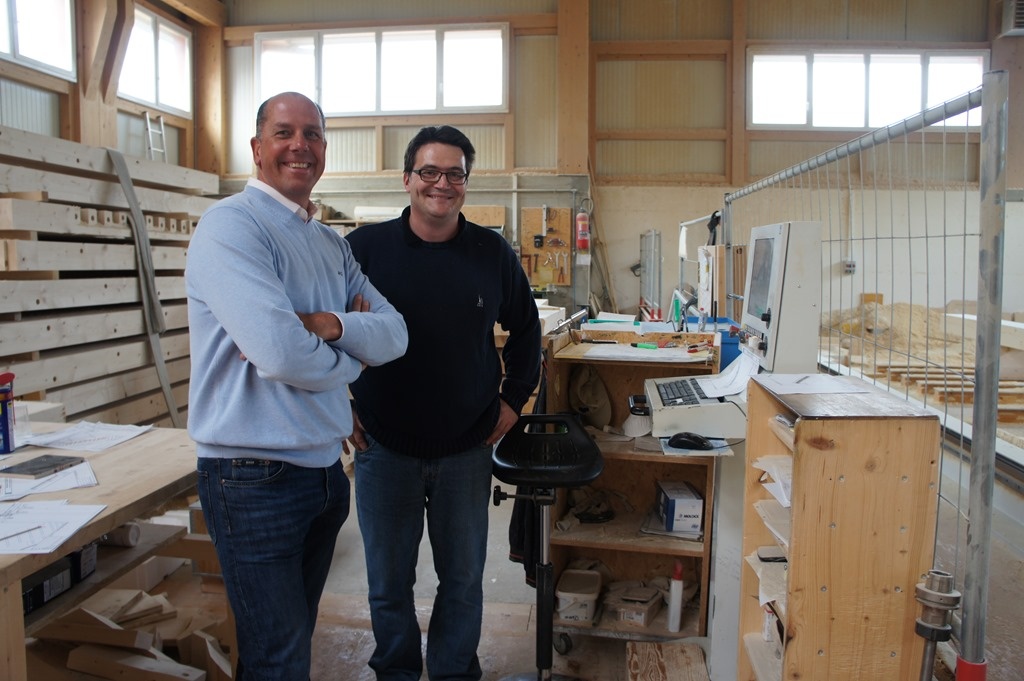
Many thanks to Jean-Marc and Karel for making this fascinating visit happen. I'm looking forward to seeing what these companies help create next!
Leave a Reply