Machine Learning
-
The class catalog for Autodesk University 2024 has been live for a week or two already, with attendees being able to bookmark sessions ahead of the ability to enroll fully. Well, today's the day that enrollment opens properly, so have at it! Classes often fill up quickly, so doing it sooner can certainly be better than waiting. I also have a few suggestions if you're at a loss for what to choose. These are all classes that I or my research team are involved in, of course. That's just how things work around here. 🙂 It turns out there's one…
-
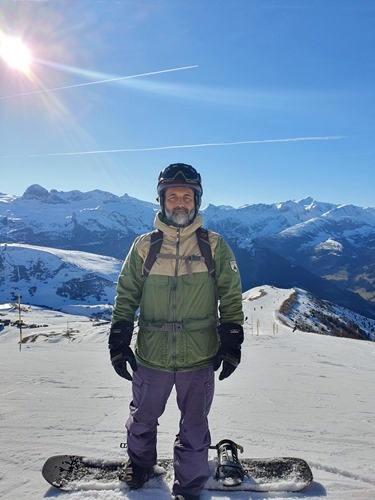
Today is my first day back after a much-needed 3-week break. For most of that period we were up in the mountains, and split our time between snowboarding and snowshoeing with the puppy. We had some unseasonably mild weather in the Alps, over the break, but we did still manage to make the most of what snow there was.During the course of the break, I spent some time thinking back on 2022 and looking ahead to 2023. For me, 2022 has brought a significant amount of change and uncertainty, between changes in role, escalating climate issues or the war in…
-
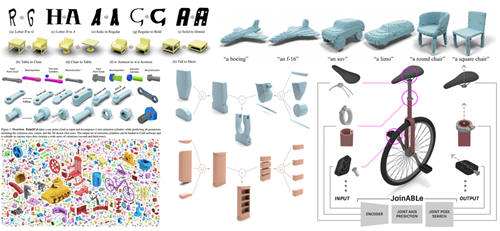
There's a lot going on with AI at Autodesk, these days: most of our engineering teams have developers who are exploring the potential for AI with respect to product features. For instance, the AutoCAD team has developed and released a number of features driven by machine learning: AutoCAD 2023's Markup Assist and My Insights features – the latter with its cool Macro Advisor capability – are all powered by ML. I'm less familiar with ML-powered features in Revit and Fusion 360, but I know they have teams focusing on exploring the benefits ML might bring to their users. All this…
-
[Firstly, apologies to regular readers who have struggled to load this blog over the last week or so. Typepad has had the mother of all outages, but things seem to be back on track now.] One of my oldest friends, Matt Armitage, lives in Kuala Lumpur and participates in a regular show on a local business-oriented radio station – BFM 89.9 – talking about technology. The show is called Mattsplained (abbreviated to MSP) and I have to admit I'm completely hooked on it (I happen to listen to it via Spotify, but I think it's on all major podcast networks).…
-
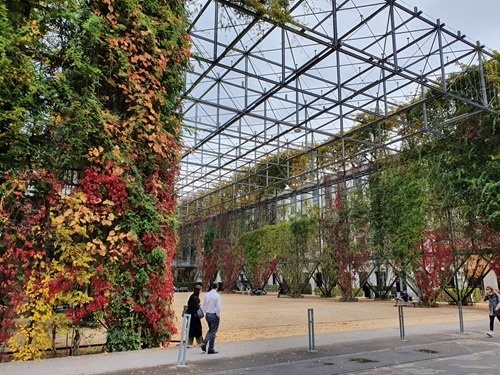
On Friday I hopped on a train to Zurich to attend the AI+X Summit 2022 event – organised by the ETH AI Center – which was co-located with the ETH Entrepreneur Club's Launch event. It was a lovely autumn day, and the colours were even on display in Zurich's Oerlikon district. The event was held at Stage One, an event space a short walk from the Oerlikon train station. I was mainly there for the AI+AEC workshop, but there were a number of mainstage presentations and exhibits by startups and larger companies involved in AI. The workshops were held upstairs,…
-
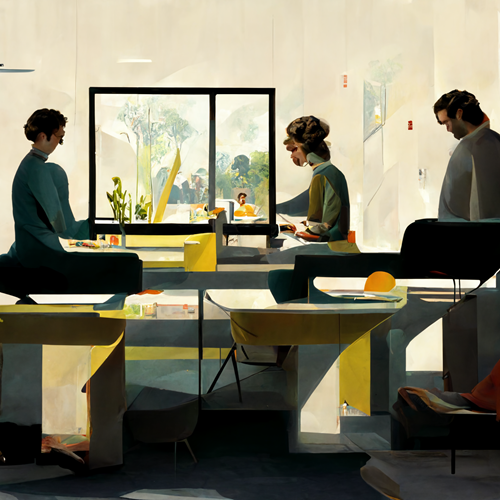
In a recent post, I mentioned that I've been asked to help lead our efforts in a particular area of research. I was deliberately vague at the time. Now, with Autodesk University 2022 around the corner, it seems a good time to say more about this. I hope it stimulates some interesting discussions at the event. As a company, one of Autodesk's core interests is to enable the design and creation of healthier, safer, more resilient spaces. We want to explore tools for designers and architects that help them create buildings with more attention to the occupants. In the past,…
-
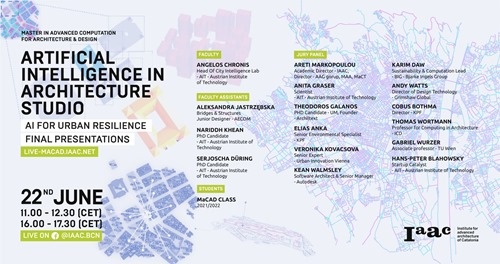
Today (June 22nd, 2022) at 11.00am and 4.00pm (CEST) you can join the final presentations for a very interesting MaCAD (Master in Advanced Computation for Architectural Design) program from IAAC (Institute for Advanced Architecture of Catalonia). You will be able to join the join the session via the IaaC MaCAD Facebook page. These presentations are the result of a studio on Artificial Intelligence in Architecture, with a particular focus on AI For Urban Resilience. During the studio, led by Angelos Chronis and assisted by Aleksandra Jastrzębska, Nariddh Khean, Serjoscha Düring, the students developed AI-driven urban solutions for the city of…
-
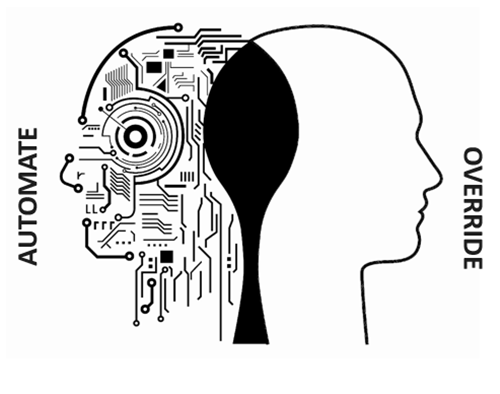
At our in-person Autodesk University events, it's common for our R&D teams to interview customers and to brief them on ongoing research projects and upcoming product features. This is a really valuable part of our R&D process: this feedback helps us make sure that our products and services help the industry move forward by addressing real customer pain. This year is a bit different, of course: rather than hanging around the Idea Exchange – which I know many of us struggle to find time for – you can sign up for sessions via the AU website (or the links in…
-
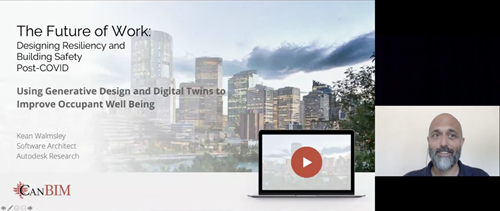
This post is a bit of a grab-bag of various event-related topics. The first one (chronologically, if not in terms of the title above) is the availability of session recordings from the recent CanBIM event: "The Future of Work: Designing Resiliency and Building Work Safety Post-COVID". My own session was entitled "Using Generative Design and Digital Twins to Improve Occupant Well Being". As it was the first session of the day – with a new web streaming platform – there were a few teething issues for the sponsor's introduction (and the session auto-closed a little too promptly, which meant no…
-

The Forge DevCon is a great place to dive deeply into what's possible – and what will soon be possible – with the Forge platform. I'm involved in the organisation of the Las Vegas DevCon – being held on November 12-13, 2018 – in that I help lead one of the tracks. When the first DevCon took place, back in 2016, I was track-lead for the AR/VR track… these days I'm co-track-lead with my old friend Cyrille Fauvel for the Complementary Technologies track, which incorporates topics such as AR/VR, AI and robotics. All the really fun stuff, basically. 😉 This…