The need for autonomous drone navigation

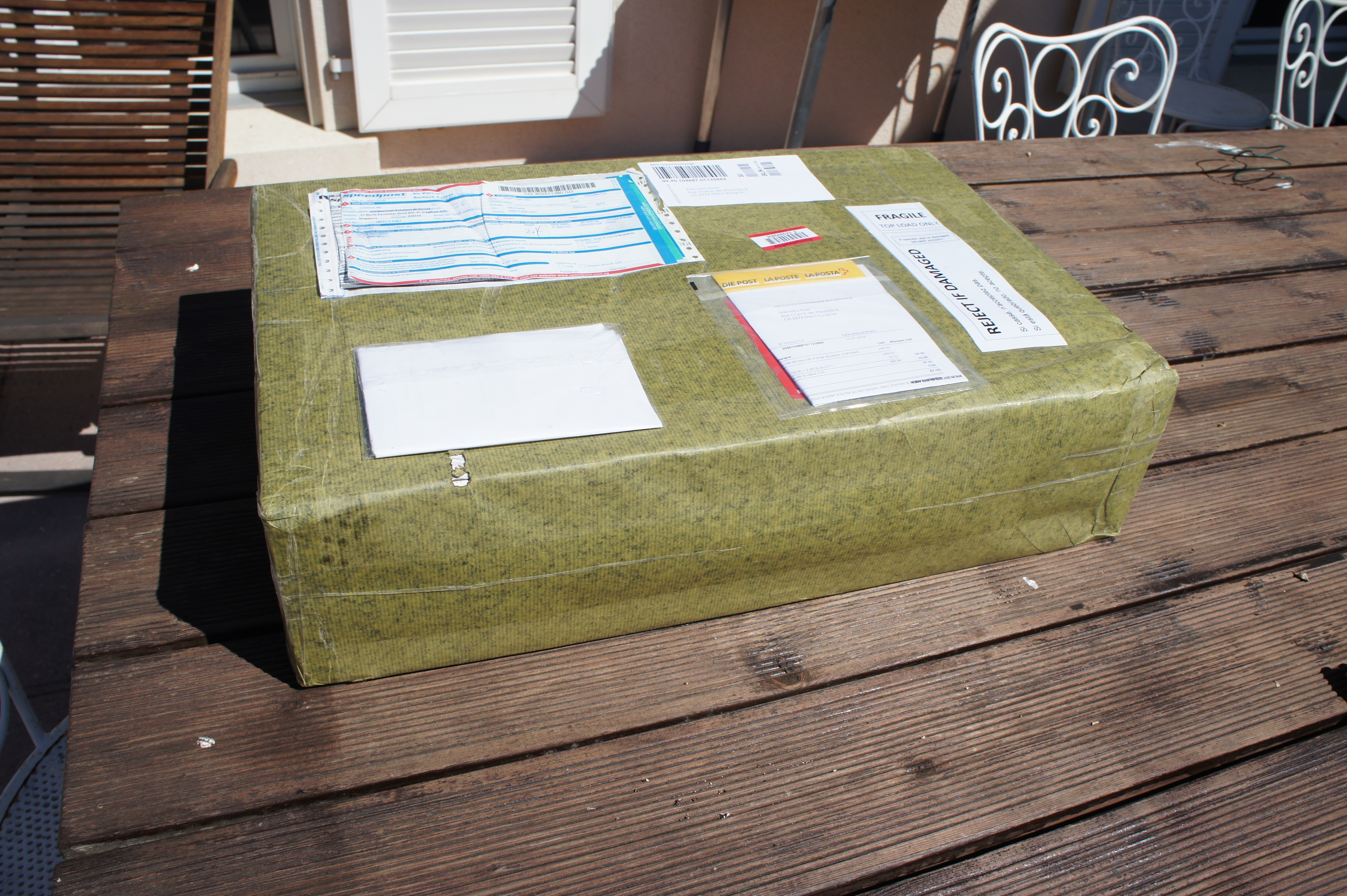
My Quanum Nova arrived from Hong Kong, yesterday. I'd just been tracking the parcel's progress when the doorbell rang and the postman handed it to me: he seemed surprised I didn't mind paying the additional SFr 47 customs fee (on top of the $299 price-tag and what I had to pay for batteries) and even let him keep the change. I was in that good a mood. πŸ˜‰

DSC09446

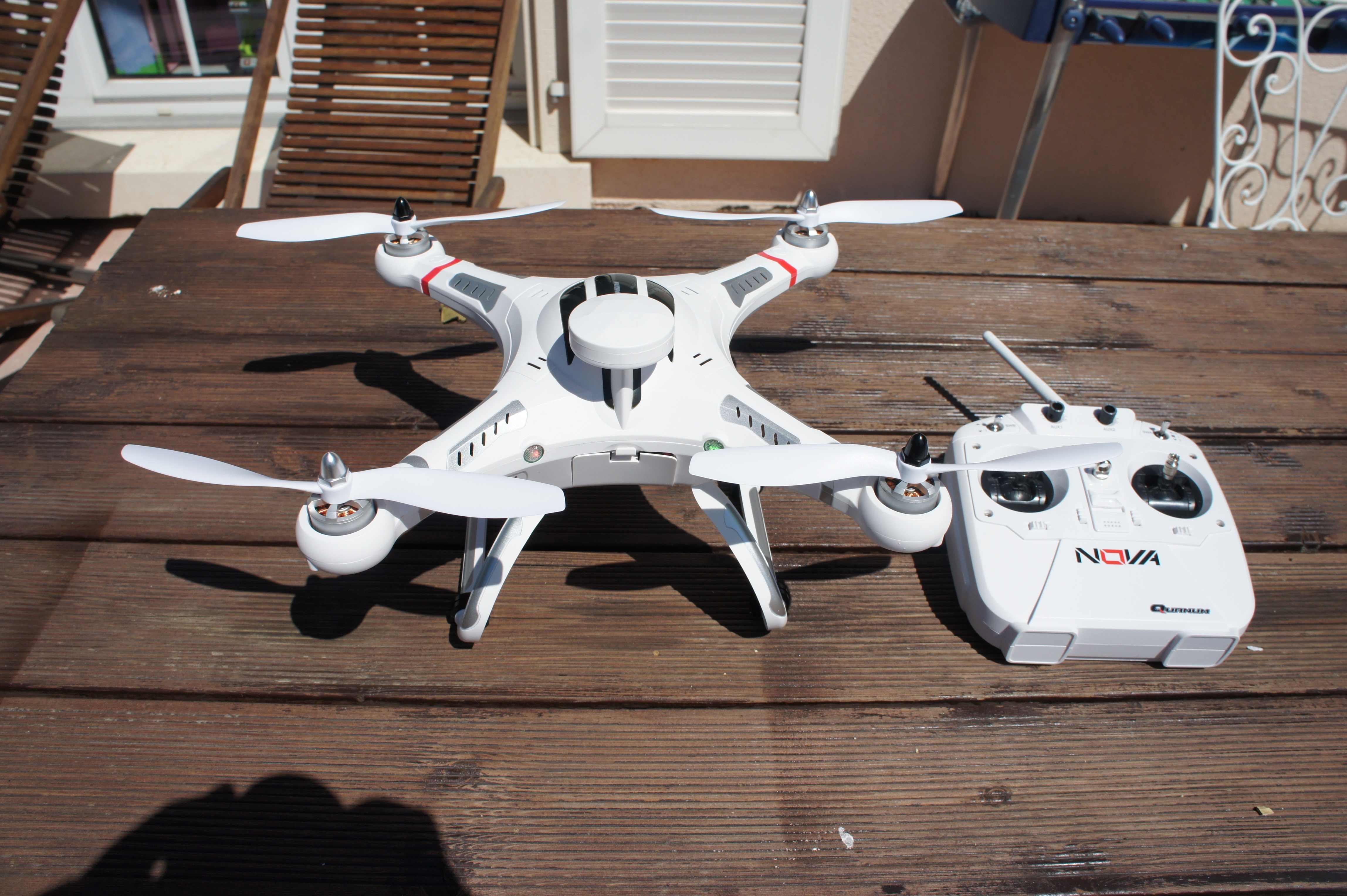
Reality gradually set in as I assembled the device, although that was pretty straightforward, overall. The assembly instructions were better than expected, and I was soon able to turn the device on (I'd charged all four of my 2700mAh li-poly batteries in the weeks I'd been waiting for the drone to show up, so I was locked and loaded… interestingly enough, the day before the drone arrived I received a notification that higher-capacity batteries are now available, too).
DSC09452

Unfortunately the instructions for getting the drone's motors to disarm were much less useable. In theory I was meant to use the left thumbstick on the controller – pushing it down to the bottom-right – to arm the motors. But try as I might I couldn't get this to work. I wasn't even sure whether the transmitter was working to control the drone, I really couldn't get it to respond in any way.

Eventually I decided to connect it up to my PC and see if I could get anything to work using APM Planner 2.0. I was able to connect to the device – as it contains an ArduCopter-compatible board, an Arduino Mega 2560 – and could use APM Planner to adjust some options. Out of desperation – although I'd seen a few people on the forums had done this, themselves – I upgraded the ArduCopter firmware to v3.1.5.
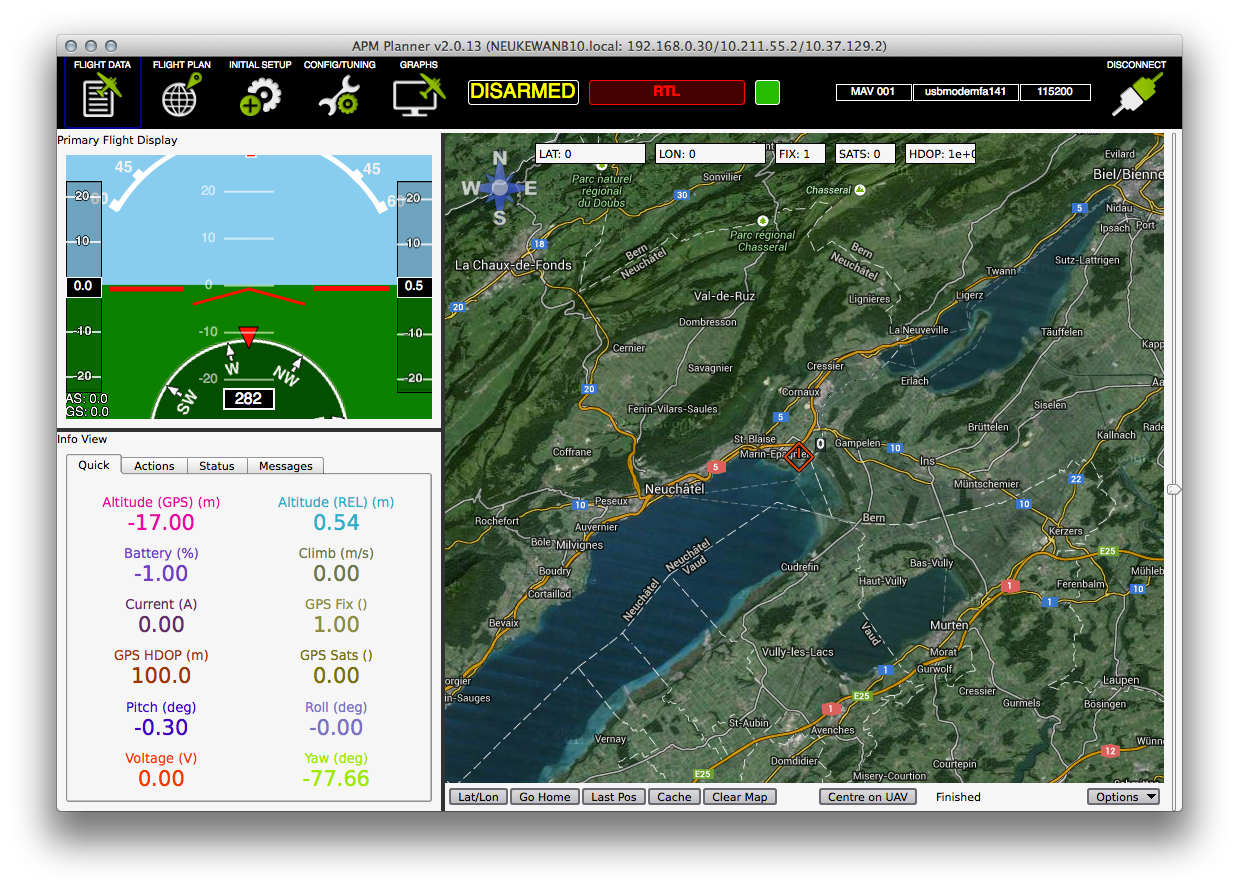
Connecting the APM Planner 2 to my Quanum Nova

This worked, but didn't help address the connection problem. I then went and re-calibrated the radio – which allowed me to at least see that the controller was indeed connecting to the drone. This calibration did allow the motors to arm: you can imagine my surprise when this happened in my living room (yes, with the propellers attached… who thinks to remove them when there's every chance your drone's a dud?) and nearly got tangled up with the USB tether attaching it to my PC.
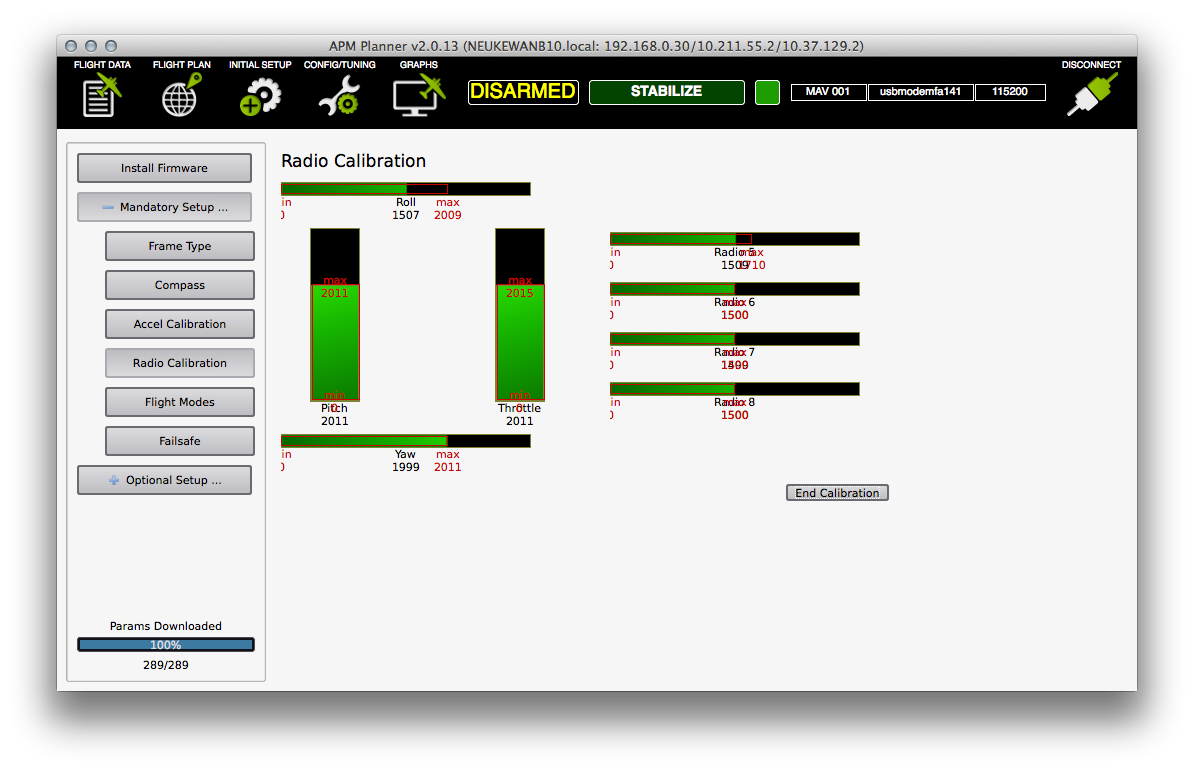
Calibrating the radio using APM Planner 2

Anyway, at least I knew my drone was functional, at this stage, and that I actually had to hold the right thumbstick downwards, too, for the motors to arm. The instructions could really use having this additional nugget of information provided, but hey.

The next thing I did was – of course – head outside and try an actual flight. First, though, I attached my GoPro-equivalent camera, my CamOne Infinity, to the bottom of the Nova with the provided mount. As far as I'm aware, Photo on ReCap 360 won't work with stills coming from the Infinity, but this was more to capture the event than to provide data for a 3D reconstruction.

I'm glad I did: the results were hilarious. The drone took off fairly steadily, but I then made the rookie move of switching to what I thought was a stabilized flying mode but ended up sending the drone skywards at high speed. I panicked, tried to adjust and brought the drone back down to earth with a thump. This dislodged the camera, which stayed in the grass filming the departure of the drone as it now – with much less weight – looped back up into the air and crashed elsewhere in the garden.

Here's the video of the event – I've blurred the faces to protect the privacy of a family member, which I'm actually glad has also obscured the look on my face as most of this was playing out.

The drone is, incredibly, largely intact. The upper side of two of the arms have cracked – as has the GPS tower on top – but nothing that can't be held together with tape. I can't help feeling that – despite any sense of personal ineptness – this is a fairly typical experience for first-time drone pilots. For me, though, it underscores two things: 1) I did well to start off with a $300 drone and 2) I really need to get to the point where software is taking care of an increasing amount of the navigation effort. If I'd wanted to be a pilot I would have chosen another career, after all. πŸ™‚

I'm heading off to Greece on Sunday for a couple of weeks, so it'll be some time before I blog again. I'll hopefully be able to tweet once or twice from the beach, but I'm planning to make this a proper break to be with the family. When I get back I'm hoping to spend a bit more time with the Nova, and perhaps even to start working with the new 3DR X8 that our office has just bought, too, which should work really well with the new "one button 3D capture" DroidPlanner functionality.

8 responses to “The need for autonomous drone navigation”

  1. James Maeding Avatar

    I think all RC hobbyists crash their first model. Its the most painful too unfortunately. Like a hazing or something by an unknown RC union you never paid dues to or agreed to join. Stoked you got one with arducopter board, I am looking at that currently. As I never used to say "If it uses a 'mega, it has to be good!" Now to see what kind of quality you can get with Recap 360. My first attempts with handheld camera are very average.

  2. I'm not sure whether more autonomous systems are needed, or pilots with better judgment (no reflection on the author intended).

    One of my passions is aircraft. I built my first radio controlled glider in 1981 and have stayed abreast of the modeling industry in the US for many years.

    Drones are really changing things for modelers in many ways. When I started modeling there were many barriers to entry: besides the cash outlay, you needed to invest a huge amount of time building an aircraft. To be successful you also had to understand some basic aircraft theory (like weight and balance), understand mechanics, and have some skill in flying most often developed the "hard way". Most new pilots spent about 20 hours building and fixing their machines for every hour of flight - and most flights ended with a trip to the workbench. But the process had the side-effect of weeding out those without the skills and commitment to get things flying. And because pilots had invested so much money and time in their aircraft they were typically very careful with them and operated them with relatively good judgment.

    About 15 years ago things started to change. Radios got very cheap and companies started to offer ARF (Almost Ready to Fly) or Ready-To-Fly aircraft. While ARF a RTF aircraft had been around for years they were fragile and did not fly well. Manufacturers were starting to deliver higher quality designs and used materials (often foam!) which were very tolerant of rough landings. Pilots could buy a plane and be flying (and crashing) that afternoon, but the planes were so durable that people could crash a dozen times before needing to do repairs. And the planes were getting inexpensive so when one wore out you could go out and buy another.

    The barrier to getting up and flying - the point where the sport gets dangerous - became much lower. People were also getting hurt at record rates. A plastic propeller spinning at 20000 rpm cuts a finger very easily, and now people could go to the hobby shop, spend a few hundred dollars, and be in the emergency room that night. About the same time lithium battery technology was becoming widespread and lithium fires were becoming more common as people without an understanding of how the battery and charger worked were shorting the wiring doing repairs or overcharging the batteries. The natural barriers that kept impulsive users from getting into a deceptively dangerous hobby were gone.

    Today I see the industry at the beginning of a similar trend with drones, which present a whole new set of issues beyond those of pilot safety.

    For example folks like their privacy, and don't like model airplanes with cameras buzzing over their heads or backyards. In the US there is currently no law preventing your neighbor from flying his aircraft in the public airspace over your backyard. (A young man was recently assaulted by a woman for flying his drone over a public beach - perfectly legal under current laws, but questionable judgment - https://www.youtube.com/wat...

    As you recently discovered with your own trials, flying is a learned skill. It takes time. It takes crashes. It takes repairs. It takes understanding how the system works and what can go wrong, which is difficult if you didn't build the system and the manufacturer doesn't provide a lot of information. (Hint: the less you pay, the less information you get that tells you what to do).

    Insurance companies are getting more involved as more people drop their drones on someone's head or property. Amazon making a splash in the news about using drones for delivery doesn't help - I don't see that every being acceptable from a public safety perspective, and I have trouble seeing the FAA allowing it.

    In the United States the FAA owns all of the airspace down to ground level. The laws here allow the operation of "model aircraft" with a fairly liberal set of rules - basically don't do anything stupid like operate them near full sized aircraft. Yet people do (and always have done) stupid things anyway. πŸ™‚

    Drones, and the international security climate, are drawing attention to model aircraft accidents more and more. It seems there is a new accident in the news every day and the FAA is looking closely at dramatically regulating model aircraft operations in the US. Maybe that should have been done a long time ago.

    In graduate school I had an engineering professor who worked on China's first indigenously designed aircraft (a cargo plane designed in a cave during the cultural revolution). To ensure that the hand calculations performed in designing the aircraft were correct, the engineers working on the design were required to be on the first flight of the aircraft with the test pilot. A real stake in the outcome.

    Bottom line, I'm not sure any of the social and safety issues get better with autonomous drone control - if anything it just lowers the barrier so that more people with bad judgment can get into trouble. The problem is the judgment of the operator, whether that operator is twiddling sticks or programming a computer it doesn't affect their judgment. Autopilots can fail, you might program the wrong flight plan, there might be a bug in the system, the system may not be properly designed, or you might be operating it in a dangerous manner. The latter is especially problematic when the operator isn't the one whose personal property and health are at risk.
    I see a backlash against drones in society coming soon. Hopefully it can be avoided, but I see things already going this direction in the US with regulation the FAA is considering. That's probably a good thing for the public, and a big inconvenience for those who already fly model aircraft responsibly.

    1. Kean Walmsley Avatar

      Great historical context and perspective - thanks, John! You also get the prize for the longest comment that doesn't include a complete program listing that this blog has ever received (I'm guessing, but am probably not far off).

      I'm definitely coming at this the perspective of seeing what's possible with modest investment (time, effort and money). Which may or may not put me at the dangerous end of the spectrum: the lessons I'm already learning are steering me towards solid calibration, testing and mission planning, as well as learning and respecting my limits as an operator.

      The backlash is absolutely happening, and often for very good reasons. It will be interesting to see how things play out over the coming months/years.

      Kean

      1. Finally I finish first in something. πŸ™‚

        And if you think this is verbose, you should see my subdocs! (For those who don't work at Autodesk, a "subdoc" is a document we submit with our code changes that describe what you changed and why. I sometimes spend more time on my subdoc than I do writing the code which it describes).

        1. a coder? Have I penetrated the autodesk veil of secrecy and found the name of an actual coder? Care to reveal what products you work on, I have years of questions to ask if you work on AutoCad.

          1. james, you're asking John to subject himself with self inflicted injuries ... not a fair call πŸ˜‰

            1. james maeding Avatar

              I'll keep him alive with cash, I mean blood transfusions yearly πŸ˜‰

    2. I agree its crazy you can just buy modern quadcopters and fly them without much of the learning curve previous modelers were used to. The tricky part of all this is how do you defend against a drone flying 200 feet away you cannot hear if any noise is going on? A previous generation pilot had to have line of sight, or you yell "I lost it" and start sweating about what happened. I'm more worried about when gangsters figure out you can cheaply deliver damaging devices with them. Then we will see some serious technical innovation. I keep telling people not to invent another drone, but an anti-drone.

Leave a Reply to John Beltran Cancel reply

Your email address will not be published. Required fields are marked *