Last week I headed across to Barcelona for the annual offsite of our research team. As the dates of the meeting fell during my daughter's school holidays - a rare occurrence! - we were able to fly out together to Spain.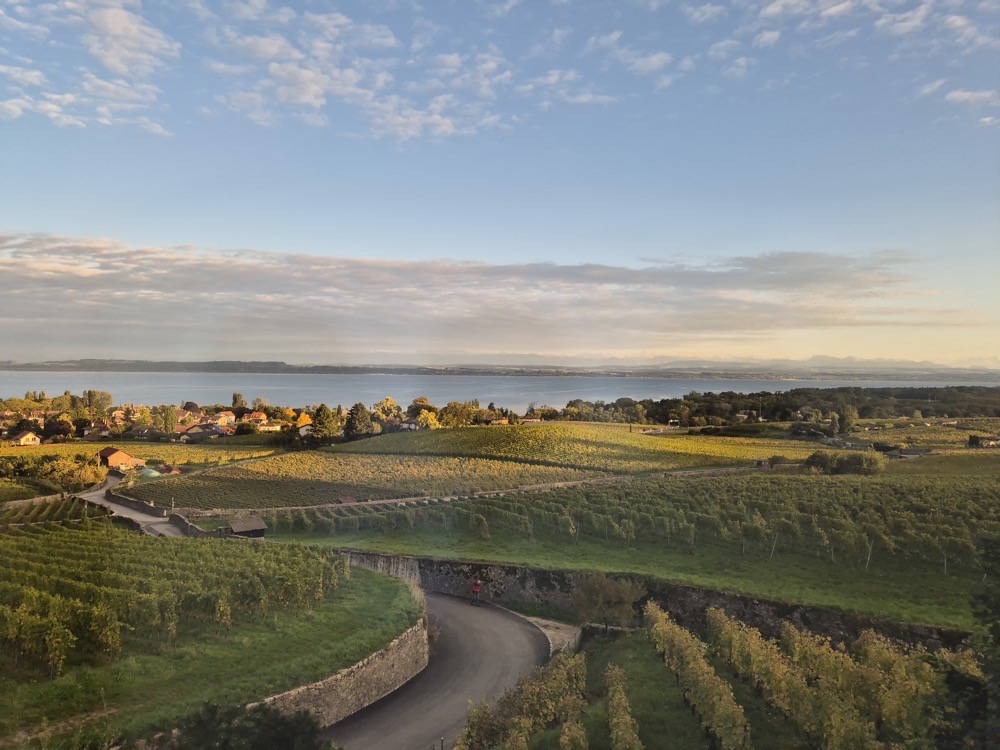
Barcelona isn't Benidorm, but you do get the occasional hint of that very strange relationship that Spain has with the UK.
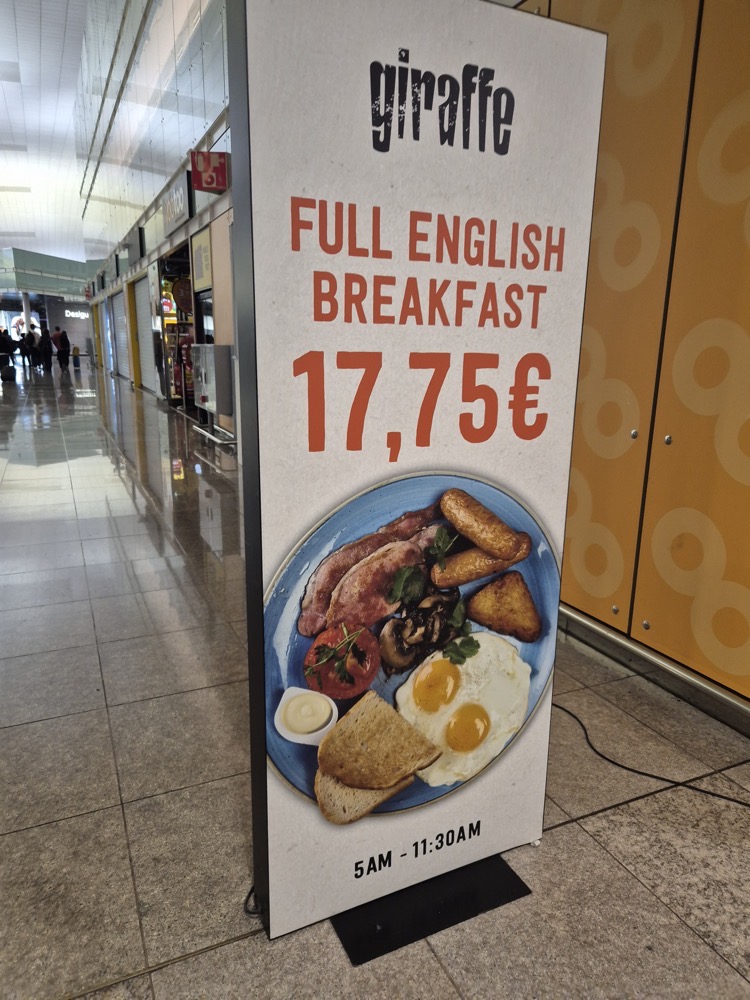
We'd originally planned to fly to Barcelona on the Tuesday evening, but as Vueling decided to consolidate flights (at least I assume that's what happened - we were just notified that our flight time had changed to the day before) we ended up flying late on Monday evening and staying at a cheap hotel near the airport.
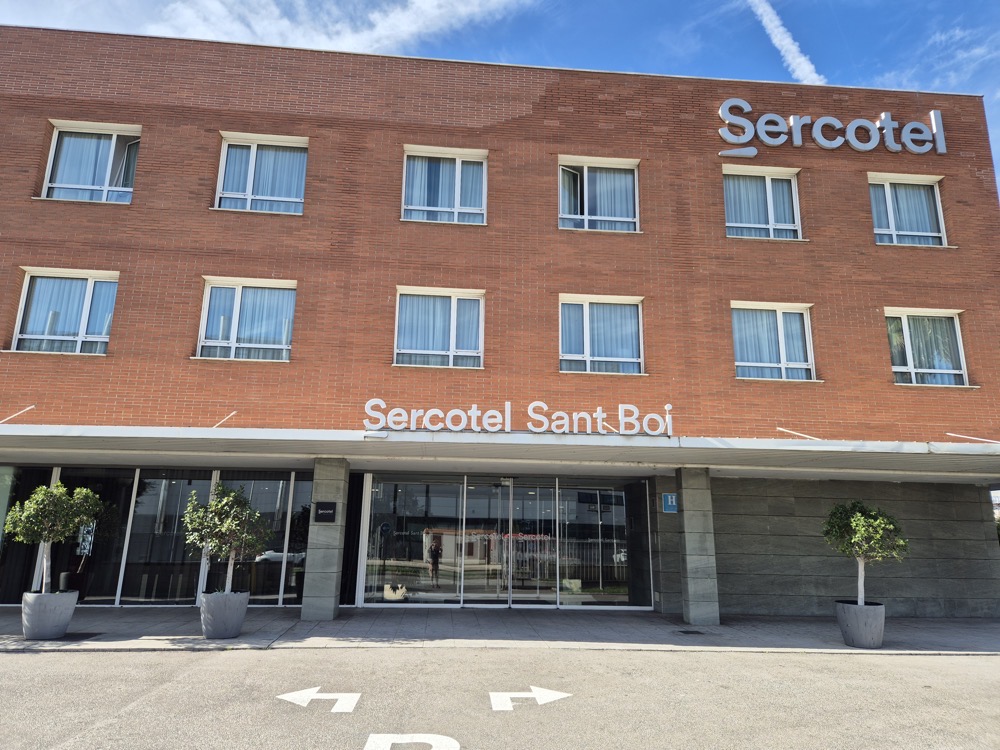
We arrived late at night, so these are pics we took when we woke up on Tuesday.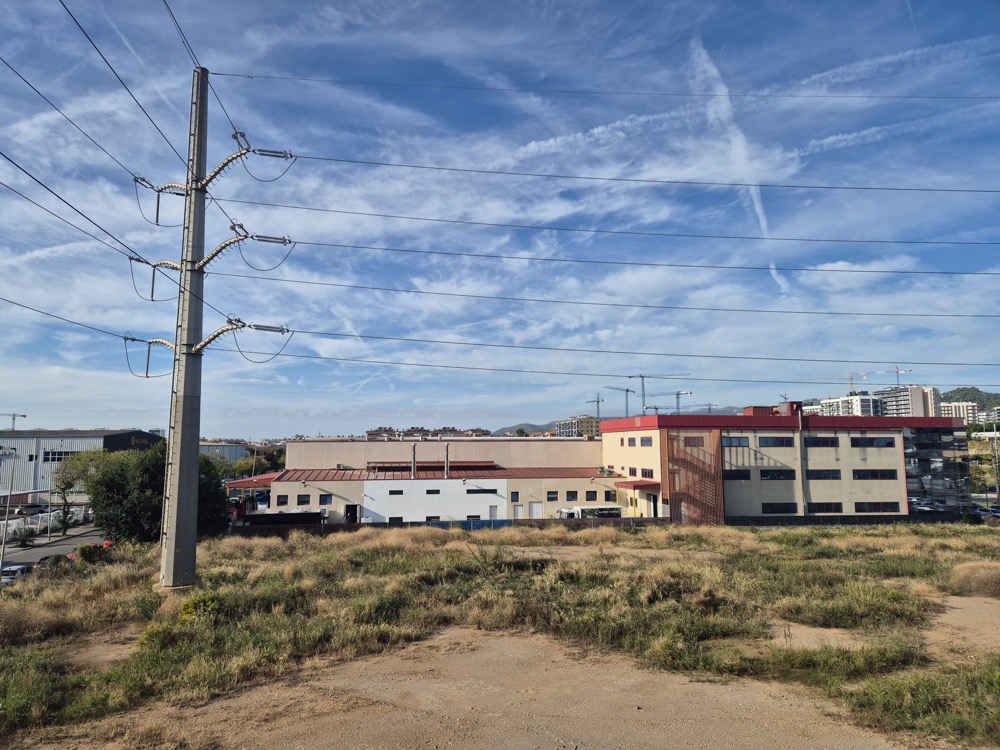
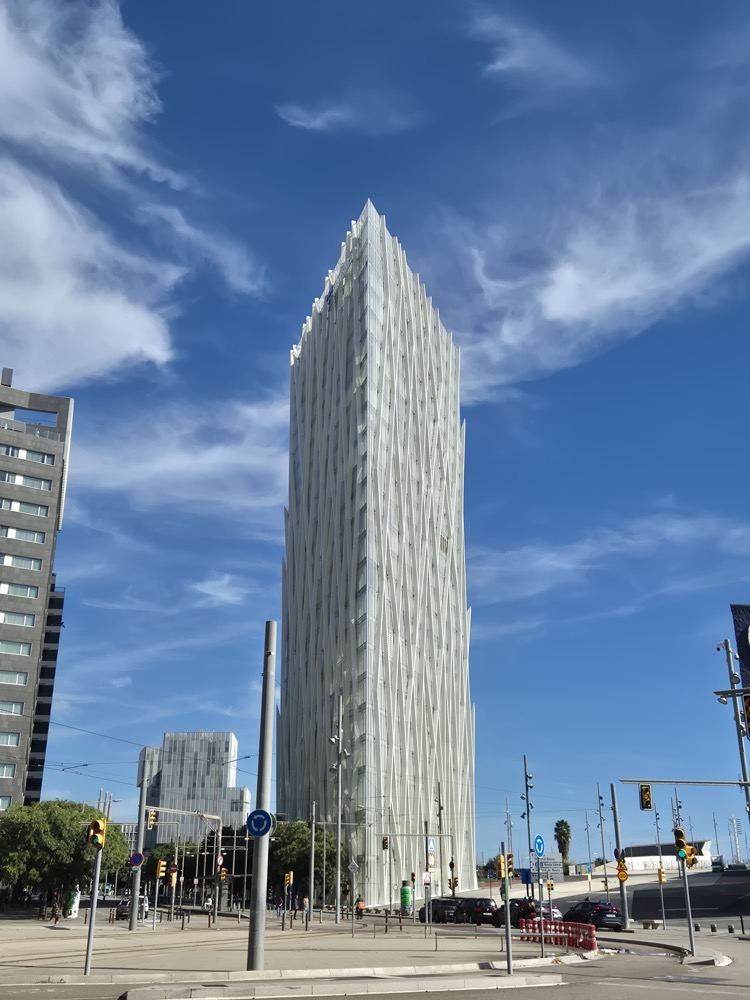
After breakfast we crossed Barcelona to get to our hotel, the Hilton Diagonal del Mar, which is near the Autodesk office and the Torre Telefonica.
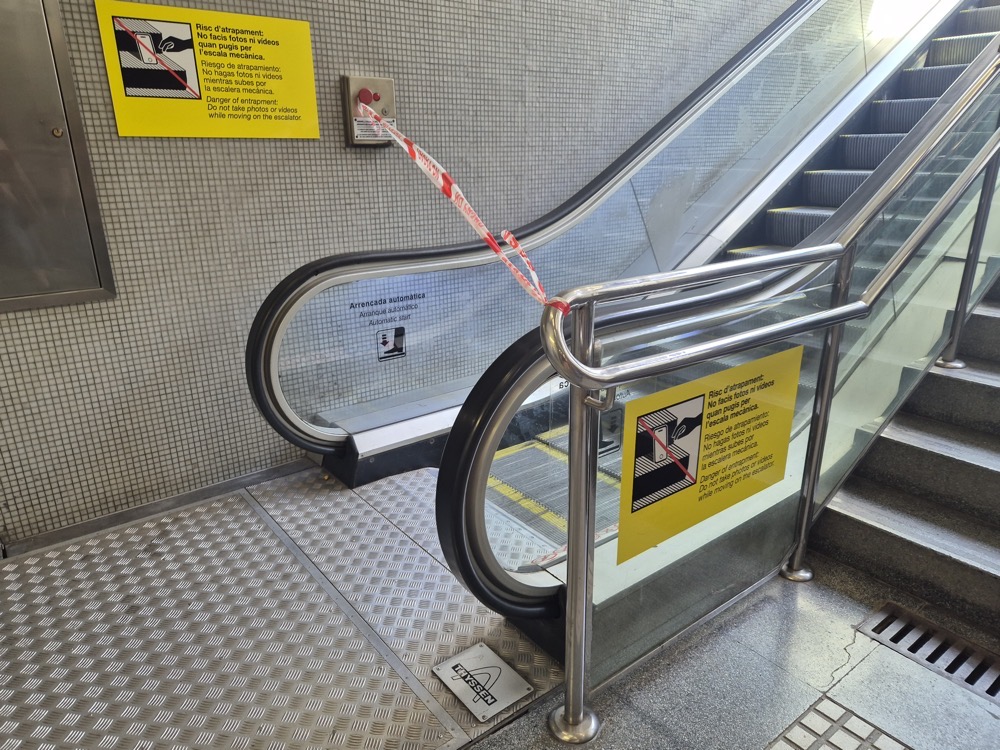
We took the metro to visit the centre of Barcelona for a few hours. Once again - the last time this happened was during a trip to the UK - almost all the upwards escalators were in need of fixing. At least we'd dropped our luggage by this point.
While we didn't have tickets to visit the inside of la Sagrada Familia - I have fond memories of climbing the towers with my old friend Jim Tinney, back in 1996 - we did walk around it and take snaps from the outside.
(Note to the City of Barcelona: I understand your desire to have people go online to purchase tickets, but the current experience leaves a lot to be desired. Your QR code forces people to install a 100 MB app on their phones, which then simply loads a website telling them that tickets aren't available for the coming 2 weeks.)
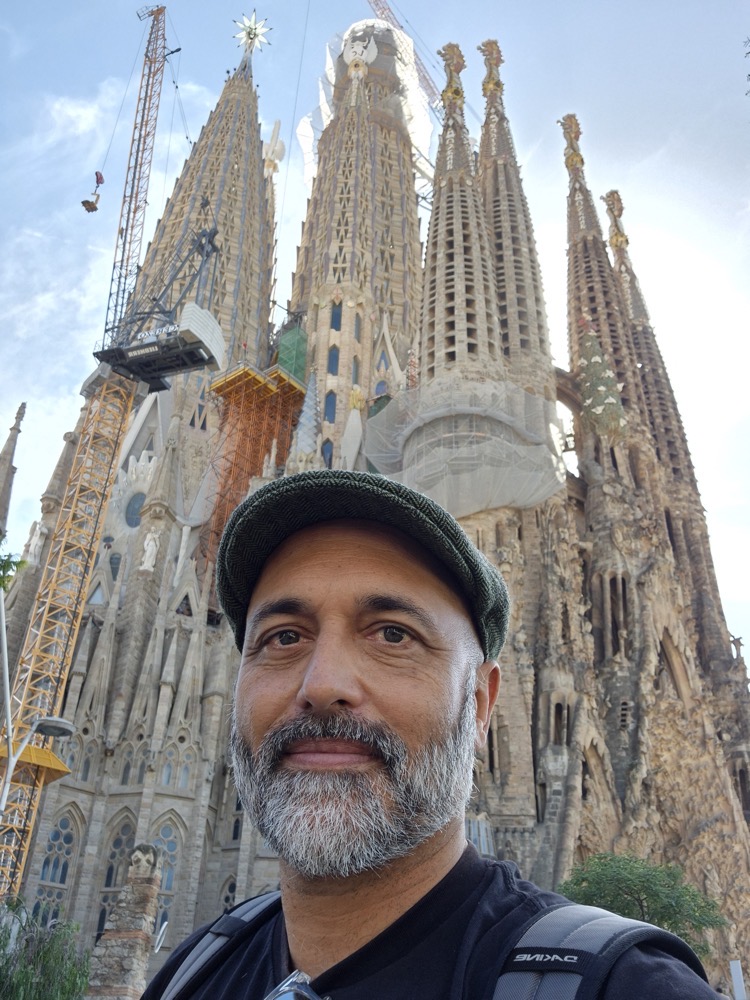
A lot of work had been done since I last saw the Basilica, but more was ongoing.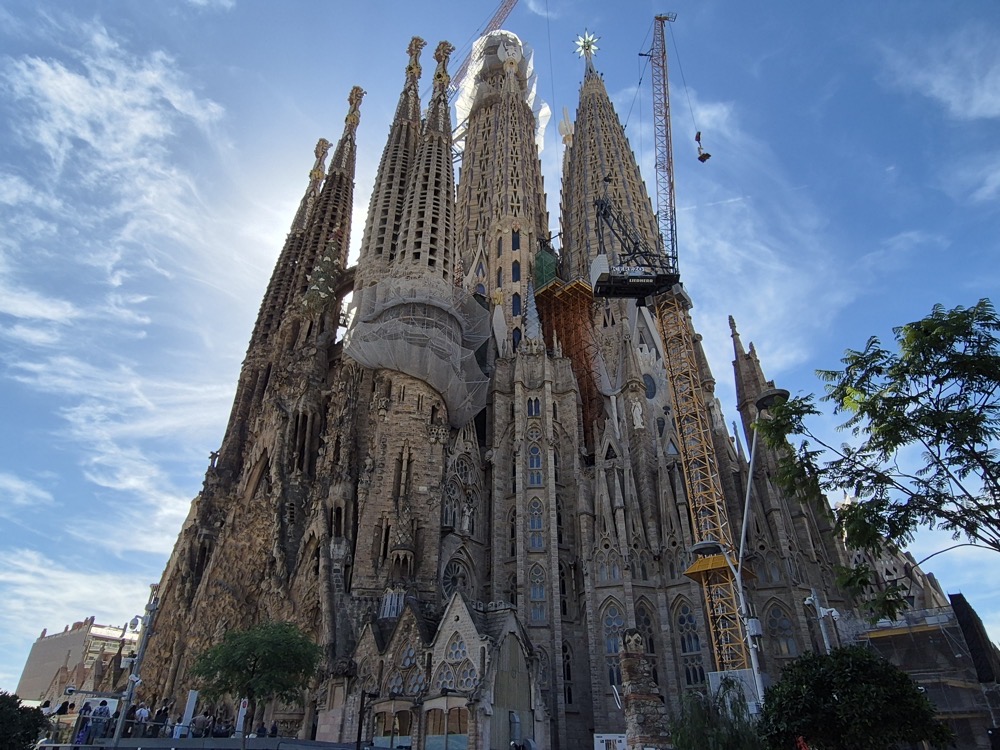
Here's what appears to be formwork that has been used for something recently.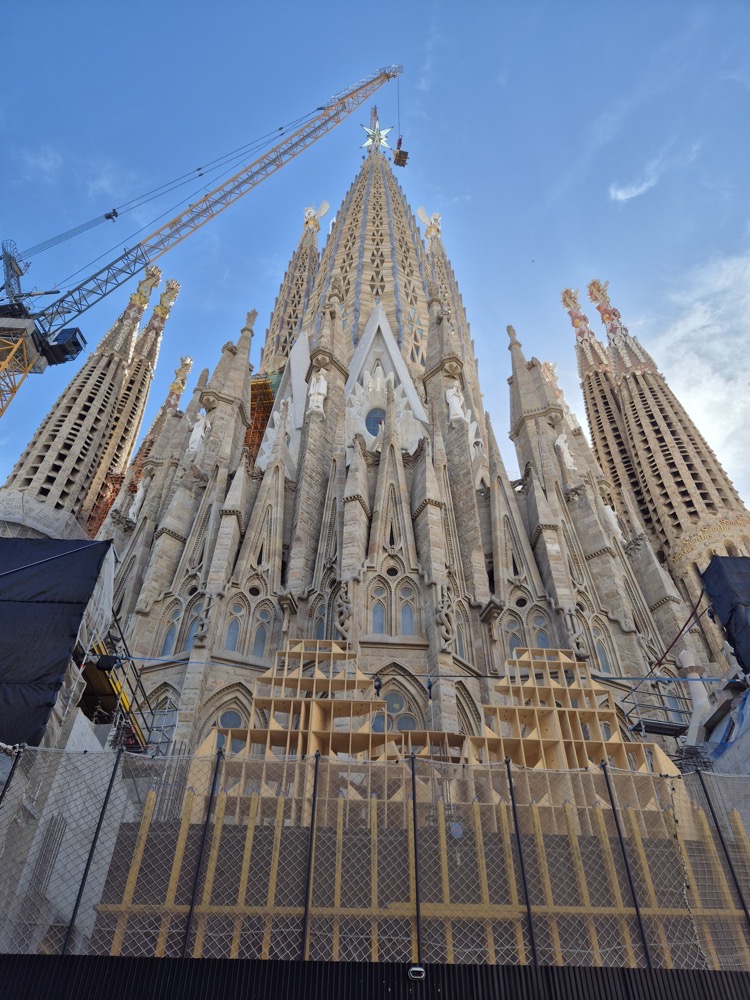
Perhaps the new chapel on the left of this photo?
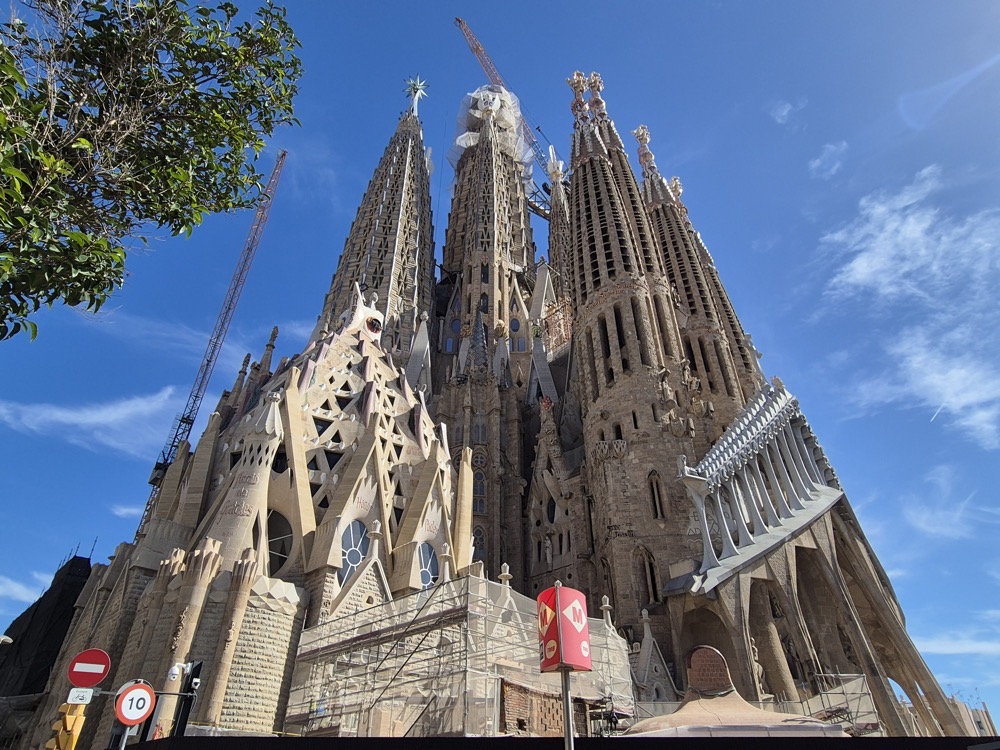
Here's the stunning new Passion Façade.
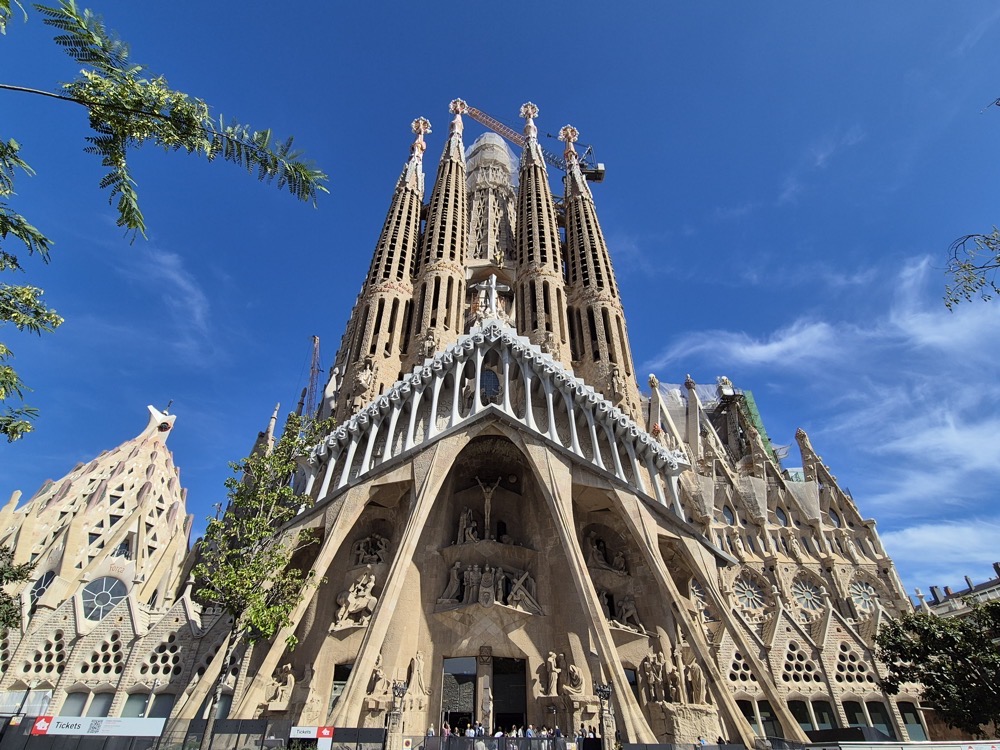
From here we opted to walk back to our hotel, mostly along the Diagonal.
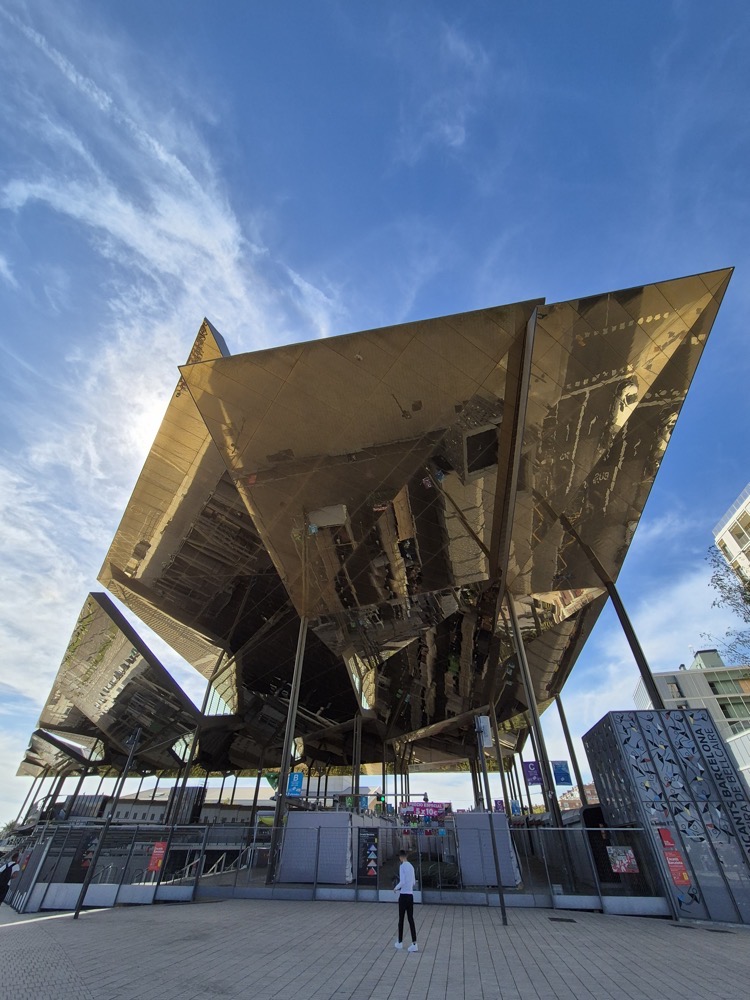
It's a decent walk, taking you past various interesting sights.
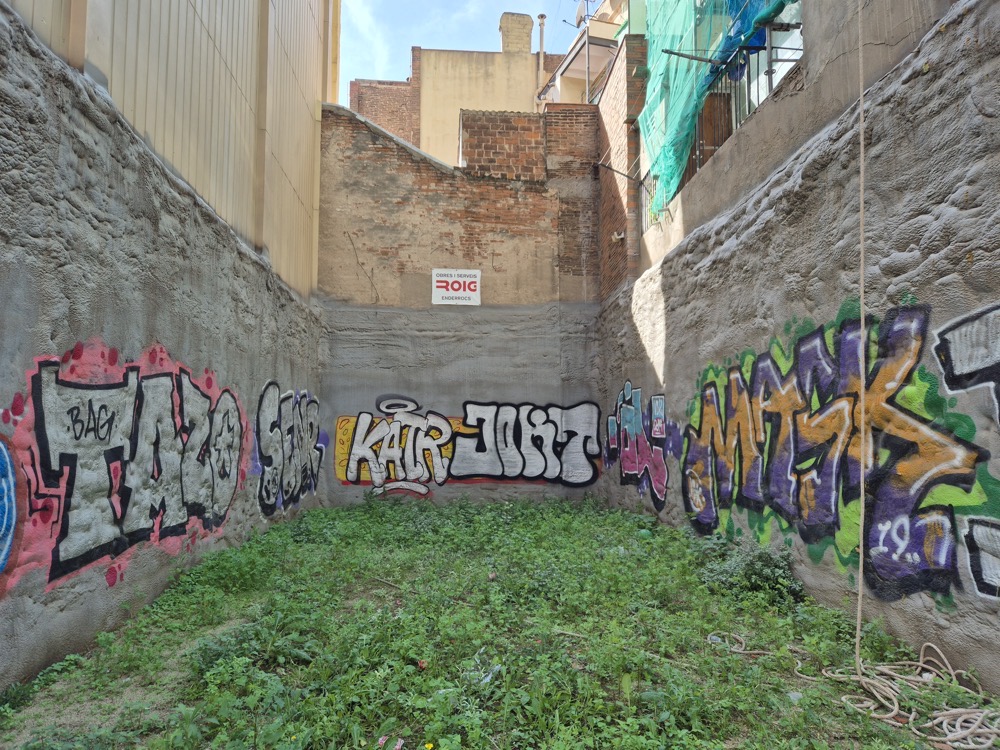
We cut down to the waterfront for the last section.
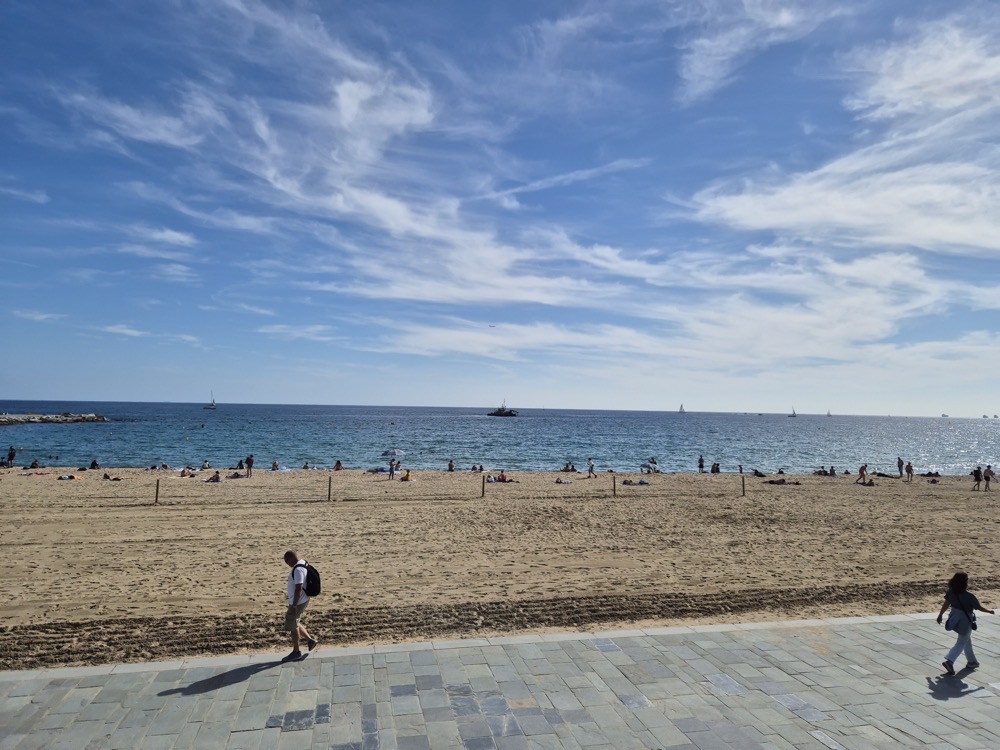
Our room in the Hilton overlooked the Autodesk office. Right now we're in Tower B, the central building below.
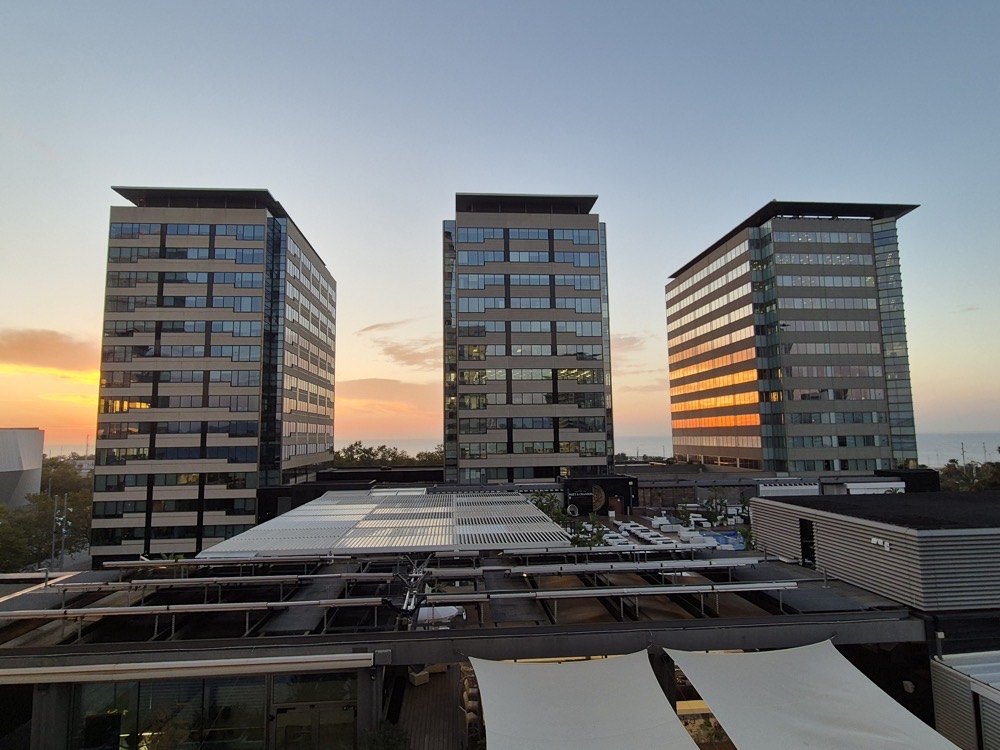
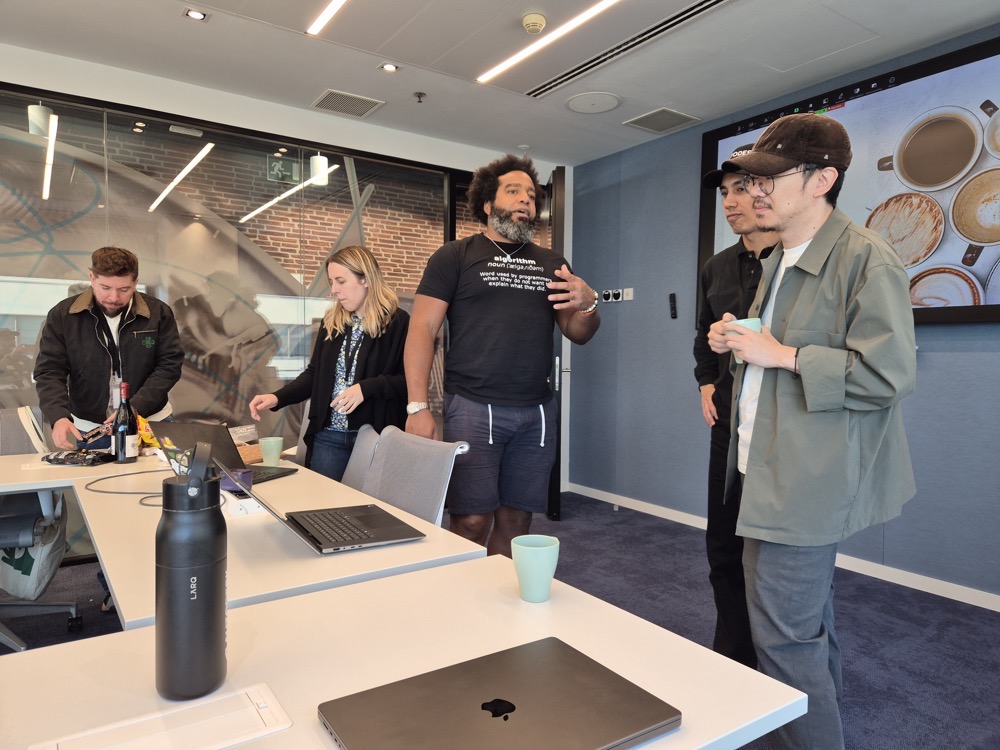
Autodesk Barcelona is a perfect event location, especially for a team that's focused on human-centric architecture.
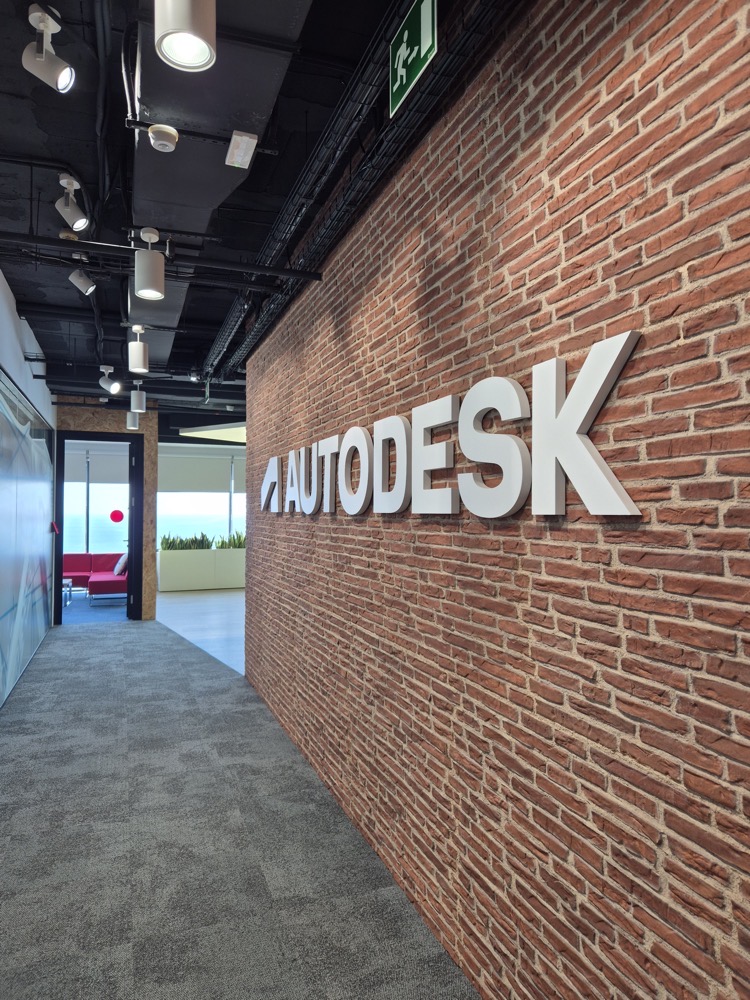
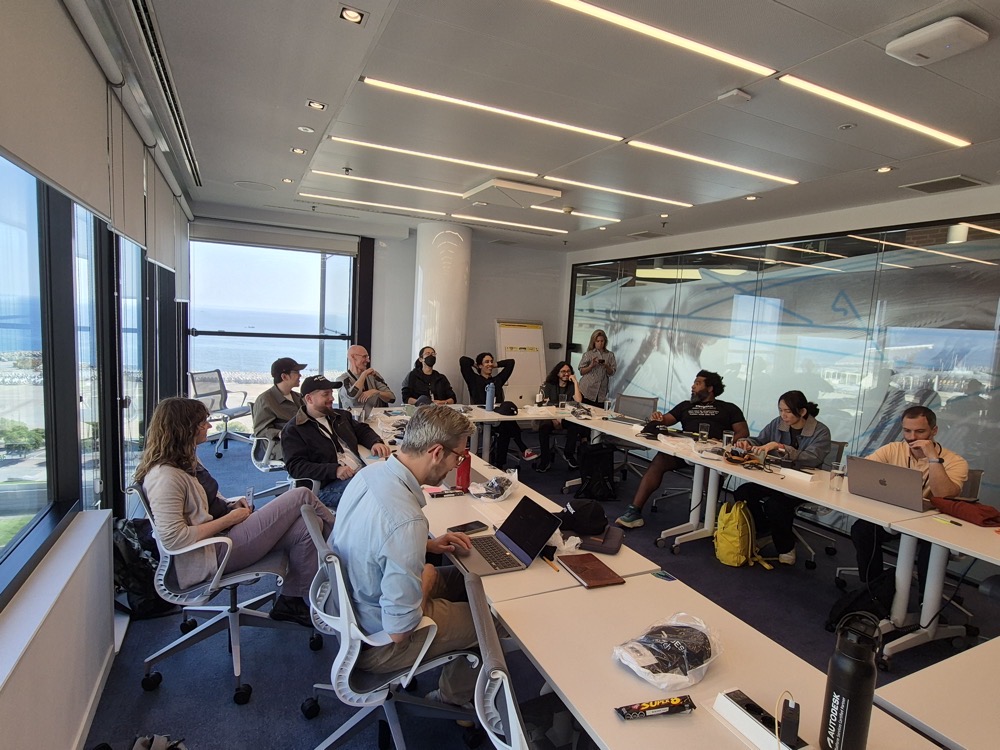
We had a large room booked for our 3-day meeting with easy access to the kitchen area for coffee breaks.
The biggest issue with the Barcelona office is that you can literally see the beach from it. And people were still very much enjoying the last days of summer, even in early October.
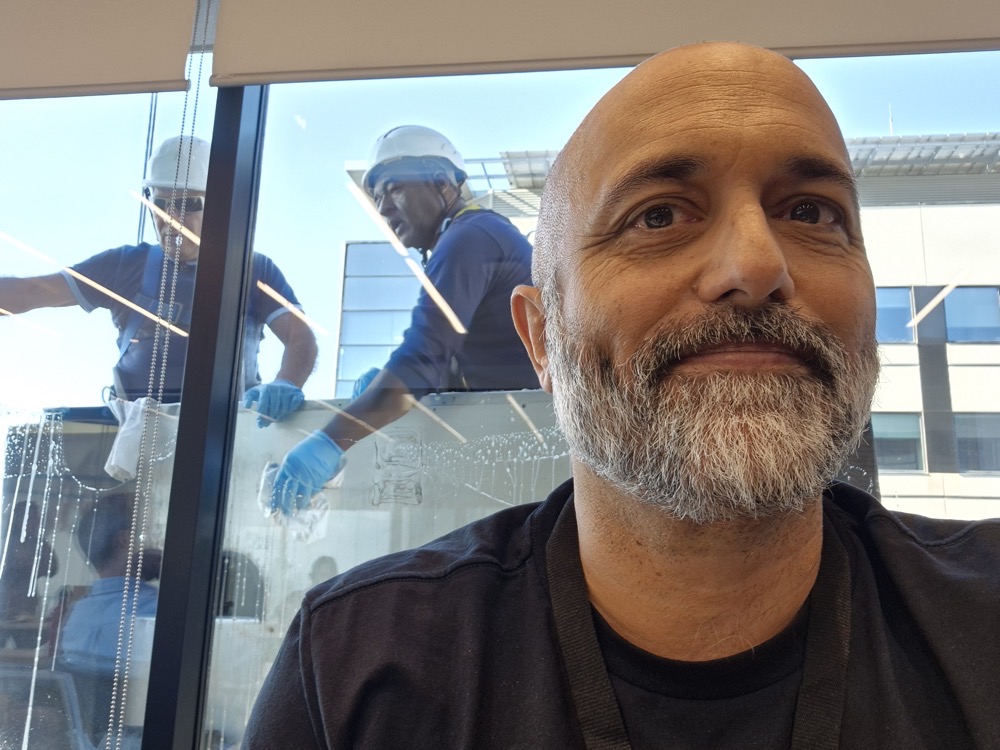
At one point we had some window cleaners pop by. Which only helped our views outside, of course.
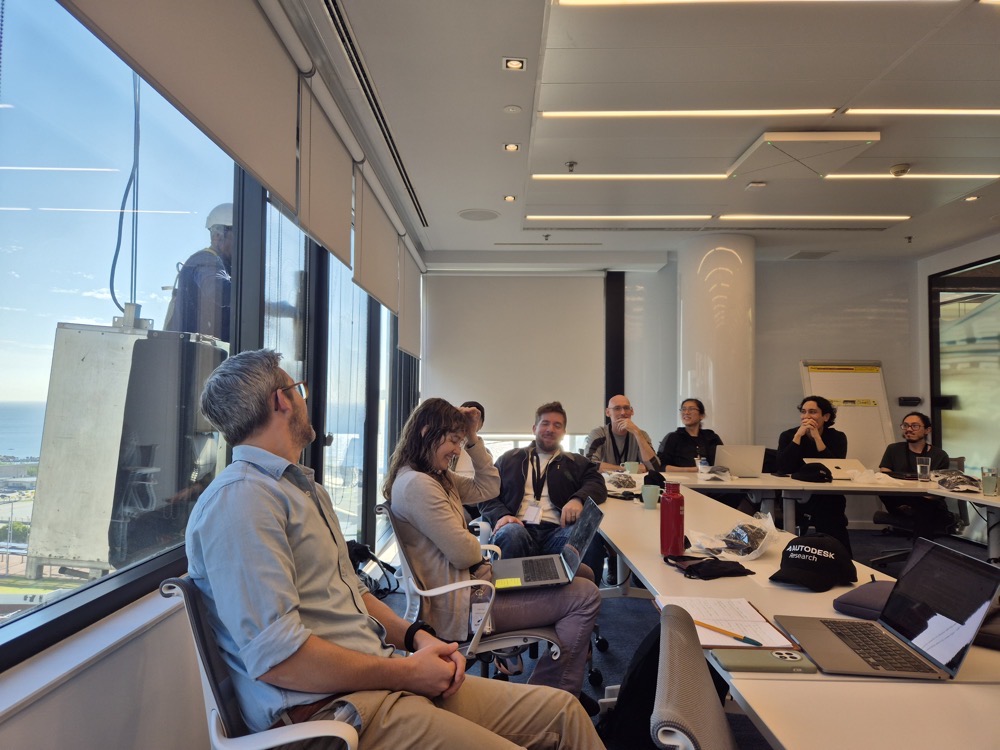
We were on the 11th floor, which is 10 floors higher than I'd be comfortable doing their job.
I won't talk much about the packed 3-day agenda, other than to give a huge shout-out to my Research colleague (and co-lead), Dagmara Szkurlat, who put a lot of work into making it a fantastic event.
One of the stand-out moments was a 45-minute vibe coding sprint that had us all develop throwaway prototypes relating to human experience capture or simulation.
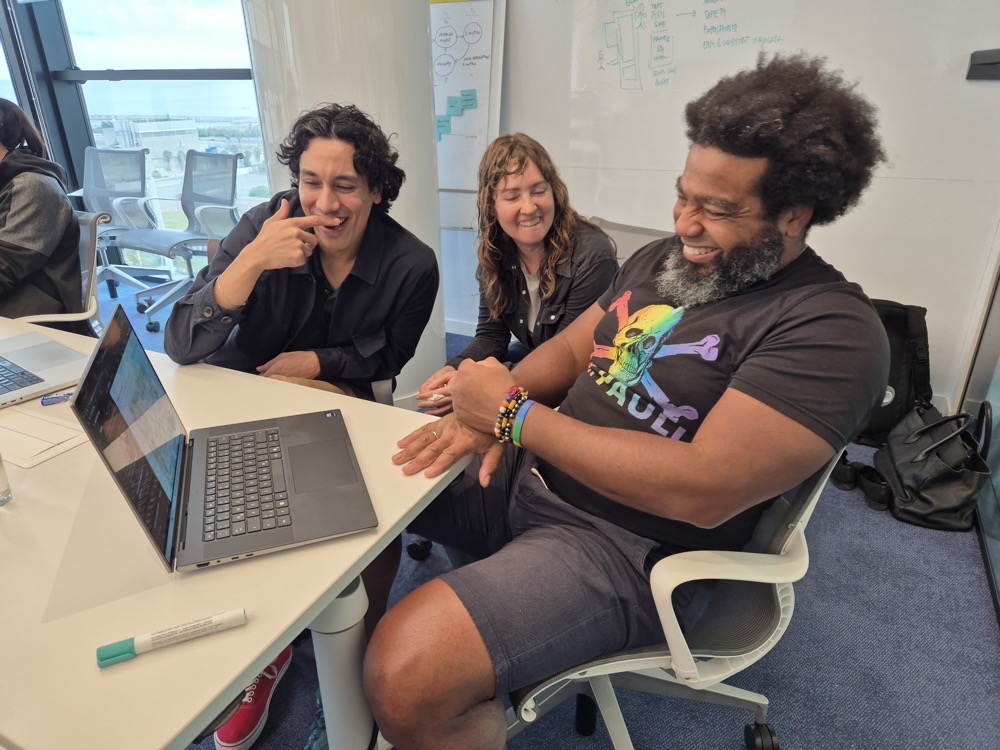
It was a really fun activity.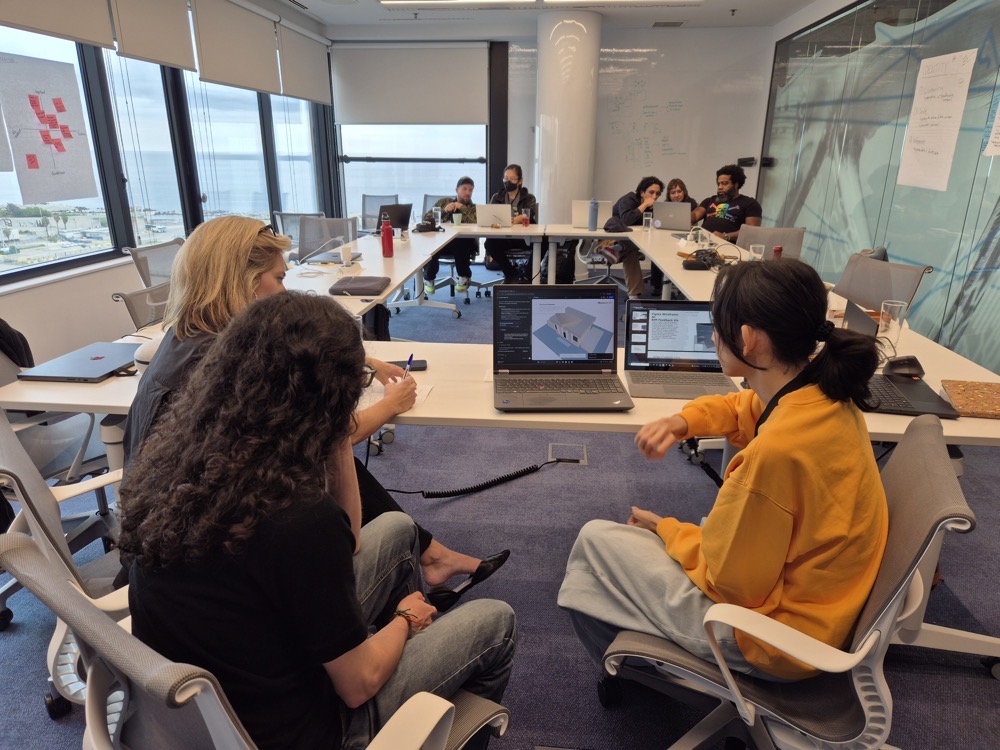
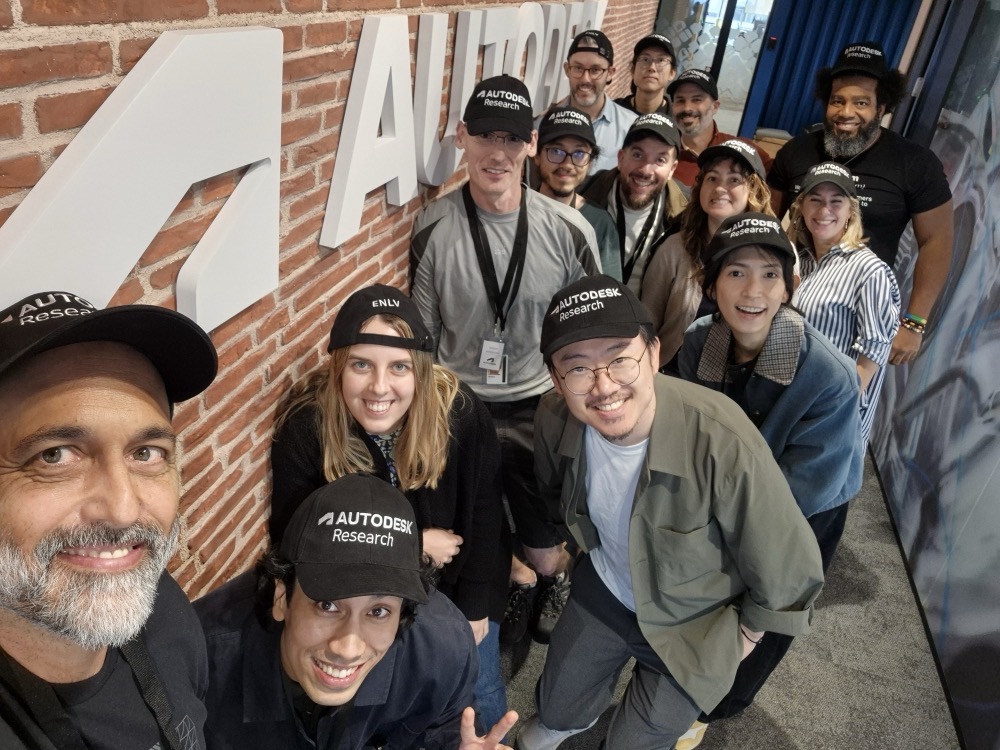
One of the teams worked from the kitchen area with its stunning views.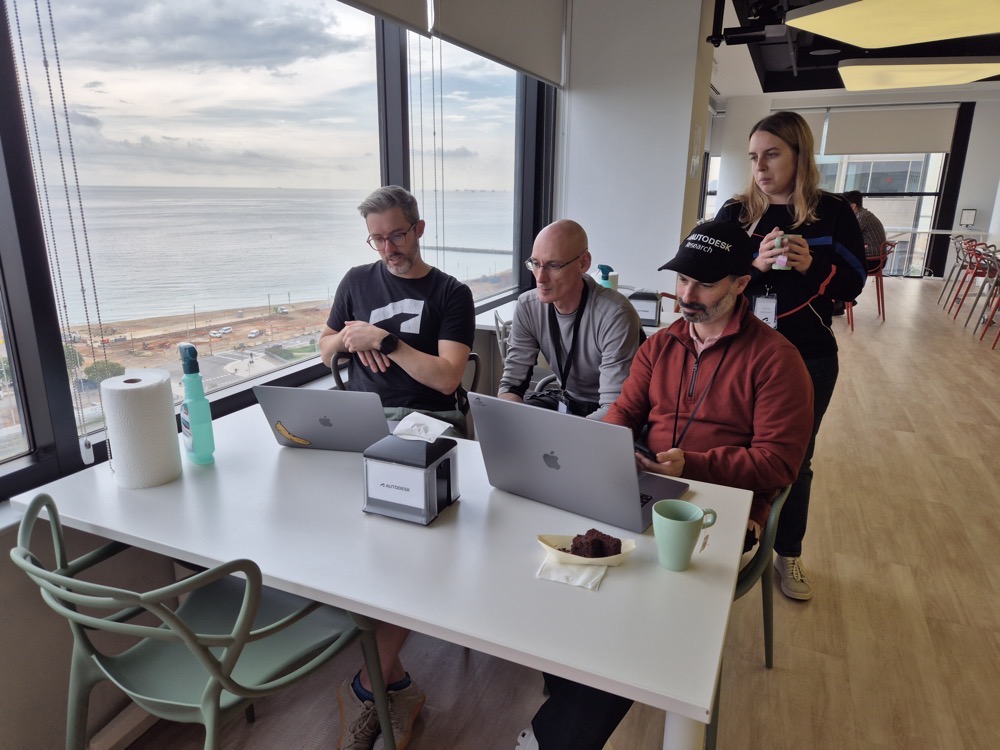 Here are a few team photos we took in our new Autodesk Research team caps.
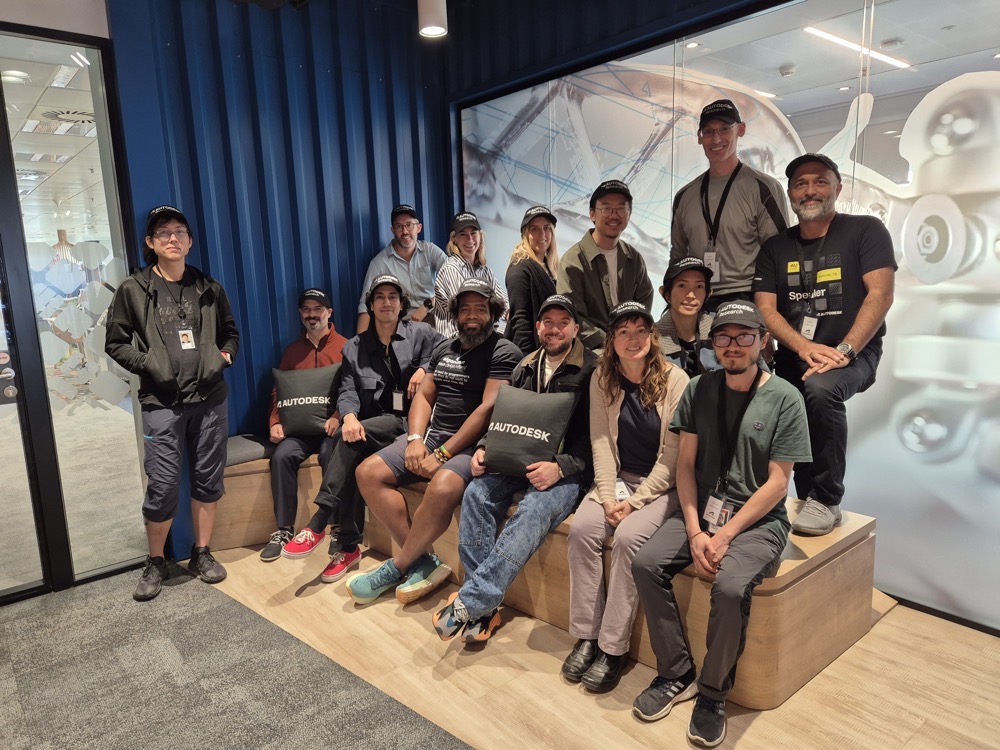
The back of the hats have "ENLV" embroidered: the acronym we use for "Enlivened Design", the internal name of our research area.
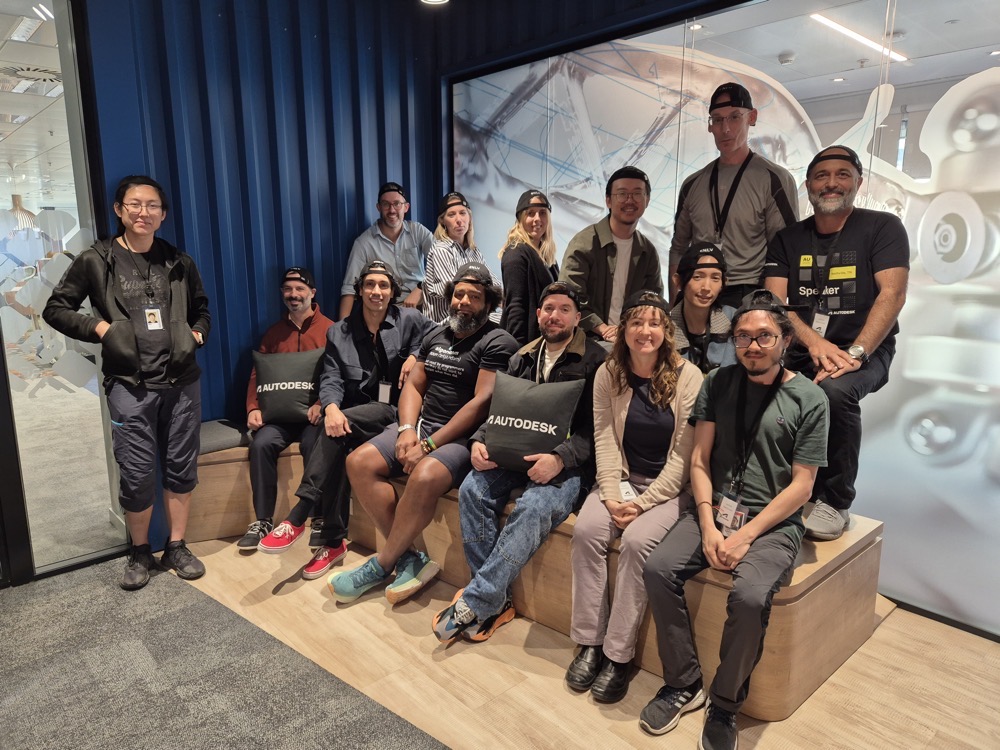
And one with us throwing our hats in the air.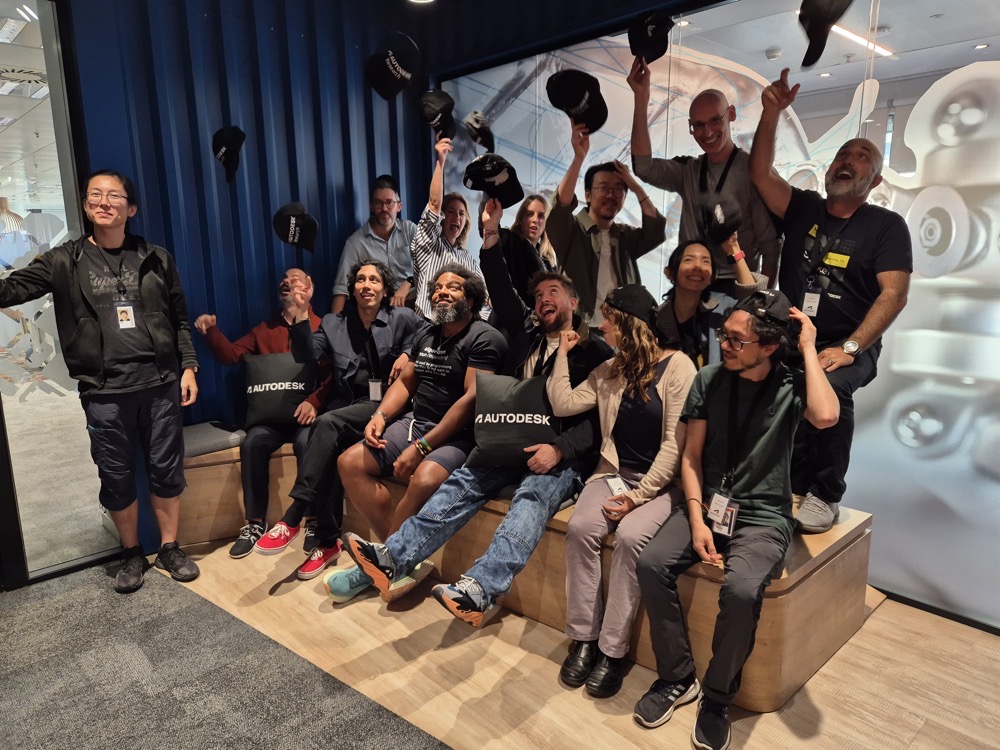
I'm really pleased with what we were able to achieve in an all-too-short 3 days. Thanks to the whole team - from left to right below: Lorenzo, Dagmara, Jeremy, Andres, Allin, Ray, Mike, Seba, Jacky, Dianne, Bon, Pru and Tomas - for your hard work and engagement!
It wasn't all work, work, work. On the evening of the first day we visited Casa Batlló, another of Gaudí's famous creations in downtown Barcelona.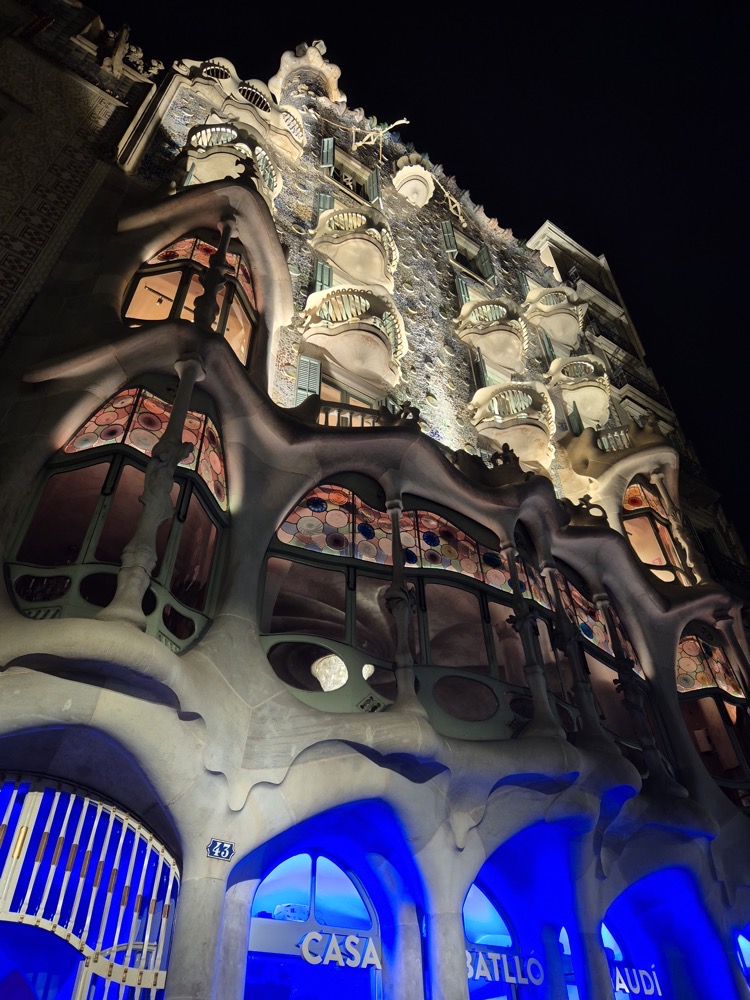
Over the weekend my family and I stayed in an Airbnb around the corner, so I was able to take photos at various times of the day.
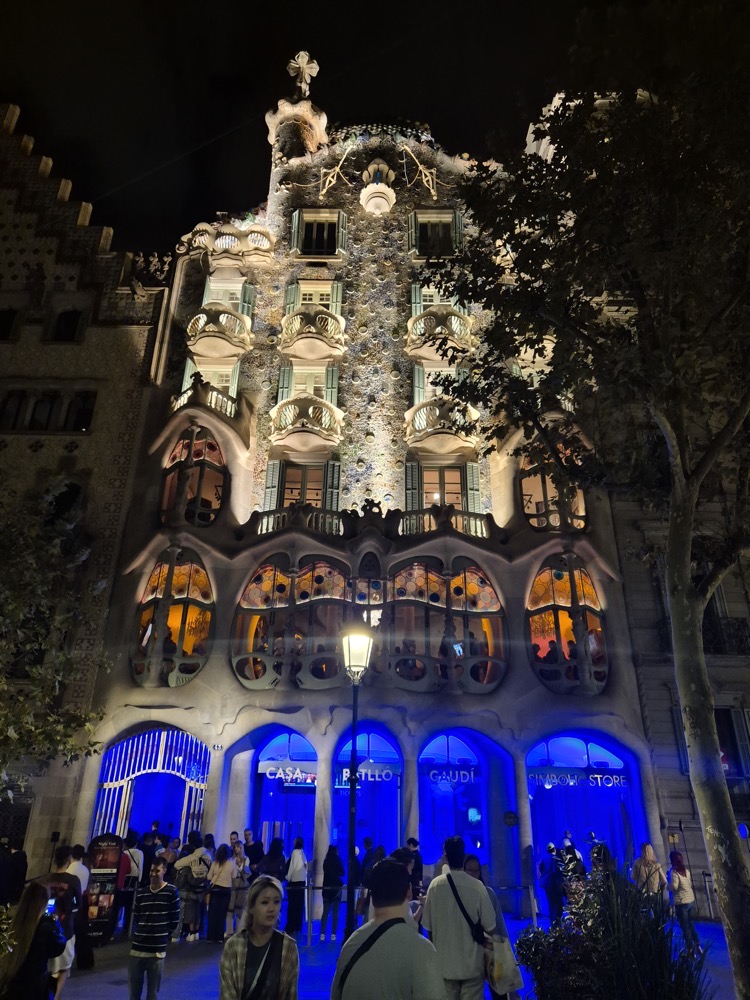
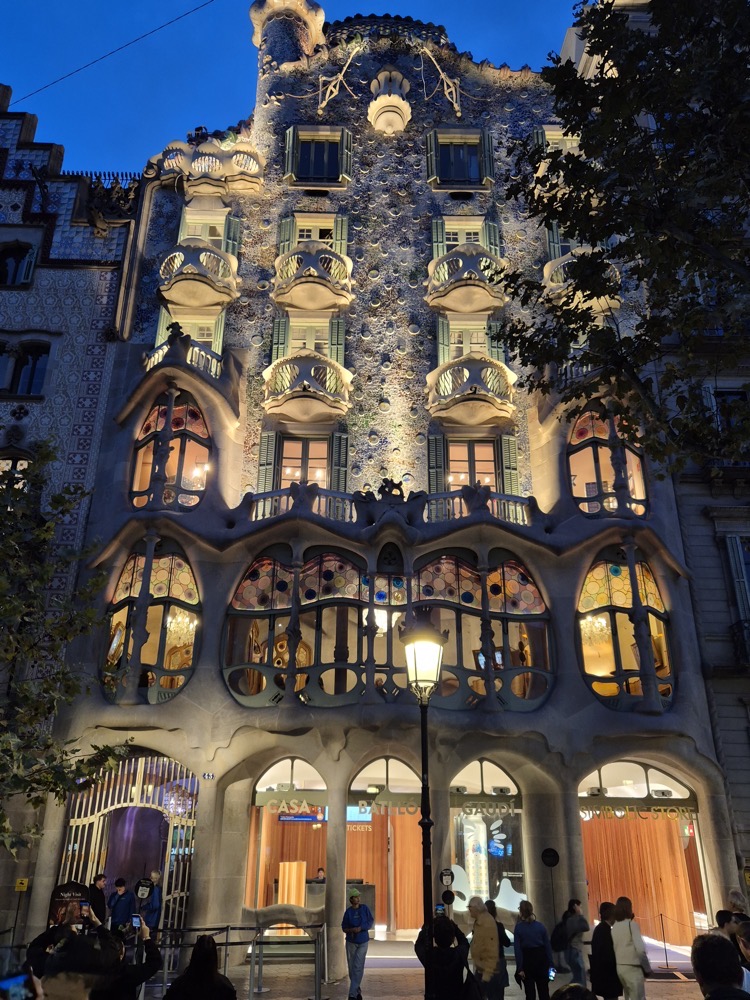
When there weren't tours it didn't have a glowing blue ground floor, which was quite nice.
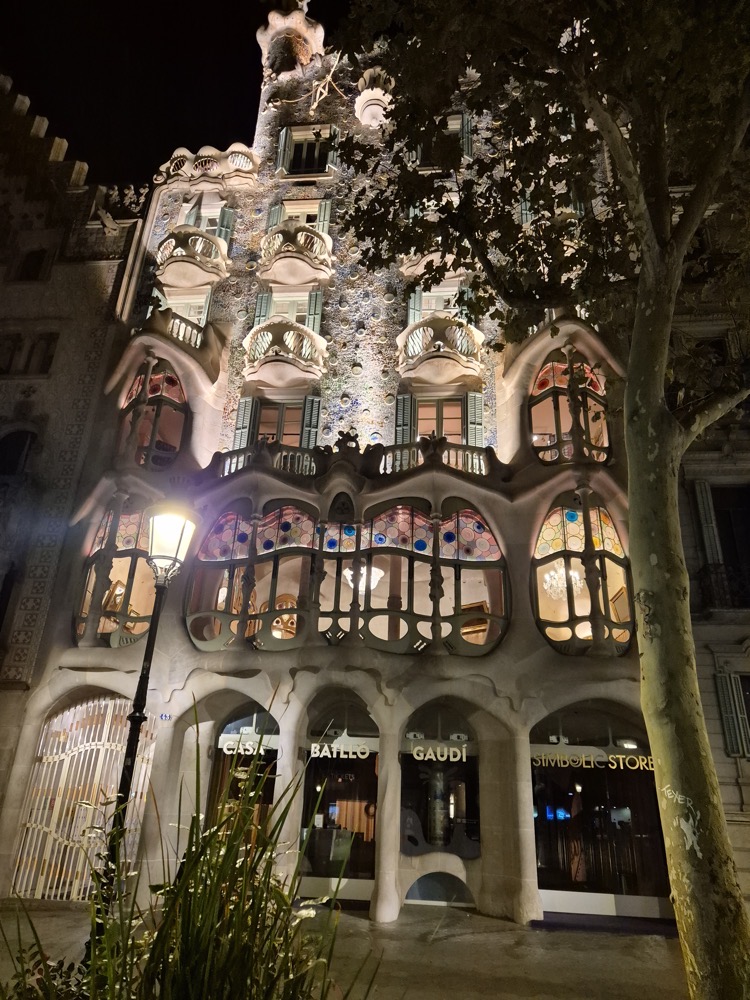
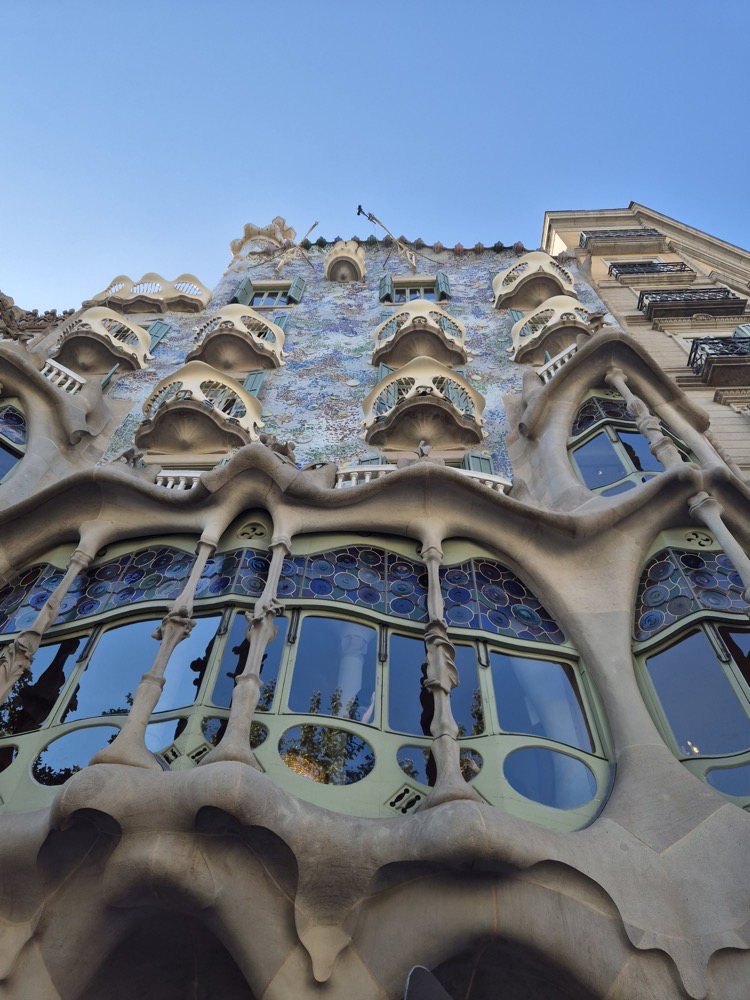
During the day the colors were stunning.
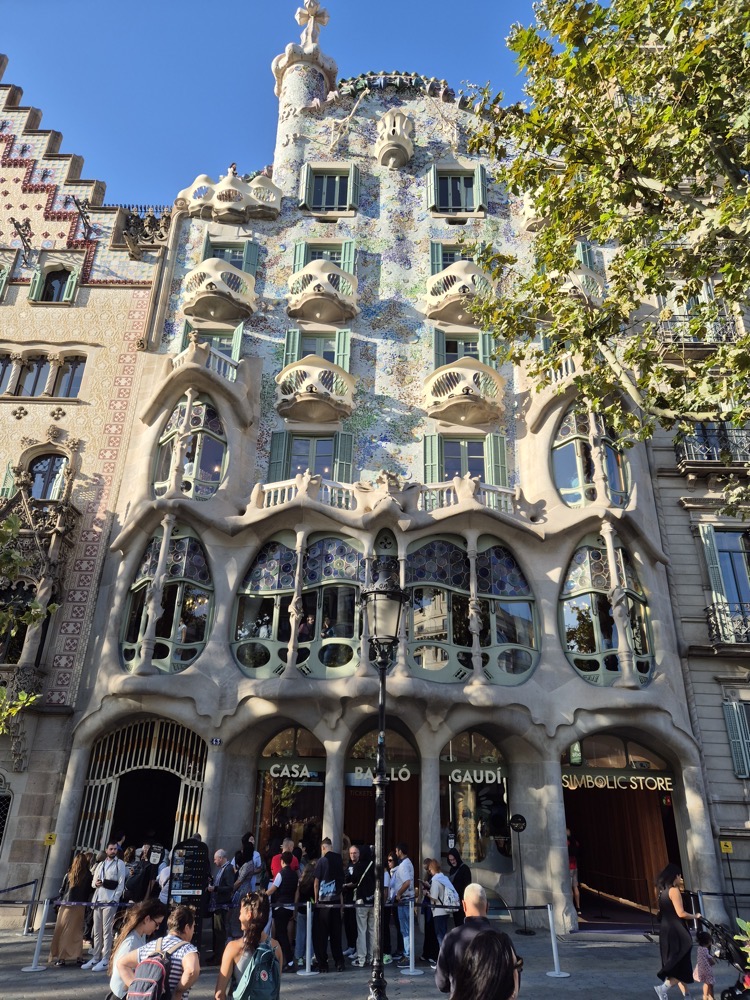
It's such a gorgeous building.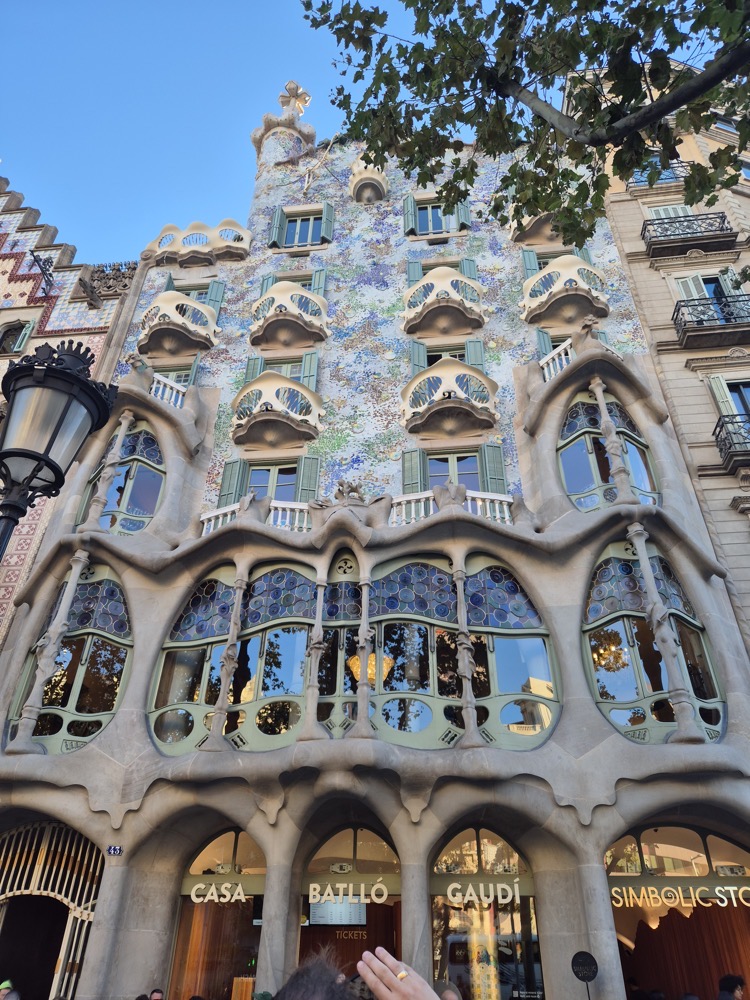
 Our tour was at night, which meant the inside was artificially lit. The interior had a projection of water running down it. It was interesting to see the response of the team to this: the people focused on simulation and computer graphics were impressed by the precision of the mapping.
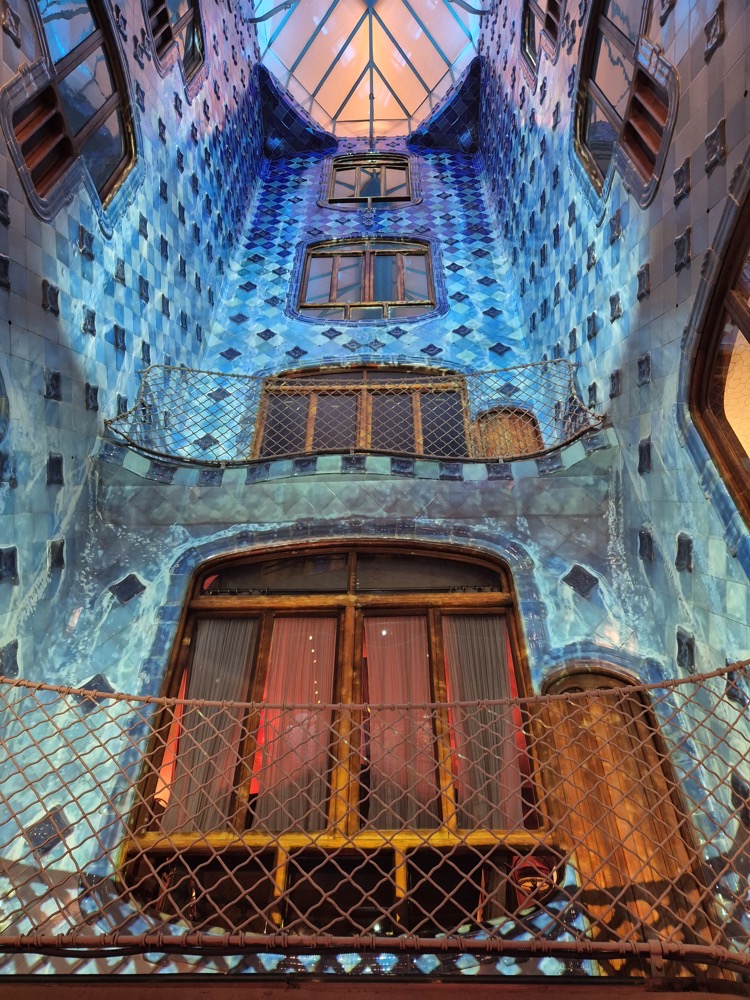
The architects liked it a lot less.
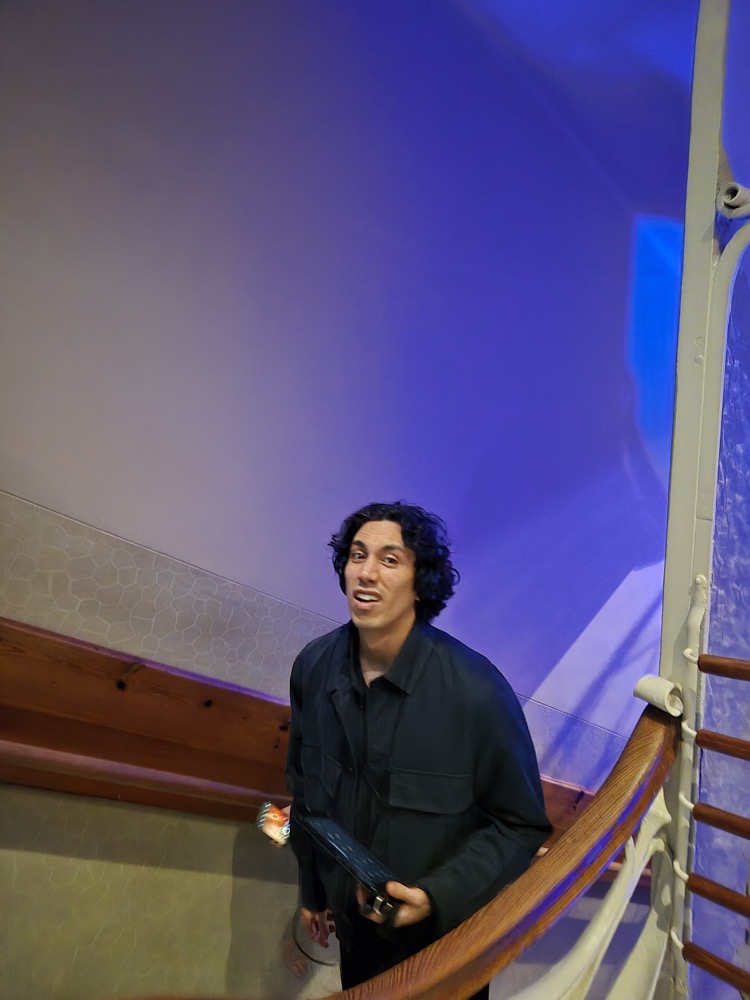
Spending an extra 10 Euros on Gold access gave us a much shorter (basically non-existent) queue to get in, plus access to a few extras inside, including the apartment once the main residence of the Batlló family.
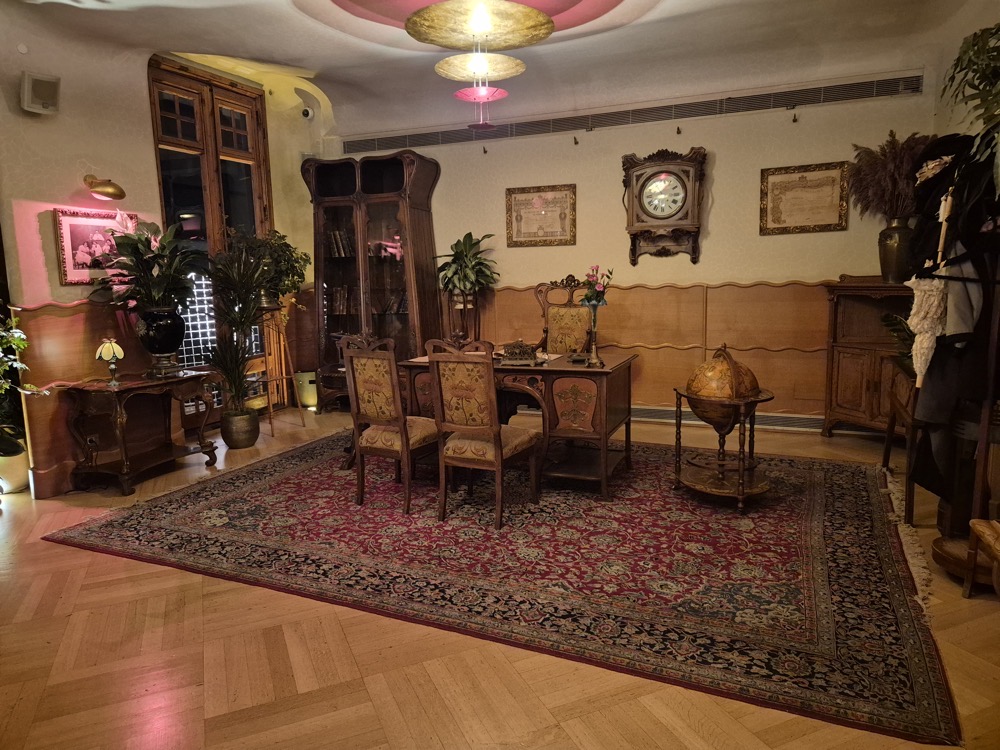
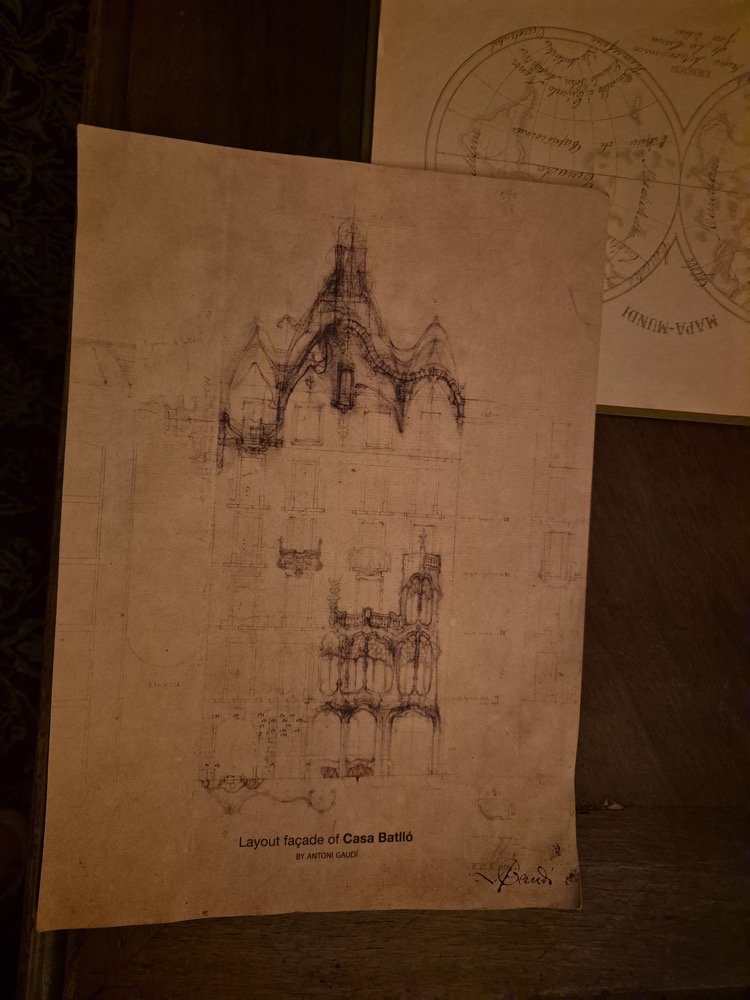
On the table it was nice to see a few reproductions of original sketches.
These are presumably photos of members of the family.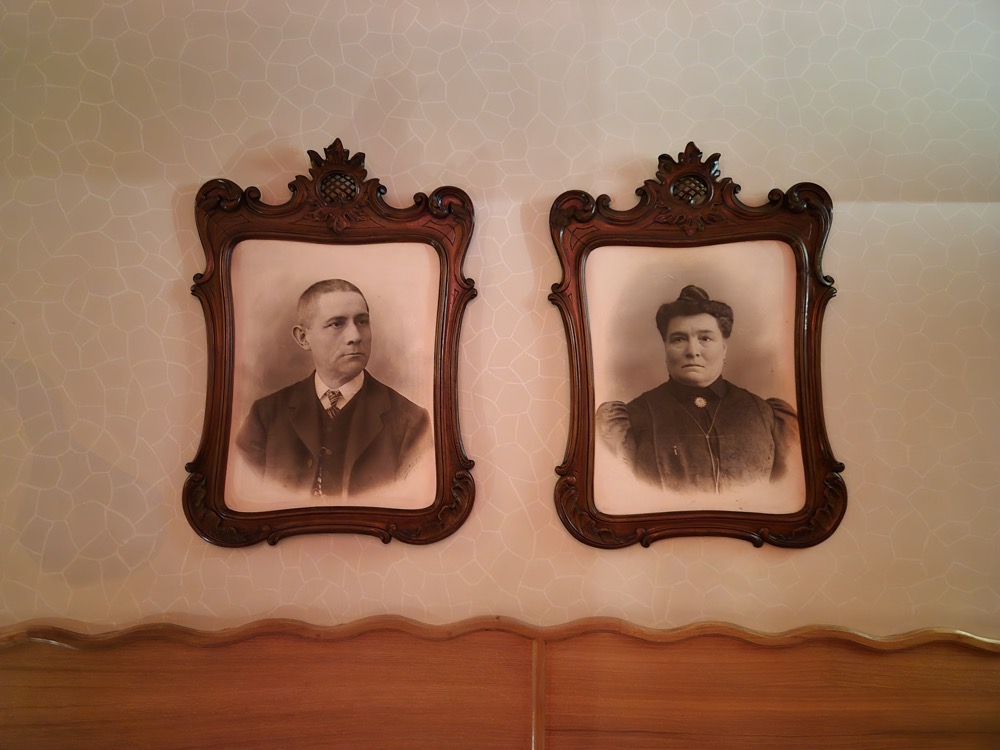
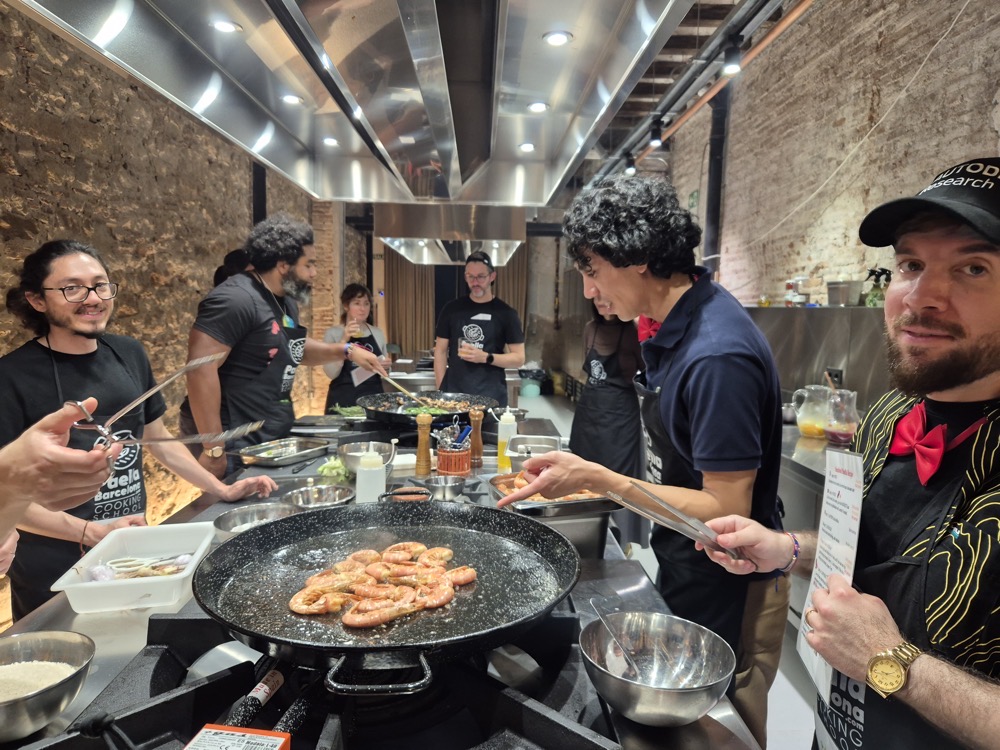
On the evening of the second day, we had a paella-making workshop.We were split into two teams, one focused on preparing red wine sangria and seafood paella, the other on cava sangria and vegan paella. Both teams would get to eat and drink whatever they wanted - this was just about the prep. Lorenzo was our captain ("yes, chef!").
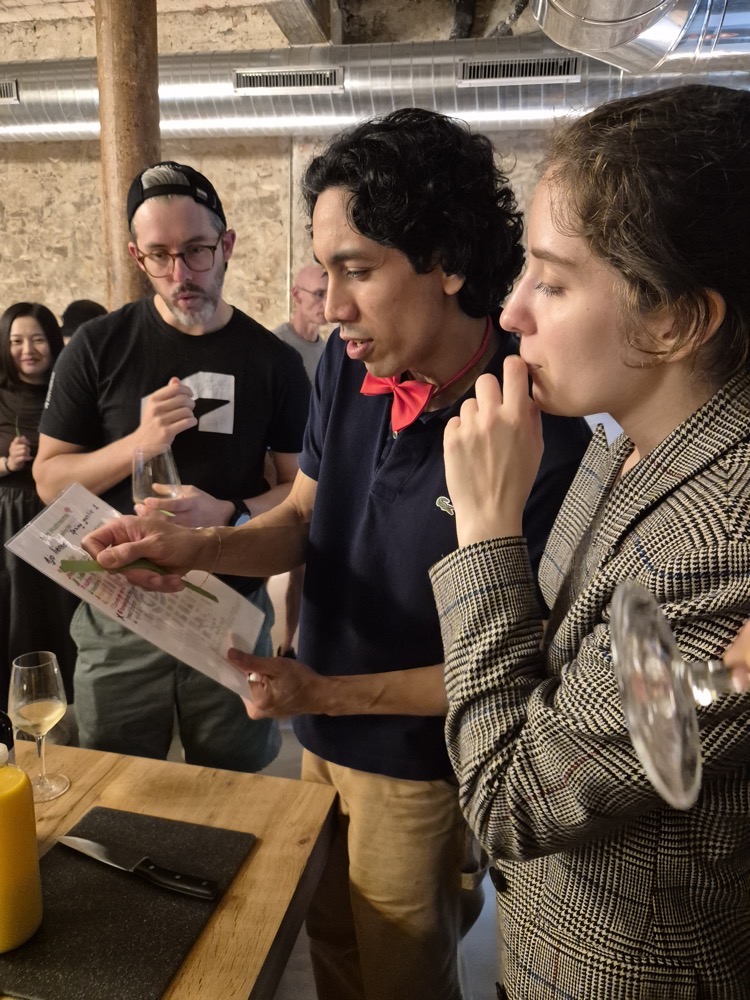
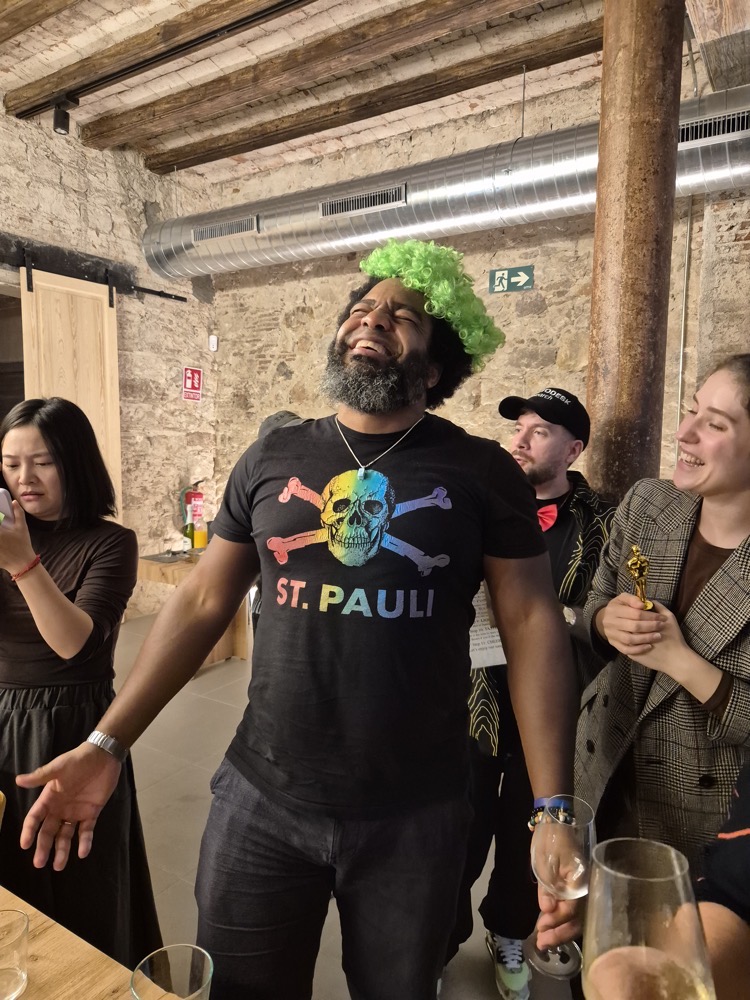
Tomas volunteered to be our judge (we needed one from each team). That was before he realised he'd have to wear a wig.
To get started we headed to the local market, where we bought the ingredients.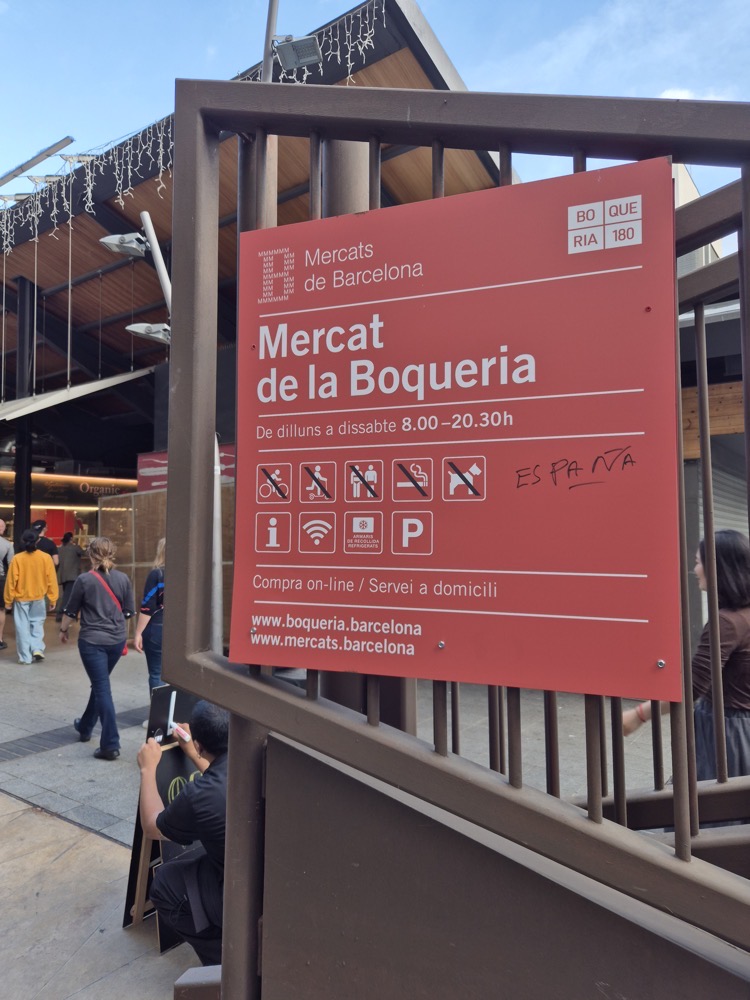
It was a really colourful place (and a fun experience).
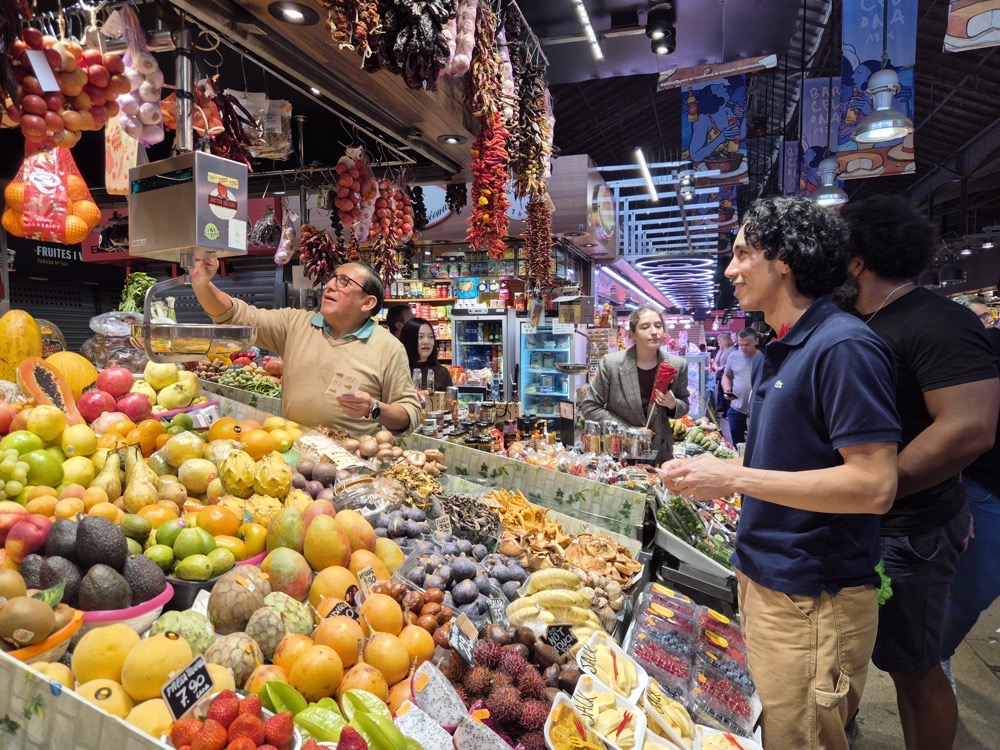
Part of the struggle was finding stallholders that would accept our special money (only certain stalls were "in on it"). I don't know if the problem was the provided map or the assigned map-reader, but it took us far longer to get the vegan ingredients than it did for "team seafood".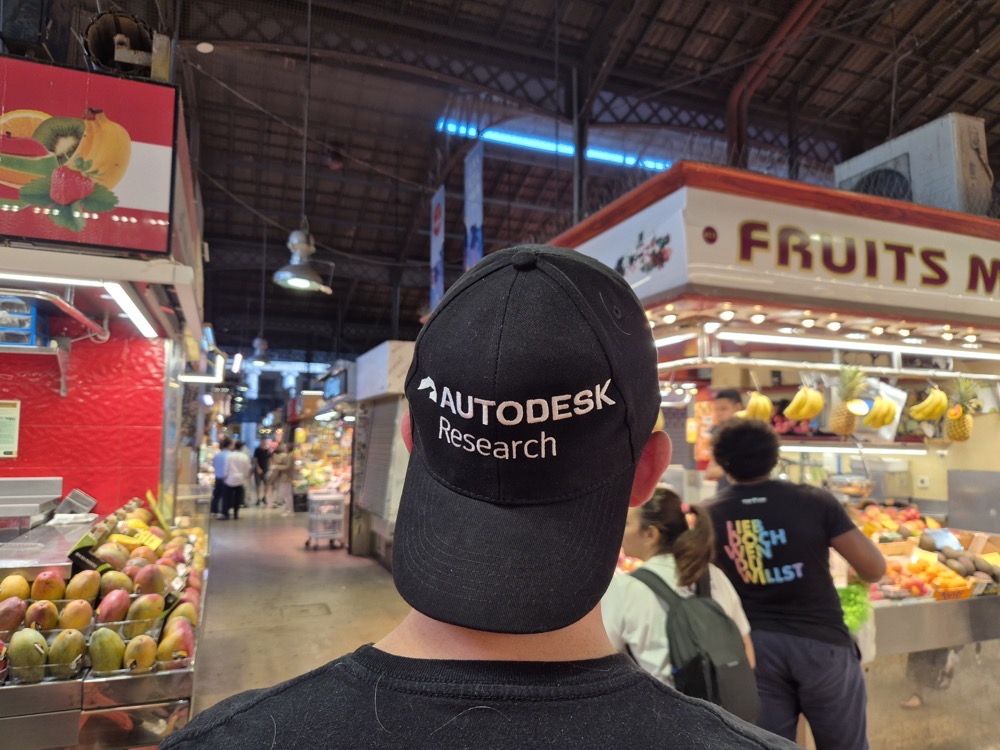
The seafood looked incredible, of course.
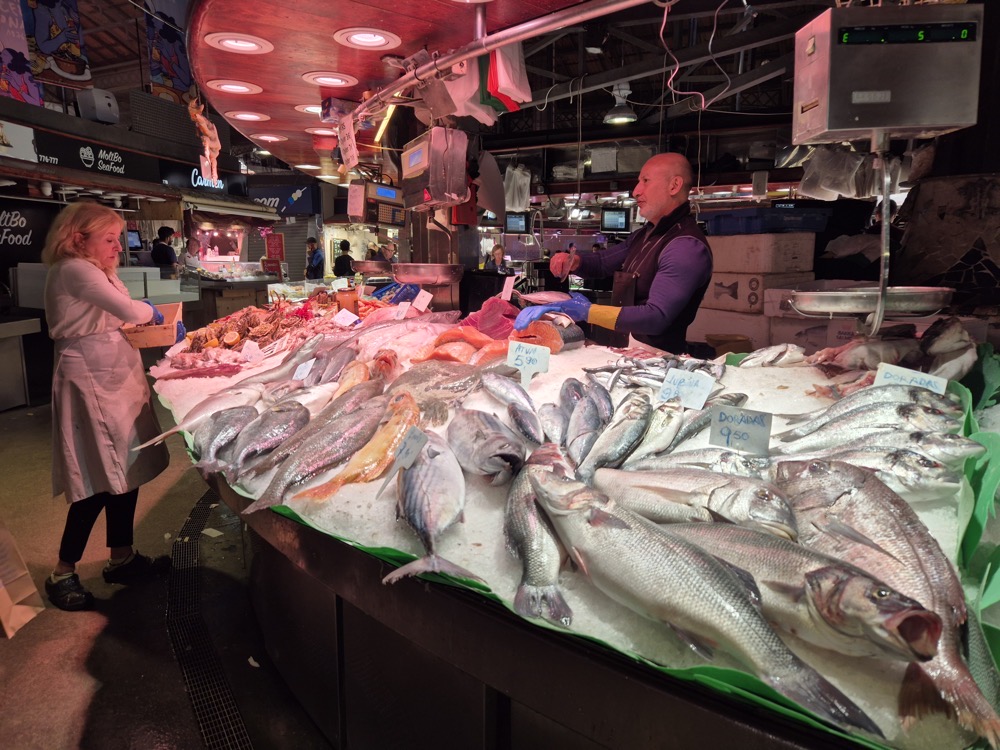
Seba was the captain for the seafood team.
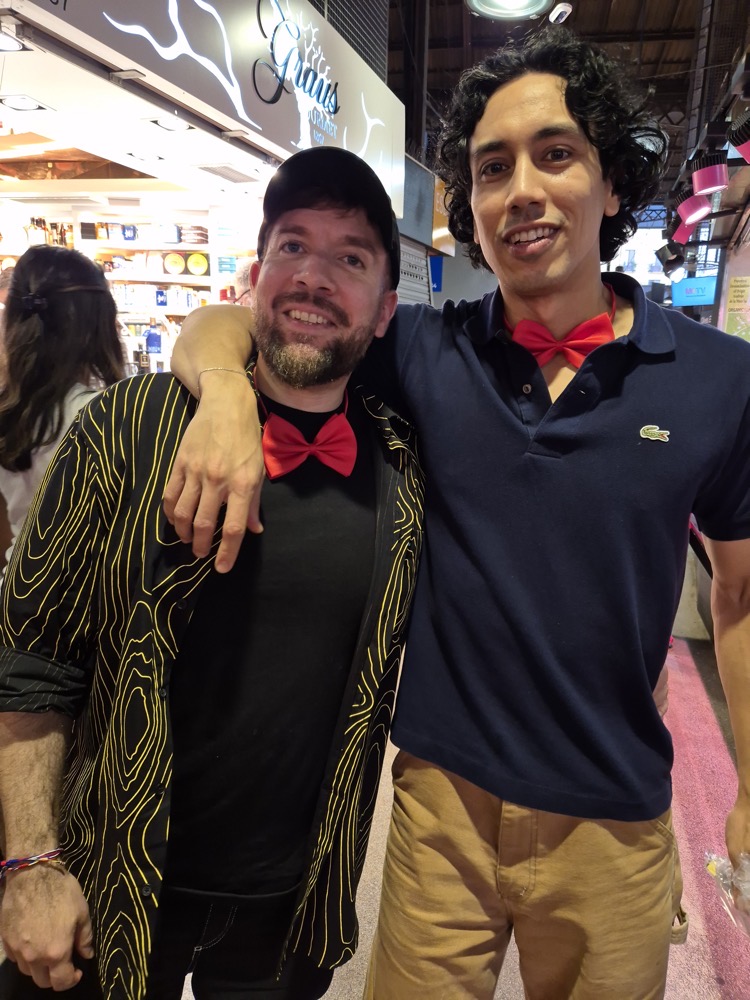
Back at the workshop, we got started on the preparation.
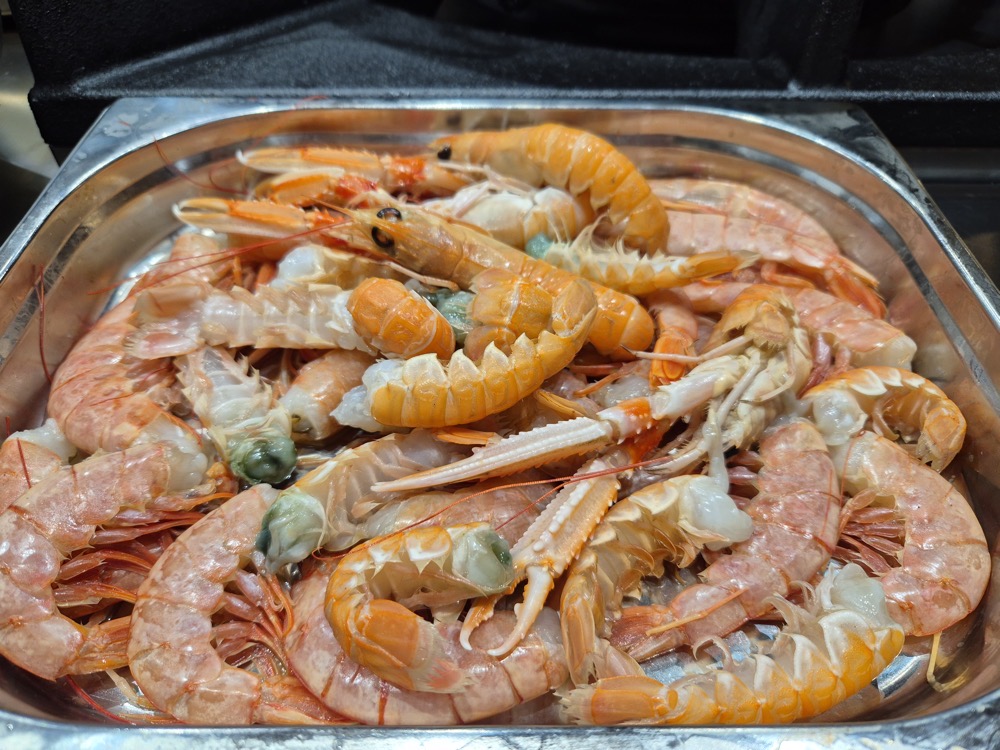
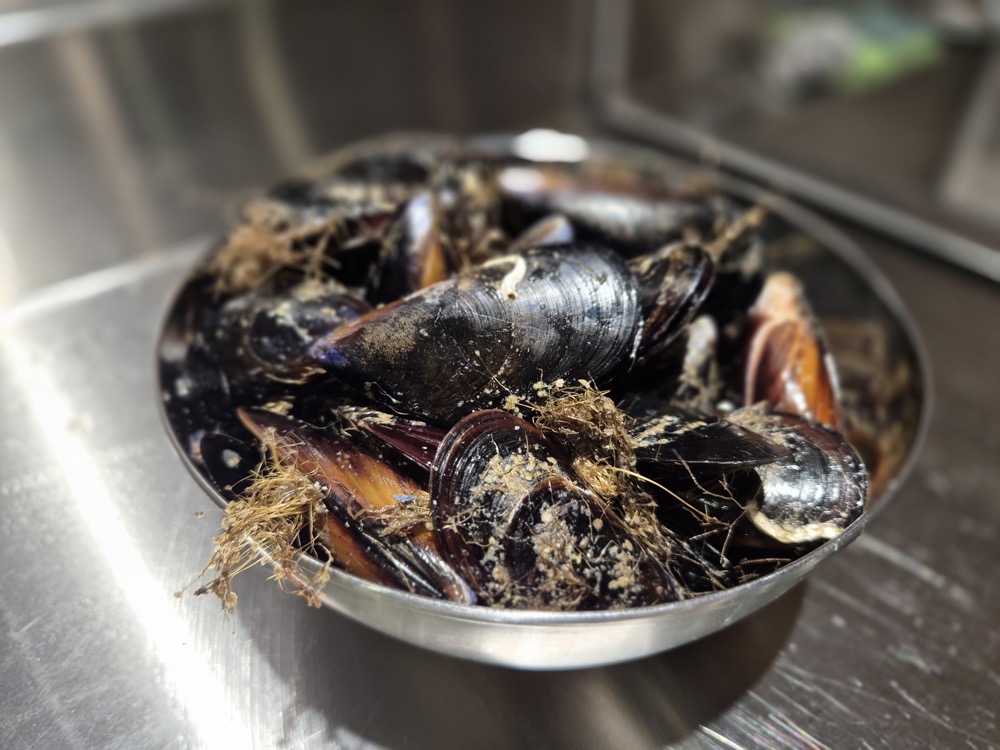
My own job was to chop mushrooms. Here's a photo taken by Ray Wang (he has a proper camera and a great eye).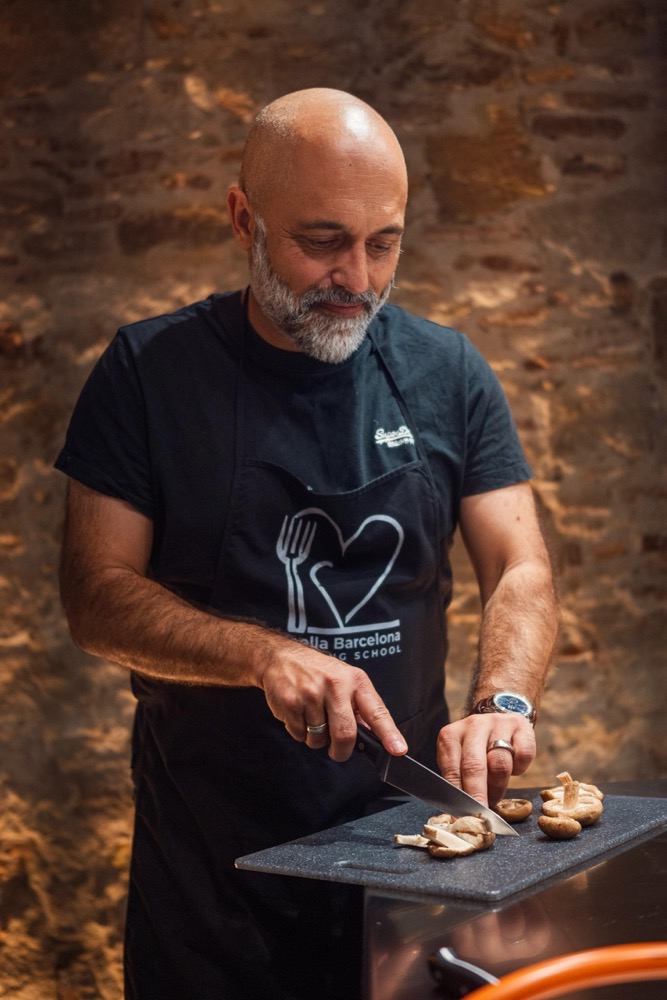
Some of the steps for the seafood paella were on the icky side, but still a lot of fun.
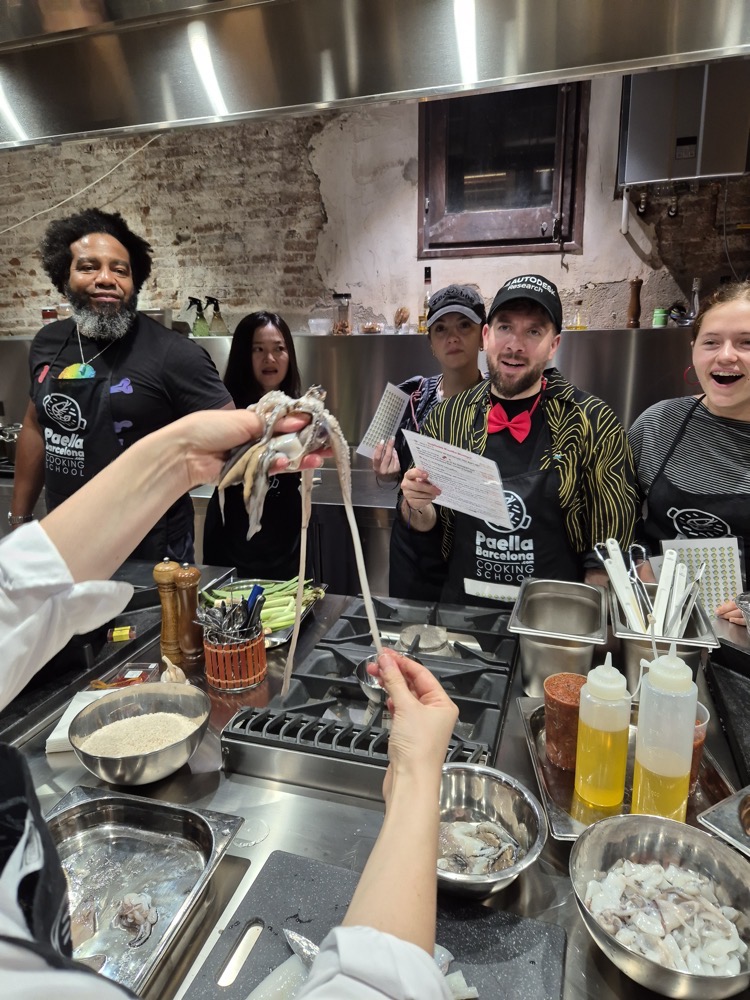
We had relatively light supervision - Maria, who was running the workshop, split her time between the two teams - but the work progressed surprisingly well.
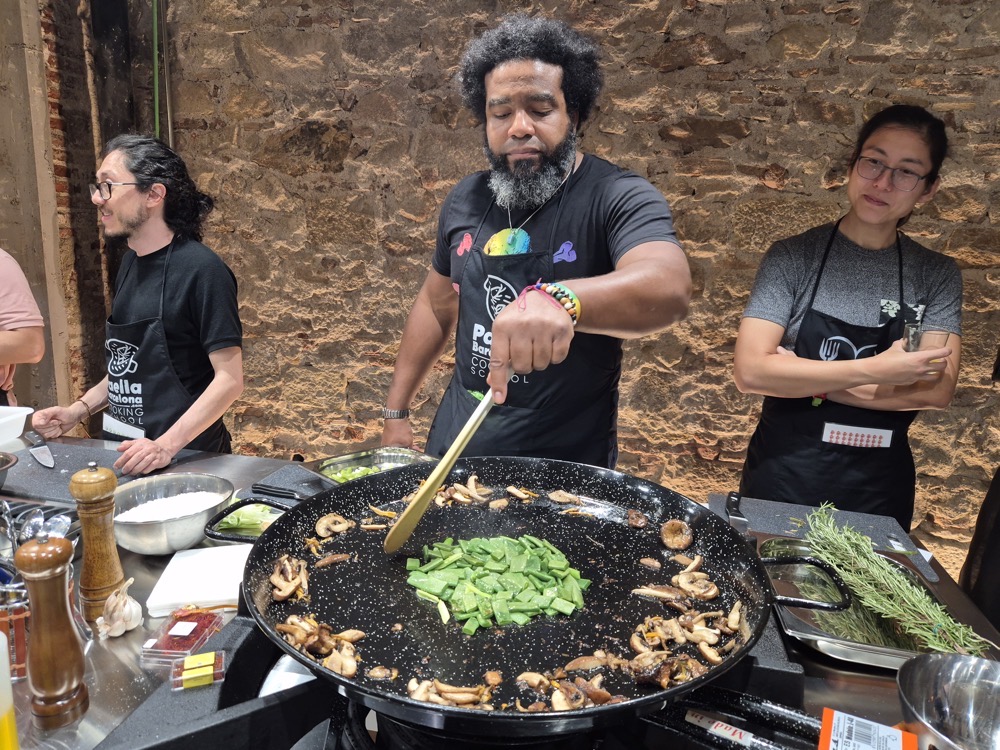
The seafood team probably had more work to do, as you might expect.
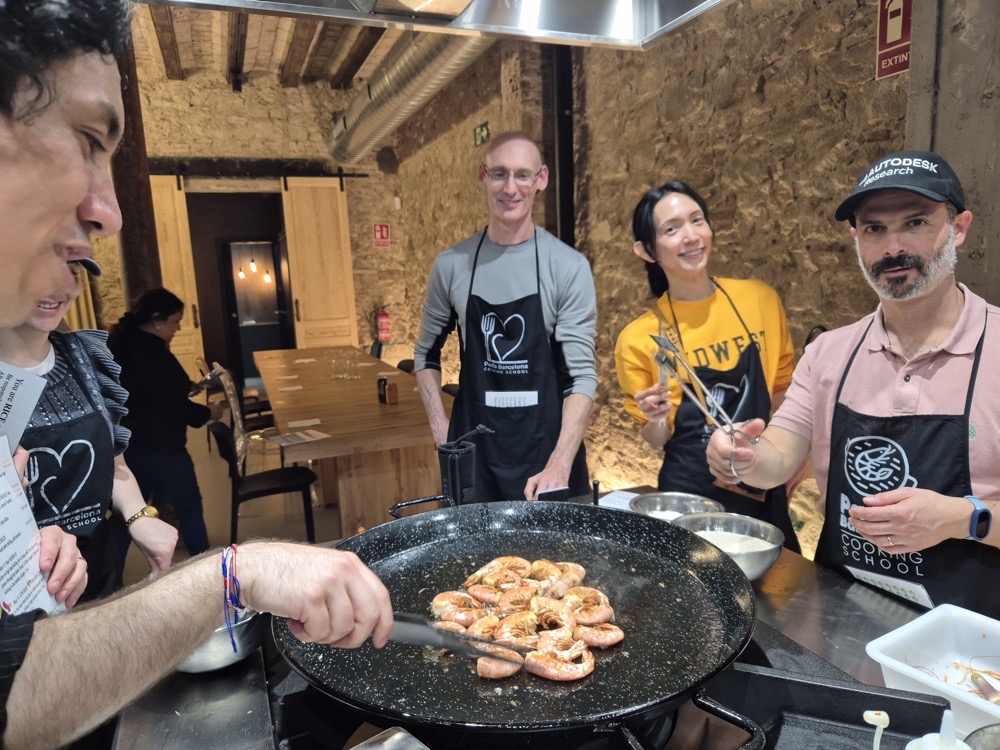
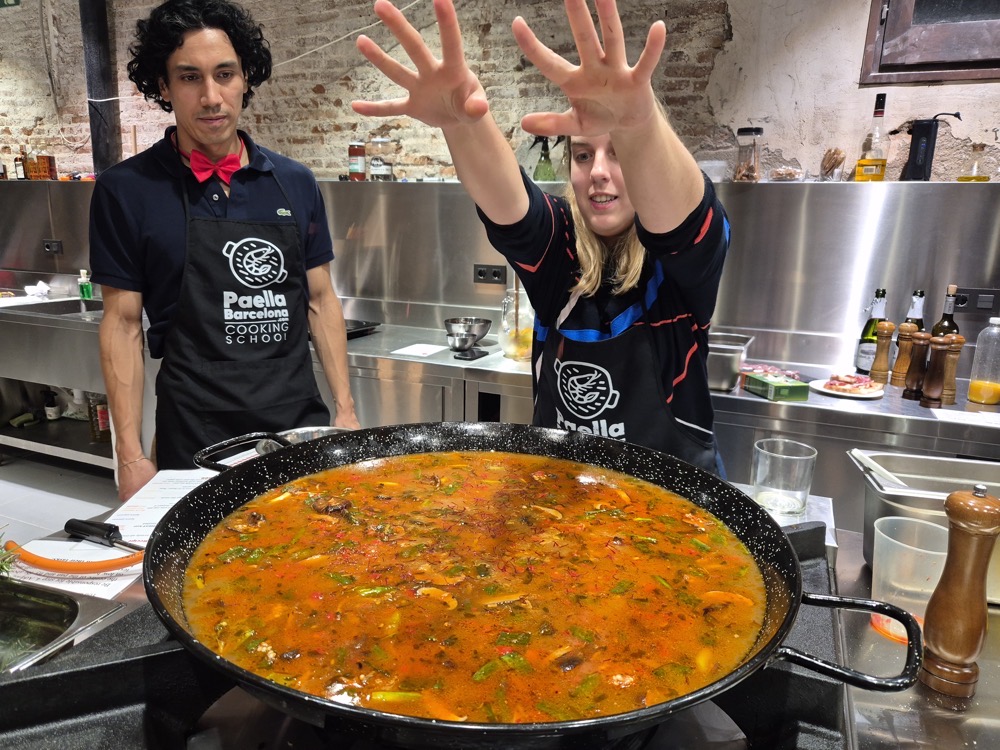
That's not to say the vegan paella was easy: it's way more interesting than rice with vegetables.
Dagmara was our "spice girl", and was in charge of - among other things - adding saffron.
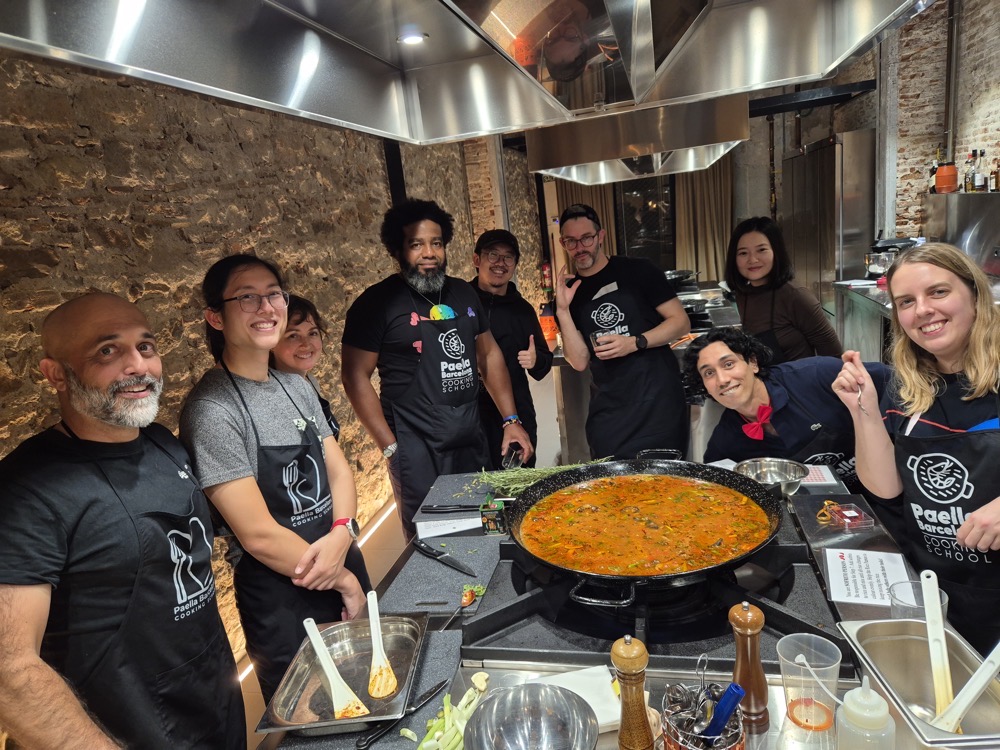
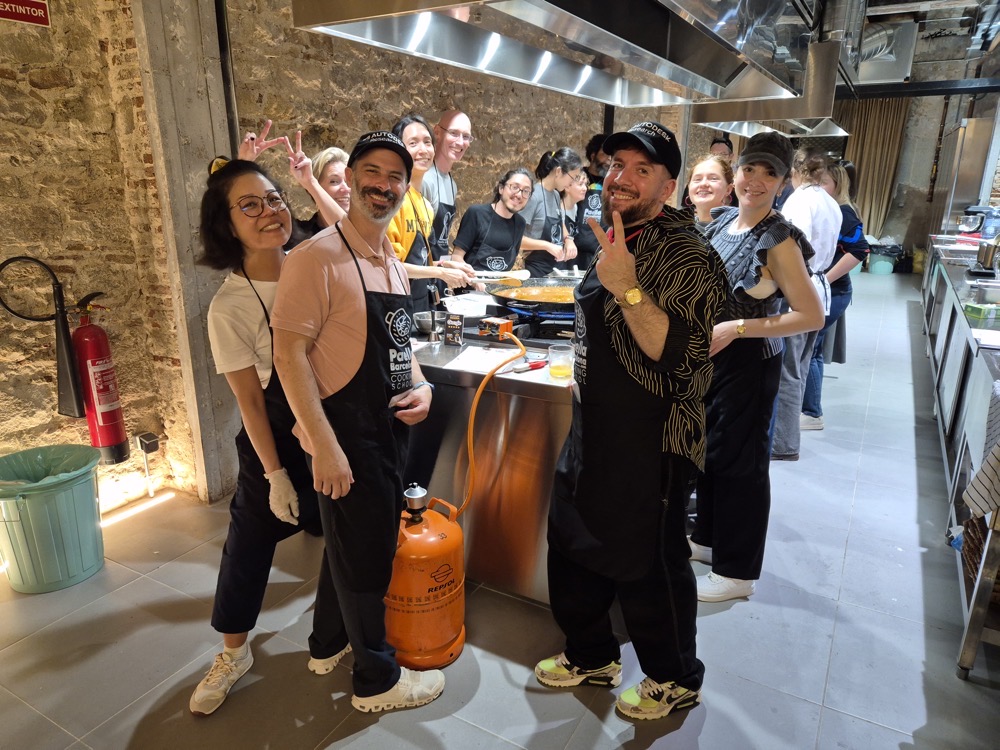
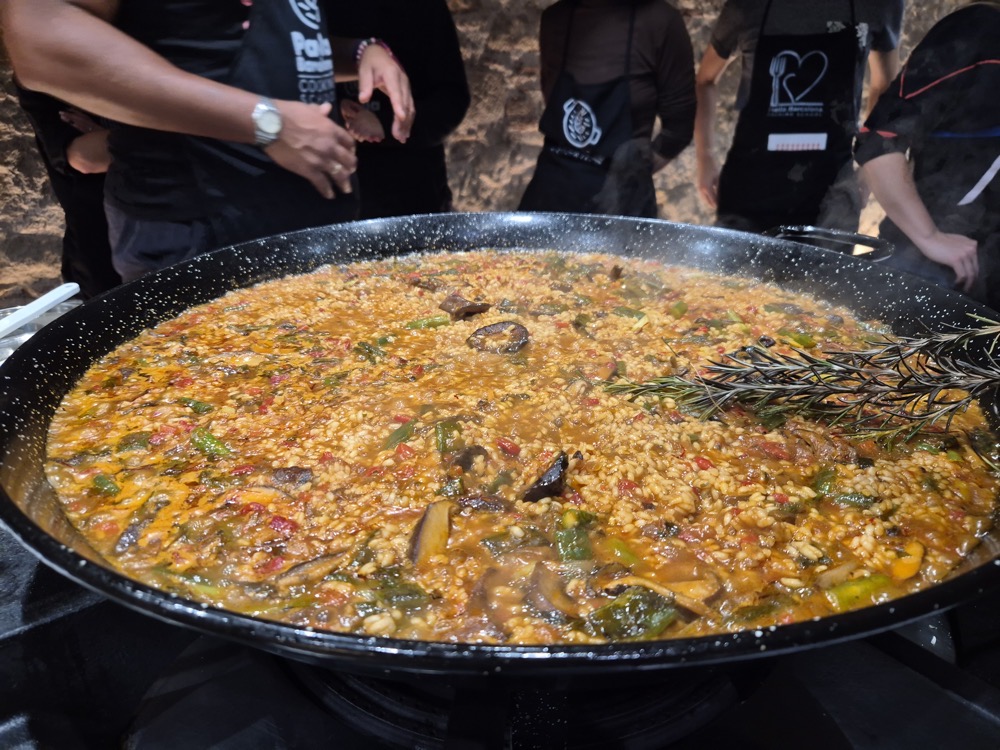
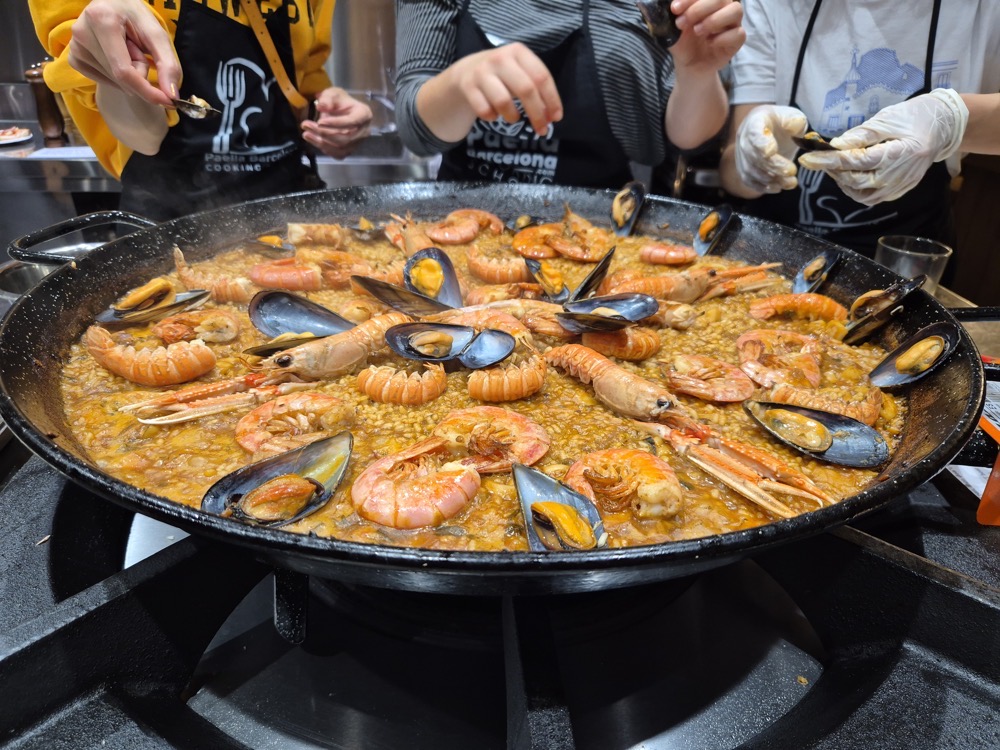 It was really a great event with a great group of people.
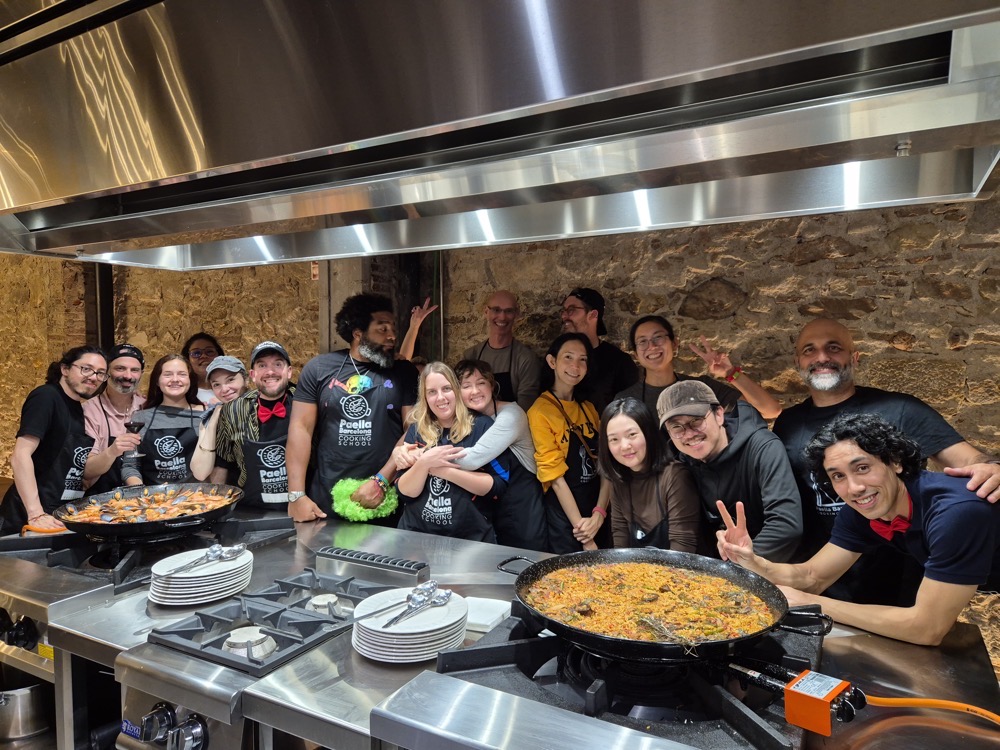
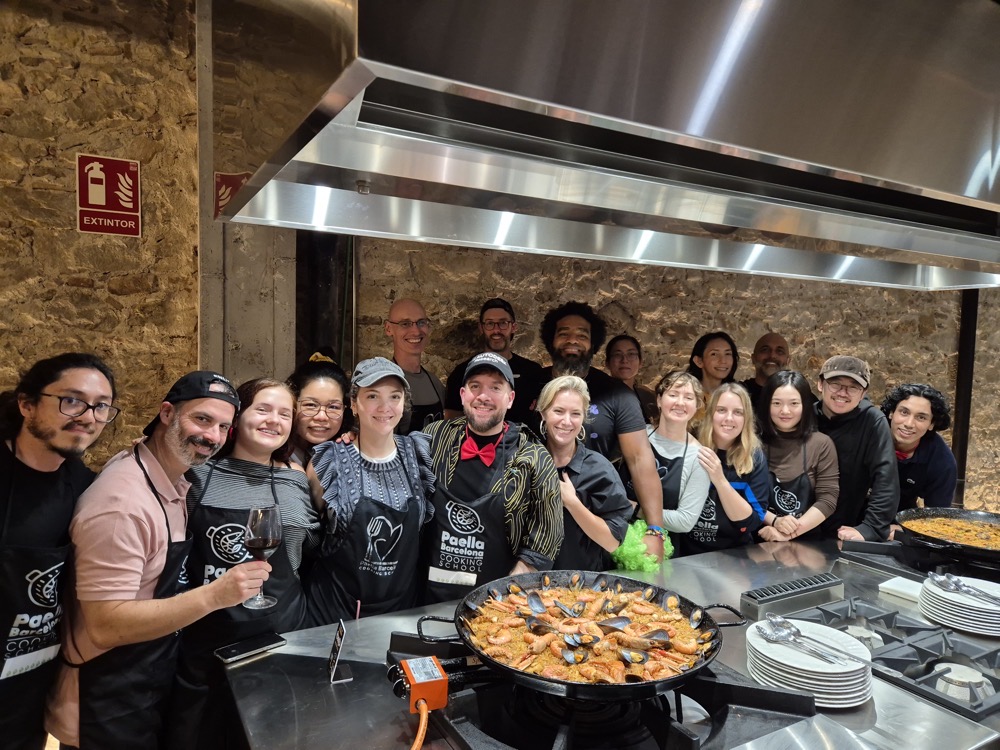
Finally we were ready to taste the results of everyone's work!
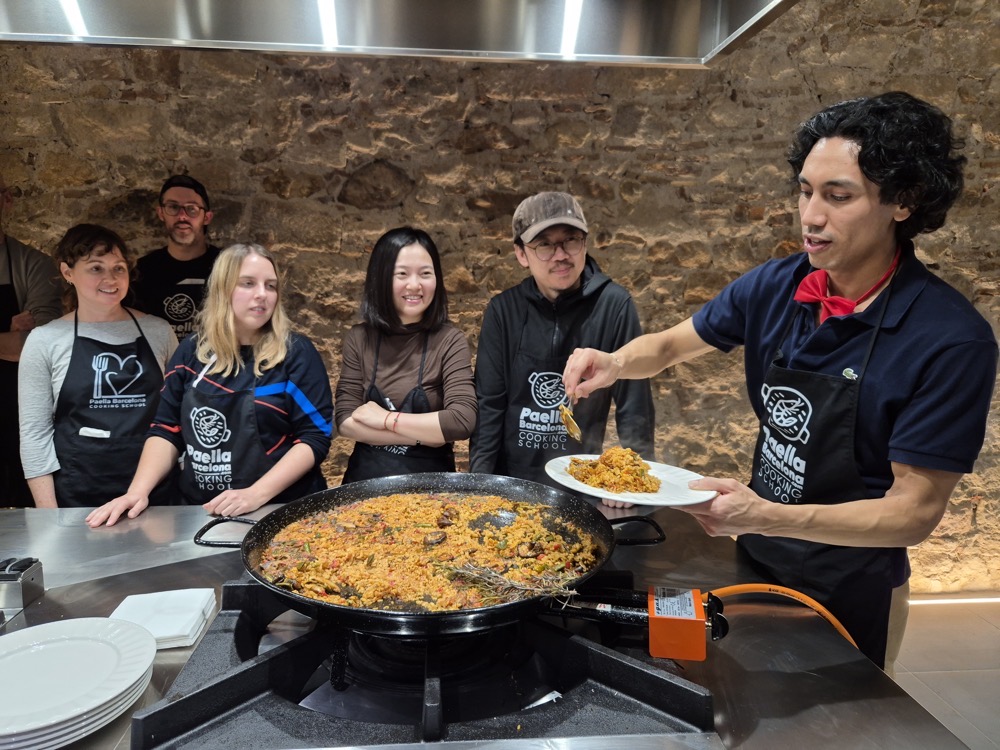
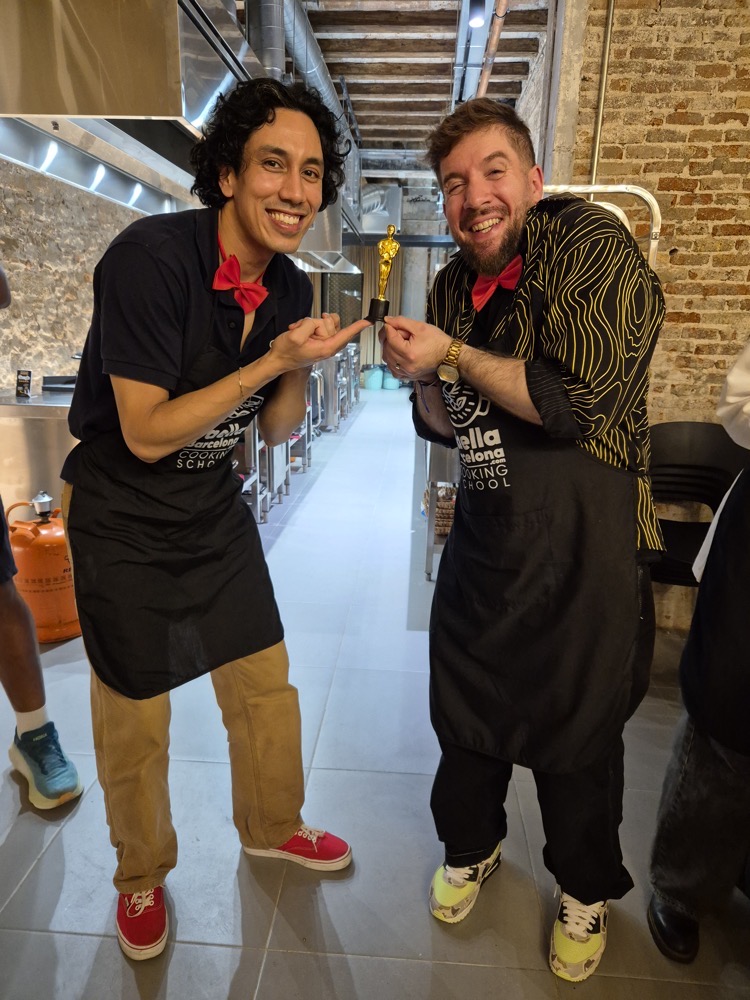
Both paellas were delicious, as were the sangrias.
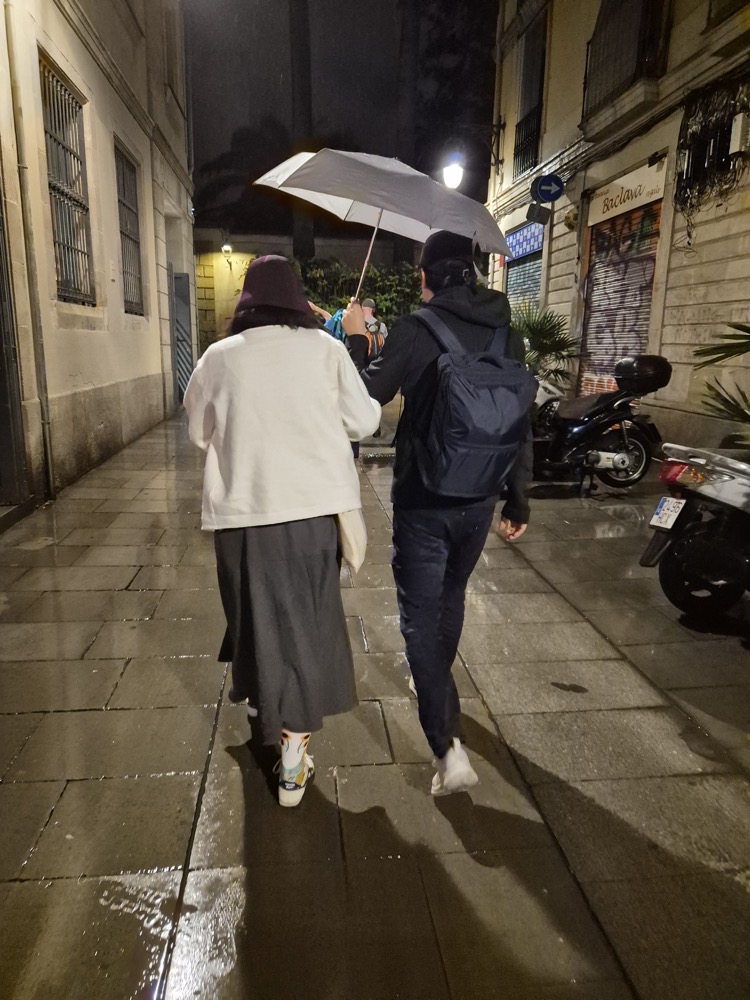
It was absolutely pouring down by the time we finished and ventured forth.
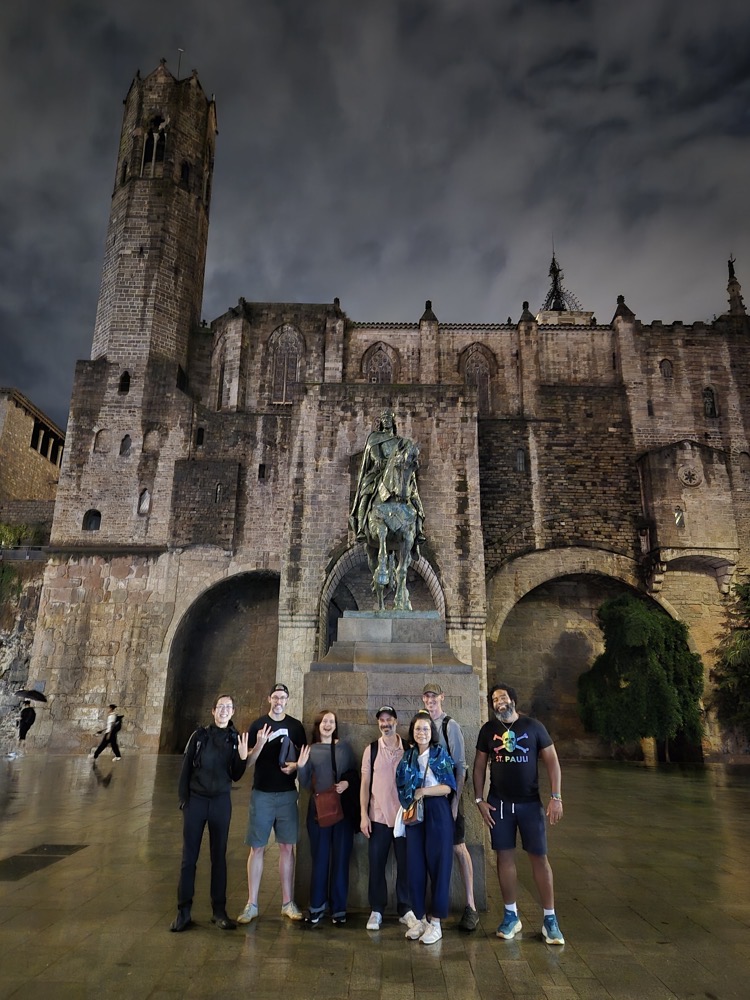
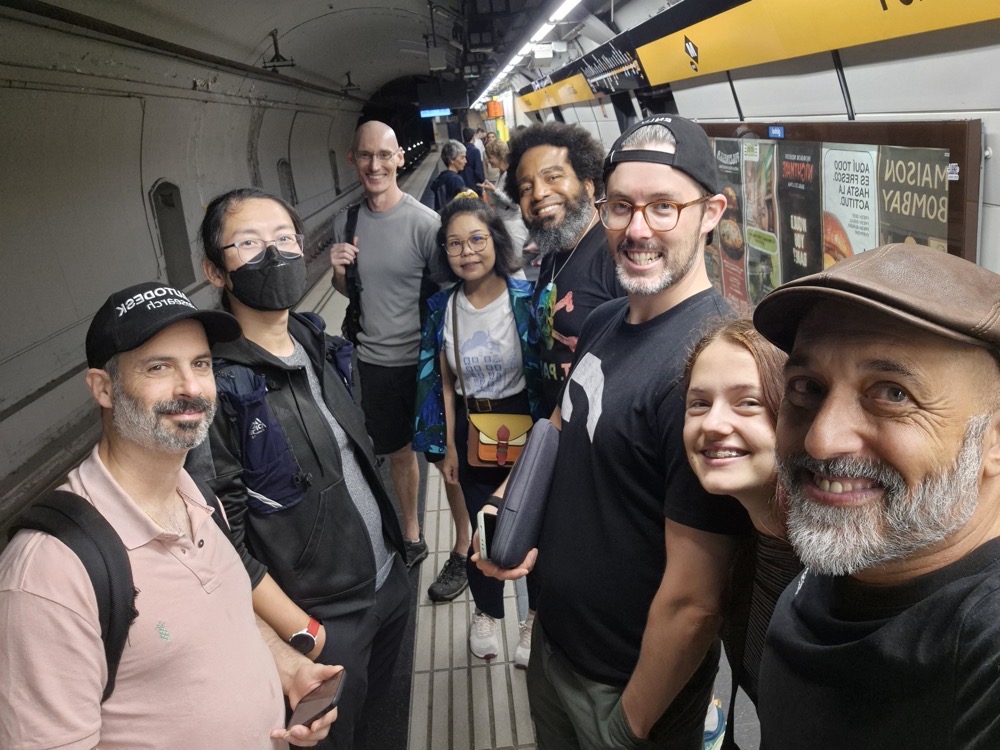
Several of us walked to one of the nearby metro stations, stopping for a quick photo on the way.
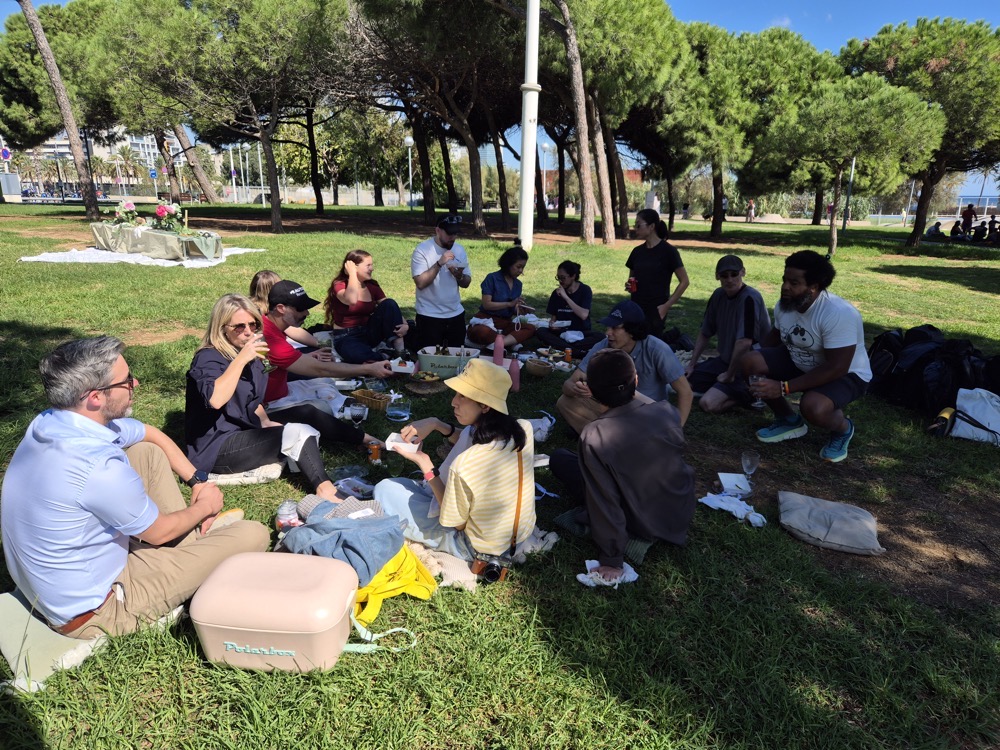
 On Friday we wrapped up our meetings and then walked along the beach to have a picnic in a nearby park.
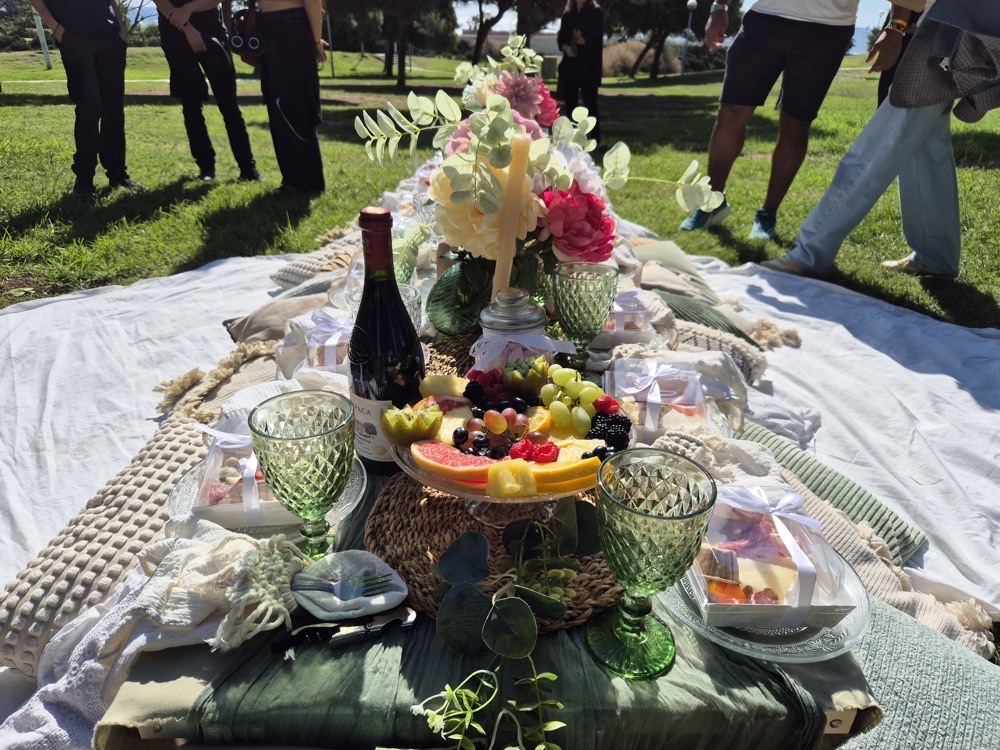
It had been laid out very nicely in the sun, but we opted to spread out nearby in the shade.
I left a bit early to get my daughter checked into our weekend Airbnb in Eixample. I just had time to jump in a second taxi and get across to San Just - where Autodesk had our first office in Barcelona, back in the day! - to visit Ricardo Bofill Taller de Arquitectura (RBTA). at their la Fábrica headquarters.
A bit of background is needed here: a member of our research team had suggested a visit to la Fábrica as a possible team activity - it's an iconic building converted from a cement factory back in the 1970s. I reached out through one of my LinkedIn contacts (thanks, Loris!) to see whether it might be possible, and from there I was connected with my colleagues in Sales who were able to facilitate a visit (thanks, Lonnie, Jose and Rossana!) with RBTA.
At the time when I reached out, I had no idea that RBTA was a large user of our software, we were mainly interested in getting to visit their office.
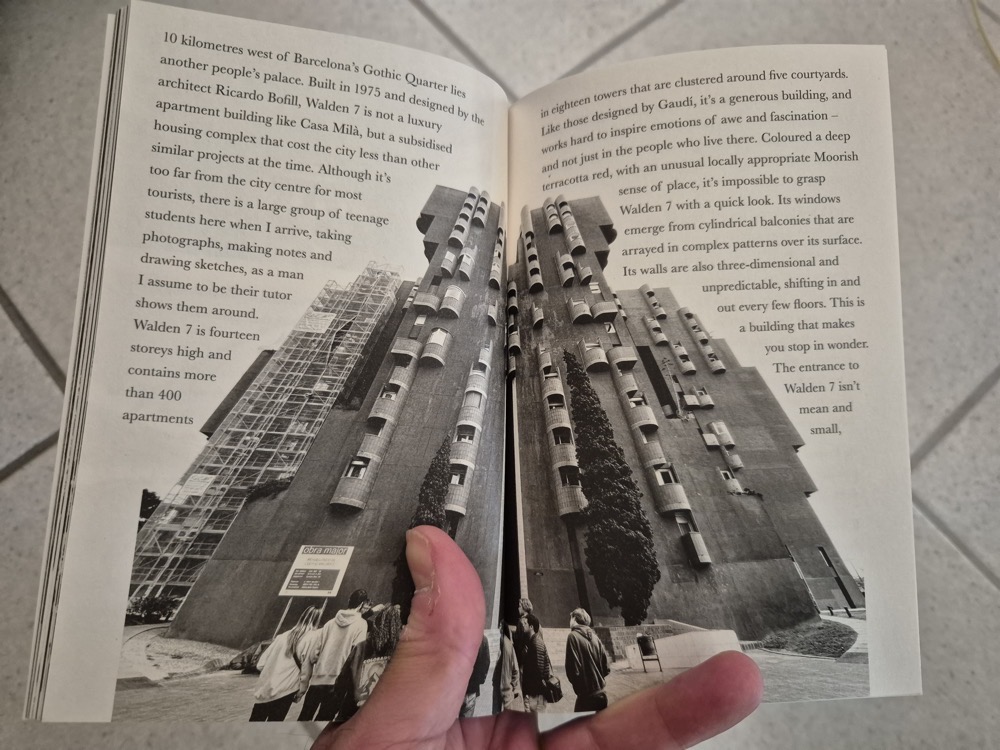
My taxi dropped me off a few hundred metres away from la Fábrica, which meant that I had the chance to walk past Walden 7, another iconic building built by Ricardo Bofill.
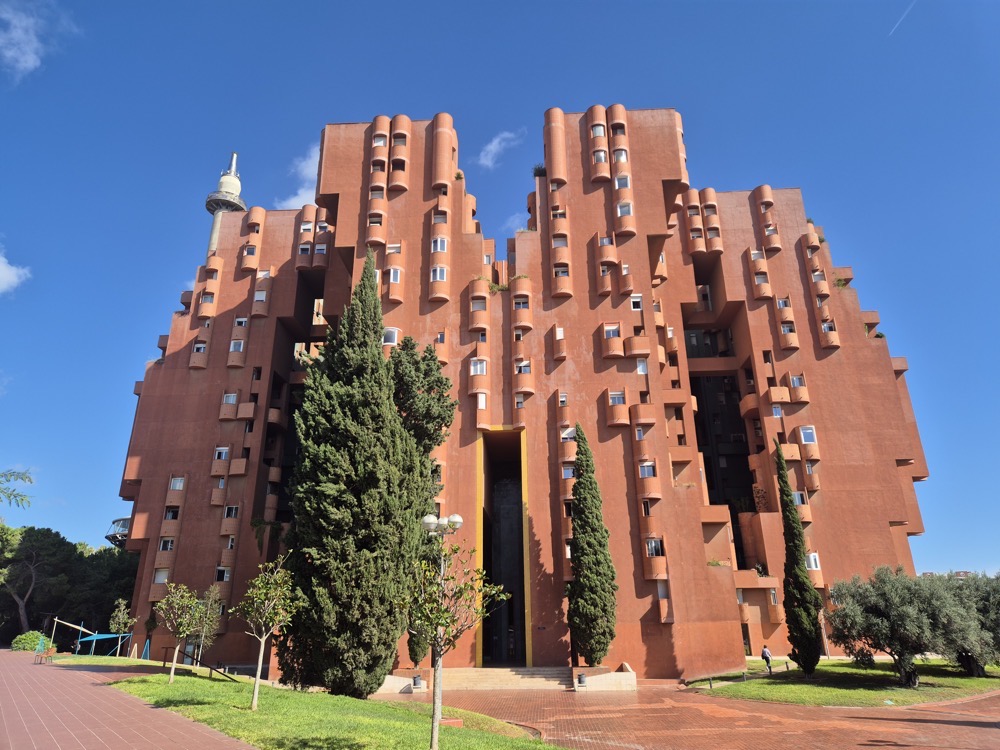
It's a social housing project that I remembered from Thomas Heatherwick's Humanise book.
Arriving at la Fábrica we were welcomed by Guadalupe, as BIM Manager at RBTA.
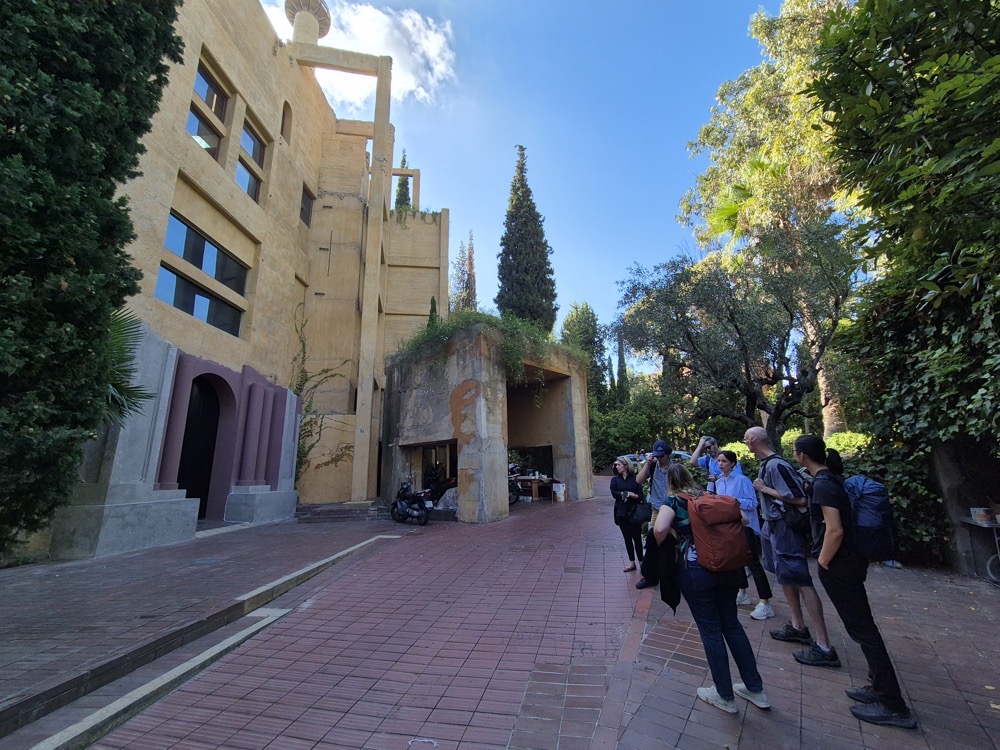
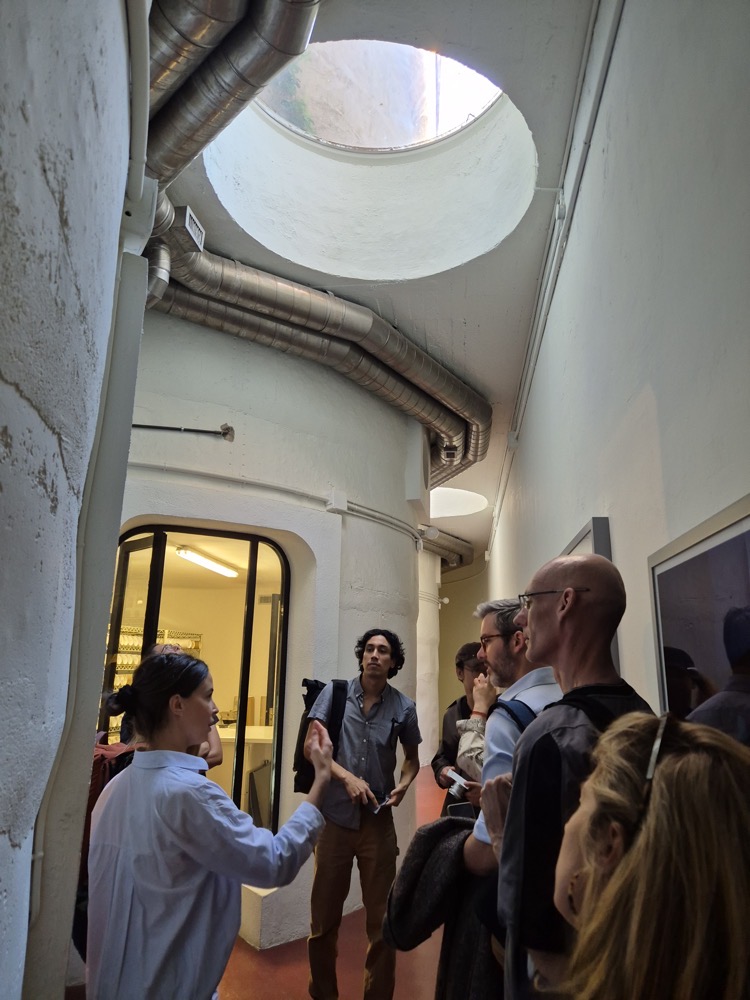
Guadalupe very generously took the time to talk about the history and current usage of la Fábrica, starting from the outside and working through a number of the interior spaces.
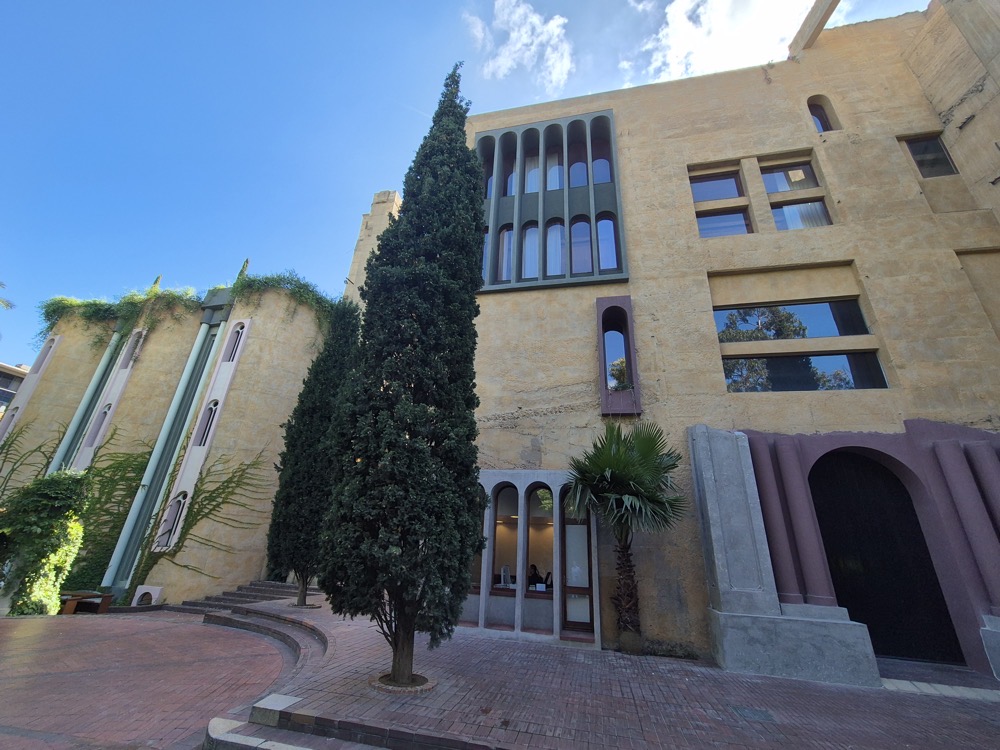
It's such an impressive project that even after 50 years feels fresh and energizing.
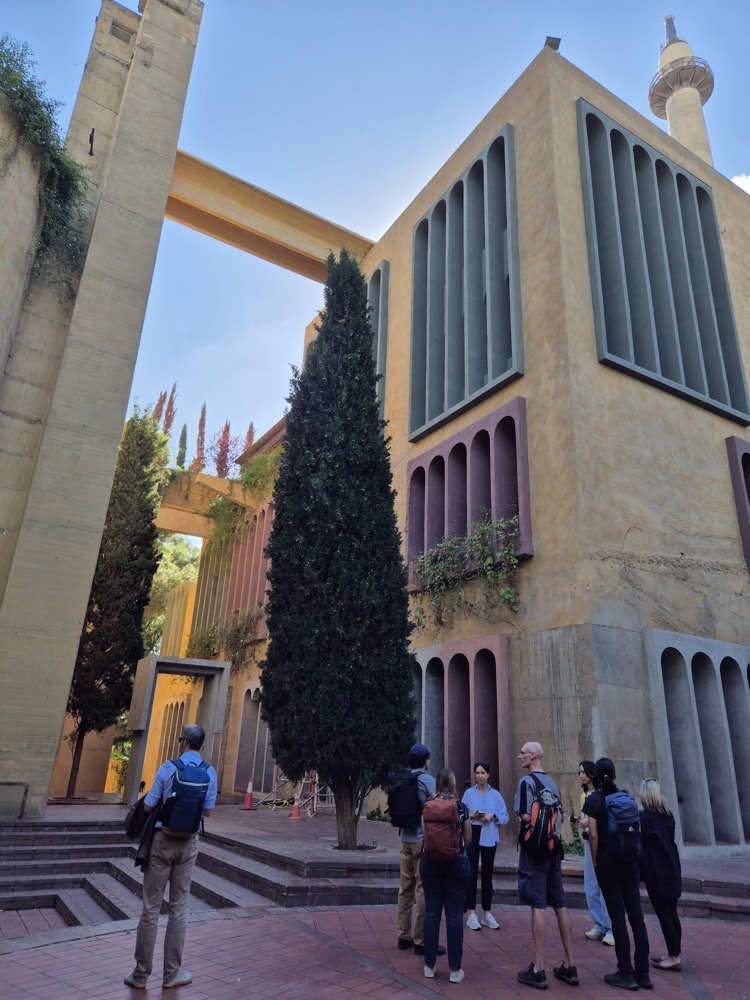
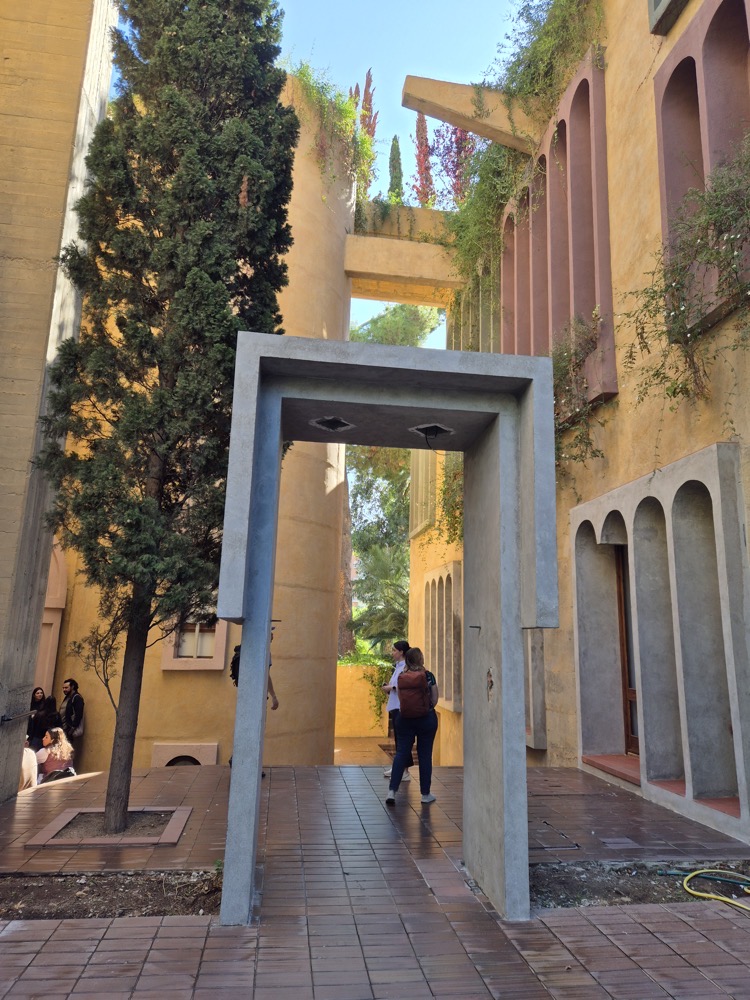
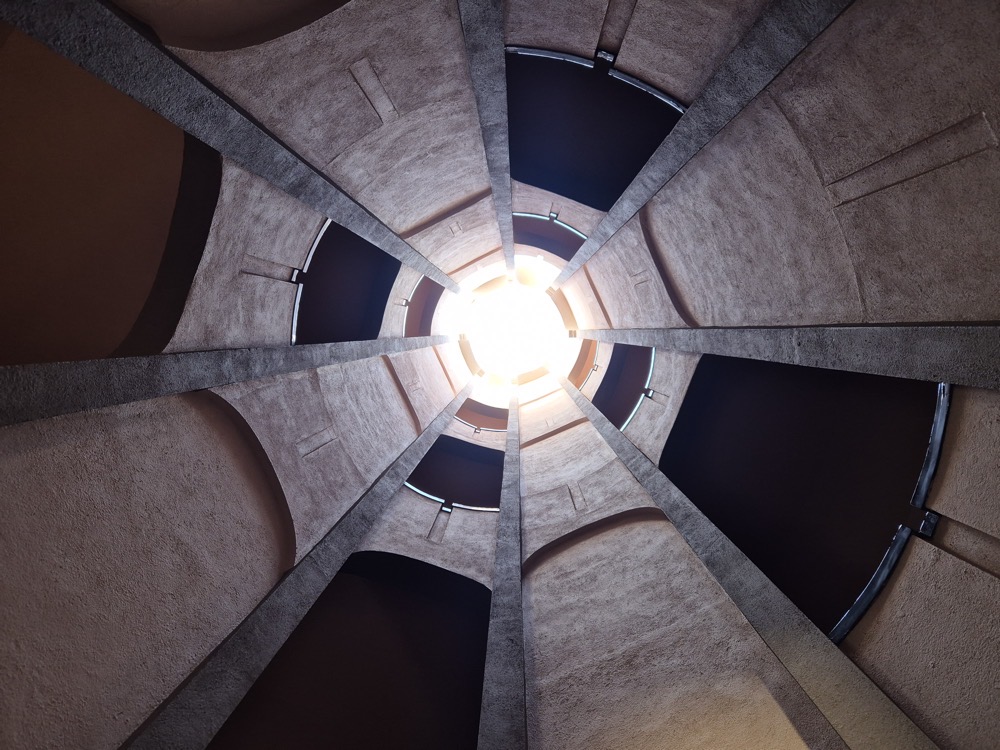
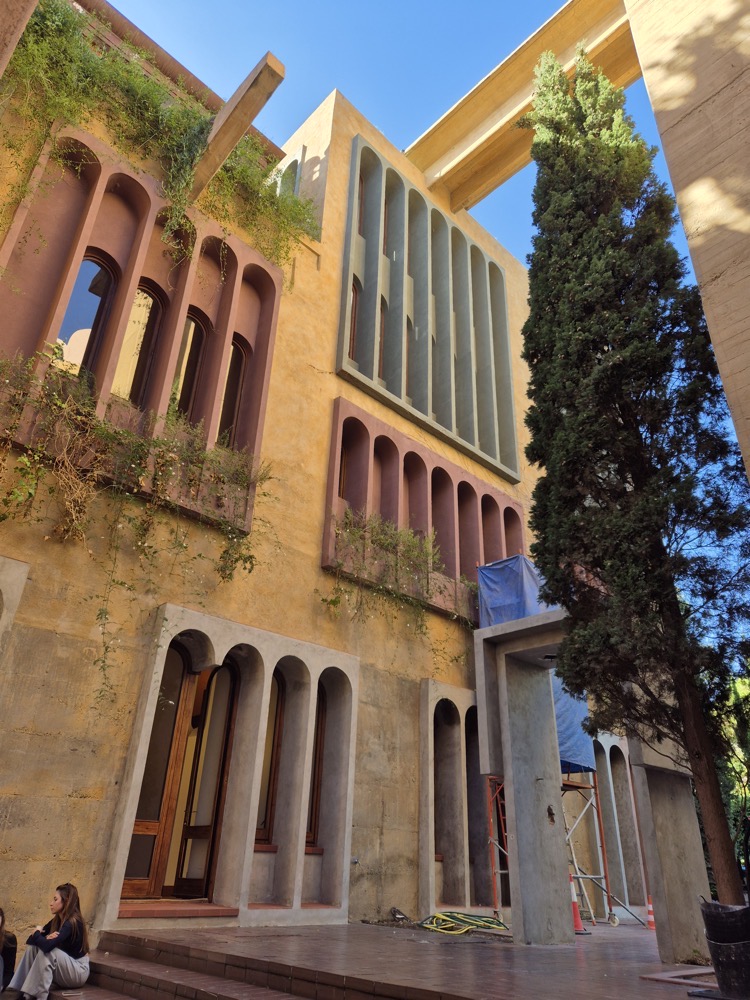 Walking inside the silos is interesting, as you're very often circling - or spiraling - around the outside, with your gaze drawn ever upwards.
We started in the basement, which hosts archive rooms...
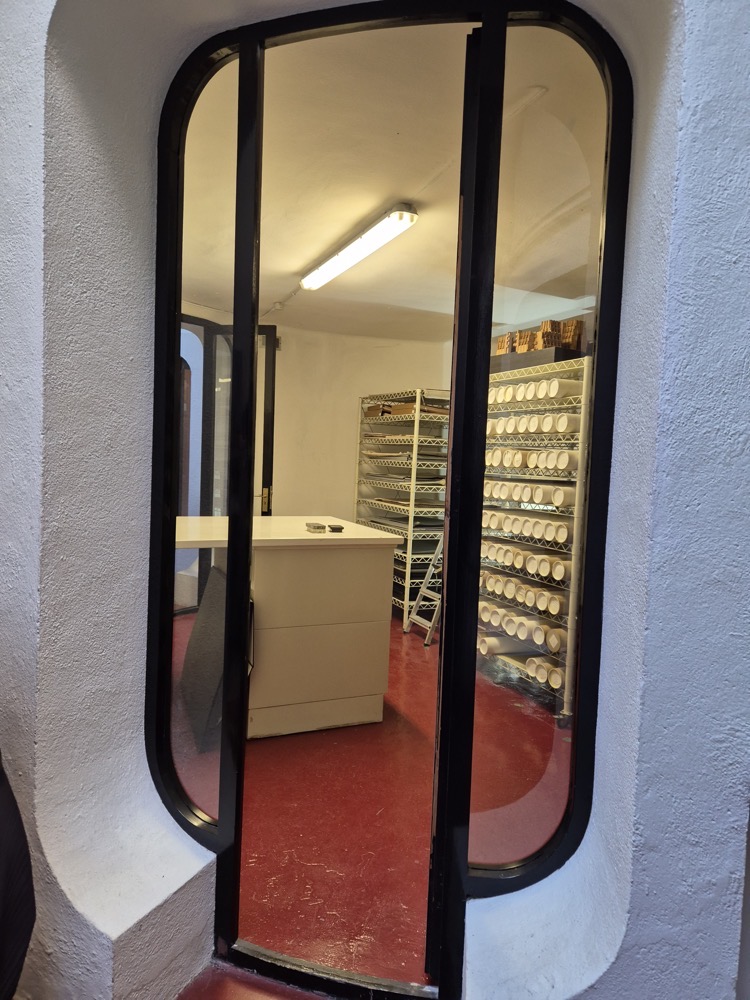
… and the rooms presumably used to review archived drawings. This one had very intelligent use of flourescent lighting that honestly seemed like daylight.
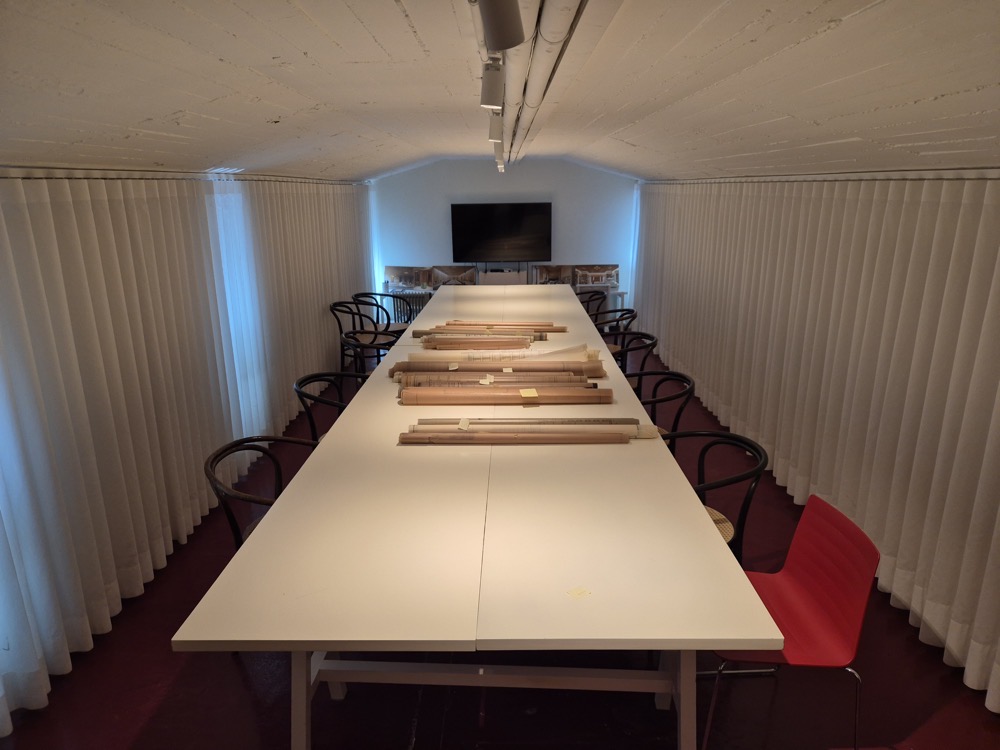
The model workshop was also down here.
There were rooms where all the computers and peripherals were either white or wrapped in white material.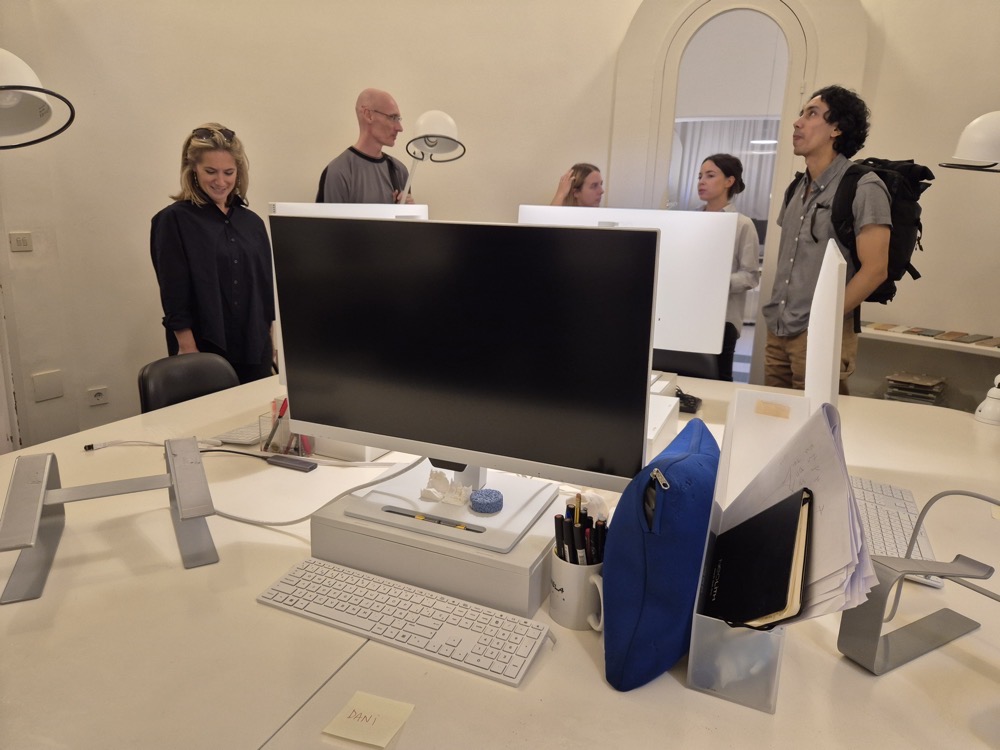
We visited the roof of one of the silos, which had a view across to Walden 7.
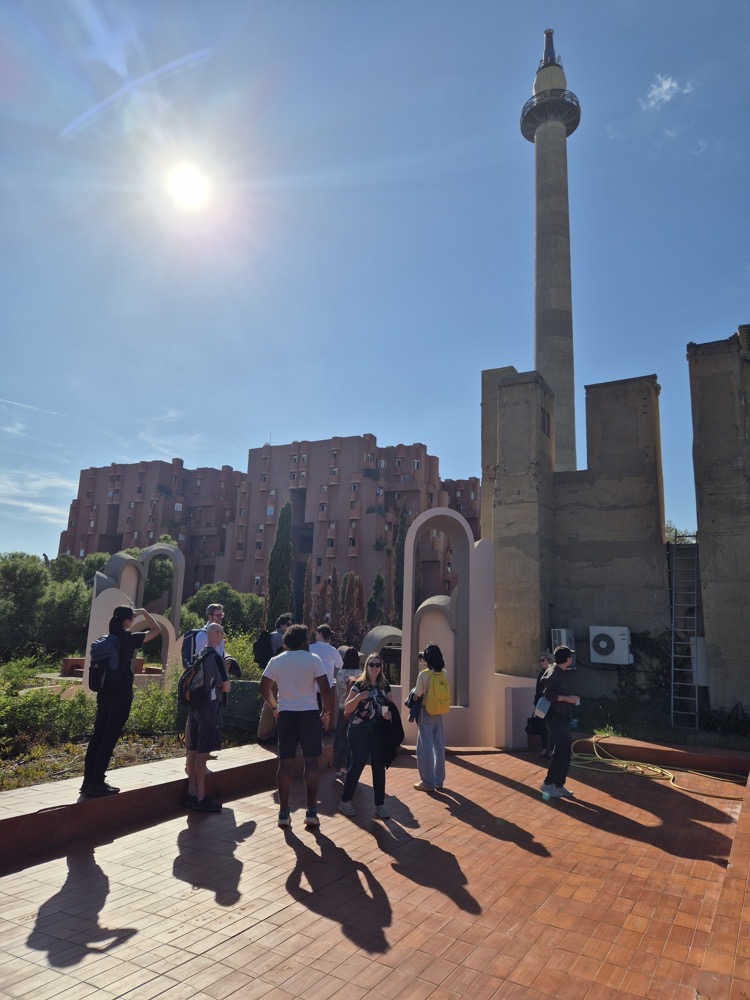
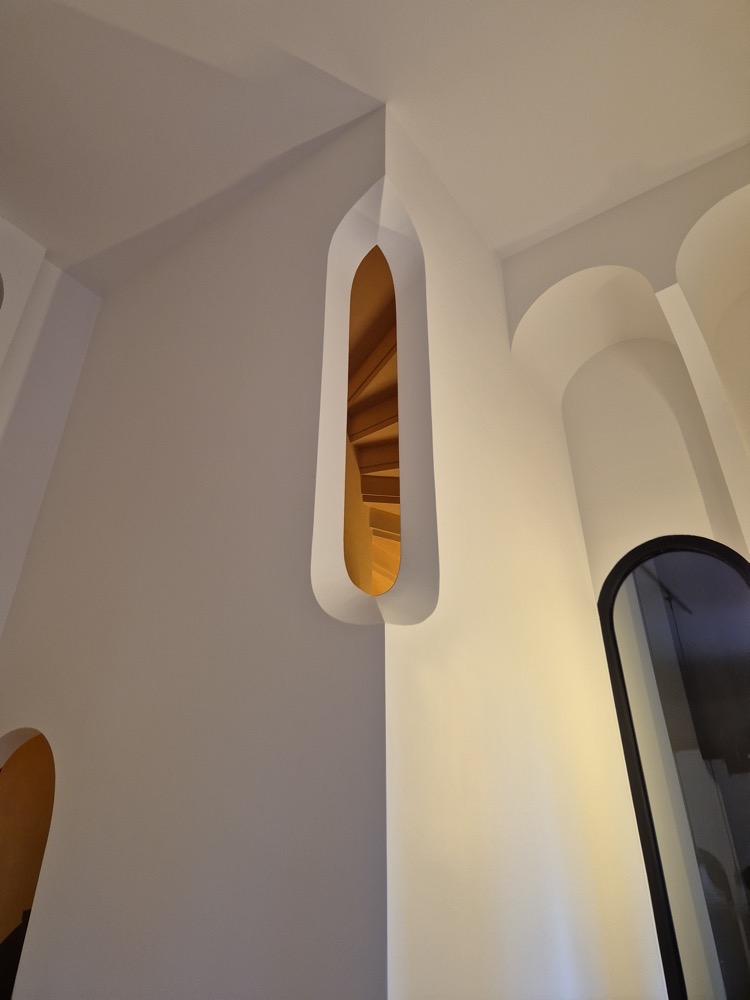
Some of the details were beautiful.
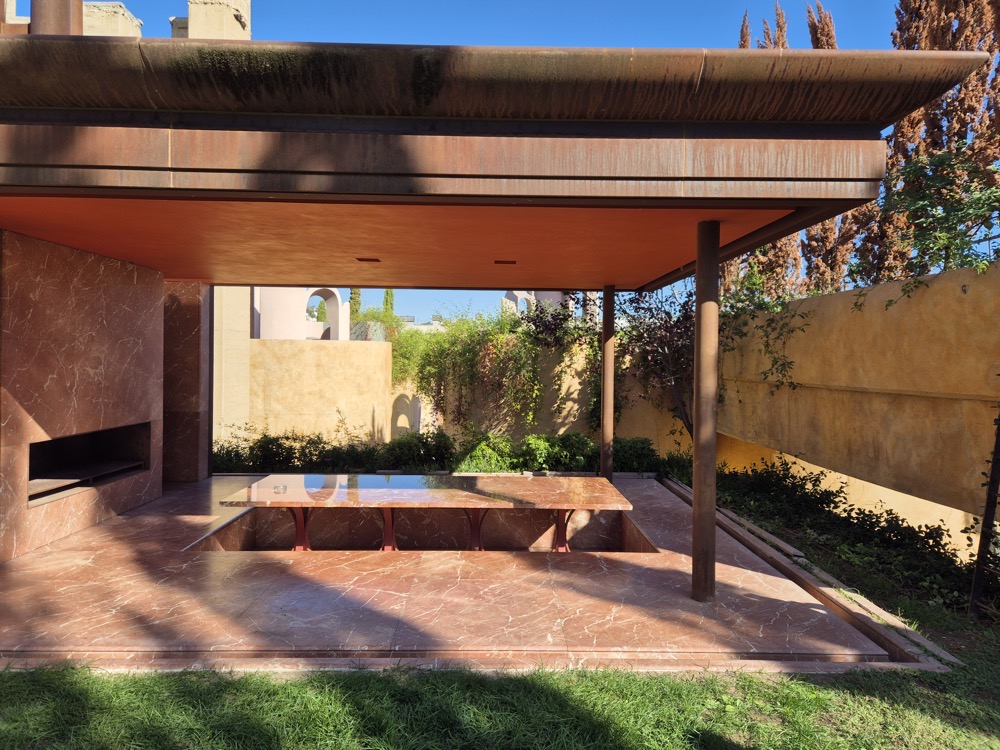
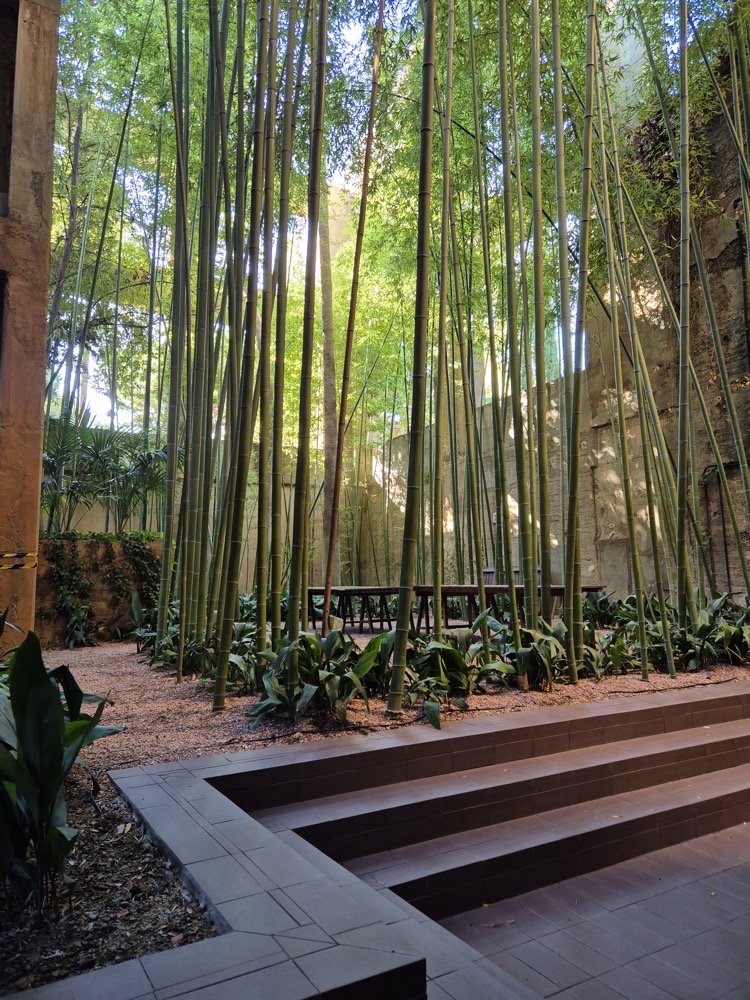
Another external garden had an embedded seating area.
We had a photo taken here of those of us on the tour.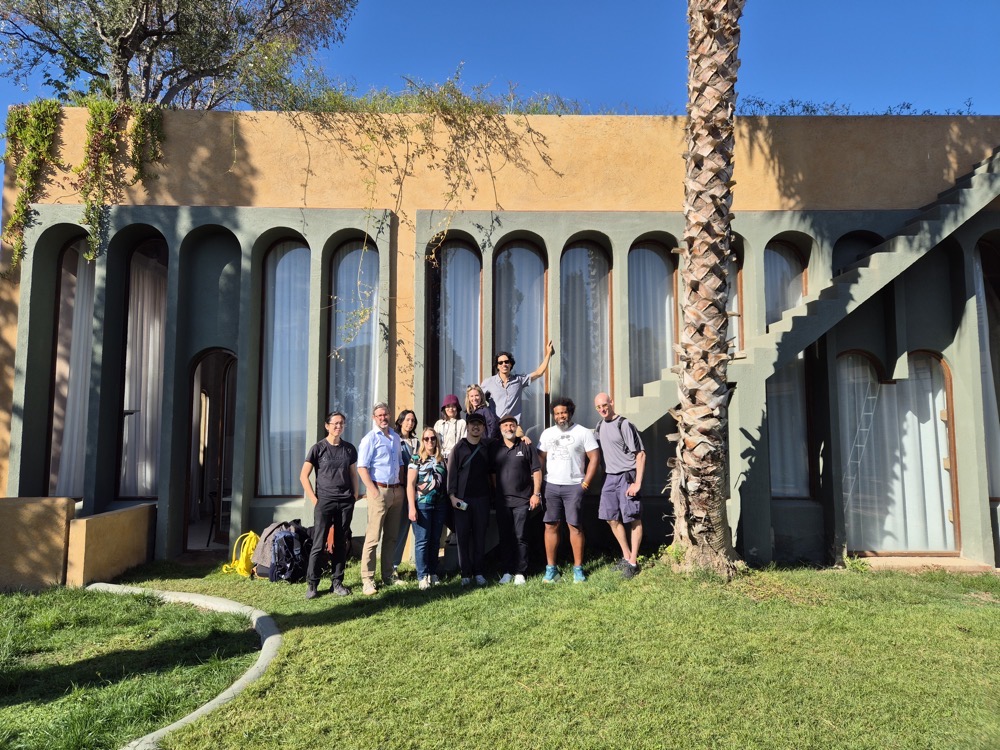
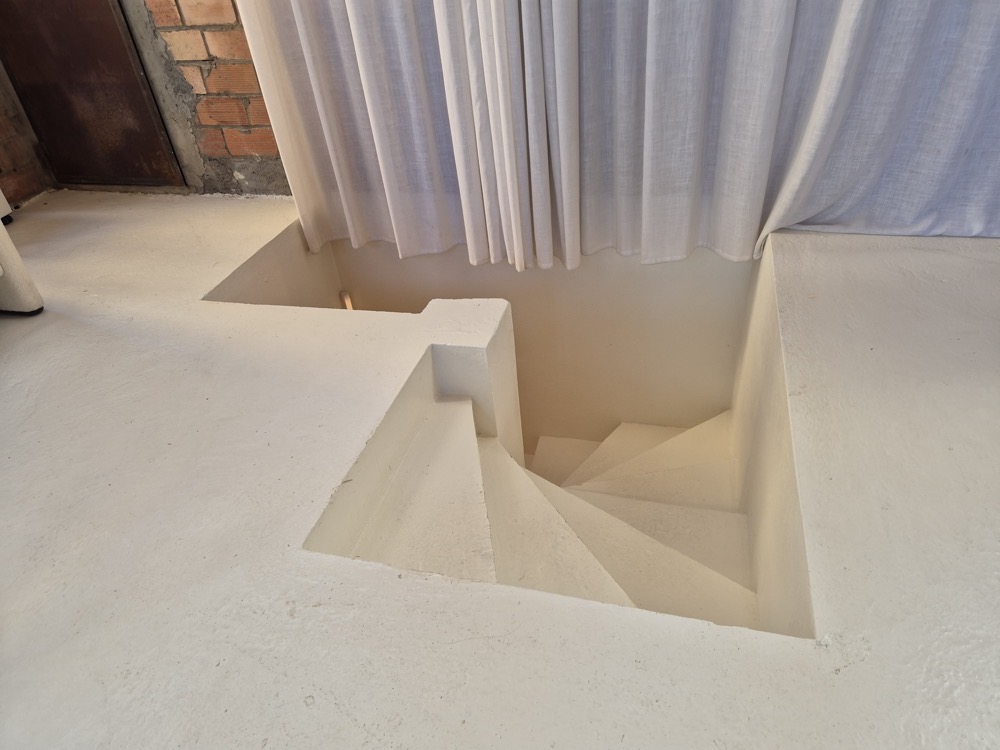
Here's the top of the staircase leading back to the ground level.
This large open space is black rather than white.
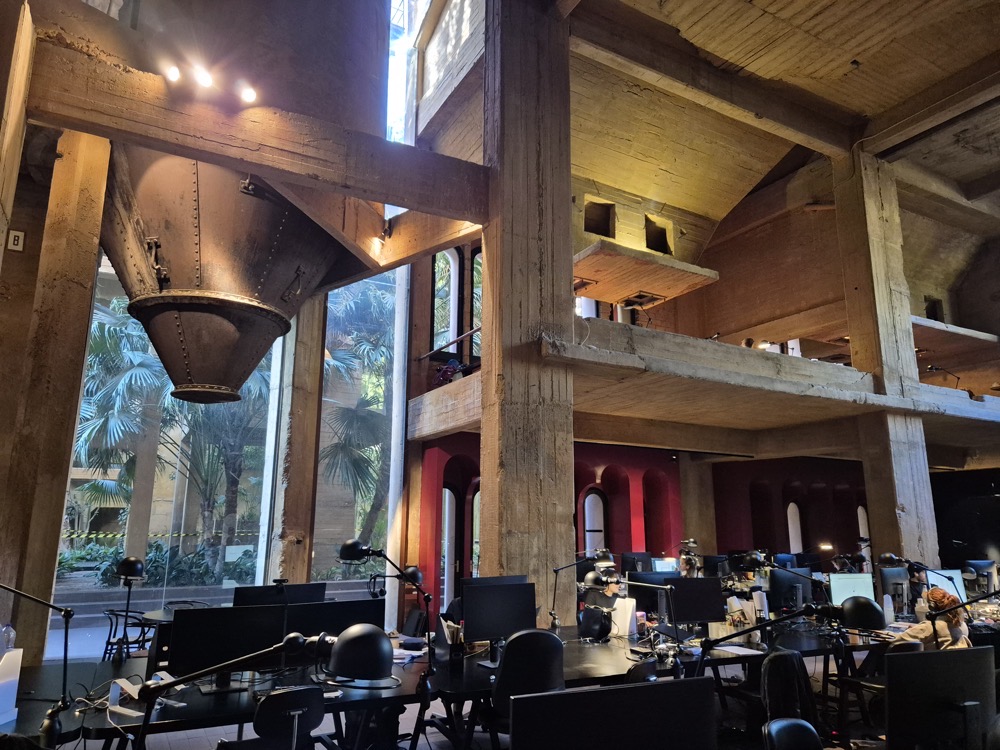
We saw many people using our software at RBTA: I was assured that this was completely normal and not at all for our benefit.
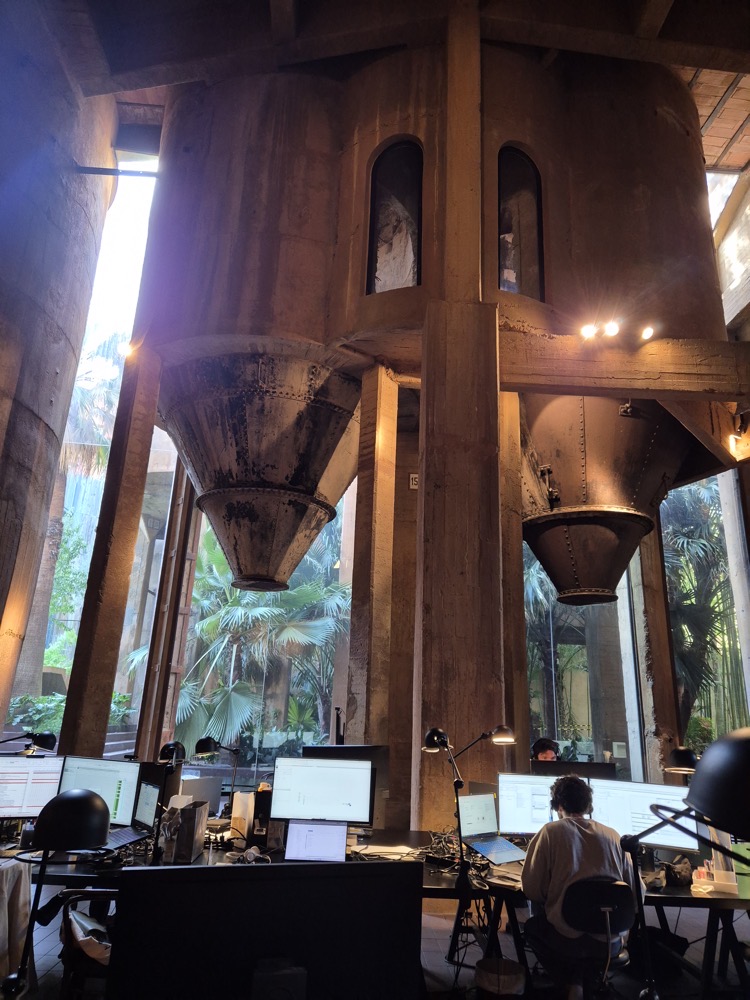
Stepping outside we could see the ground-floor garden.
This staircase looks scarier than it is - there's a handrail on the opposite side that you don't see from this angle. Still mildly scary, I will say.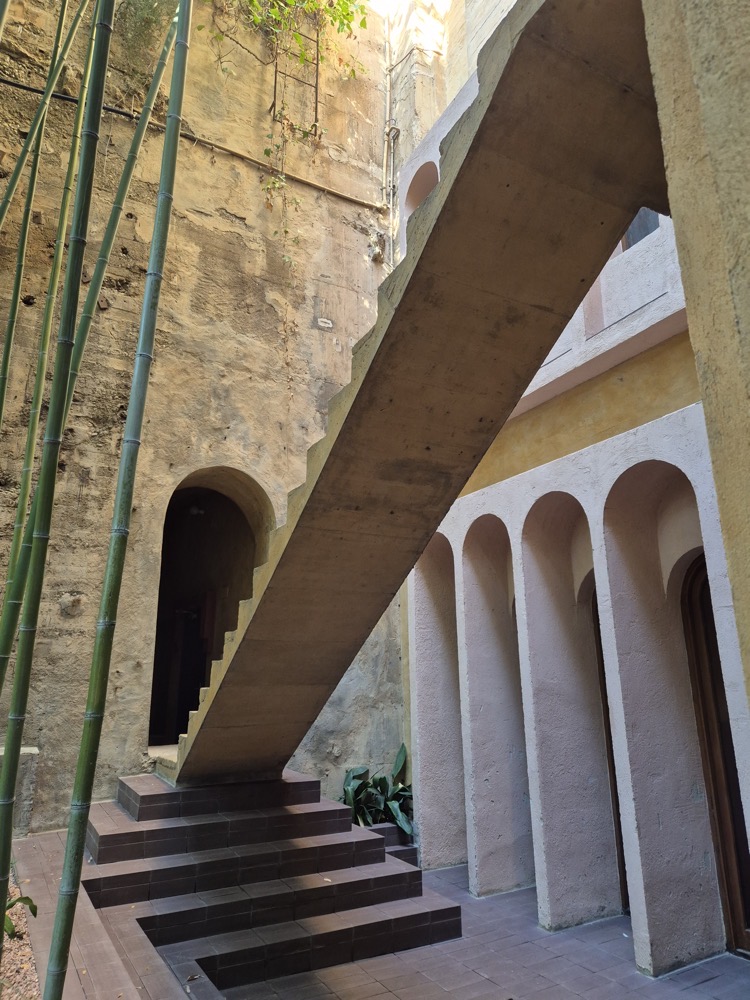
The team had a fantastic team at la Fábrica.
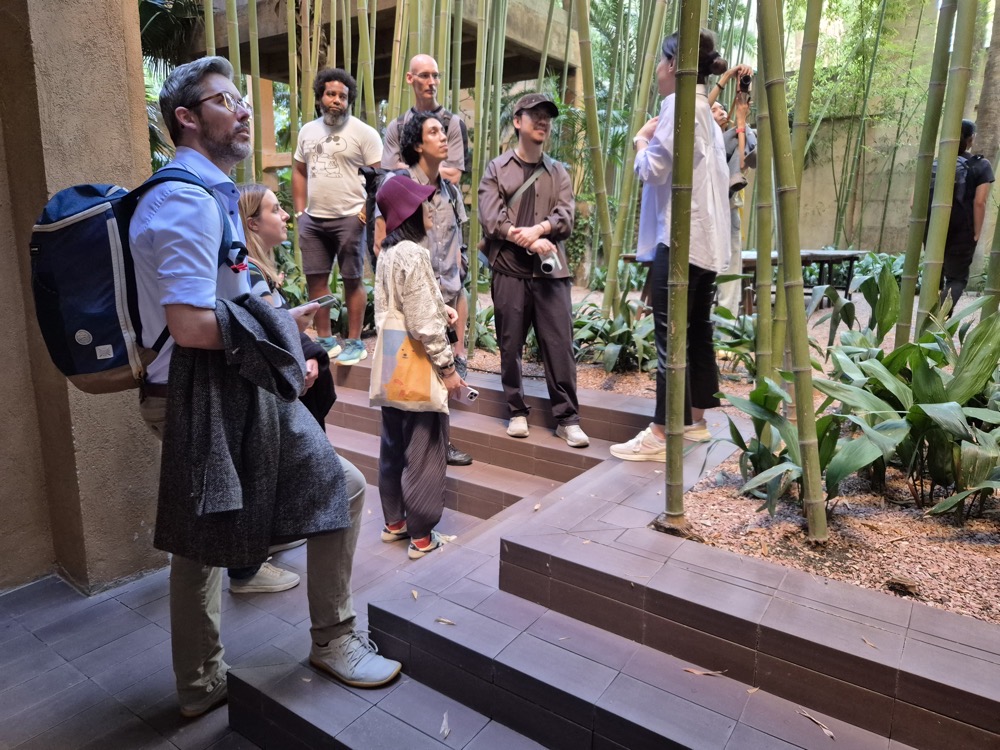
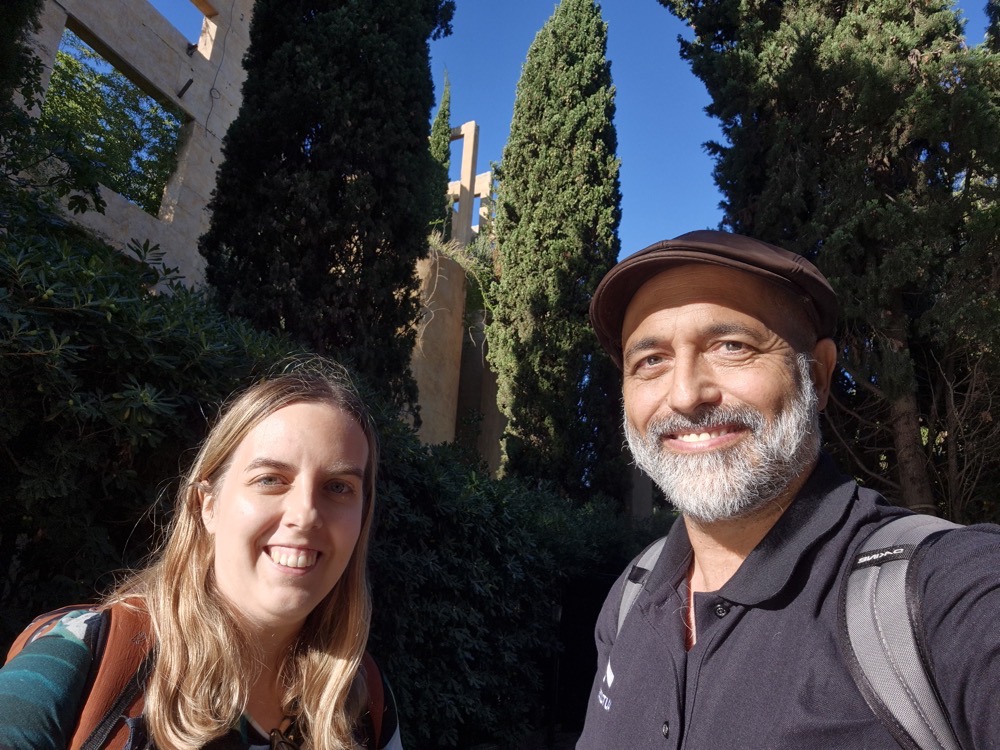
Dagmara and I stayed on to talk a little about our research. Thank you to Guadalupe, Álvaro and Juan for the warm welcome! It was great to meet you all.
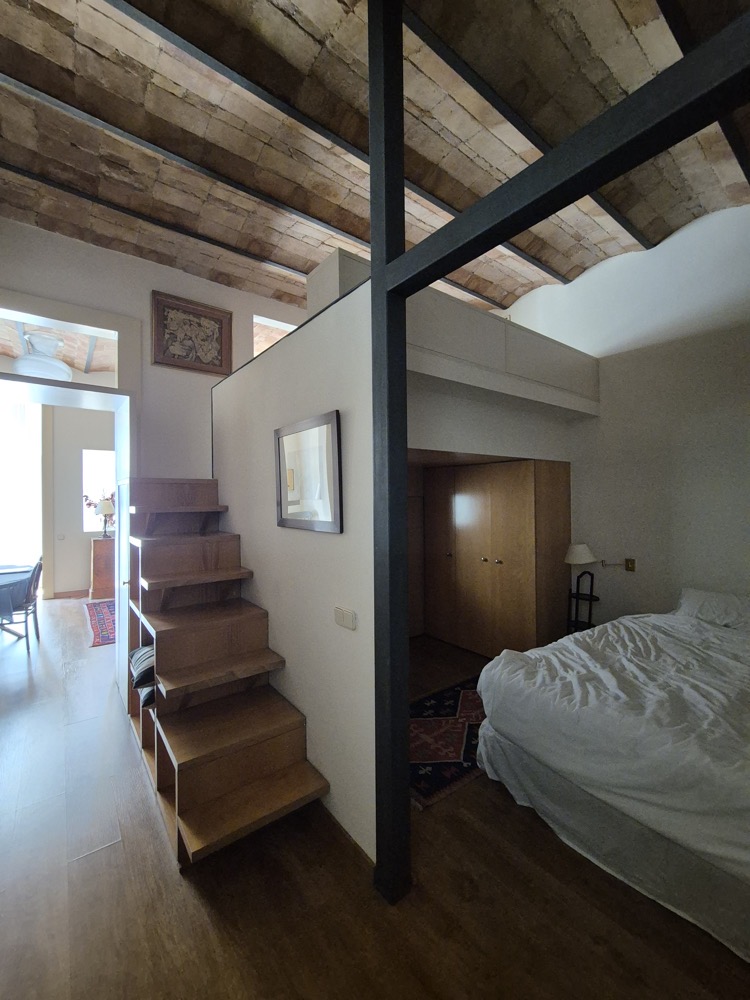
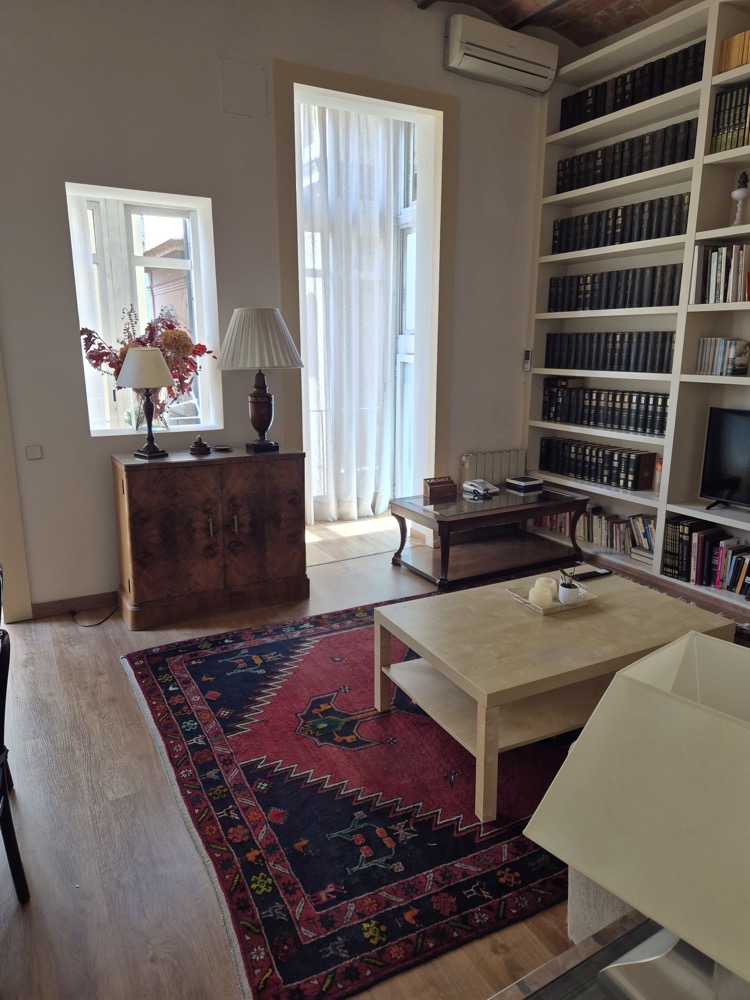
From here I headed back to the Airbnb to meet my daughter and start our weekend. It was a really nice (and quiet!) spot just two blocks from Casa Batlló.
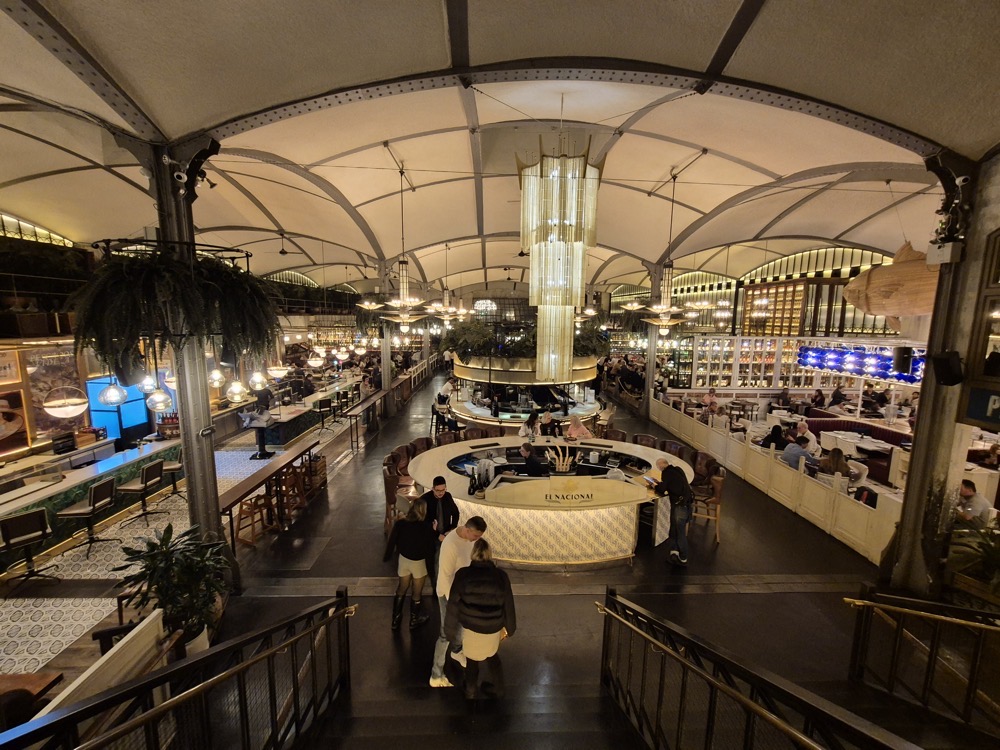
My wife joined us on Saturday. We had lunch with Tomas and family and then dinner with other friends from when we lived in the Bay Area. For fun we stopped by El Nacional.
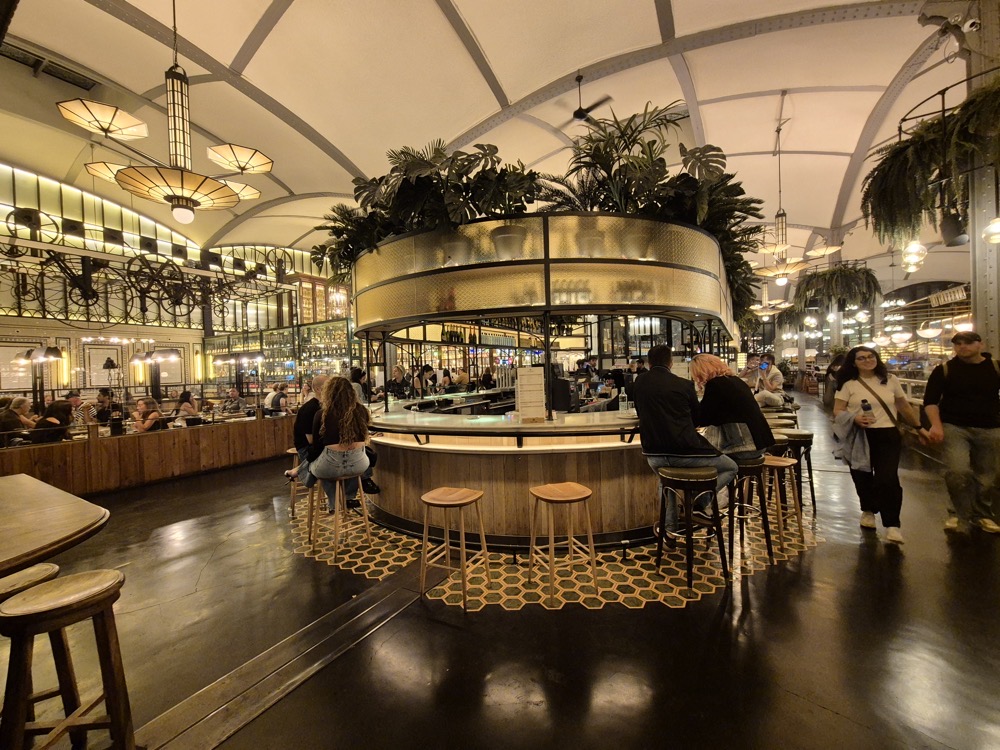
El Nacional is a former parking structure that's not a really fancy food court.
With a really cool washroom.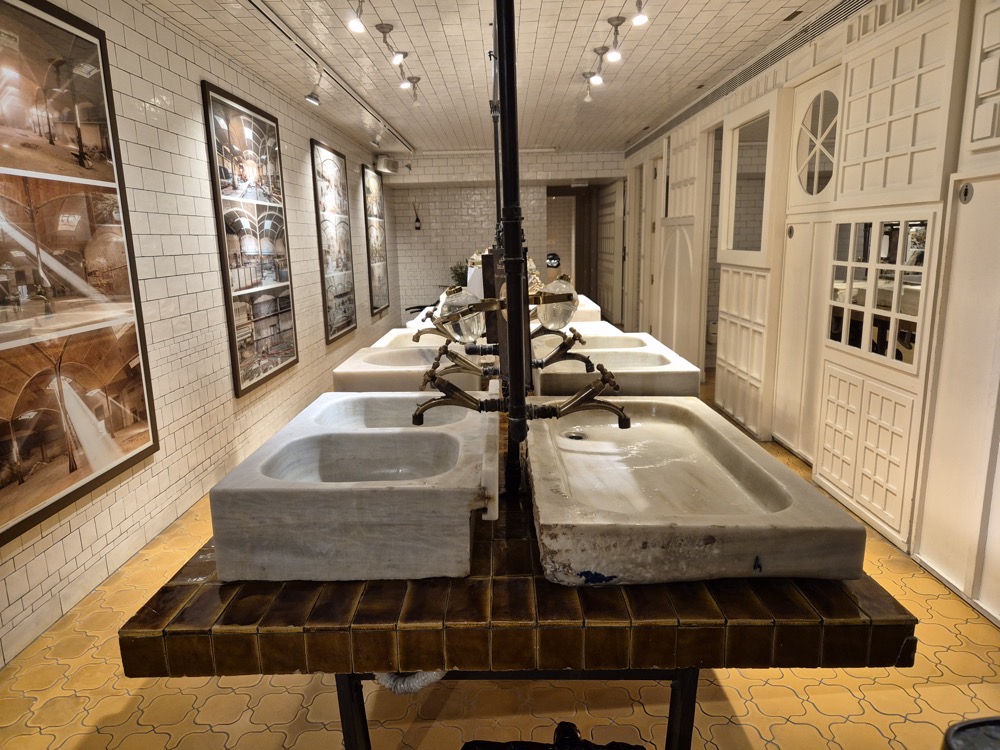
We stayed in Barcelona until Tuesday morning, visiting the Picasso Museum and its surroundings...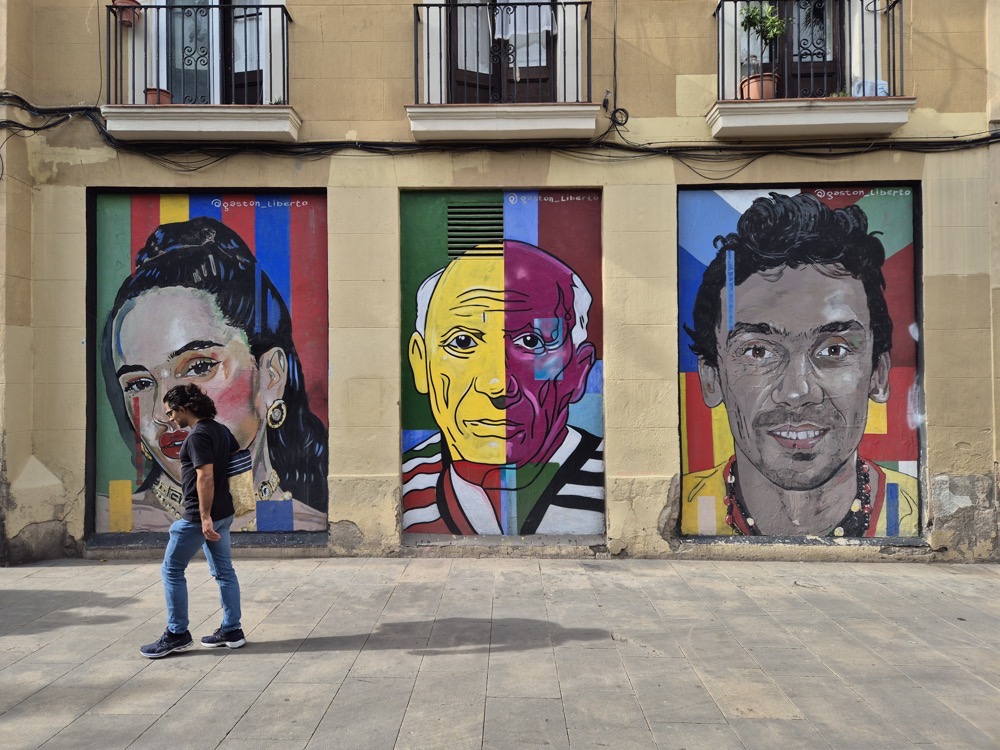
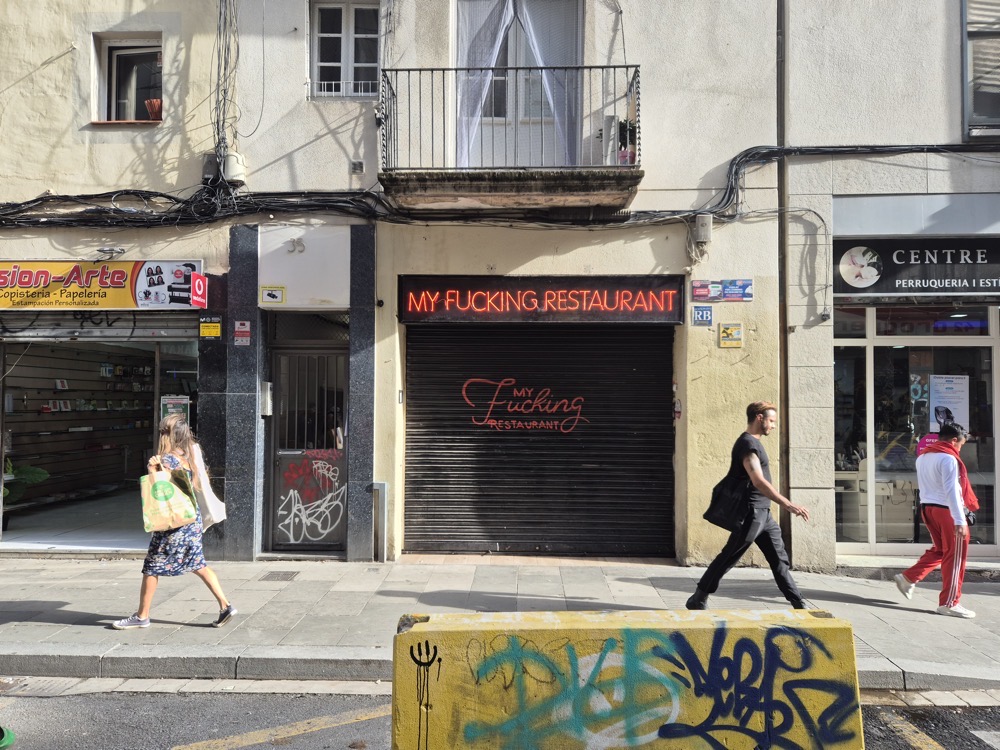
… walking past random sights...
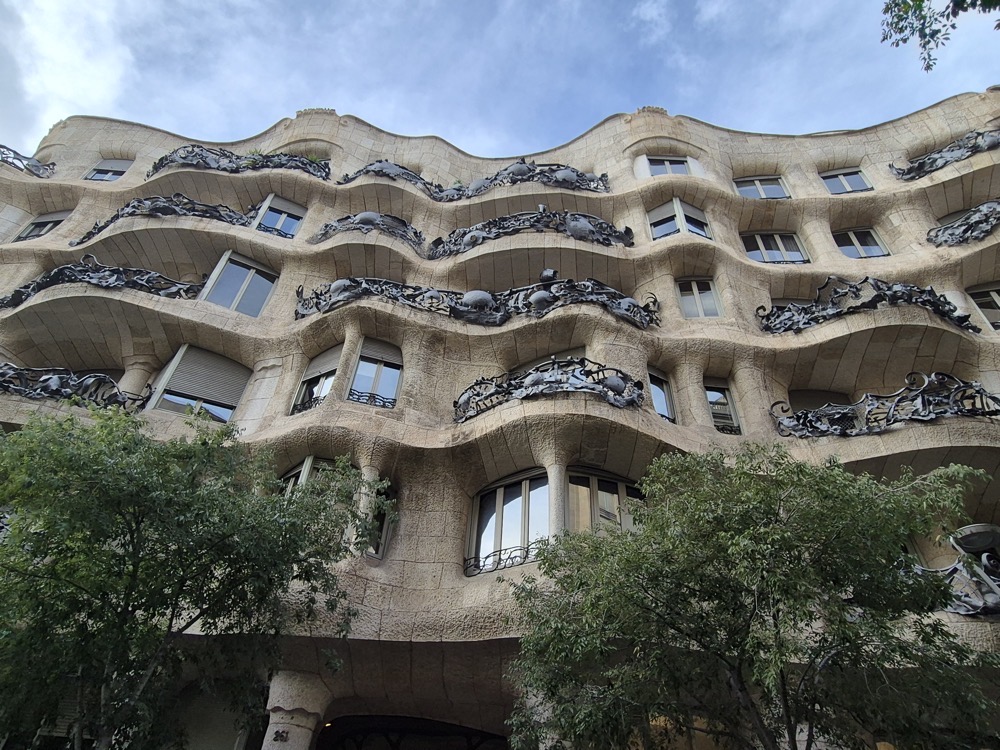
… including Casa Milà, another iconic Gaudí building.
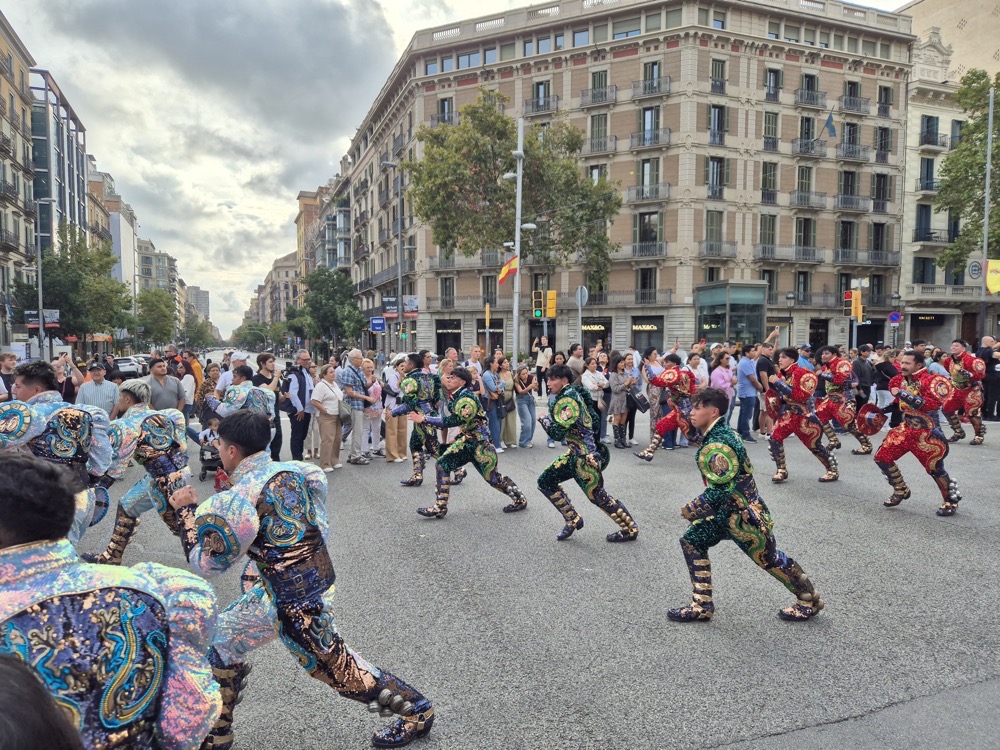
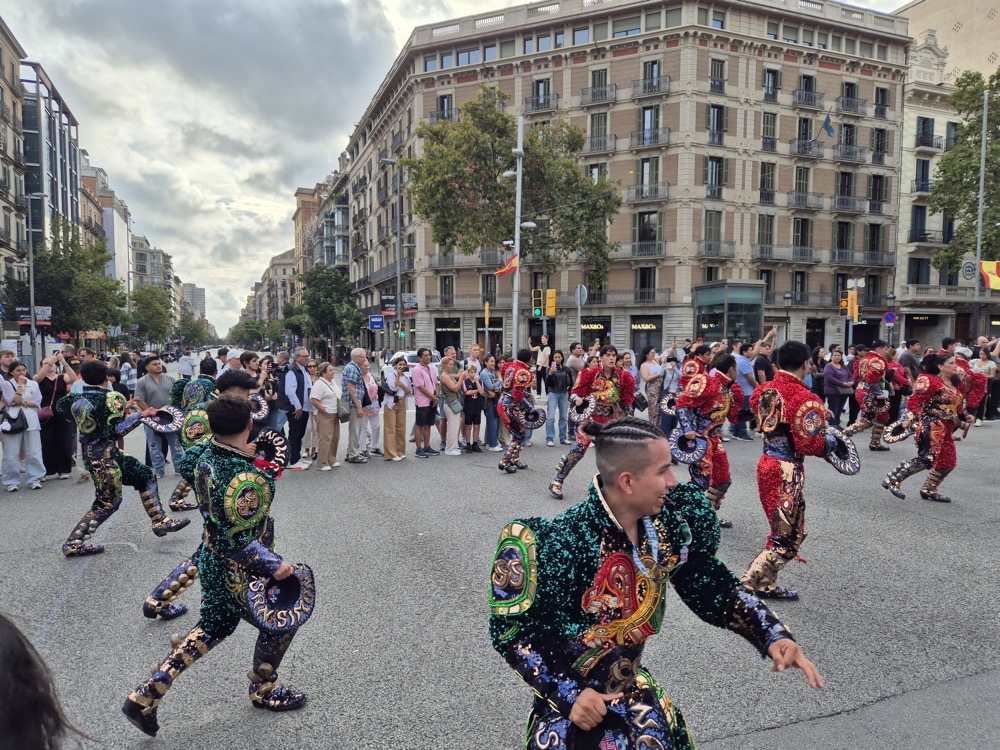
On Sunday people were celebrating Spain's National Day. We stumbled across a really fun parade with mainly Bolivian dancers.
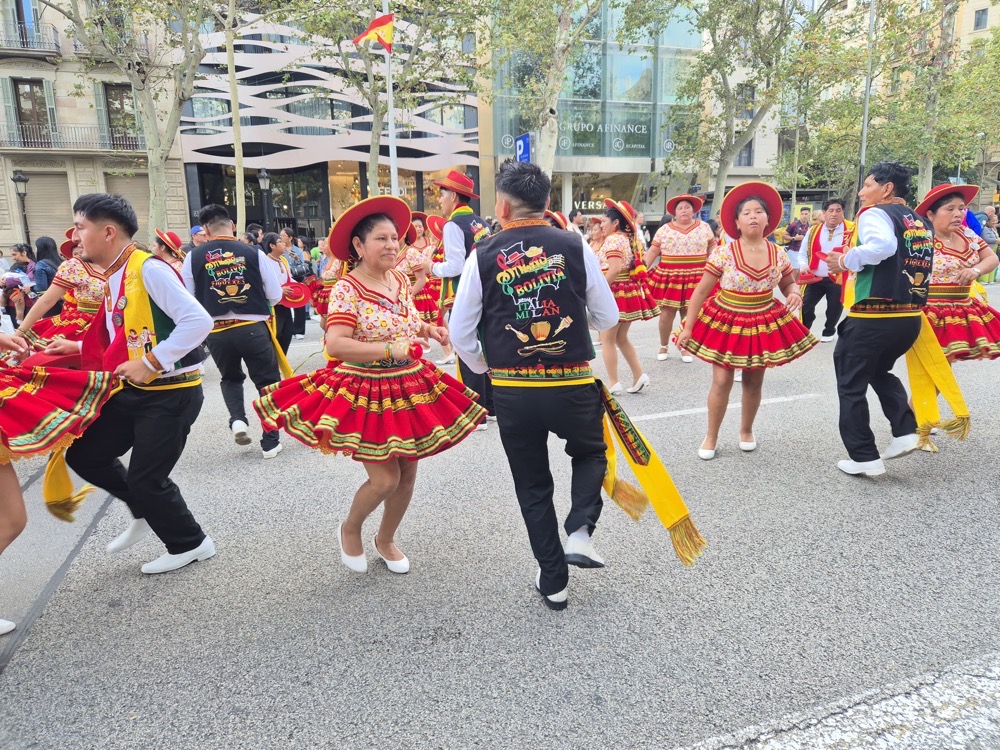
There must be a significant Bolivia community in Barcelona, judging by the number of dancers.
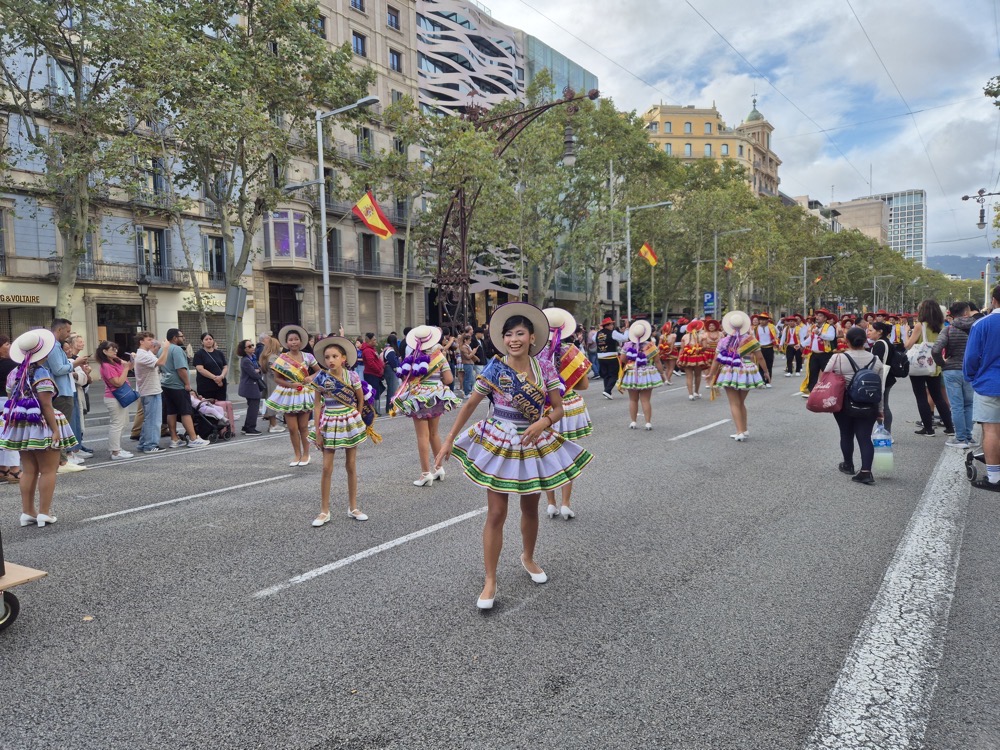
Some were really energetic. It really was impressive.
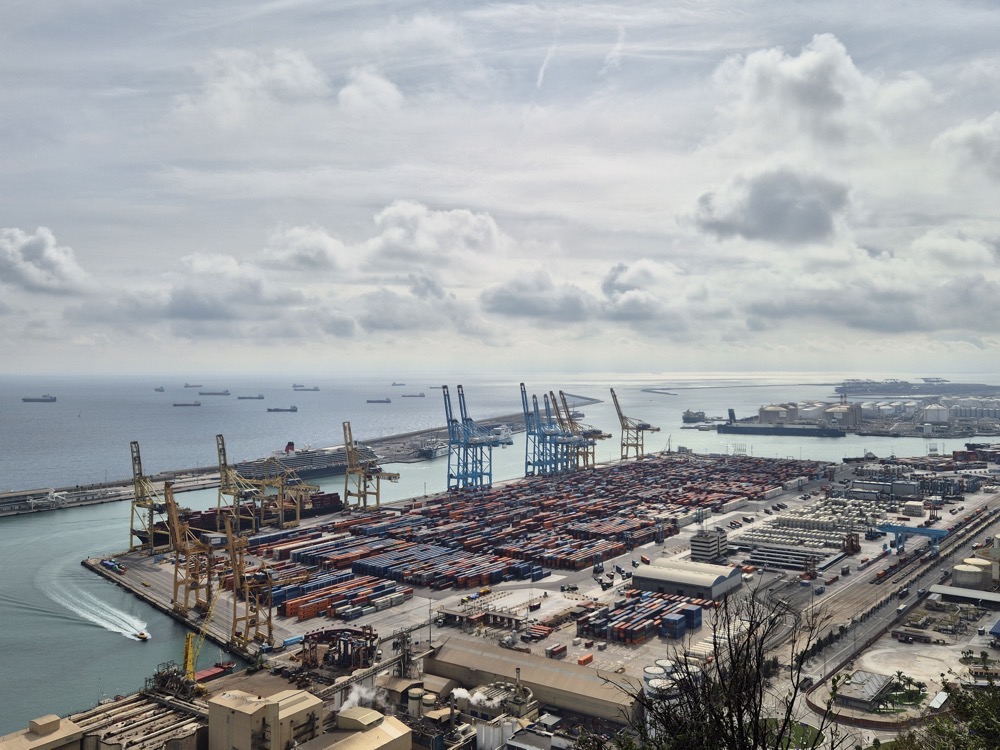
 On Monday we headed to the top of Montjuïc, mainly to get the view. The most interesting side for me was down onto the port area.
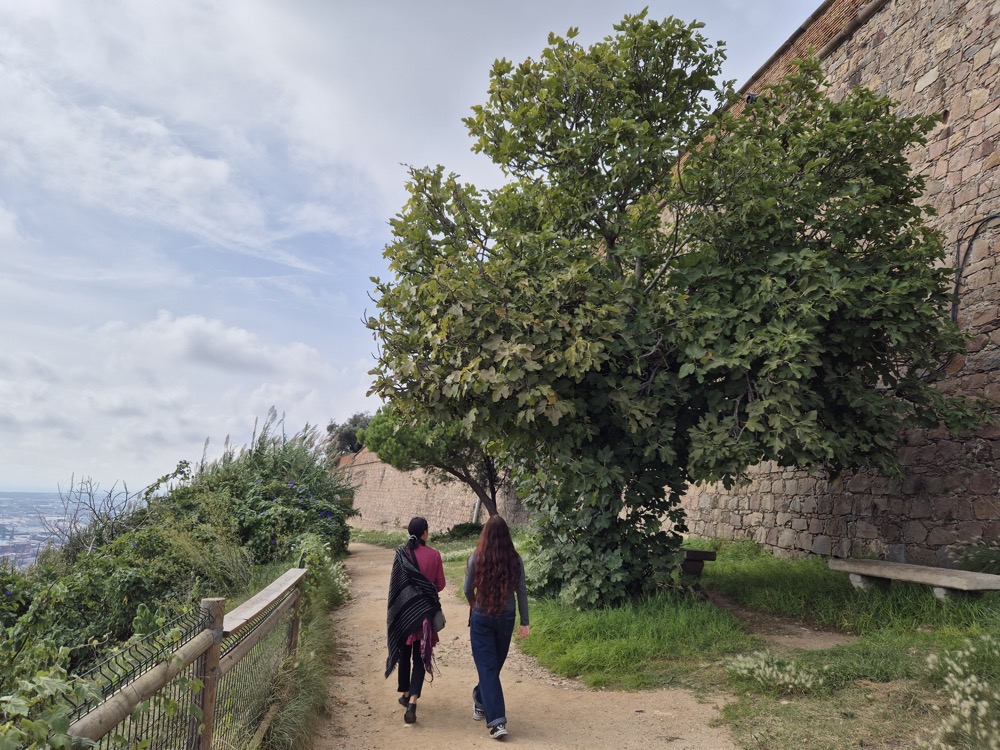
The walk around the ramparts was very enjoyable.
On Tuesday we checked out of the Airbnb and headed to the airport.
 I'm very happy with how our week went, both in terms of what we were able to achieve around planning for the coming year and - at a personal level - reconnecting both with colleagues and the city of Barcelona. I'm planning to come back sooner rather than later, probably with the whole family this time. It's such a vibrant, interesting place!
Leave a Reply