3D printing
-
I mentioned in the last post that I had a fun topic to share to help get the new decade started. Well, here it is! I've been collaborating with Elias Cohenca from our Tel Aviv office on and off over the last few years: Elias managed to port the THREE.MeshLine JavaScript library to work with THREE.js r71, making it compatible with the current releases of the Forge viewer. We've made heavy use of this library in Dasher 360 to represent skeletons and streamlines, for instance. I've also been mentoring Elias, something I mentioned in this post from the middle of…
-
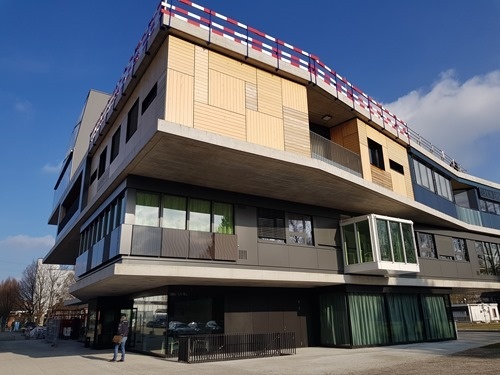
The week before last I headed across to Zurich for the day for meetings. During the afternoon I passed by the NEST building in Dübendorf – home of the DFAB House project – to meet with NEST's Director, Reto Largo, and talk more about our plans to collaborate. To learn a bit more about what's happening with this fantastic building, it's worth checking out this session from AU 2018 in Las Vegas delivered by both Reto and Thomas Müller from Mensch und Maschine Schweiz. Our plan is to "Dasherize" the whole building, which has upwards of 2,000 sensors in it.…
-
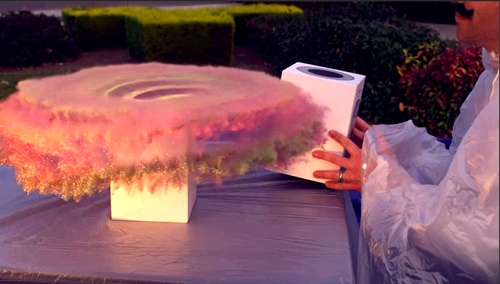
There's a video that's currently going viral on YouTube – with 35 million views and at #4 on the trending list – wherein a former NASA engineer turned professional YouTuber (sigh) shows how he designed and deployed a super-cool glitter bomb to counter local parcel thieves. It was picked up a few days ago by the BBC, back when it had a mere 6 million views. The video is genuinely fascinating, especially towards the end where it shows footage captured by the integrated mobile phones of various thieves opening it up and triggering explosions of glitter followed by releases of…
-
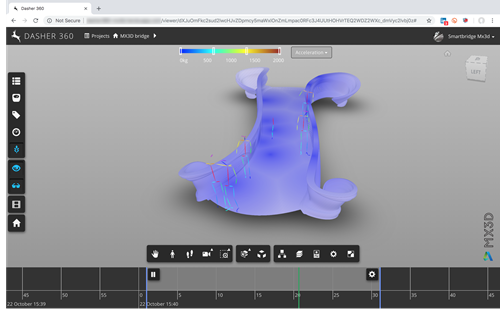
We hit a major milestone with our research into smart infrastructure, this week. After a massive push over the last 3-4 weeks (which in itself was built on work done over several years), we were able to deploy a system that measures – and reports in realtime – the performance and usage of the world's first 3D-printed steel bridge. To give you a quick sense of some of the results of this work, here's an image of Dasher 360 showing the 3D model of the bridge with skeletons walking across it with the bridge's accelerometer readings displayed as a heatmap.…
-
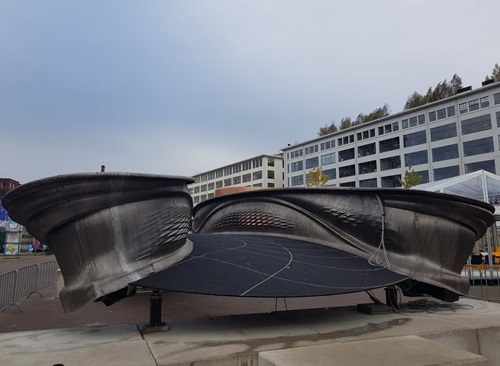
On Sunday I flex across to Amsterdam, once again, this time to take the train down to Eindhoven for Dutch Design Week. Alex Tessier and Michael Lee – colleagues who had barely recovered from the last trip across before coming back to help the project with one last big push – had arrived a few days before me. When we got to the bridge – on oversized cycles borrowed from the hotel but clearly intended for giants – the sky was still a little overcast. Alex and Mike got cracking on fixing some stray sensors and connectors. Our "home" for…
-
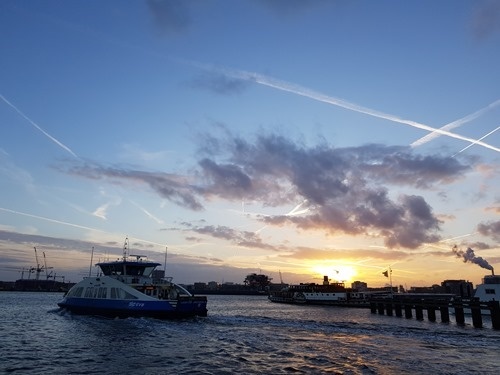
I've spent most of this week in Amsterdam with colleagues from the Toronto office. Our group descended on the MX3D offices in the funky NDSM wharf area of the city, to make a big push and help get the world's first robotically 3D-printed steel bridge – and its supporting systems – ready for Dutch Design Week. Most of the team stayed in a hotel right next to MX3D, but we did get the chance to take the ferry across to "the mainland" (it isn't really: everything is connected, it just seems that way) from time to time. It was really…
-

I spent the latter half of last week at ETH Zurich, attending a conference entitled "Robotic Fabrication in Architecture, Art and Design 2018", or Rob|Arch 2018 for short. This is the biennial conference where luminaries in the AEC industry get together and plot how robots will replace millions of construction jobs over the years to come. Not really, of course: the big thrust of this conference is to work out how robotic fabrication technology might (or must) be applied to meet the housing needs of a planet whose population is expected to increase by nearly 30% over the coming 30…
-
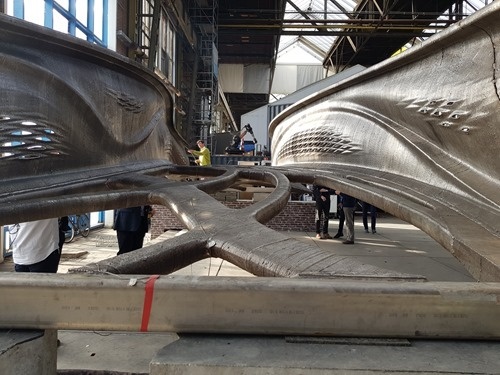
In a recent post I mentioned a trip to Amsterdam to visit with Van Wijnen and MX3D. The press embargo has now lifted on MX3D's bridge – as you can see from a slew of recent articles – so I can now share a bit more information about that part of the visit. During that week I spent 2.5 days at MX3D, mostly to participate in discussions about how best to instrument the bridge with sensors. Autodesk started our collaboration with MX3D around the vision of using generative design for the creation of the bridge's form… during the last year…
-
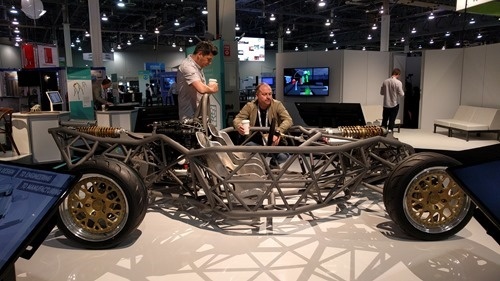
I was really excited to hear, over the weekend, that our friends at Hackrod have launched a successful crowd-funding campaign and that there's still time to participate. The campaign is being hosted on MicroVentures, which means investors should receive interest on their investment as well as equity in the project, assuming things work out. This admittedly seems a nicer model than getting a T-shirt or coffee mug saying you supported their Kickstarter. 😉 I haven't yet decided whether I'm personally going to get in on the action (so to speak) but I thought I'd post about it in case others…
-
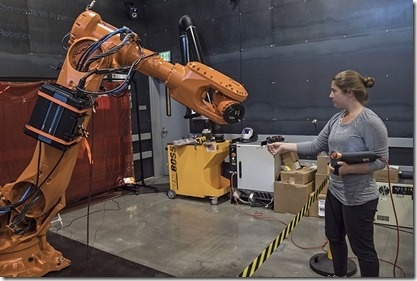
Following up from last week's post, which included a brief video showing where we're headed with generative design, today's post highlights a speech by my colleague in Autodesk's Office of the CTO (OCTO), Maurice Conti. I've mentioned Maurice before: he has an Applied Research team working on Pier 9 that is currently hiring a Machine Learning + Robotics researcher. Maurice gave a speech at TEDx Portland entitled "The Future of Human Augmentation". It looks at how we're being augmented, not only by computational systems (helping us think) but by robotic systems (helping us make) and by a digital nervous system…