APS (Forge)
-
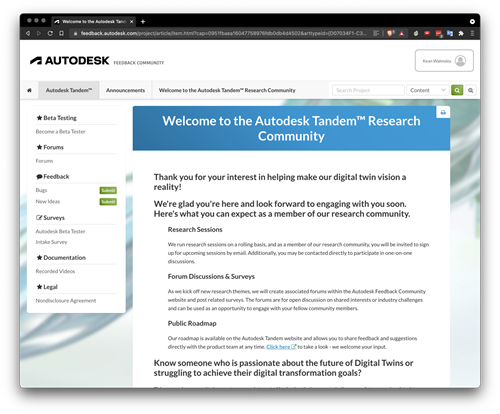
The Autodesk Tandem team has just launched their Customer Research Program. This is the perfect way to engage with the Tandem team and let them know what features you might need from your future digital twin infrastructure. In particular, if you're interested in seeing features from Project Dasher show up inside Tandem – via what I referred to in a recent post as "Dasher inside Tandem" – then this is your chance to be heard. Related to this topic, I came across a funny meme recently on Twitter. I couldn't find it again, so here's my attempt at reproducing it:…
-

I've been spending quite a bit of time exploring how Project Dasher might make use of the platform capabilities of Autodesk Tandem. This is just one effort connecting the two projects, and the one I tend to think of as "Tandem inside Dasher": the Tandem team is looking what makes sense in terms of "Dasher inside Tandem" (i.e. which Dasher features it makes sense to surface in Tandem for their customers). As I've hopefully said before, Autodesk Tandem fills a really important gap in the process to build out a model-centric digital twin: Project Dasher project was never intended to…
-
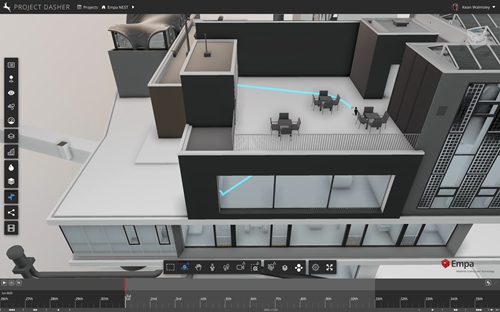
One more feature inspired by Project Dasher has made its way into the Forge viewer's Data Visualization Extension (Project Hyperion): streamlines. This is something I've talked about a few times in the past, and I'm happy to see it make its way into the Forge platform. Streamlines are a great mechanism for indicating movement – of people or assets – through an architectural space, or perhaps something like a toolpath in a manufacturing context. The way we implemented them originally inside Dasher wasn't ideal, in all fairness: I used the MeshLine.js library to be able to display lines with thickness…
-
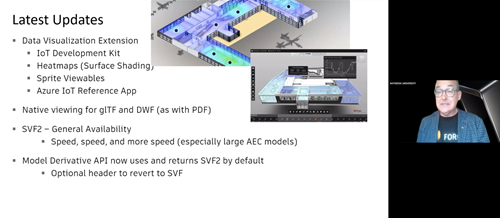
I've finally found the time to view the main information from the recent Autodesk University event, and thought it worth highlighting what I consider to be some of the "big ticket" items, especially from my own – somewhat Forge- and digital twin-centric – perspective. First-up, Forge was everywhere in the keynotes. If it wasn't previously clear that Autodesk is serious about becoming a platform company, it should be from the messaging at this AU. On a side note, there are a number of internal organisational changes that have happened/are happening at Autodesk to accelerate this shift, so I'm currently much…
-
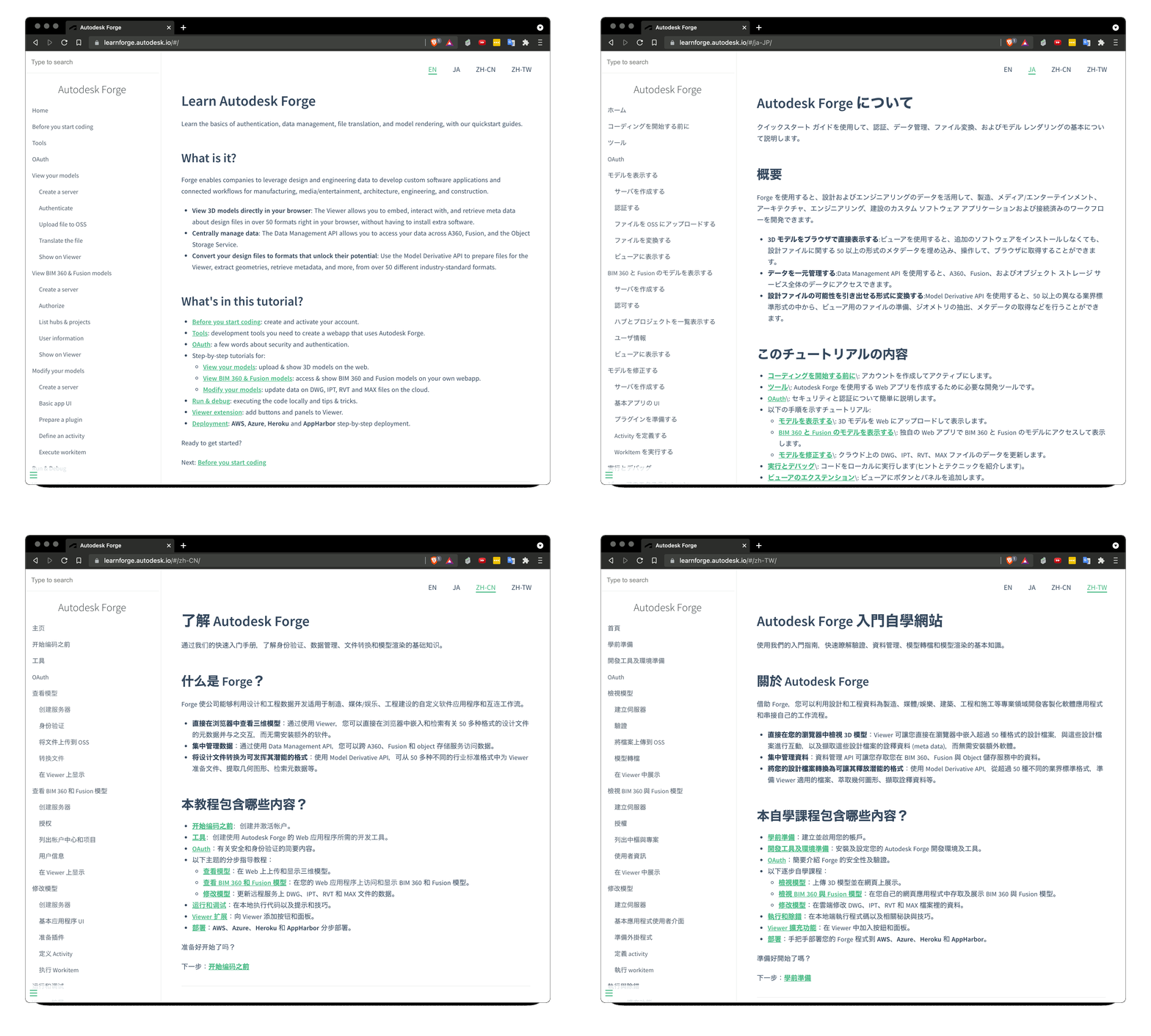
While I was away on vacation I received the news that the excellent learnforge.autodesk.io website – a great resource for learning how to develop software that uses Autodesk Forge – has been translated into Japanese, Traditional Chinese, and Simplified Chinese. This will be of great use to customers and would-be Forge developers who are keen to learn more about the platform but have a better grasp of Japanese or Chinese than English. If you have more requests for languages (I know at least one more is in the pipeline), then please post a comment and I'll pass it on to…
-
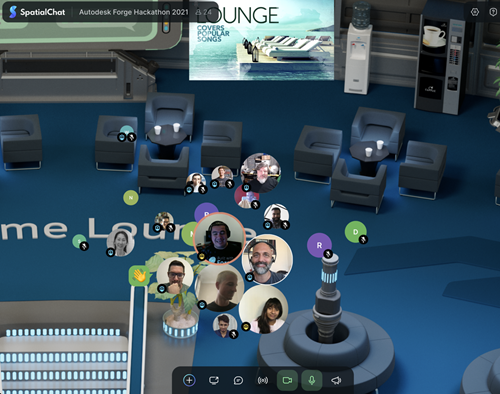
While I'm unlikely to be present for much of next week's Autodesk University event – all being well I'll be in Sardinia – I have been feeling the excitement mount ahead of it. Mainly from attending the Forge Hackathon, which is now nearing it's climax. The event kicked off with a really interesting event held via SpatialChat. I hadn't used it before, but was immediately hooked. There were different rooms (fine), but even within a single room you could have private conversations by moving off into a corner. The sound increases as you get closer to a sound source, whether…
-
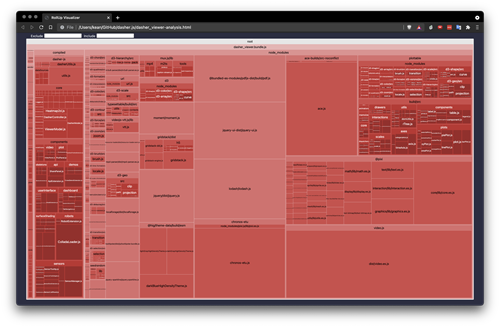
I mentioned recently that I've been working on updating Project Dasher's use of 3rd party components, and that I had some learnings to share. We started the Forge-based version of Dasher in 2016, and (much to my shame) some of the components had stayed at more-or-less the version available at that time, largely due to the migration effort needed to deal with breaking changes. Biting the bullet to upgrade them was painful but necessary, and right now I (and Dasher) feel nicely refreshed. Last time I mentioned there were two big outstanding dependencies that still required attention: Bootstrap and Rollup.…
-

Other that my regular foolings-around with ancient tech, I feel like I've been neglecting this blog in recent weeks. That's all about to change, though, as we enter the busy period leading up to Autodesk University 2021. For one I have some interesting learnings I thought I'd share from some of the foundational work I've been doing on Dasher's codebase, but there are also some interesting updates for people performing analyses of 2D (and 3D!) spaces. Fun stuff! First though, it's worth reminding people of the Forge Hackathon that's around the corner. It starts in just a couple of weeks,…
-
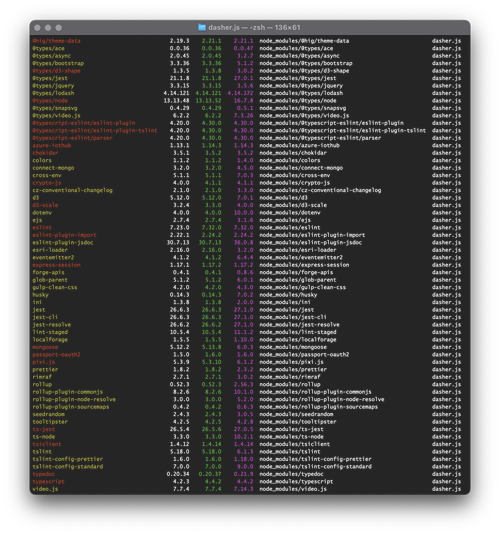
Over the last week I've been heads-down on core Dasher work, but with very little visible result. Here's why. Early last week I received an email telling me that it was time to dig into Dasher's use of 3rd party components and make sure there weren't any security issues. (This isn't something unusual – all our products go through this, and many of our research projects, too.) As anyone working on web development projects will know, it's important to go through from time to time to reduce the technical debt that accumulates due to the use of old libraries and…
-
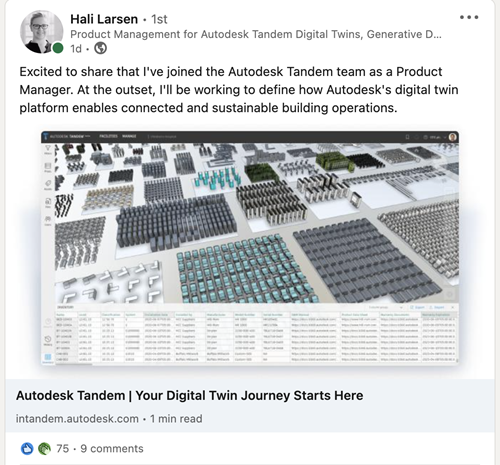
My friend and colleague Hali Larsen has joined the Autodesk Tandem team as a Product Manager focused on connected workflows and sustainability. This is huge news, for lots of reasons: for several years Hali played an absolutely instrumental role in Project Dasher – in many ways she was our de facto PM, but also worked through many gnarly issues related to bespoke configuration for various Dasher pilot projects. Hali has a wealth of experience working with customers in this space, and also knows where most of Dasher's skeletons are buried, so she is the right person to take on this…