Dynamo
-
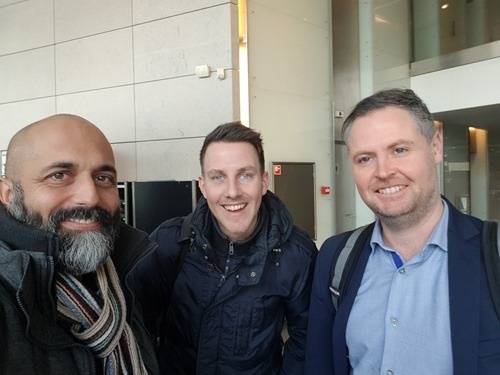
I was a little torn about my plans for this week: the Forge team is running a packed Accelerator in Munich, so it would have been great to have spent my week over there. As it happened I ended up coming to the Netherlands, instead, to meet with two incredibly innovative companies, Van Wijnen and MX3D. Despite missing the Accelerator the timing was actually pretty ideal: it proved possible to spend a day and a half with Van Wijnen at Autodesk's office in Hoofddorp before coming into the city to join some of my Autodesk colleagues – Alex Tessier, Alec…
-
The project I'm currently working on fits squarely under the umbrella of "Generative Design for Architecture". We're using Dynamo Studio to generate layouts of residential housing – including both individual homes and apartment buildings – with the results quantified in a number of metrics that will be easily explorable by the user of the system. It's the approach The Living – the architectural studio in Autodesk Research doing pioneering work in the generative design space – has used for a number of projects, including Project Discover and the layout of the AU 2017 Exhibit Hall. I came across this video,…
-
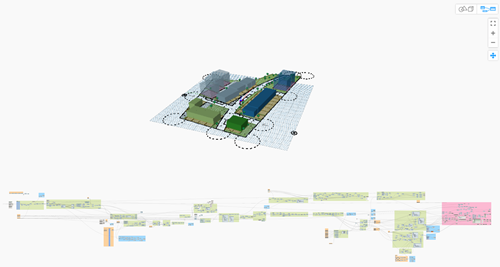
I'm working alongside several Autodesk Research colleagues on a really large Dynamo graph. We're mostly working in separate instances of the .DYN file – and focusing on different areas of it, as far as possible – and merging the changes together has been a task of which I've taken ownership. At the time of writing, Dynamo doesn't have decent support for multi-user graph editing, nor is its data storage tuned for source control mechanisms such as Git. All of which makes identifying differences between graphs and merging updated areas to be quite challenging. One basic problem that we've had to…
-
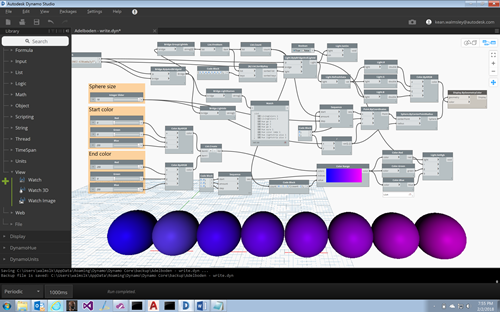
Now that we've seen a couple of posts showing how to query information about Hue lights via a Philips Hue bridge from Dynamo Studio, it's time for the really fun stuff: controlling lights from Dynamo. To make this happen some changes were needed to the zero-touch node that talks to the Philips Hue API on behalf of Dynamo, mainly to allow the setting of a light's properties. The Philips Hue API allows this to be done either via Hue, Saturation and Brightness or by the XY offset in the CIE colour space. I ended up exposing the ability to set…
-
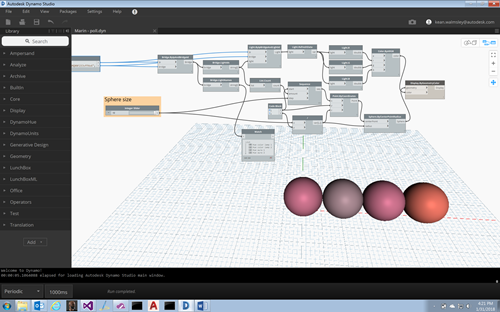
In the last post we looked at some initial code to get basic information about the lights connected to a Philips Hue bridge. In this post we're going to extend the code to expose more information but also to query the bridge repeatedly, allowing the graph to display the latest light colours as they change. Here's a view of the updated graph. A few things have changed: firstly the Bridge object exposes some new information – in our case we can see the names of the lights, but we could also access the names and IDs of the various groups,…
-
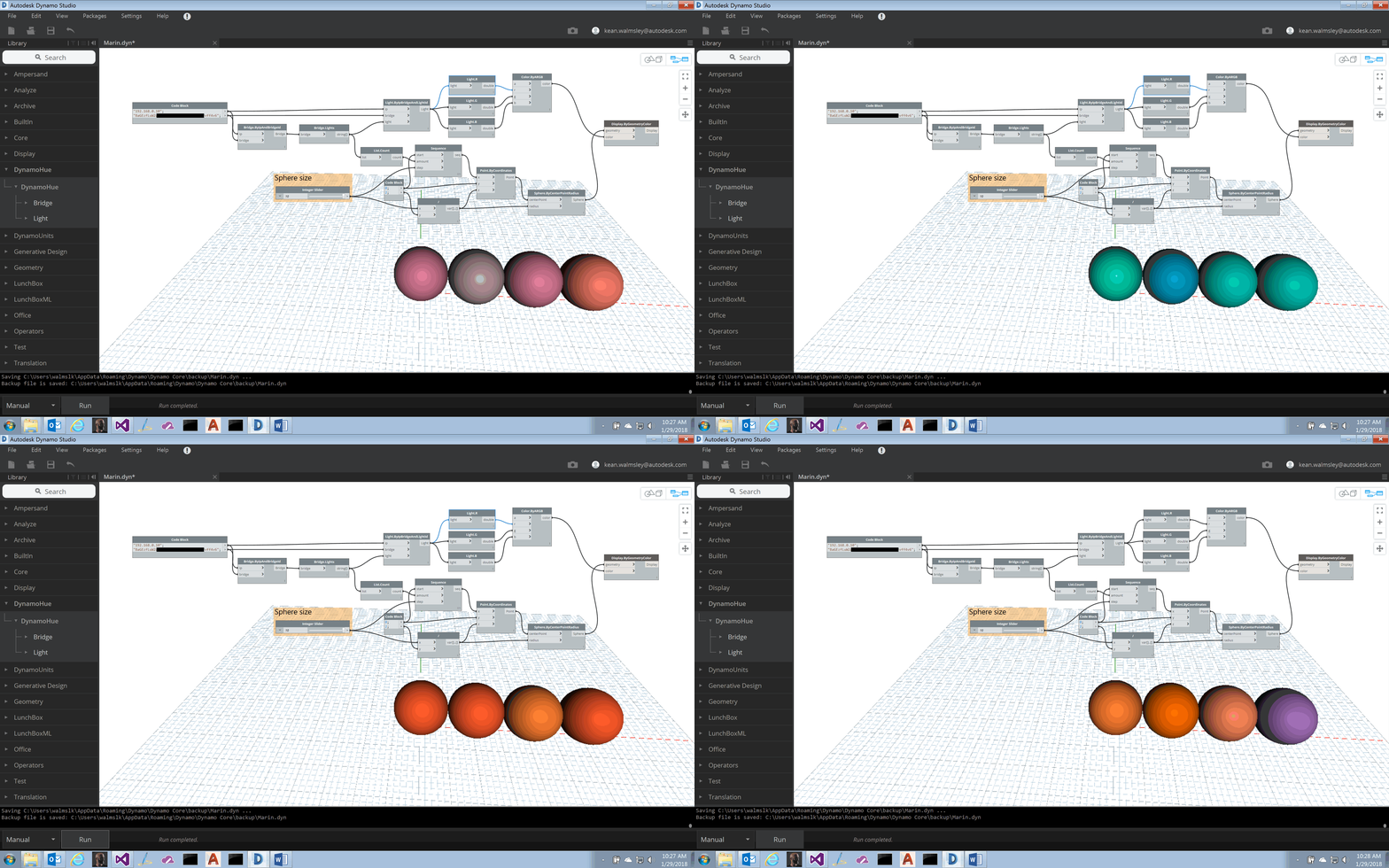
I mentioned in a recent post that I was chewing on how design apps might connect with building automation systems to display data via lights. My first step along this path was to see how Dynamo Studio might connect into my home's Philips Hue bridge and get information about the "smart" lights it contains. To do this I created a zero-touch node in C# that calls into the Philips Hue API exposed by my local bridge. (To make this piece work you need to follow the steps on this page that show how to create an authorised user ID for…
-

As mentioned in a recent post, I'm currently working on a project using Dynamo Studio. It's fun getting back into Dynamo and DesignScript: I helped prototype the initial implementation of DesignScript inside AutoCAD about a decade ago, and I love seeing how the technology has evolved in the meantime. There are a few of us from Autodesk Research working on the project, which is also fun, but in a less literal way. Dynamo doesn't work especially well with source control, as far as I can tell, so there's a fair amount of manual merging of nodes into the master graph.…
-
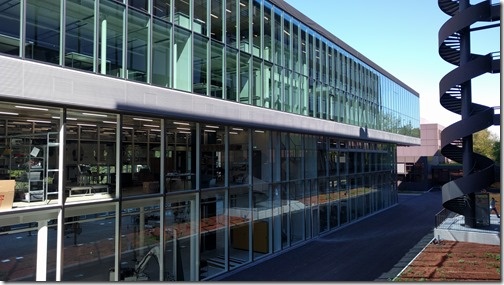
This week has been a little hectic, once again. Yesterday I spent the morning back across at ETH Zurich, speaking with members of the Block Research Group about Forge, Dynamo and HoloLens. They've just moved into a brand new building labelled HIB – where the various schools at ETH focusing on architecture from a technological perspective will be co-located – but as it's so new it's yet to be sign-posted. I eventually did find it, but not without asking for directions from 5 different people. Inside the ceiling is pretty cool: they've used a combination of skylights for natural light…
-
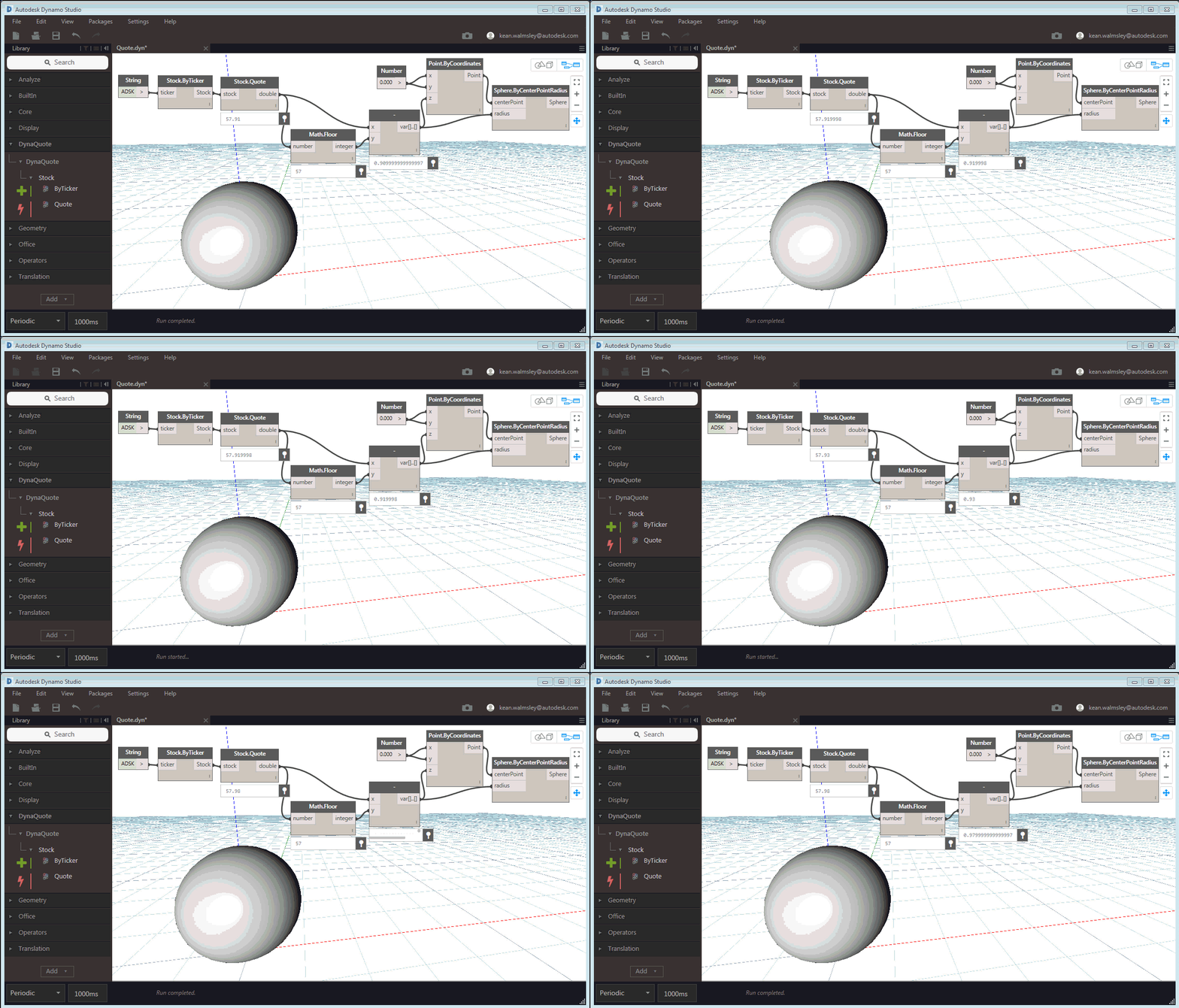
We have our annual, internal Technical Summit coming up in a couple of weeks. I'll be heading across to Montreal with 700+ other Autodesk employees to learn more about the cool stuff going on within the company. As I've done in previous years, I'll do my best to report information that I think will be interesting to this blog's readers (and that is ready to be discussed publicly, of course). One of the event's activities is being hosted by my team: the IoT Hackday. We'll have 30+ participants spread across 8 different teams. Each team will get provided some sensors,…
-
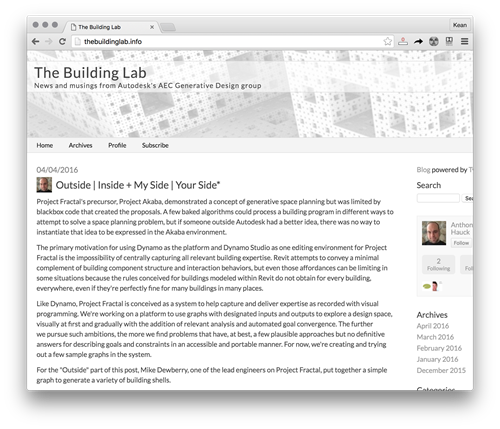
I've been spending more time looking at generative design in recent months (although this is a relative thing… I've still only posted once about Dynamo, for instance). So far a big chunk of my research has been understanding what's going on in different parts of the company with respect to generative design. As part of this effort, several months ago I chatted with Anthony Hauck who heads up a team focused on generative design in the AEC space. He talked to me about Project Akaba – an early generative tool for space planning – and its successor, Project Fractal. At…