Generative design
-
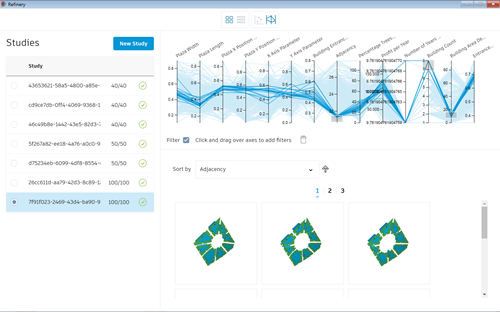
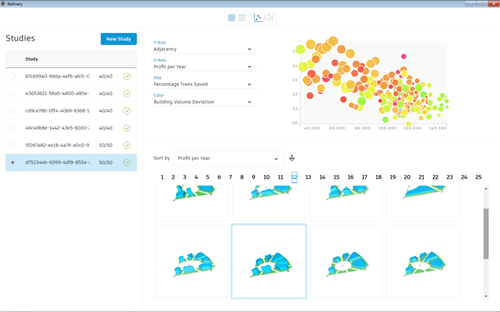
There's a lot happening this week in the world of Generative Design for AEC at Autodesk. Aside from the Space Analysis package we announced, there's interesting news from both the Dynamo and Refinery teams. The Dynamo team has kicked off their daily build process once again, this time focusing on Dynamo Sandbox builds. This is very interesting news for me, and probably for other people working on GD projects outside of Revit: I use Dynamo Sandbox to do the majority of my GD-related studies – usually by starting the executable found at %programfiles%\Dynamo\Dynamo Core\2\DynamoSandbox.exe that's installed with Dynamo for Revit.…
-
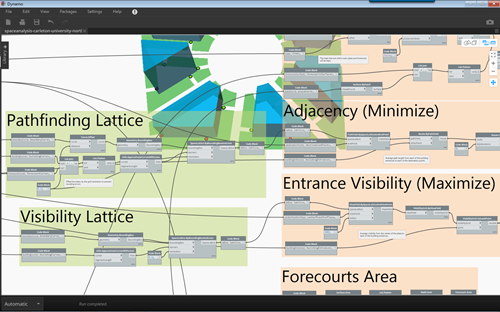
As promised last week, Autodesk Research has now posted v0.2 of our Space Analysis package to the Dynamo Package Manager. This version contains nodes for pathfinding as well as for visibility analysis. Both implementations work via a common SpaceLattice object – basically a 2D grid with diagonal connections – that can be used to drive both algorithms. In reality you may end up having multiple lattices – as pathfinding may be working with "barriers" that don't affect visibility – but the node you need to use is the same. We had posted a previous version with just pathfinding, but as…
-
A quick update before a larger unveiling next week… We've made solid progress with implementing the grid-based capabilities of the SpaceAnalysis package. All being well we should have an "official" version available early next week. This release will contain pathfinding – based on Djikstra's shortest path algorithm, working on a grid with the size and resolution of your choice – as well as the ability to test visibility – using the same grid for an Isovist-like analysis. We have a version already posted via the Dynamo Package Manager (ssshhhh!), but we've gone through and rationalised a bunch of the nodes…
-

On April 5th-6th, 2019 in London, the UK Dynamo User Group is holding its first ever Dynamo Hackathon. Several members of the Dynamo and Refinery teams will be there, as well as yours truly (I'll only be there on the 5th, though, as I have family commitments over the weekend). If you'd like to participate, you do need to move quickly: today (March 19th) is the last day that submissions will be accepted. (This deadline really crept up on me: I've been meaning to post about this for the last week or so, but was busy on other things… now…
-
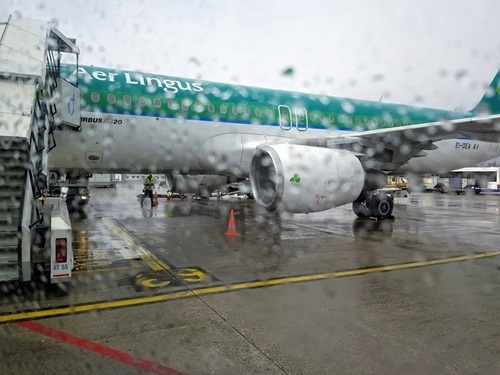
After having spent a great few days with the Toronto team, I headed home on Friday afternoon. I did have a little bit of "fun" getting home, though: firstly the UPExpress going from Union Station to Pearson Airport stopped – ostensibly waiting for the right signal – for about 30 minutes. It wasn't a big deal for me, thankfully: I'd left some buffer in my schedule, so still had a little time to wait at the airport. While I did so, for some reason I checked my downloaded Netflix content… none of it played: I kept getting an obscure error…
-
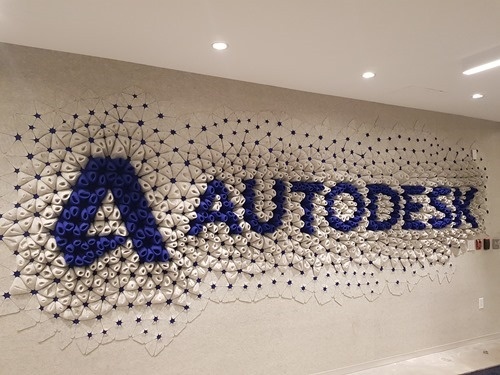
I seem to spend quite a bit of time, these days, talking about the new Autodesk office in Toronto. I did visit one part of the office when I came through in July 2017 – on our world tour – but people hadn't, at that point, fully moved across from the former 210 King St East office. So this week was – somewhat surprisingly – the first time I'd actually seen the generatively-designed office space first-hand. Crazy. I've been staying in the Chelsea Hotel – apparently the largest hotel in Canada, with about a thousand rooms – which is conveniently…
-
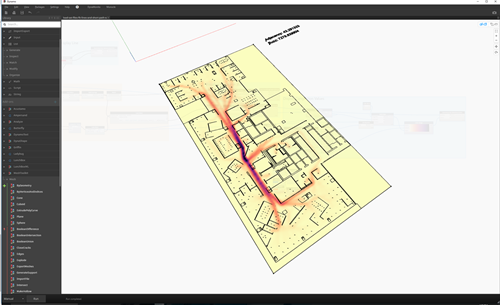
I'm on holiday with my family, this week, enjoying the Bernese Oberland with family and friends. In Toronto – where I'm heading next week – my team-mates are busy trying out the 2D path-finding component I talked about in the last post. Now that Simon Breslav has wrapped the C++ path-finding module created by Rhys Goldstein – building a .NET wrapper and using it from Dynamo – he's started using it to implement a version of the "buzz" metric The Living used for Project Discover. Here's a sneak peek of how it currently looks with one possible layout of the…
-
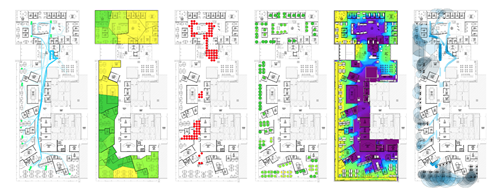
Over the last few weeks colleagues in Autodesk Research have been building the foundations for a space analysis package that can be used for generative design workflows in Dynamo. We'd love to hear from you if you're interested in taking it for a spin. But first, a little background… We've known we've needed to get better performance when analysing 2D and 3D spaces since embarking on the original layout of the new MaRS office in Toronto as part of Project Discover: the approach we had worked well – as I think is clear from the results of the project –…
-
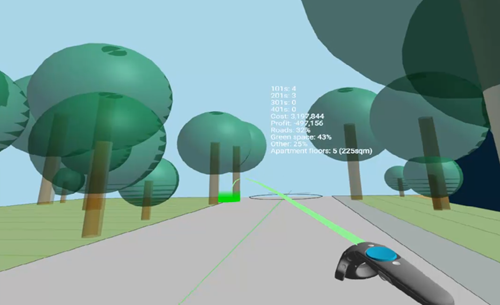
This week I decided to take the WebVR/WebXR extension work I did for Van Wijnen to the next level: mainly to integrate metric information in some way into the scene, whether as 3D text objects or via some kind of Heads-Up Display (HUD). But before embarking on this I decided to take another look at the implementation of the HTML client. When I first wrote the HTML page that consumes geometry data from the Refinery server, I decided to use raw JavaScript and WebVR/WebXR calls with three.js. I'd thought briefly about using A-Frame – an awesome framework started by Mozilla…
-

Some good news for people who thought they'd missed their chance to speak at this year's Autodesk University in London: the Call For Proposals (CFP) for AU London 2019 has been extended until January 25th, 2019. I love Autodesk University events in general, but the London edition – which I attended for the first time in 2018 – is quickly becoming my favourite, venue-wise. Tobacco Dock is a fabulous place to hold an event, providing the weather gods are smiling. (Last year's event was basically perfect, while the inaugural event in 2017 was very hot, apparently… and I can only…