Geometry
-
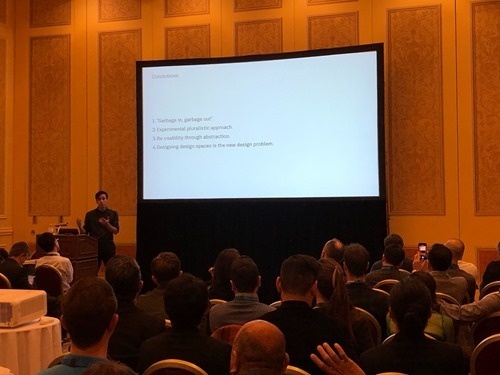
I mentioned last time that I was expecting to publish some posts about Autodesk University 2019 material I found particularly compelling (now that I've had the chance to consume some). I didn't get to watch as many recordings as I'd have liked – for now – but I did manage to watch the rest of a class of which I only caught the first few minutes before having to run to another meeting in Las Vegas, my friend Lorenzo Villaggi's session on Geometry Systems. There are two main pieces to generative design systems – at least in the way they're…
-
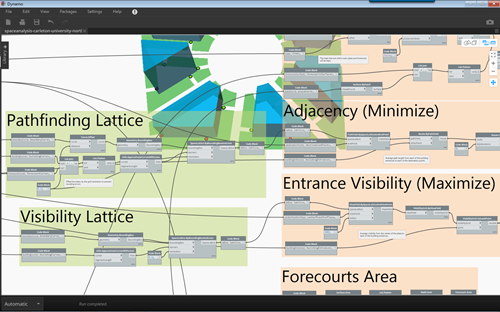
As promised last week, Autodesk Research has now posted v0.2 of our Space Analysis package to the Dynamo Package Manager. This version contains nodes for pathfinding as well as for visibility analysis. Both implementations work via a common SpaceLattice object – basically a 2D grid with diagonal connections – that can be used to drive both algorithms. In reality you may end up having multiple lattices – as pathfinding may be working with "barriers" that don't affect visibility – but the node you need to use is the same. We had posted a previous version with just pathfinding, but as…
-
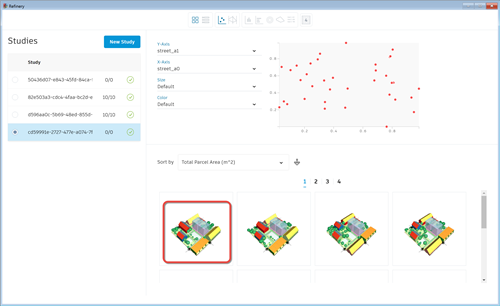
It's time to talk about a little project I started over the holiday break: connecting Project Refinery – the optimization engine for Dynamo that will help drive Generative Design workflows – to Virtual Reality. It's a project I've been thinking about for some time, now, and was originally inspired by two things: the workflow Van Wijnen uses Refinery for makes heavy use of VR for visualization – to evaluate designs with internal stakeholders – but right now they export the geometry from Dynamo to Revit and then use Enscape to visualize the scenes. It's not a complicated process, but it…
-
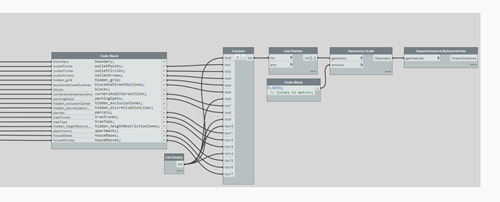
It's been a quiet week on the blogging front, mainly because of the May 1st holiday on Tuesday, but also because I've been heads-down on projects I can't really talk much about. One thing that does seem worth sharing is an approach we've been using to take geometry from Dynamo into Revit. The project itself relates to the use of Generative Design for urban planning. I can't yet talk about the generative aspect – which is extremely cool – but once the design is basically finalised there's a need to bring the geometry into Revit. The ideal scenario would be…
-

If my calculations are correct, I'll be in Singapore during this year's Autodesk University in Las Vegas. It's the first I'll have missed for many years – and it's going to feel more than a little strange, when that week comes along – but this trip (and my family) will be taking precedence, for once. While I'm not going to be there myself, my good friend and colleague, Simon Breslav, is stepping in to deliver the class I would be giving if I were there. Although as Simon is the person who developed a great deal of the code being…
-
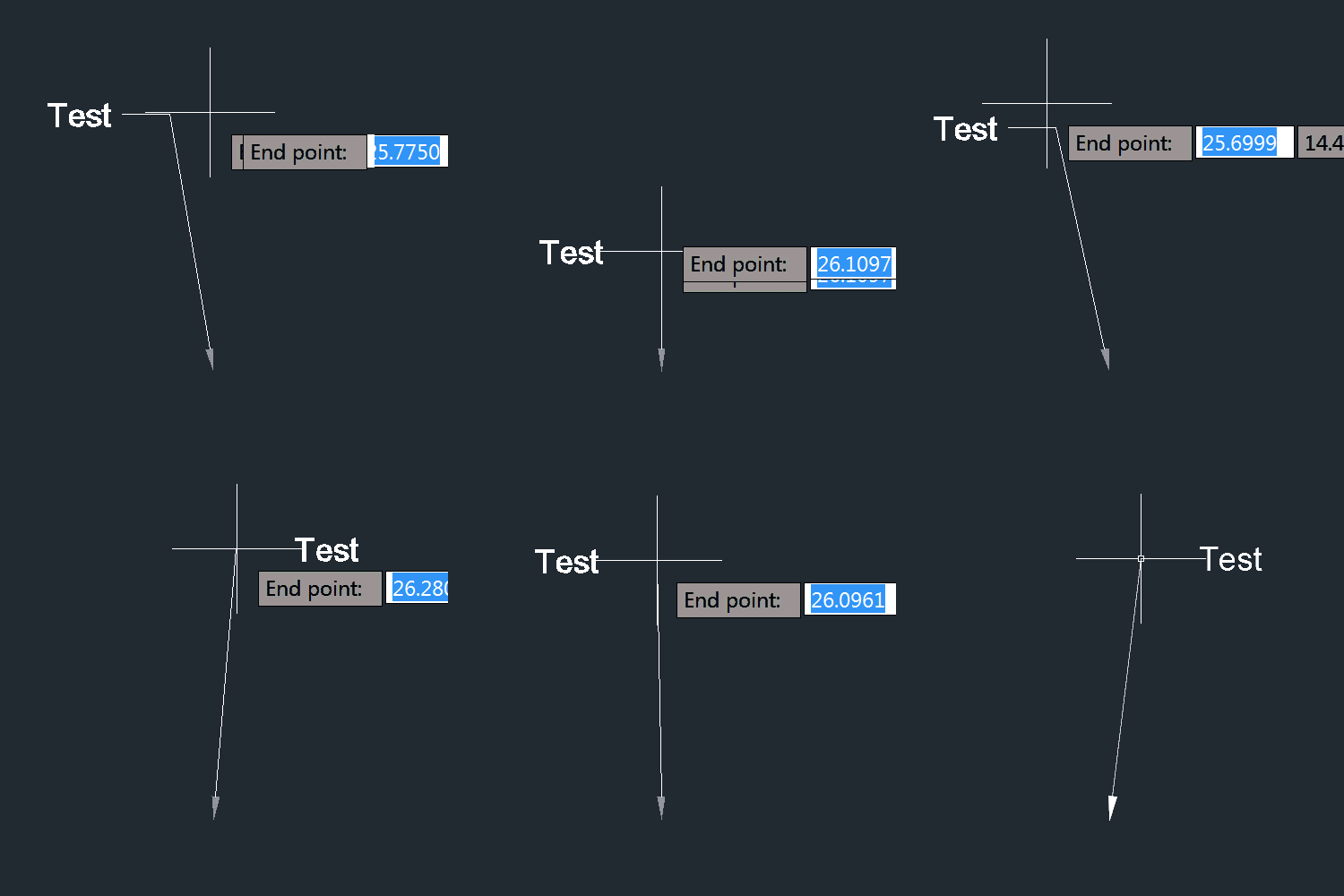
I'm sure some of you will be relieved to see I can still (more or less) manage to write code for AutoCAD… the last few days I've been feeling quite under-the-weather, so today's post is a little bit of "comfort code": sometimes while you're brain is struggling to handle the unfamiliar, it's very happy to tackle the familiar. At least that was the plan, and the reason I decided to tackle this recent question from Thomas Heitz: I would like to write an code to change automatically the structure label style while dragging the label. So I created two labels…
-
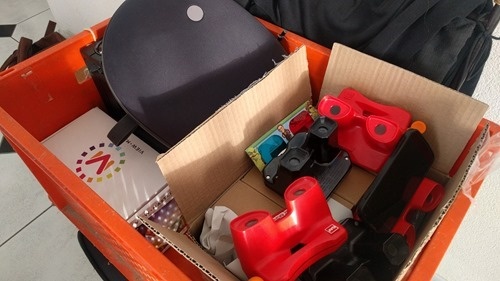
On Saturday I gave a couple of VR presentations at Micro16, an exhibition and conference held at Microcity, a (relatively) new technical hub in Neuchatel that houses part of EPFL. [I always pronounce Microcity with stress on the second syllable, much as Will Ferrel does when pronouncing "Metrocity" in the movie Megamind (so that it rhymes with "atrocity"). Anyway – it's just a (formerly) private joke shared with my wife and kids.] I'd been invited by a local organisation called Enigma & Indicium, which organises vocational workshops for young adults. The two sessions were attended by people aged from about…
-
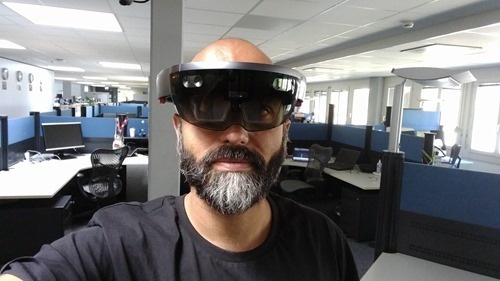
Over the last few days we've held Autodesk's first internal, global Hackathon. I started off by not wanting to join a team – I did sign up as an "evangelist", which it turns out means I'm also a judge – but in the end I decided to create a simple HoloLens application. And then Jeremy Tammik suggested we join forces, so we actually were a team, all of a sudden. From my side I focused on creating the HoloLens application – which receives path information from somewhere and displays that to the user – as well as the 2D AutoCAD…
-
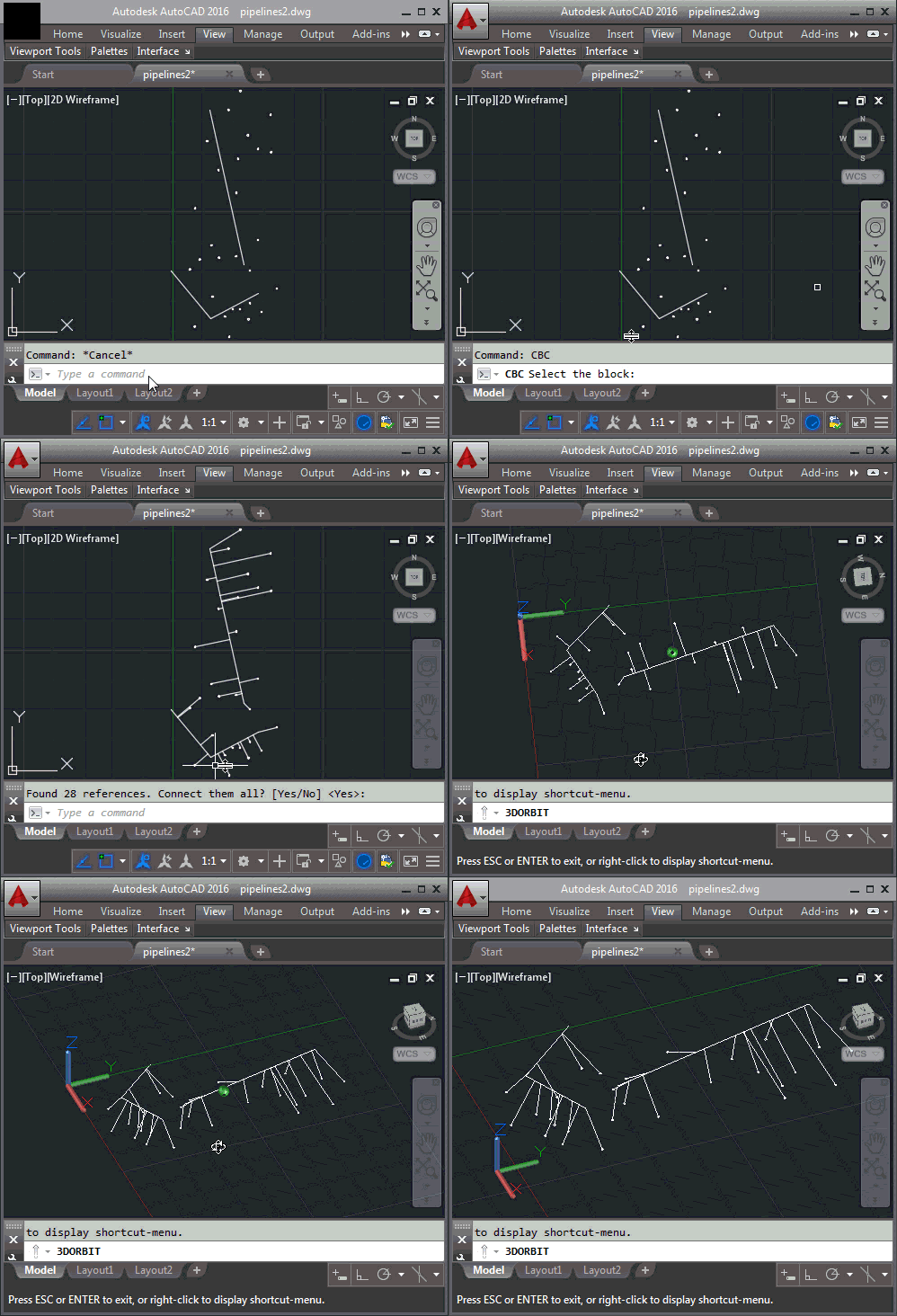
In the last post we saw a simple command that connects a block with a curve via a line that starts at the insertion point and meets the curve at its closest point. In this post we're going to see how we can search the modelspace for the nearest curve and connect each block to that. There are a few interesting techniques used in this post's code: We use the dynamic keyword to count the block references for a particular block without starting a transaction (as we're still in the user input phase, at that point). We're going to use…
-
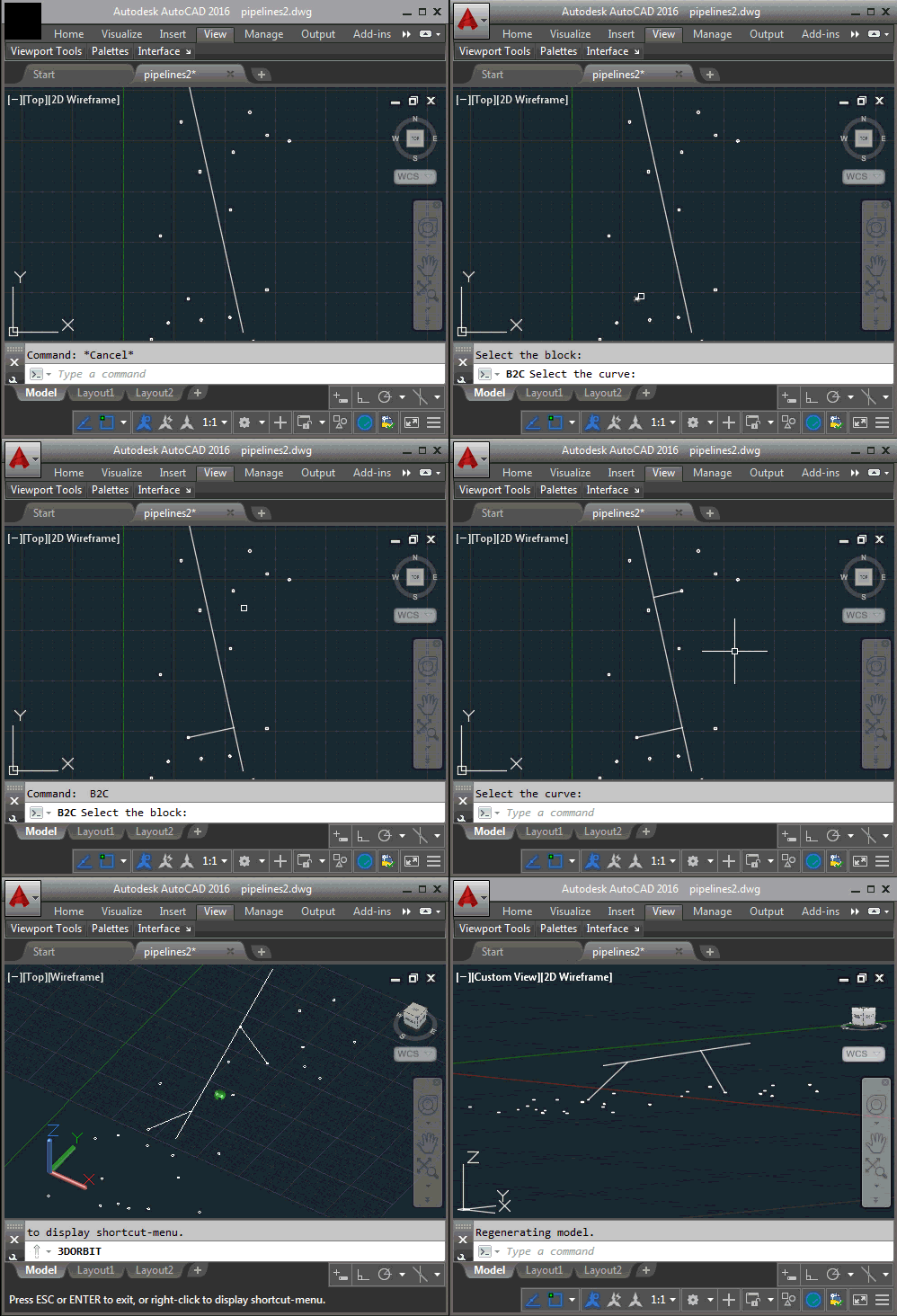
A question came into the LISP forum during Wednesday's Answer Day. It related to a really interesting task: to take certain blocks in a drawing and connect them to the closest polyline via a perpendicular line. It took me a little while to understand, but basically the problem relates to pipeline design: there are gully posts – represented as blocks – that need to be connected to pipelines (polylines) in the drawing. They need to be connected by the shortest path, which will be perpendicular to the pipeline (assuming the pipeline is long enough, of course). It was too juicy…