Autodesk Research
-

There are some very interesting events scheduled for the coming weeks. Just prior to next week's AU London 2019 – itself an event that will be heavy on content for computational and generative design, this year, including a talk by Lorenzo Villaggi and myself – there's a Dynamo Day being hosted in London by the UK Dynamo User Group (or #UKDynUG) on Monday June 17th. There are four day-long workshop streams tailored for various needs… Dynamo Intro plus Geometry Dynamo Intro plus Data Dynamo Power Up Dynamo Dev Day … followed by an evening user group session with a number…
-
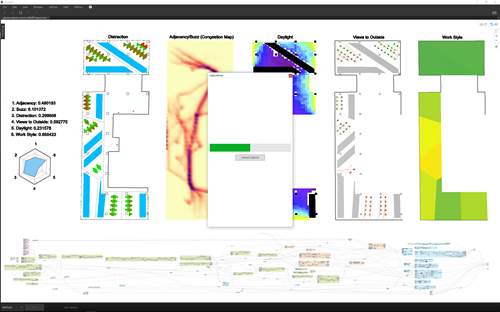
(If you're asking yourself "what's Capturefinery?" then I suggest reading these posts first. TL;DR: Capturefinery is a tool for capturing screenshots of the various runs in a Refinery study and compiling them into animated GIFs for sharing via social media or including in customer presentations.) Firstly, a huge thank you to my partner in crime – and the first (so far only?) user of Capturefinery – Simon Breslav. He's been kicking the tyres and giving very helpful feedback that has steered the development of this package. He very kindly tells me he likes it a lot – I hope you…
-
Now that the dust has settled on the Call for Proposals process for AU 2019 – and its accompanying Forge DevCon – in Las Vegas, you can vote for your favourite sessions. Here's a blog post on the Forge site explaining how to do so for Forge classes. I've submitted two, this year. The first is about how Forge developers can build their own products using components we're publishing from the Dasher 360 codebase. You can find the class by searching for "Dasher", even if the class is about more than that. Here's the text for this first proposal: Advanced…
-
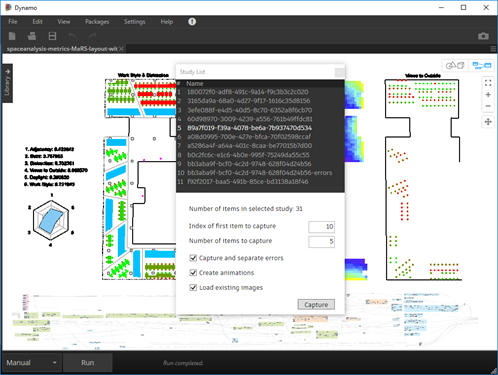
I'm happy to announce that the Capturefinery package for Dynamo (and Refinery) is finally ready for posting to the package manager! My main misgivings – stopping me from posting it sooner – had been around the basic UX (fixed in the last update) and the fact that the tool requires (or required) the system to basically be dedicated to the capture operation. These have all now been addressed. Here are the enhancements I made today: The graphics are now captured via the Dynamo API, rather than via the OS (i.e. the screen) This means you can keep Dynamo minimised and…
-
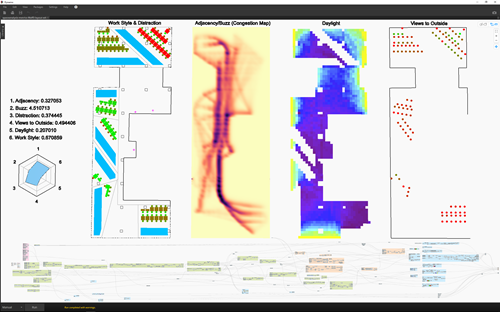
I talked recently about a Dynamo view extension I created to capture presentation graphics (primarily animated GIFs) from the entries in the "hall of fame" of a particular Refinery study. This has been super-useful, internally, but not just for creating fancy graphics. Early on we realised that it was a great way to identify problems in Dynamo graphs: we could see the occasional error state (with the yellow text at the bottom left of the screen) flash past, indicating that a Dynamo run had completed with warnings and/or errors. Presumably the errors haven't stopped the metrics from being evaluated and…
-
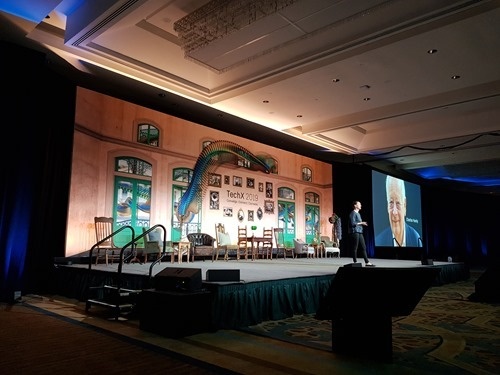
I only managed to write a single blog post last week, as I spent the week at TechX 2019 attending interesting classes and networking with my Autodesk colleagues. It was an amazing week, so I do feel it's worth sharing a bit more of its goings-ons. I only really talked about the first day of TechX in my last post, so let's now see what the rest of the week had in store. Much like the first day, the second day at TechX started with a number of keynotes. The first two were by Autodesk executives, our CHRO (Chief Human…
-
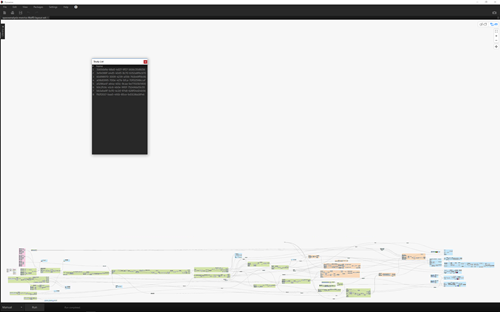
A few weeks ago I posted a GIF on Twitter that showed a few images from an earlier version of the Project Rediscover graph. I created this in a very manual, low-tech way: firstly, I selected a number of designs in Refinery, one-by-one, took a screenshot of each and then used GIMP to build an animated GIF. (This used to be very easy to do with previous versions of OS X, by the way: the Preview tool allowed you to drag images across into a GIF file and create new frames, and you could then use GIMP to adjust the…
-
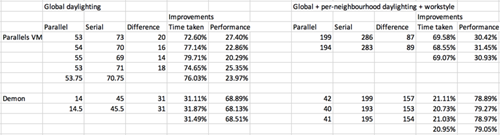
I've mentioned this topic a few times in recent weeks, so it was really time to sit down and put pen to paper (or fingers to keyboard). This one was a lot of fun to dig into, and I think the results will be of interest to people. Parallelism is something that I've been tracking since my studies during the 90s: I remember programming transputers using a programming language called occam, way back when. I was really happy when – around a decade ago – Microsoft got serious about tackling asynchrony and concurrency with F#'s Asynchronous Workflows and the .NET…
-
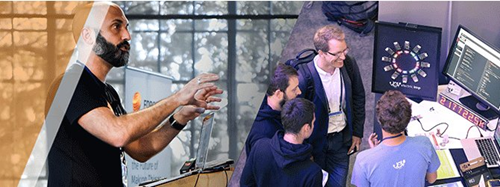
Today the call for proposals opens for AU 2019 – and its accompanying Forge DevCon – in Las Vegas. I was informed of this fact by an email which very creepily contained a photo of me describing something or other with my hands. (Jeremy Tammik speculated that I was once again talking about zombies. 🙂 As one door opens, another one closes: this is also the last day you can submit classes for AU Germany and the Forge DevCon in Darmstadt. It's important to note that AU Germany is a German-language event, while its DevCon is in English. Here are…
-
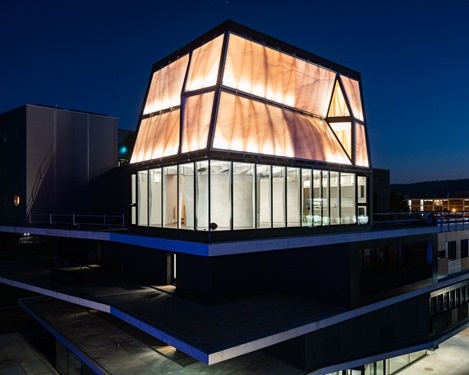
I've been spending a lot of time talking about the work we're doing with Dynamo and Refinery – especially as it relates to our plan to share a version of the "Project Rediscover" graph at AU London 2019. But there's more my team is hoping to be able to share in mid-June at Tobacco Dock: we're working towards having a version of the NEST building – in particular the DFAB House, a showcase for digital fabrication in the building industry – inside Dasher 360. Ideally it'll be displayed on a large touchscreen for people to interact with. [See below for…