Dynamo
-
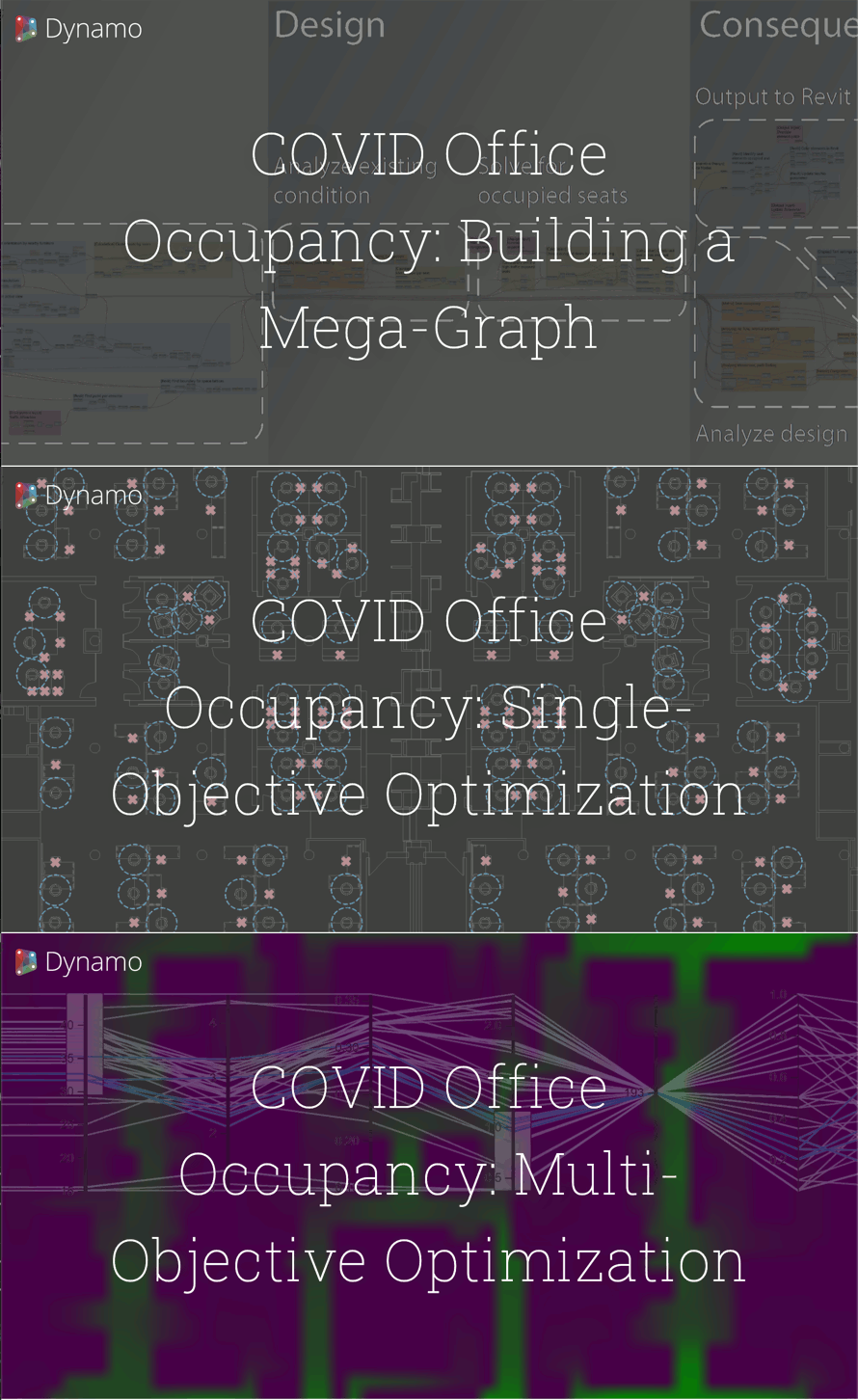
I posted, back in May, about the work we'd been doing to explore the possibility of using the Space Analysis package for Dynamo to plan for post-COVID office layouts. Soon after that post our research relating to the pandemic shifted focus towards a longer-term plan of creating a "living lab" that would allow us not only to explore how design decisions might impact viral transmission, but to have these decisions based on data measured from a functioning ventilation system. Expect to hear more about that research in a future post. We handed over the work that had been done until…
-
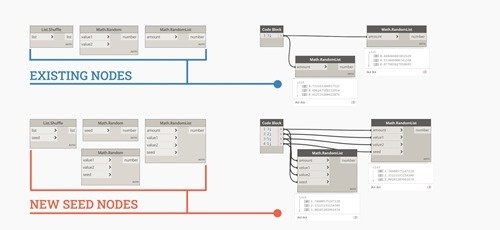
Santa (meaning Sol Amour) has left one last Dynamo release under the tree for us all to enjoy over the holidays: Dynamo Core 2.10. According to Sol's post there have been a few updates to Node Autocomplete – which I mentioned a few weeks ago – but that we should expect many more to come. And there are other updates that are likely to be of interest in this release, too – check out Sol's blog post but also the release notes. There are a few new nodes in this release, for instance: AnyTrue, AnyFalse and a Math.Random node that…
-
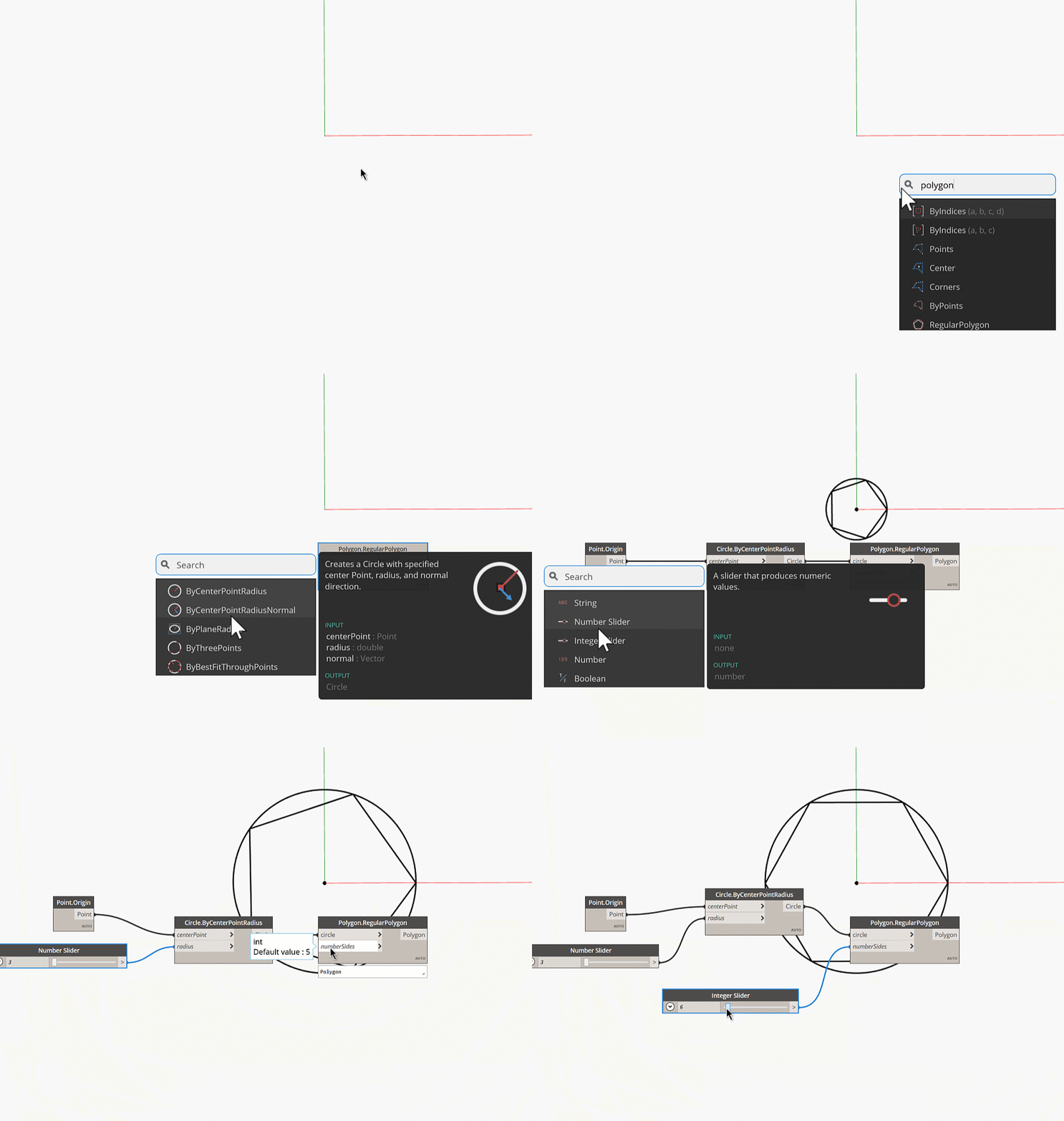
If so (or if not but you're up for doing so) then the Dynamo team would like to hear from you! For some background, here's the post on Dynamo Core 2.9 that introduces the feature. To enable the feature via Settings –> Experimental –> Enable Node Auto Complete. Then you can simple place a node (from the Library or by right-clicking on the canvas) and start to use auto-complete to find nodes to connect by Alt-clicking the input ports. Here's me creating a small graph to create a polygon, for instance. From my cursory inspection it seems a really handy…
-
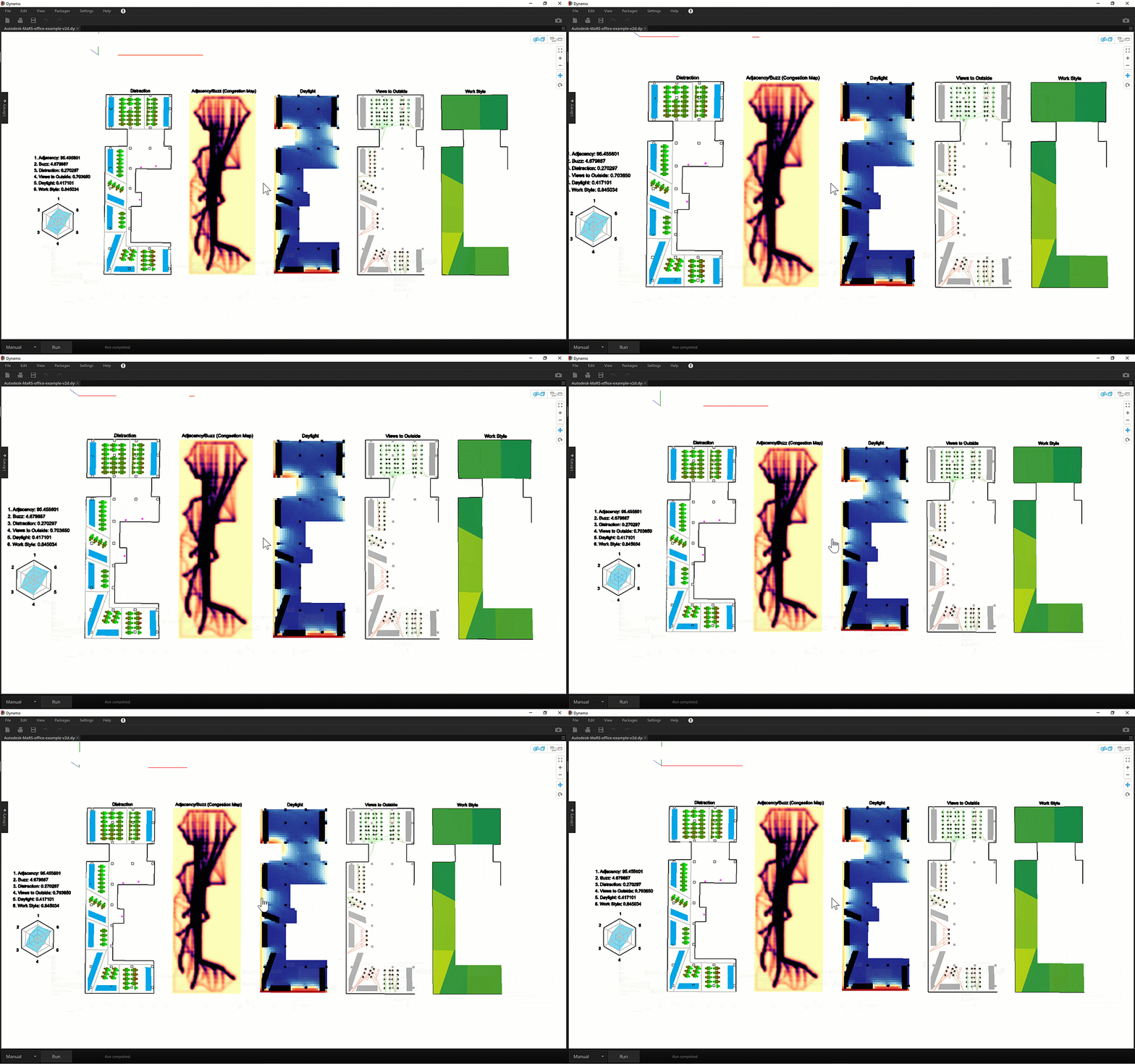
After being teased with some graphics improvements coming in Dynamo, I was excited to find on returning from my recent holiday to find a new release of Dynamo Sandbox was available for testing. There are a number of notable features available in Dynamo 2.7, whether the ability to run CPython3 code – rather than using IronPython, which is based on Python2 – or improved graphics preview performance thanks to an upgrade to Helix. I started by just loading v2 of the MaRS graph, without changing any of the code blocks to use CPython. Straightaway I found that the graphics performance…
-
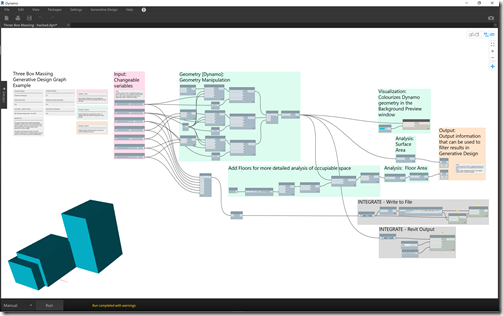
In the last post we saw how the Data.Gate node can be used to send geometry to Revit 2021 when the "Create Revit Elements" button gets pressed from the Explore Outcomes UI for a Generative Design study. Phew. In this post we're going to dig into how this node can also be used to have other "side effects" such as storing the various input parameters to a text file. For the purpose of this workflow I've chosen to hack the standard Three Box Massing.dyn graph (which ships with Revit 2021 as a sample for the Generative Design feature). The general…
-

I was inspired to write this post by a chat I had with Zachary Kron, earlier in the week. I'd been noodling on how best to support a workflow where users of the Generative Design feature in Revit 2021 can select specific solutions in a study and do something with them. The specific use-case was around some functionality I'd prototyped back during the days of Project Refinery, where while exploring the results created during a generative study you could double-click individual designs – whether in the scatterplot or the design grid – which would add them to a graphical dashboard…
-

I have the sense that I'm seeing my face too much at the moment (admittedly I'm very attached to it… haha). All I can say, in my defence, is that over the last few weeks I've started to receive more requests to participate in virtual activities. And I've mostly said yes, as it's a reasonable alternative to travelling to meet people, given the current circumstances we're all in. In case you haven't seen these various pieces of virtual content – and you're actually interested – here's a quick round-up of some current and future ones. Getting Simple When my friend…
-
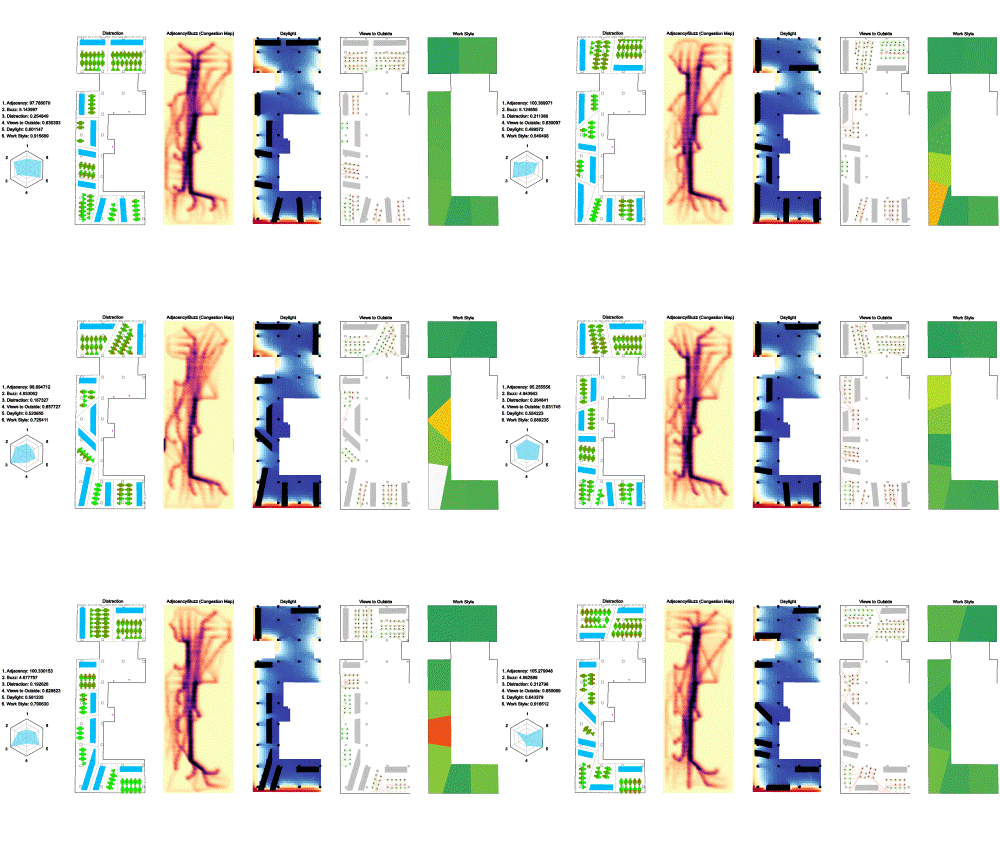
For the last few weeks I've once again been heads-down on Generative Design-related tasks after several months working almost exclusively on Dasher. I like switching context like this but it can certainly be a little disorientating, at first. Anyway, it's been really interesting working once again with my friends in the AEC Industry Futures team (the rockstars formerly known as The Living), and with Rhys Goldstein – the designer of the algorithms driving the Space Analysis package – on imagining a tool to help with post-COVID office layouts. Something I speculated about a little while ago, although that was before…
-

As a follow-up to the last post which talked about SimAUD and it's going online, today I wanted to mention some other online resources that might also be of interest to people during these times. The Institute of Technology in Architecture (ITA) at ETH Zurich is one of many institutions that have moved their public lectures online and have made them available for anyone to watch. So far I've watched a couple of them live, the second one being by my friend and former colleague, Matt Jezyk, who is now spearheading Tesla's efforts to streamline gigafactory design using techniques such…