VASA
-
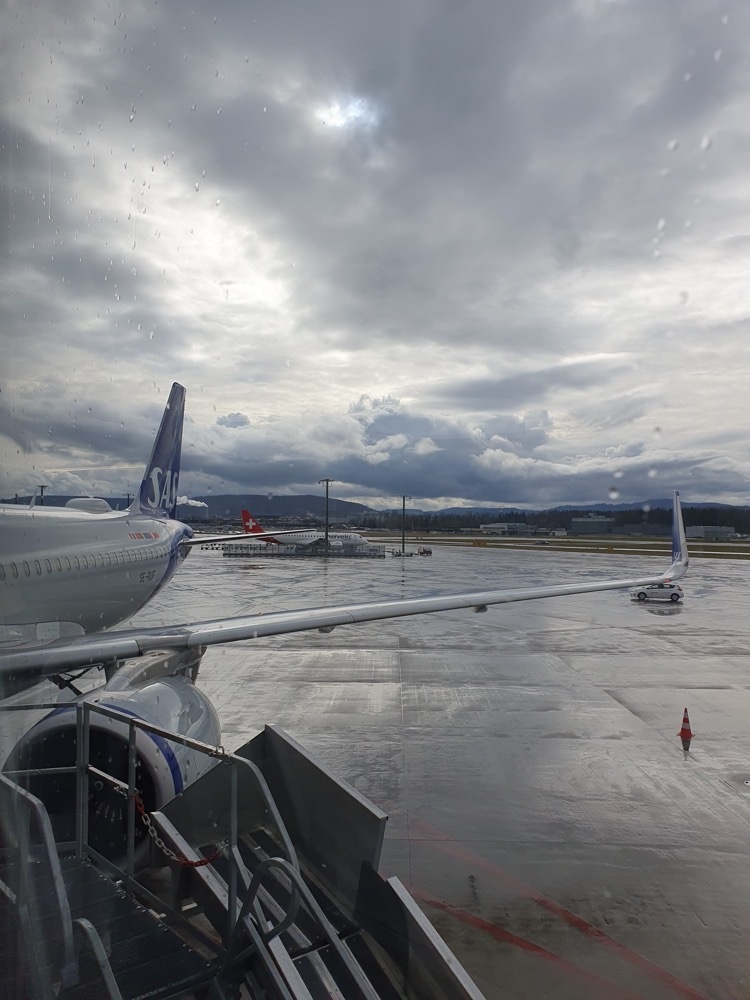
On Monday I headed to Zurich airport with our eldest son to hop across to Oslo. He's between semesters at Uni - waiting for his exam results to trickle in - and it's great we're getting the chance to get a change of air for a few days.It's rare that I sit in a window seat, so I was sure to capture the view as we left Zurich... … and arrived in snowy Oslo. The weather had impacted our trip very slightly - a 30-minute delay to our 2-hour flight - but we were still happy to touch down in…
-
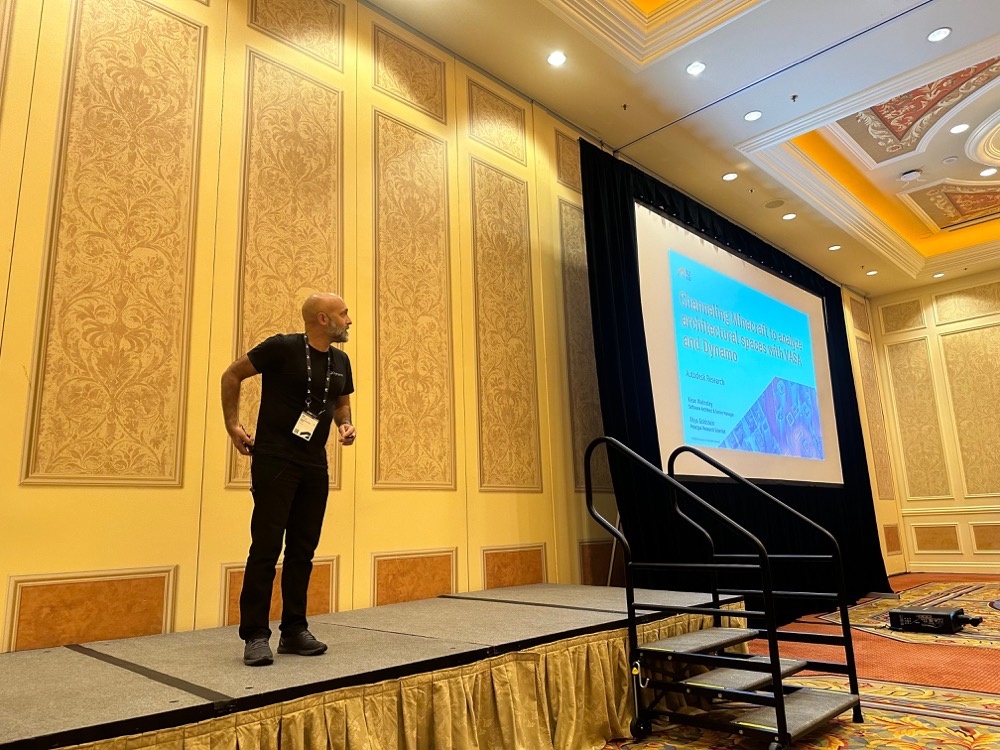
The recordings and other materials prepared for the two classes I helped present at AU 2023 are now available online. In today's post I'll point you to the first class, entitled "Channeling Minecraft to Analyze Architectural Spaces with VASA and Dynamo". This one was one of the first sessions of AU 2023, and had a very good crowd in attendance. Here are a few photos from the live session. Thanks again to Fernando Malard for snapping them. I already posted a quick summary of the content (without audio) - here that is again. Here is the material posted…
-
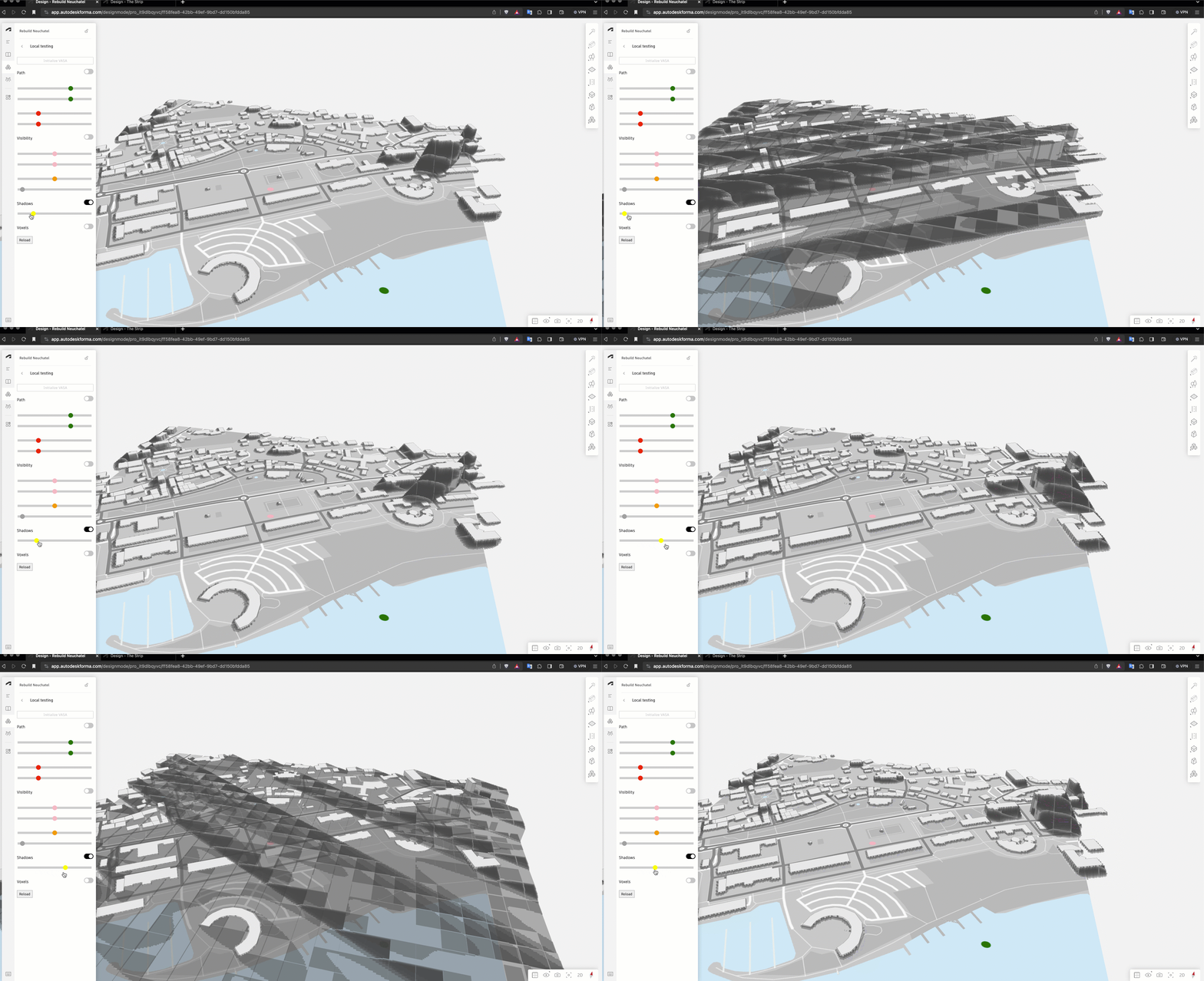
I was sure this series was finished - as indicated in the last post which talked about both VASA's pathfinding and visibility from a point inside Forma, after having talked about a manual approach for connecting the two tools - but I did leave the door ajar to me finding something else to talk about on this topic. Sure enough, I got thinking about the missing "big ticket" item that VASA is able to implement with relatively low effort: visibility from a direction (as opposed to from a point) which can simulate things like shadows cast by direct sunlight. It…
-
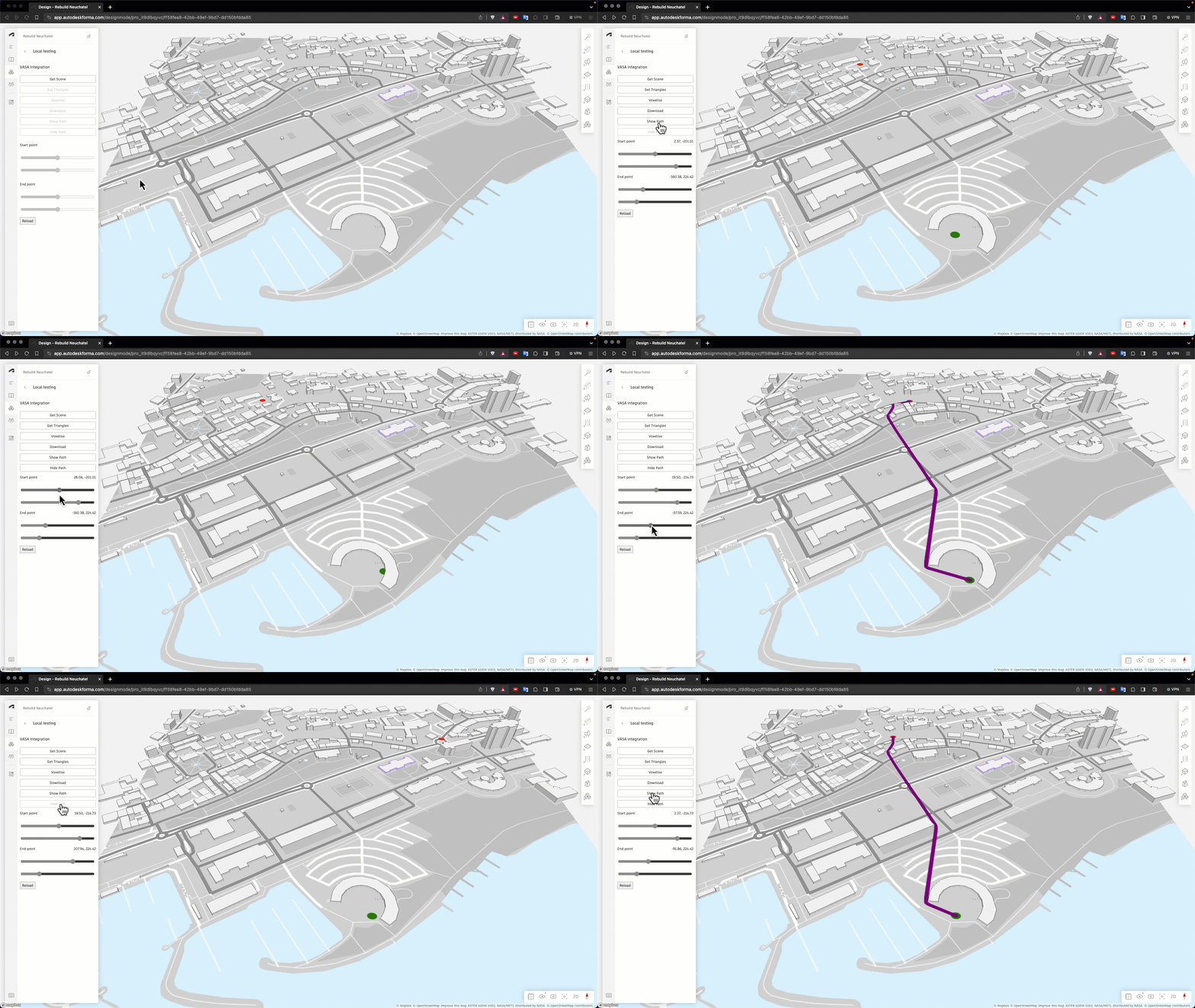
In the first post in this series we looked at an approach for exporting Forma geometry to an STL file that can be loaded into Dynamo and analysed using VASA, our Voxel-based Architectural Space Analysis toolkit. The overall goal is to be able to use VASA for urban-scale analysis of the site context. (Later on I hope we'll also be able to work with more detailed architectural geometry as the level of detail in Forma evolves.) In that post I also alluded to something that's coming soon which will streamline the above workflow: you'll hear more about that at AU…
-
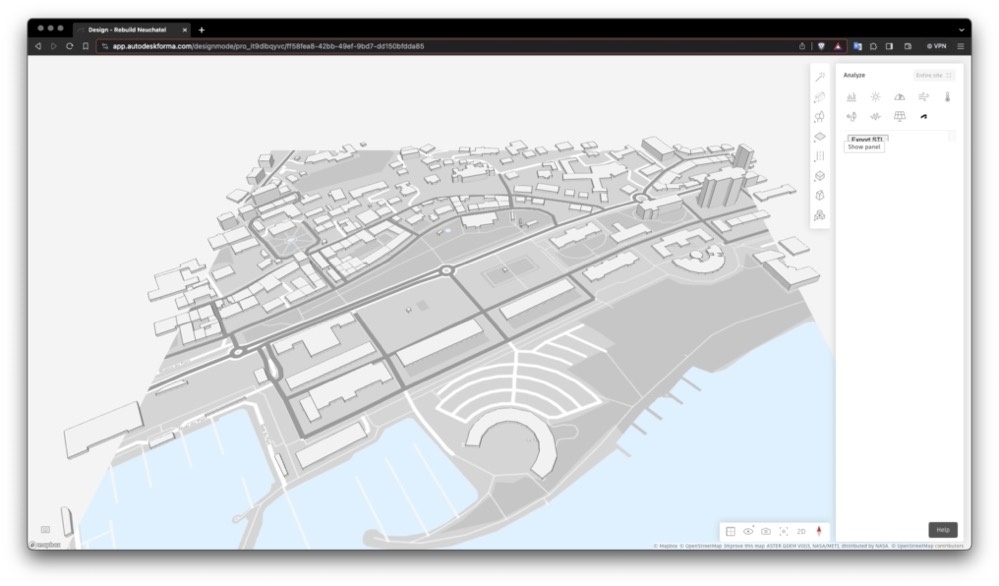
While preparing for one of my upcoming AU classes, I decided to explore how someone could use VASA - our Voxel-based Architectural Space Analysis toolkit - with Forma. Right now Forma is largely focused on conceptual design - taking into account the surrounding urban context - so this thinking was largely focused on how VASA might be used at the urban scale. This is something we've looked at before in the context of FormIt and Dynamo. While a tighter integration is likely to be possible at some point - I'll talk a little more about our work on a WebAssembly…
-

It has been a really busy but important week for our team. We had a fantastic virtual offsite where we spent a significant amount of time using LEGO to conceptualise some of our planning for the coming year. A friend of mine was all set to become a LEGO practitioner - to assist with team-building events - before the plans were de-railed by the pandemic… independently my colleague Dagmara suggested we try "Serious Play" for this offsite and I said yes before she'd finished her sentence. We've made great strides for our upcoming exhibition in Toronto (formal announcement coming soon)…
-
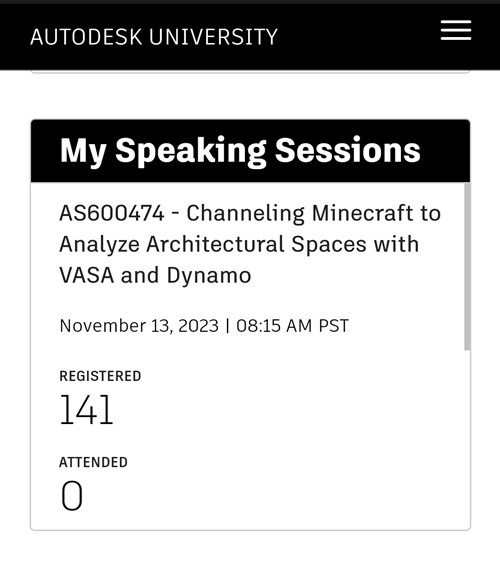
As mentioned in the last post, it's now possible for people to sign up for their AU classes. And it's really worth taking the time to do so, as some classes are filling up quickly. Despite being held at a ridiculously early time on the first day of the conference, my first class is already 88% full, for instance (there are 141 registered and the capacity of the room it's currently assigned to is 160). I see that 300+ people have this session in their list of favourites, so if you do want to attend then I recommend signing up…
-
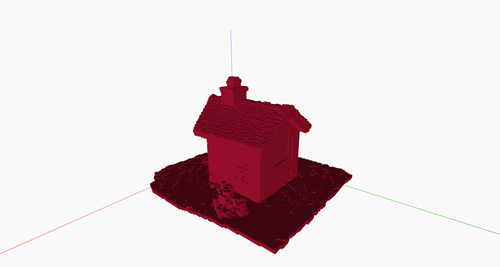
Last week we saw a Dynamo graph that imports a point cloud from an ASCII-based format to specify the initial locations for a fun flocking simulation. This week we're going to look at a graph that uses a similar import technique but rather creates a voxel model based on the point cloud: The main difference from the previous import code is that rather than returning a list of Point objects, we've tweaked the code to return 9 doubles for each point that are taken as triangle definitions. The little secret is that the triangle's vertices are coincident: we use the…
-
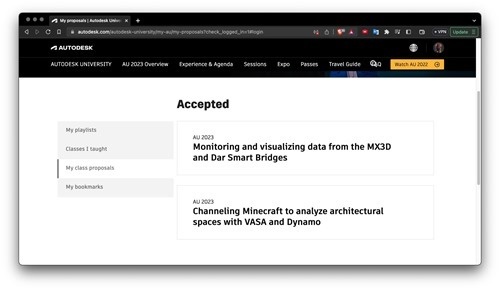
Just a quick note to say that you can now log in to the Autodesk University website (this guidance has changed, please see below) from today – June 23rd – to see the status of your class proposals and learn whether or not they were accepted for AU 2023 in Las Vegas. I was very happy to learn that the two proposals I submitted this year were accepted: I'm sure there'll be an email sent very shortly, but I just thought I'd share this in case anyone's impatient to find out their situation relative to classes at this year's event.…
-
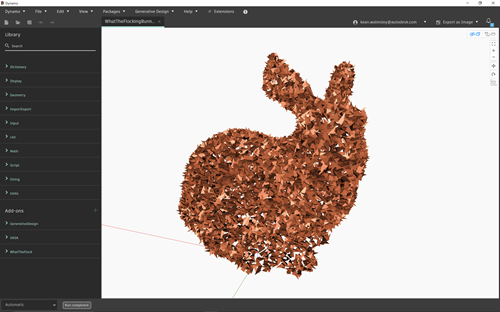
I was thrilled to see a post by Long Nguyen over the weekend announcing his publication of a Dynamo package called WhatTheFlock – with full source code – that implements a Boids-like flocking simulation. This work is significant not because ornithologists will use Dynamo to predict or simulate murmurations (although that in itself is a fun thought) but because Long has demonstrated a valuable technique that might be used to implement other arguably more useful types of multi-agent simulation inside Dynamo. Long is using a background process to perform calculations before rendering the results into the Dynamo window. A really…