Autodesk Research
-
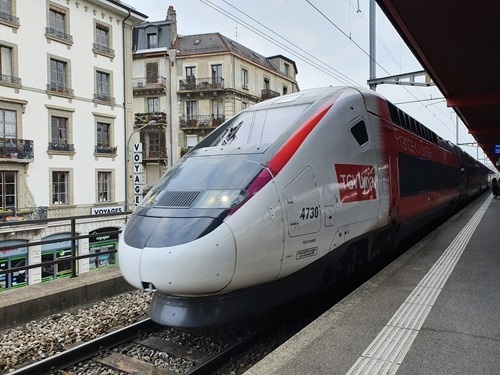
On Monday I hopped onto the train to Geneva and from there onto the TGV to Paris Gare de Lyon. I was in Paris for BIM World, where we displayed the Dar 2m Smart Bridge. It was my first time seeing the bridge in person, which was a really exciting moment for me. After checking into a very nice little hotel in the 6th arrondissement I headed to the conference centre to help with the setup. The bridge was already unboxed and hooked up when I arrived. Pete Storey had some wires to connect to get it up and running.…
-
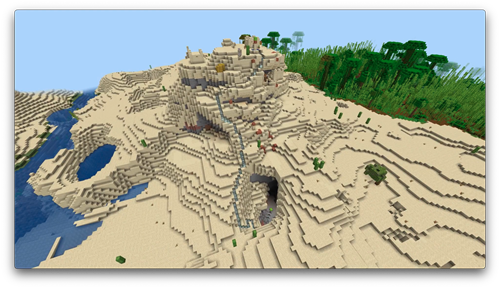
Followers of this blog will have seen me mention the Voxel-based Architectural Space Analysis (VASA) package (you can find all the posts about it here). VASA is a toolkit that allows you to voxelise and analyse 3D geometry, whether for pathfinding, visibility or daylight analysis. The big news of the day is that Autodesk Research has managed to port VASA across to work with the popular voxel-based creation environment, Minecraft. This actually was pretty easy, as we could completely ignore all the code needed to voxelise a 3D environment from the codebase and focus on the analysis side of things.…
-
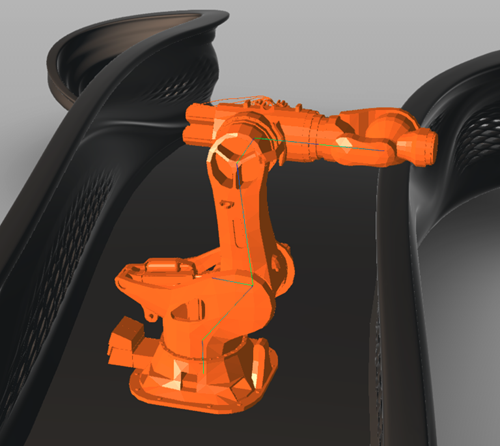
In a recent post we saw that switching to use THREE.BufferGeometry brought some unexpected benefits when it came to rendering robots inside Dasher. I wasn't very happy about the fact that said robots were spinning destructively on the MX3D bridge, so I started looking into options for collision detection inside a Forge viewer application. From the start I should say that the approach that I ended up choosing is fairly rudimentary in nature: a much better solution would be to integrate a physics engine such as Ammo.js or perhaps even a voxelization engine such as VASA. But I figured that…
-

As I mentioned a few weeks ago, I'll be in Paris next week for BIM World on April 5th and 6th, 2022. The 2m Dar Smart Bridge has apparently arrived in Paris from Dubai, so once a few legal formalities have been completed it should be on-site at the event. I'm looking forward to seeing how it looks – and performs – in person, especially when connected to Dasher! Autodesk will have a fairly significant presence at BIM World, by all accounts. I've done my best to pull together the various activities (beyond whatever's happening at the booths on Autodesk's…
-
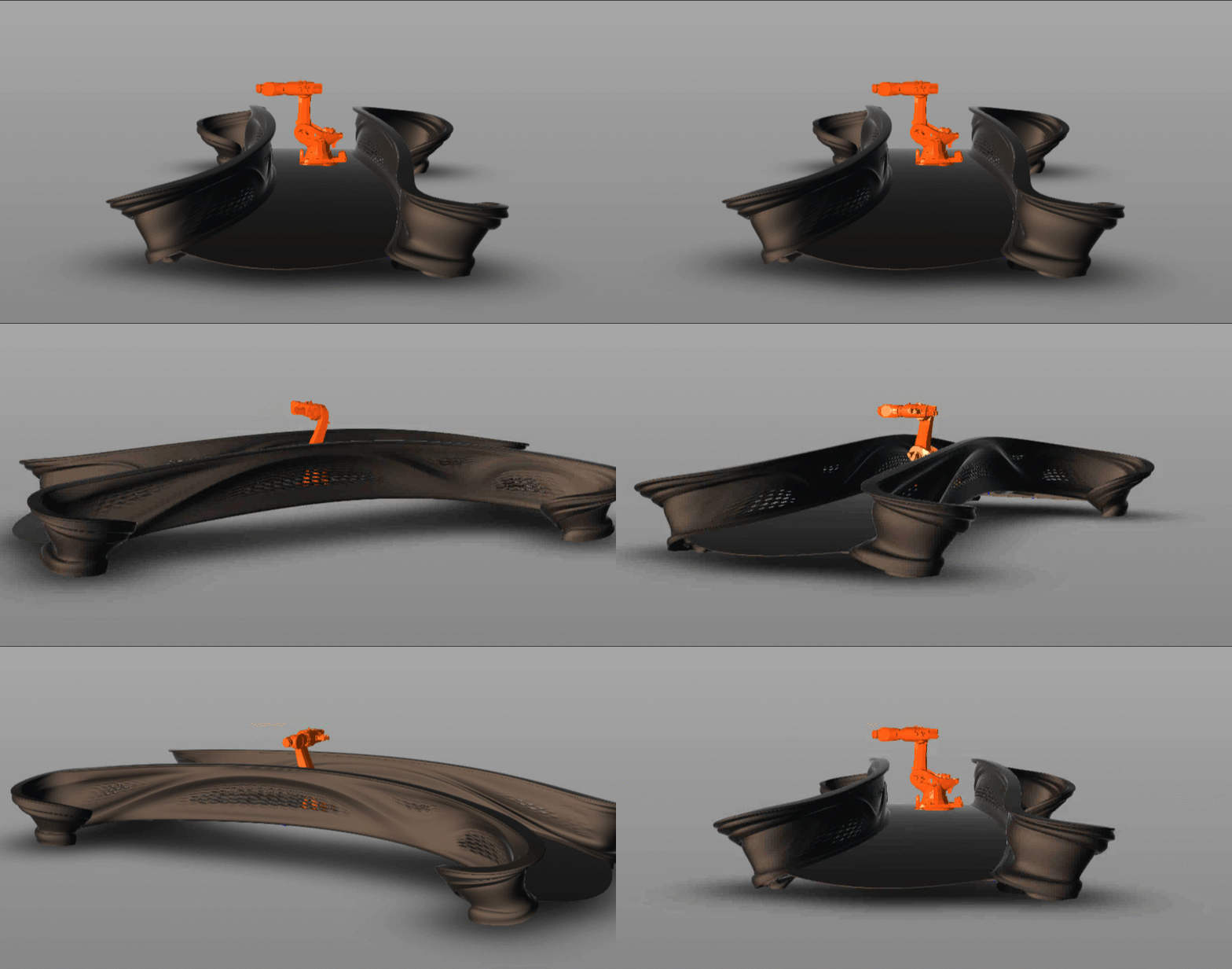
I talked some time ago about some work that has been needed to be done in Project Dasher – and other Forge viewer clients – in anticipation of supporting viewers such as Tandem's. In this case it was fairly specifically about the need to support loading of multiple models inside the viewer, rather than working on the assumption that there's a single model available. For the last few days I've been looking at another area that by all accounts will be beneficial, whether driven by use of the Tandem viewer or the upcoming Forge viewer based on the latest Three.js…
-
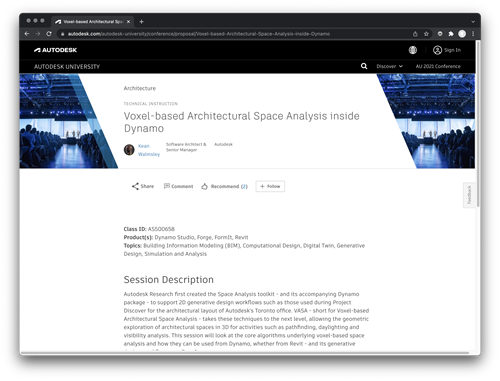
I've gone ahead and submitted two class proposals for Autodesk University 2022. If you think they should be part of this year's event, I'd certainly appreciate you voting for them: Voxel-based Architectural Space Analysis inside Dynamo Autodesk Research first created the Space Analysis toolkit - and its accompanying Dynamo package - to support 2D generative design workflows such as those used during Project Discover for the architectural layout of Autodesk's Toronto office. VASA - short for Voxel-based Architectural Space Analysis - takes these techniques to the next level, allowing the geometric exploration of architectural spaces in 3D for activities such…
-
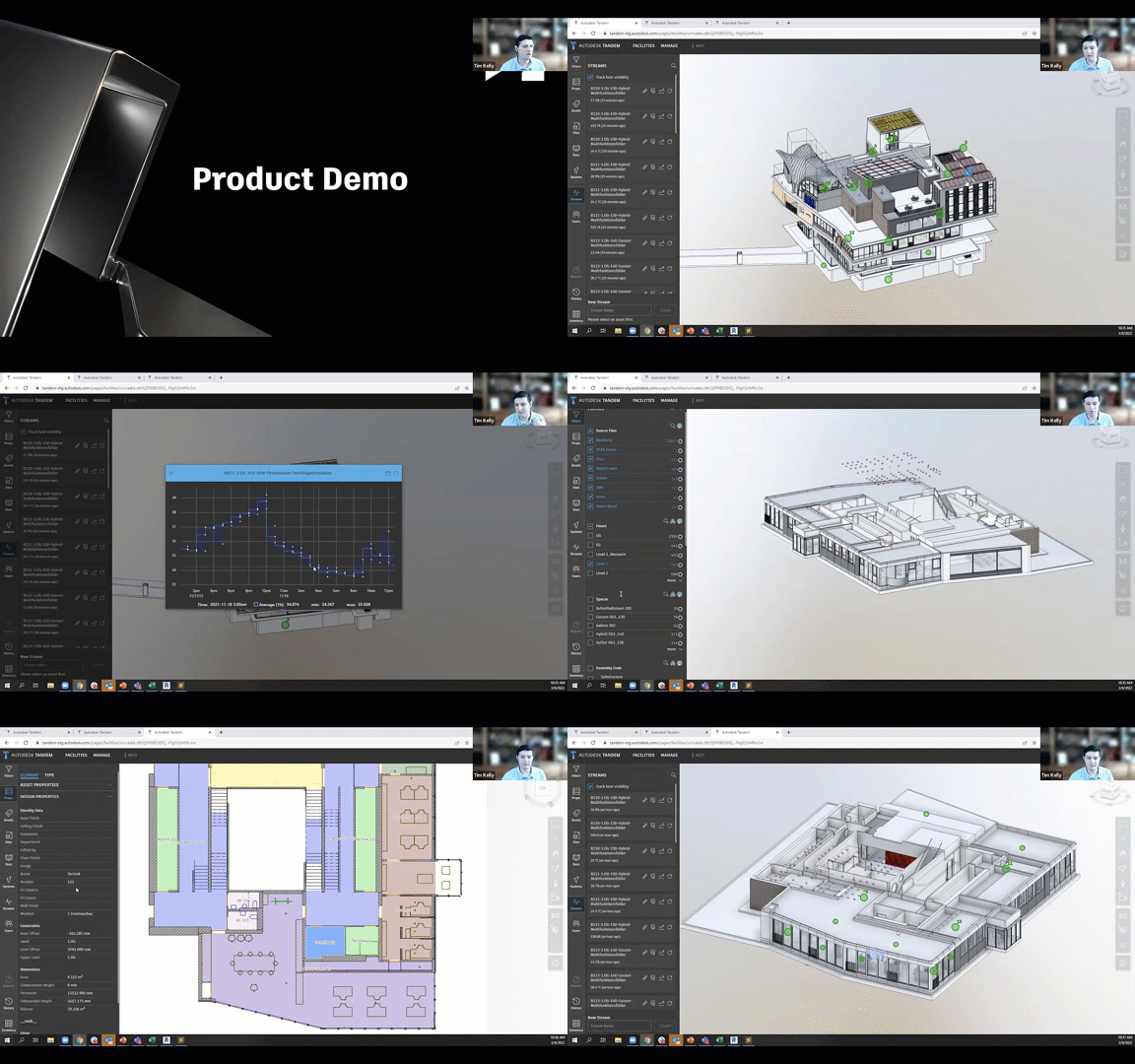
Last week's webinar – where I was kindly invited by the Autodesk Tandem team to join them to talk about Autodesk Research's explorations into the potential for Digital Twins in the AEC space, specifically through Project Dasher – has now been posted via the In Tandem website (under Resources). It's also on YouTube, so you can watch it directly over there. One really interesting section was Tim Kelly's demo (starting around the 26-minute mark) of work the Tandem team has been doing to integrate Dasher-like capabilities into the product. Really exciting stuff! Here's a preview of that segment…
-
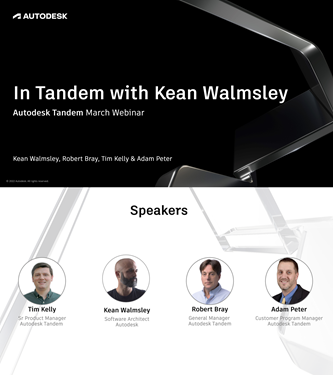
Today I'll be speaking with Tim, Bob and Adam from the Tandem team about the work we've been doing in Project Dasher and how this is influencing their own offering, moving forward. The webinar is today (March 9th, 2022) at 4pm GMT | 5pm CET | 11am Eastern | 8am Pacific. If you've read this post in time, sign up here!
-
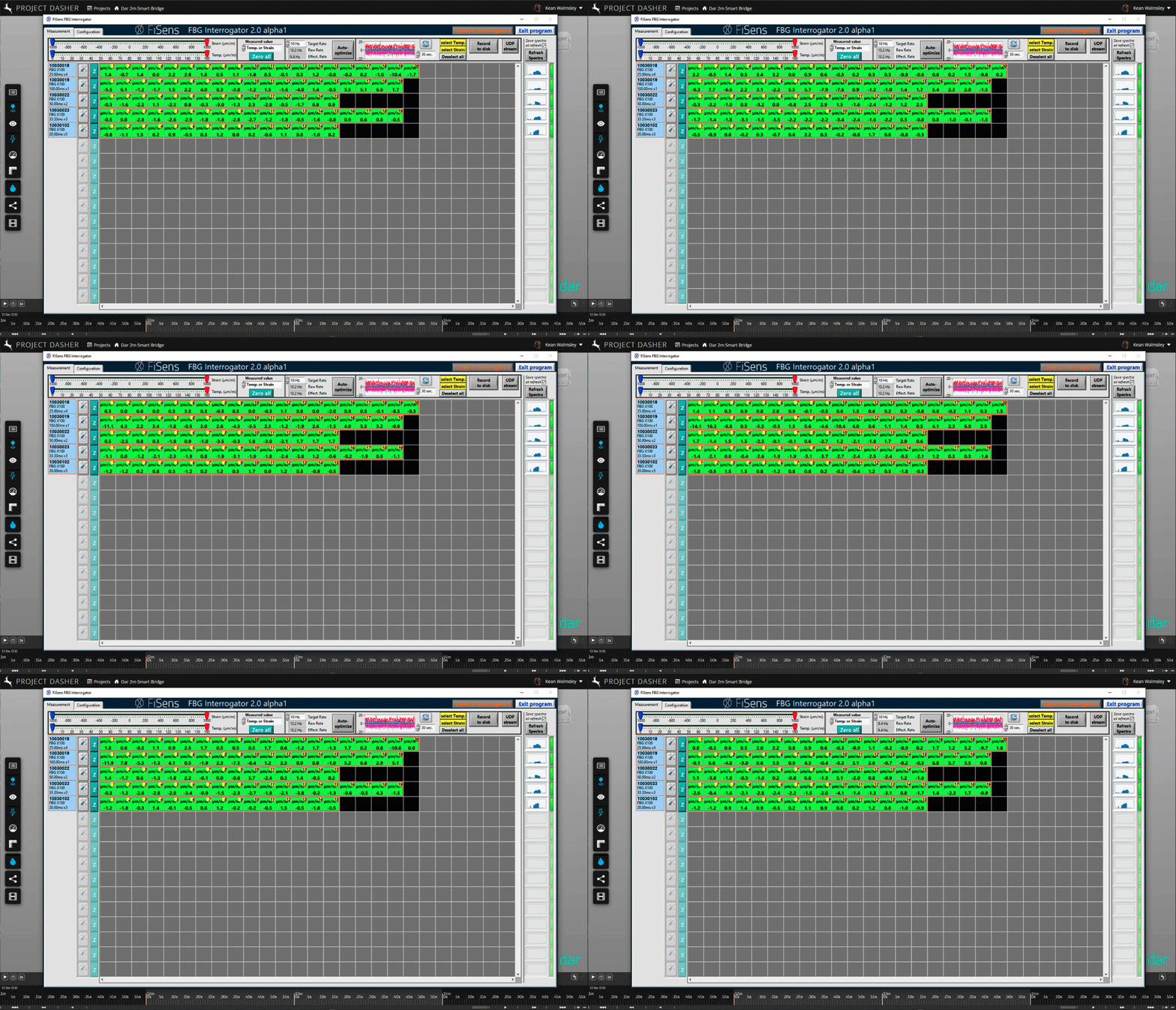
This is all very exciting. I've booked my TGV ticket for Paris to attend a physical, in-person event: BIM World Paris is being held on April 5th & 6th, 2022, at Porte de Versailles. Autodesk is sponsoring the event, and the Autodesk Research team will be using the opportunity to show off the work that was done on the 2m Dar Smart Bridge, something I've covered recently in some depth. I'll be attending along with my friends and colleagues Pete Storey and Fikret Kalay. In preparation for the event, I've been remoting into the PC running the bridge's "operating system",…
-
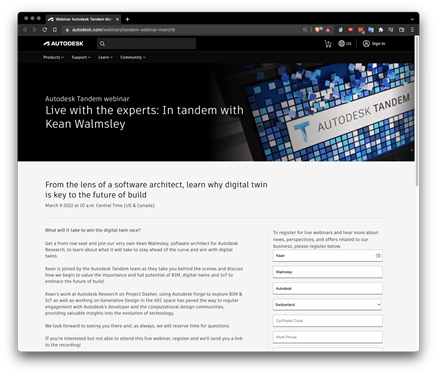
The Autodesk Tandem team have kindly invited me to join their regular webinar – coming up on March 9th – to talk about the history of Project Dasher and to participate in a more future-centric discussion with Bob Bray and Tim Kelly. Here's the description of the webinar. Even I want to attend, it sounds so interesting! 😉 From the lens of a software architect, learn why digital twin is key to the future of build What will it take to win the digital twin race? Get a front row seat and join our very own Kean Walmsley, software architect…