IoT
-
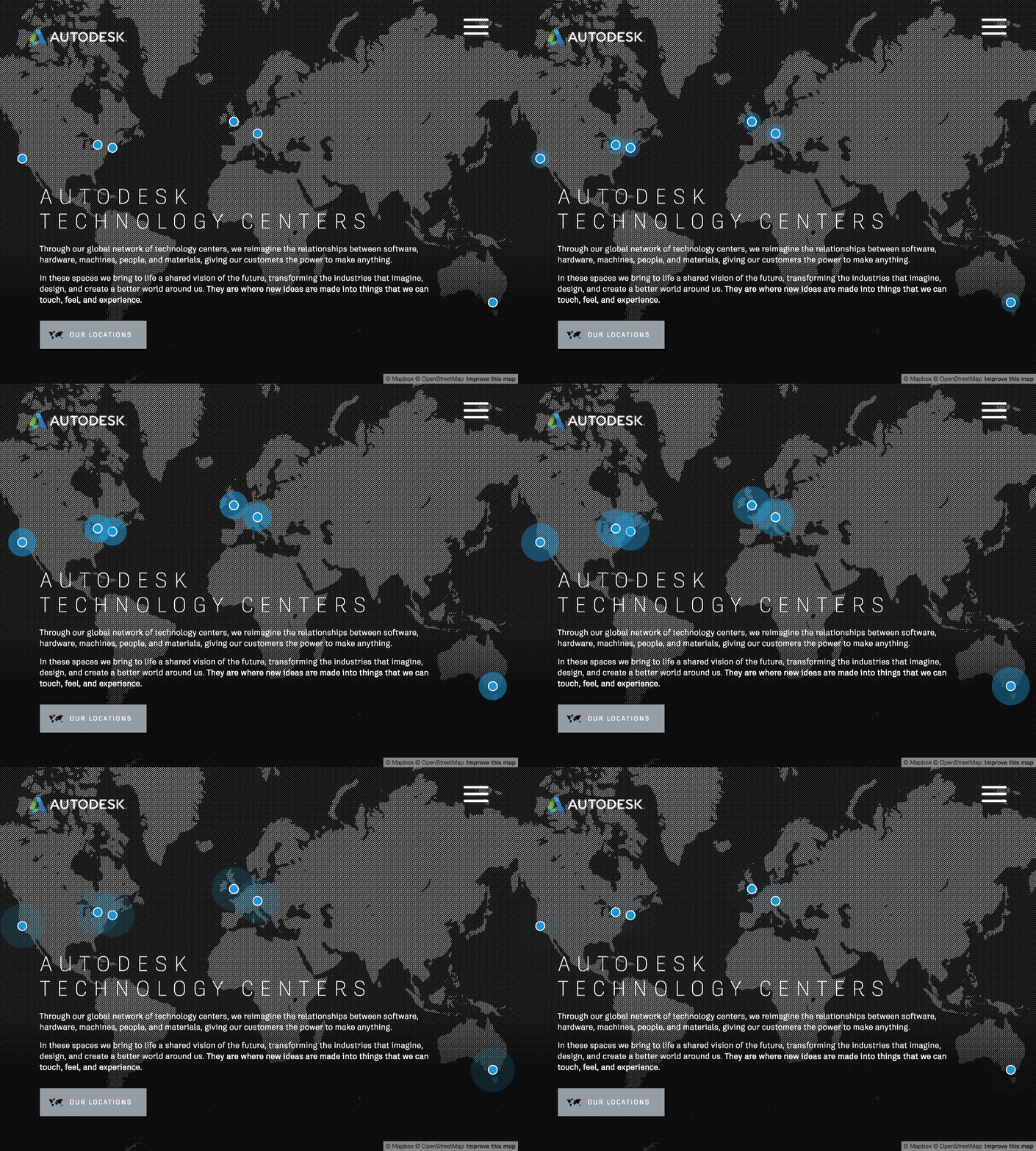
During a 3-day event, this week, Autodesk opened its Advanced Manufacturing Facility (AMF) in Birmingham, the UK's second largest city. Here's a video showing some information about this very cool facility. It's one of 6 technology centres that Autodesk is running at various locations around the world. The others are Pier 9 in San Francisco, the Boston BUILD Space, Autodesk Toronto's new MaRS office, the VR Center in Munich and the Materials Lab in Kilsyth, Australia. My team is proud to have been asked to provide technology to be showcased at the AMF: Dasher 360 is running there, providing access…
-
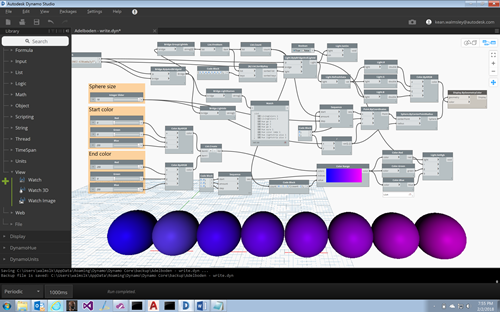
Now that we've seen a couple of posts showing how to query information about Hue lights via a Philips Hue bridge from Dynamo Studio, it's time for the really fun stuff: controlling lights from Dynamo. To make this happen some changes were needed to the zero-touch node that talks to the Philips Hue API on behalf of Dynamo, mainly to allow the setting of a light's properties. The Philips Hue API allows this to be done either via Hue, Saturation and Brightness or by the XY offset in the CIE colour space. I ended up exposing the ability to set…
-
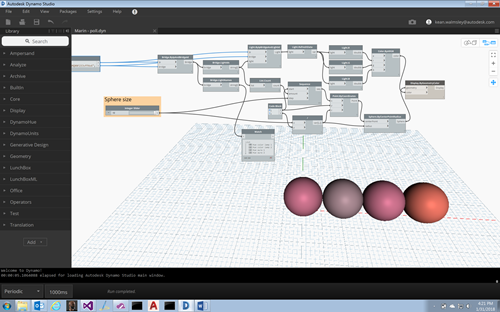
In the last post we looked at some initial code to get basic information about the lights connected to a Philips Hue bridge. In this post we're going to extend the code to expose more information but also to query the bridge repeatedly, allowing the graph to display the latest light colours as they change. Here's a view of the updated graph. A few things have changed: firstly the Bridge object exposes some new information – in our case we can see the names of the lights, but we could also access the names and IDs of the various groups,…
-
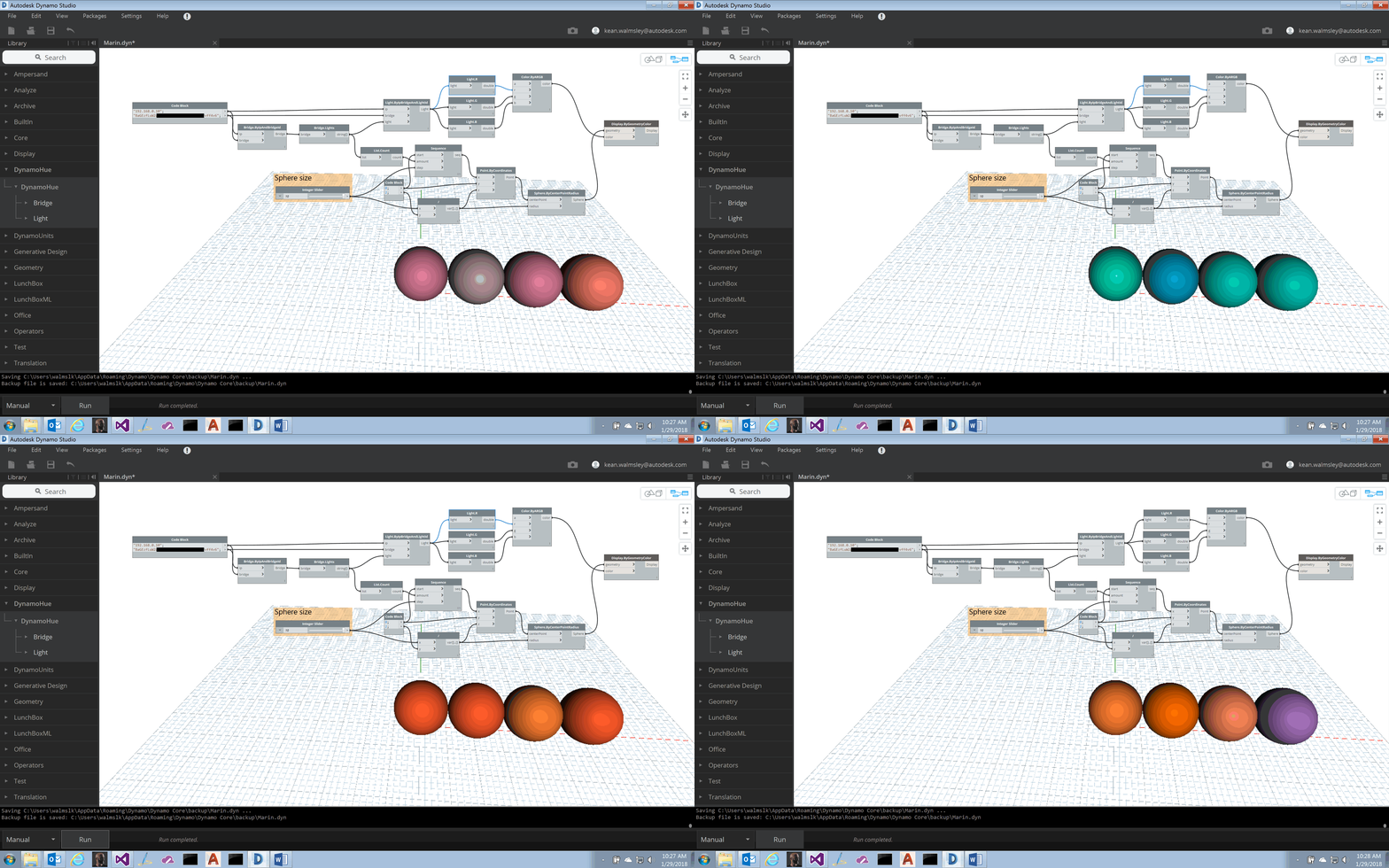
I mentioned in a recent post that I was chewing on how design apps might connect with building automation systems to display data via lights. My first step along this path was to see how Dynamo Studio might connect into my home's Philips Hue bridge and get information about the "smart" lights it contains. To do this I created a zero-touch node in C# that calls into the Philips Hue API exposed by my local bridge. (To make this piece work you need to follow the steps on this page that show how to create an authorised user ID for…
-

A year ago I talked about my early forays into the world of home automation, mainly via Philips Hue. I'm now treating the "experiment" as a success, and have decided to invest in more lights (and another Hue bridge for our main home). While thinking about this, I decided to check on the availability of an API. Sure enough there's a great REST API available for Philips Hue, as well as a number of SDKs. All of which has me thinking about possibilities of using Philips Hue as a way to visualize data. Just as we use Forge inside Dasher…
-

If my calculations are correct, I'll be in Singapore during this year's Autodesk University in Las Vegas. It's the first I'll have missed for many years – and it's going to feel more than a little strange, when that week comes along – but this trip (and my family) will be taking precedence, for once. While I'm not going to be there myself, my good friend and colleague, Simon Breslav, is stepping in to deliver the class I would be giving if I were there. Although as Simon is the person who developed a great deal of the code being…
-
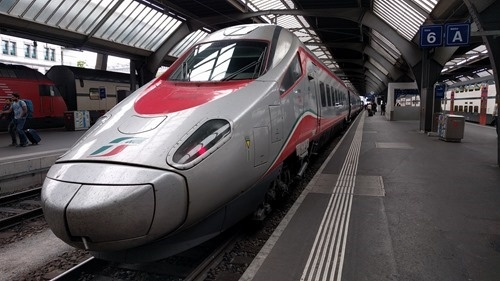
OK, so that was perhaps a little mad. Earlier today I spent 5 hours on the train – going from Neuchatel to Zurich and then on the new SBB service via the Gotthard Base Tunnel – to get to Milan, had a coffee with my uncle (who lives and works nearby), gave a 30-minute presentation on Forge and AR/VR at a Meetup, and then spent 4.5 hours on more trains – this time going towards Geneva on the EuroCity (formerly Cisalpino), and then changing at Brig to head via Bern – to get home. This was the main train there…
-
I was asked recently by Bill Debevc to talk about Dasher 360 during an interview for the BIM Thoughts podcast series. It was certainly fun chatting about the project with Bill. I'm happy to see that the podcast is now live on the BIM Thoughts site. Enjoy!
-
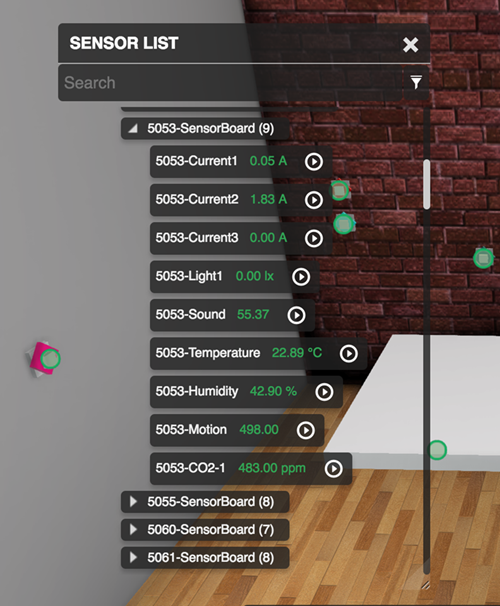
Most of my team has been 100% focused on an event taking place in Toronto, this week, the Symposium on Simulation for Architecture and Urban Design (or SimAUD). This is a really interesting conference for people working in our space: I'm looking forward to attending myself, at some point. As the only non-Toronto based member of the team, it made sense for me to skip it (and given the fact I'm about to embark on a 6-month trip – including some time in Toronto – I didn't even suggest that I attend). This meant that I ended up spending the…
-
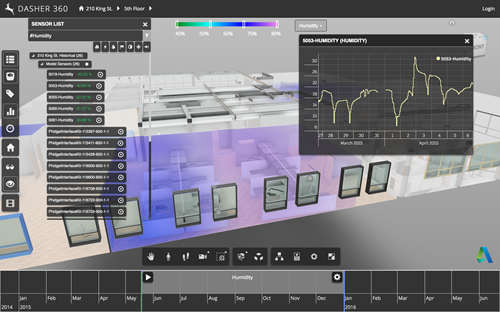
We've been busy working on a number of interesting features for Dasher 360 over the last few weeks. The main focus – at least from my side – has been to extend the filtering capability to allow people to filter sensors based on type and their location in the model. Not only that, but the filtering is reflected in realtime in the list of sensors, even when highlighting different areas of the model via the site's breadcrumbs. I wasn't sure if this was going to be viable – mainly for performance reasons – but for now it seems to work…