Point clouds
-
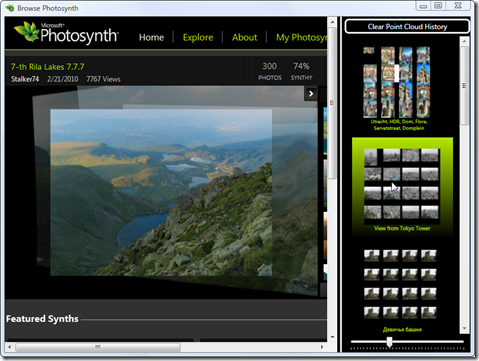
As alluded to in the last post in this series (ignoring a related post that dealt with user interface integration) I wasn't really happy with some of the tricks I needed in the WinForms version to try and make a coherent user interface for tracking accessed point clouds in a hosted Photosynth browsing session. This post replaces the WinForms UI with one implemented using WPF, and in fact might also have been titled "Using data-binding in WPF to track a list of objects with associated thumbnails" or something to that effect. 🙂 What I've done in the new version of…
-
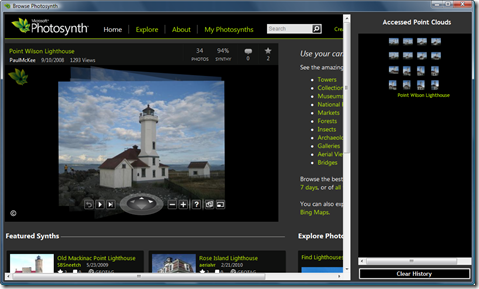
In the last post we looked at a command to allow importing of Photosynth point clouds into AutoCAD. In this post we'll put a GUI on the front end, to avoid people having to sniff network traffic to determine the location of the appropriate files on the Photosynth servers. The application is actually relative simple: it hosts a browser control that gets pointed at the Photosynth web-site, allowing the user to browse through Photosynths. As point clouds are detected (as the browser has some handy events notifying of the HTTP traffic generated by the embedded Photosynth application, and we know…
-
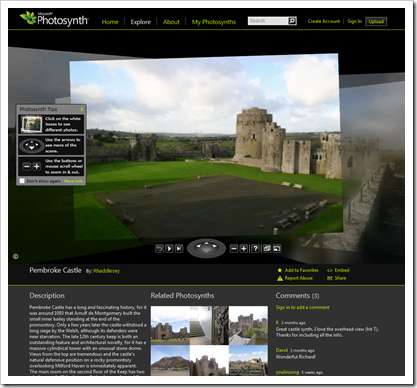
For some background into what this series is all about, see this previous post. I've been tracking Photosynth for some time, but only recently became aware of its use of point-clouds on the back-end and the possibility of extracting this information from the site. I first got inspired by Binary Millenium's video of the process they've used along with the Python script they've provided on their website to extract the points from a Photosynth point cloud file. I converted this code to C# (without realising there was already a version out there – I should really have done better research,…
-
As I mentioned in the last post, I've been working on an application that brings across point clouds from Photosynth into AutoCAD. Before we get into the details, I'd like to lay some of the groundwork for this series of posts by talking a little about the bigger picture: "reality". How about that for bigger picture? It doesn't get much bigger than that, unless you're working on the LHC at CERN. 😉 Reality is increasingly being captured in digital form (Google StreetView, Bing Maps, Photosynth) and augmented (just look at the cool iPhone apps available in this area, such as…
-
As you're by now probably aware, the 2011 family of our products is now shipping. I'll have lots to say on AutoCAD 2011's new API features over the coming weeks/months, but for now here's a quick post on the items from the most recent API Wishlist Survey that we delivered in this release (the items we've addressed in some way are in bold below): .NET API for Property Palette Parametric Drawing .NET API Enhanced Dynamic Block API Runtime Ribbon API enhancements Enhanced Dynamic .NET language support Improved .NET<->LISP Interop Object transparency API Enhance Visual LISP IDE Boundary tracing API Solid…
-
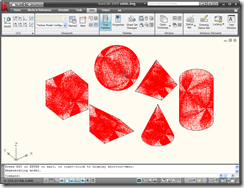
To start off my series of more in-depth looks at the new APIs provided in AutoCAD 2009, I decided to extend some recently posted F# code to generate and draw transient point clouds to be slightly less transient: we'll see how to use the new transient graphics API in AutoCAD to display a cache of transient graphics, even after the view has been changed. Some of you may be wondering about the amount of code I'm posting in F#. I find the technology extremely interesting and am also increasingly productive with it, so I've found myself gravitating towards using it…
-
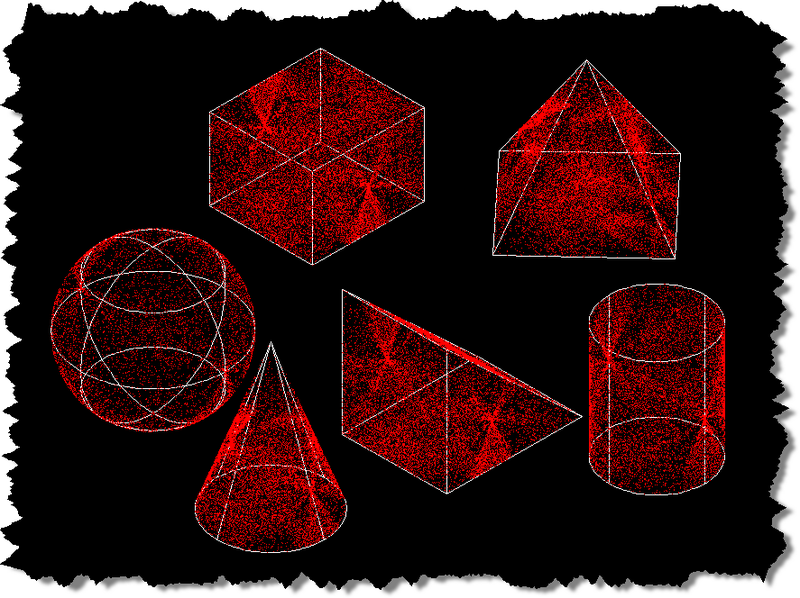
On my way back from the US last week, I started thinking more about uses for random numbers inside AutoCAD: especially ones that allow me to try out some possible application areas for F#. There's something deliciously perverse about using random numbers in Engineering systems, where it's really important for outcomes to be deterministic (i.e. predictable) & precise. And that perversity appeals to me quite strongly, for some reason. Feel free to drop me a mail if you have an idea why that might be, any amateur psychologists out there... 😉 So, I got to thinking... an interesting domain area…