PaaS
-
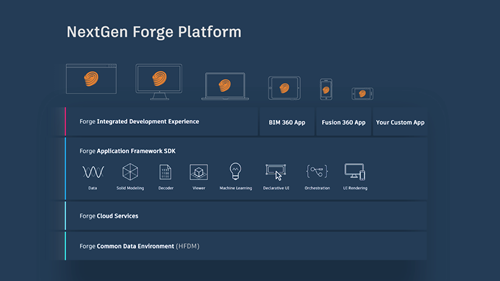
Many of you have been using Forge services to good effect, whether the Forge viewer or the Data Management, Model Derivative and Design Automation APIs. There's lots of really cool stuff you can do with Forge – we use it heavily in Dasher 360, for instance – but the existing services are largely engineered to deal with data created by existing desktop technology, i.e. they're file-centric. The next generation of Forge web-services will help you and your customers move beyond files. Here's a class from last year's Forge DevCon that gives an introduction to two key technologies in this new…
-

For most of the week – while at the Forge Accelerator in Barcelona – I sat next to an acquaintance (I'm happy to now call a friend) from Amazon Web Services: Tom "Elvis" Jones. Tom is a solution architect at AWS and has been to a number of Forge-related events over the last year or so. Autodesk has tightened its relationship with AWS in recent years, one of the reasons for Tom's presence at Forge events. From talking to Tom, it's clear he's interested in helping Forge developers get started more quickly with the AWS platform, something that's going to…
-
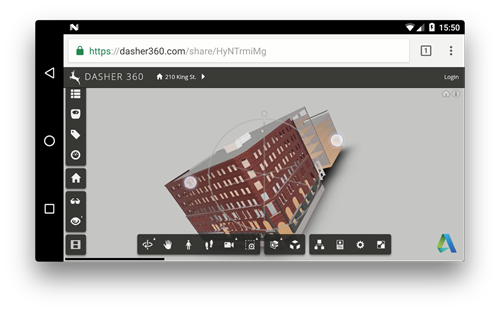
Over the last few days I've been working to improve support for touch devices in Dasher 360: the primary focus is on touch-enabled TVs and monitors, but I've been doing much of the testing for this on my mobile phone. Which means things are steadily getting better for people wanting to use phones and tablets to access the site, too. It turns out – and this may not come as a surprise to many of you – that the default pinch behaviour in the Forge viewer is to do an unconstrained orbit. No zoom, just the orbit mode that makes…
-
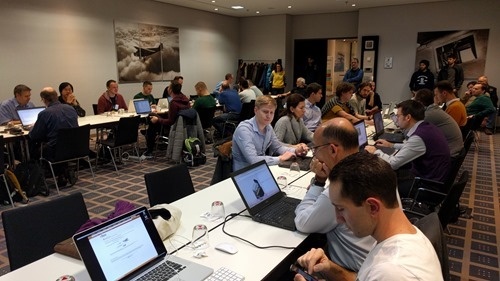
It's been a challenging few days of "acceleration" in Munich. We've had a large, highly motivated crowd, which has definitely been a highlight. On the lowlight side, during the last 24 hours we've had our first major outage of the Forge platform. A core service, ACM – our Access Control Manager – went down early yesterday morning (for us here in Europe). This impacted both the Data Management and Model Derivative APIs, without which you can't really use the Forge viewer, for example, as well as various other cloud-connected products such as Fusion 360 and Collaboration for Revit. Thankfully the…
-
During last week's Forge Accelerator, a developer wanted to strip the standard items from the context menu in his Forge Viewer application. We both searched for a while, until we found the answer: he'd been using this approach to add his own menu items – of course – but it turns out the exact same approach can be used to strip out unwanted items, too. The "context menu callback" receives a menu object that contains its various items: you can inspect them and remove the ones you don't want, or even adopt a more brute-force approach as we've done below and…
-
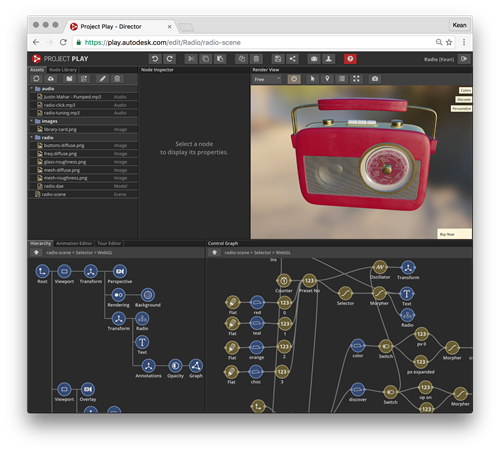
There's a new WebGL-based technology being developed by Autodesk and it's completely awesome. And you can request access to it today. Project Play has been in development for some time. It has some shared lineage with the Smithsonian X 3D Explorer – although I'm not sure to what extent, if any, they share code – and it's the viewing technology used by millions (?) around the world to explore the ReCapped Apollo 11 Command Module. But this technology is about way more than just viewing static models. It's a full node-based editor that allows you to create rich 3D experiences…
-
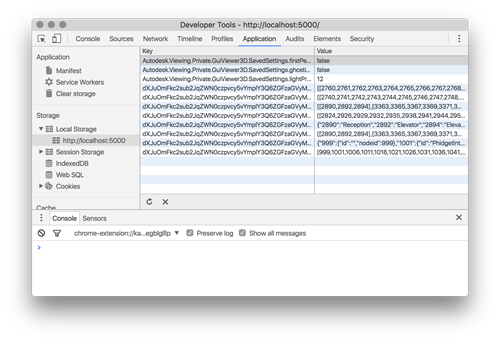
In the IoT-related (and Forge Viewer-based) prototype I'm spending most of my time working on, we have a long startup operation that instantiates a number of arrays of data with information derived from the BIM. This operation only really needs to be done once per model – every user will get exactly the same information from the model that's loaded in their own browser instance – but we were calculating it on every load of the model in the Forge Viewer. The question I'd like to look at in this post is the appropriate method for memoization of this function…
-
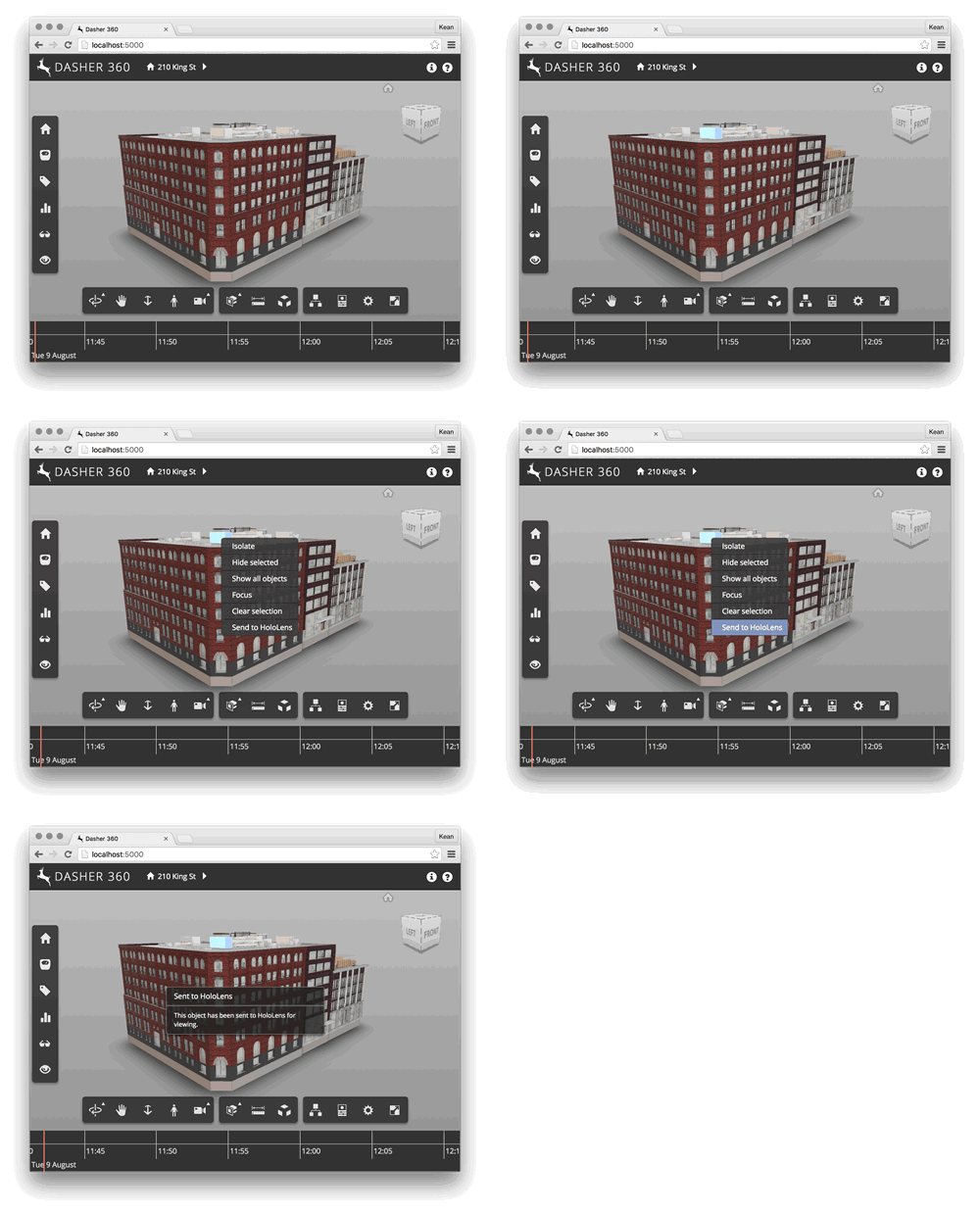
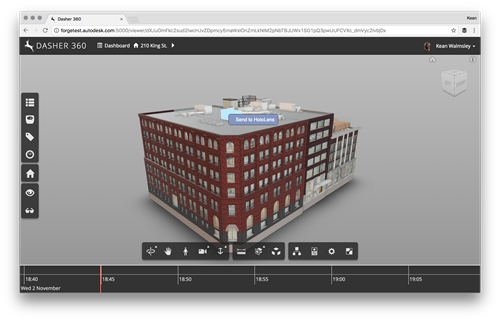
I've been spending quite a bit of time working on our "Dasher 360" prototype, recently. Which is, of course, based on the Forge Viewer. A simple – but handy – feature I added today is to add a context menu item to be displayed when objects are selected – and right-clicked – inside the Viewer. In my case I wanted to prototype a possible workflow for a "Send to HoloLens" capability: the feature itself isn't ready (that's what you might call an extreme understatement), but I thought I'd add the menu item in preparation for something being implemented. Here's a…
-
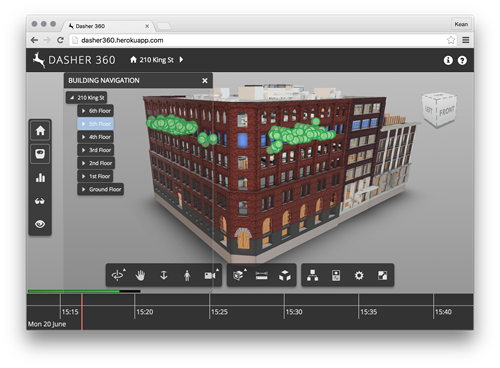
This question has come up more than a few times over the last year or so: I remember a number of Revit developers hitting it when creating Viewer applications at the accelerators in Munich and Prague, for instance. The problem appears to be that RVT files – when translated and loaded into the Viewer – do not have the concept of room objects: they're just spaces. Which presents a challenge for developers who want to work at the room level. Last week I showed a demo during our "Autodesk Research and IoT" session, which showed room-centric navigation built into the…
-
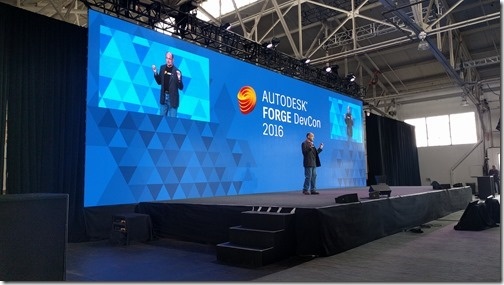
With such a great first day at the Forge DevCon, how would the second (and final) day compare? Here it is, in pictures. 🙂 As for the first day, Jim Quanci, my long-time friend and former boss, acted as Master of Ceremonies. The first external presenter was Chris Anderson – who I mentioned yesterday. Chris is a very entertaining presenter, and talked about the evolution of the UAV industry. I love Chris's vision for how drones should evolve: it aligns perfectly with mine. I was very happy to see Thiago da Costa speaking next. Thiago was co-founder of Lagoa, a…