Retro computing
-
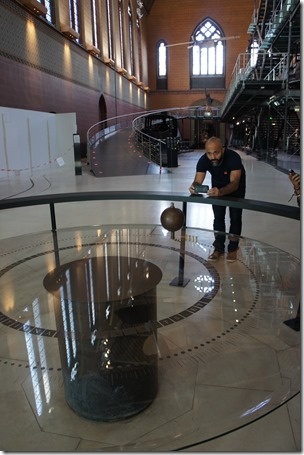
My best attempt to describe this technical, industrial museum is as a Mecca for Makers. It's not a funky new space with a bunch of hipsters manning 3D printers – not that I have a problem with such spaces… I love those spaces 🙂 – rather it's a shrine to all manner of human invention and creation since before the industrial revolution. The first thing I had to see on entering the museum, this morning, was Foucault's Pendulum – with the museum playing a key part in Umberto Eco's incredible novel of the same name, this was a "must see"…
-

The nostalgia is strong in this one. (In both this post and this blogger, in case you're wondering.) It started with my 20th anniversary at Autodesk, but it got worse, last weekend, when I travelled to the UK to celebrate the 50th anniversary of the University of Kent (where I studied, back in the day, about halfway through its history). I'd coordinated with a couple of close friends, so we descended on Canterbury from Switzerland, Connecticut and Windsor, and joined a thousand or so alumni for a really fun, celebratory weekend, revisiting old haunts and sharing old memories. Doubling down…
-

Tomorrow marks the 20th anniversary of the day I joined Autodesk. I know: it's tomorrow, not today, but then you really can't beat good Beatles lyrics (and it hopefully helps reset the cosmic balance after quoting an Olivia Newton John song in the title of the last post ;-). I already used this title – somewhat prematurely – 5 years ago, but hey. As I'm feeling a touch nostalgic, here's a BBC video about computer graphics & animation – and even CAD! – from 1983: it was around this time I first became interested in computers. I recommend watching this episode…
-
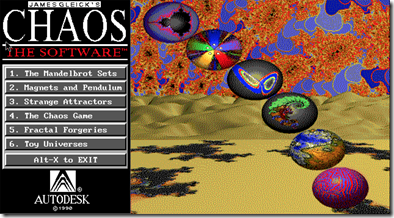
It's time for another trip down memory lane… From time to time, I hear people talking about Autodesk's more "radical" R&D investments… whether in the consumer software space – much of which is being driven by the Maker movement – or related to the bio/nano research Andrew Hessel and team are performing at Pier 9. I can understand that to some this might seem as though Autodesk is departing from its core mission, in some way. I have a slightly different perspective on this… yes, we had perhaps 15 years of our history – largely during the Bartz era –…
-

Every so often I get hit by a wave of computing nostalgia. This weekend it was a veritable tsunami triggered by the discovery that a number of old MS-DOS games are available to play online in your browser, including the seminal Prince of Persia. This game has a strong connection with AutoCAD, for me, so today I'm blogging about that. I first started working with AutoCAD while I was still at high school – it must have been around 1989. After a successful (but mind-numbingly boring) summer project at a local manufacturing company, converting their old engineering calculation routines…
-

Every so often I get an attack of nostalgia for the early days of personal computing. The latest bout was triggered by the discovery of an app called Retrospecs, an iOS-based image processing app that transforms photos to use the colour palettes of 8- and 16-bit computers. The latest release – v1.7 – supports the following emulations: Teletext Apple ][ (Low res) Atari 2600 (NTSC) Intellivision IBM CGA (6 variations) BBC Micro (Mode 1 & 2) Sinclair ZX Spectrum Commodore 64 (Low res & high res modes) Colecovision Dragon 32 (PMODE 3) Thomson TO7 MSX (Screen mode 2 and (for…
-
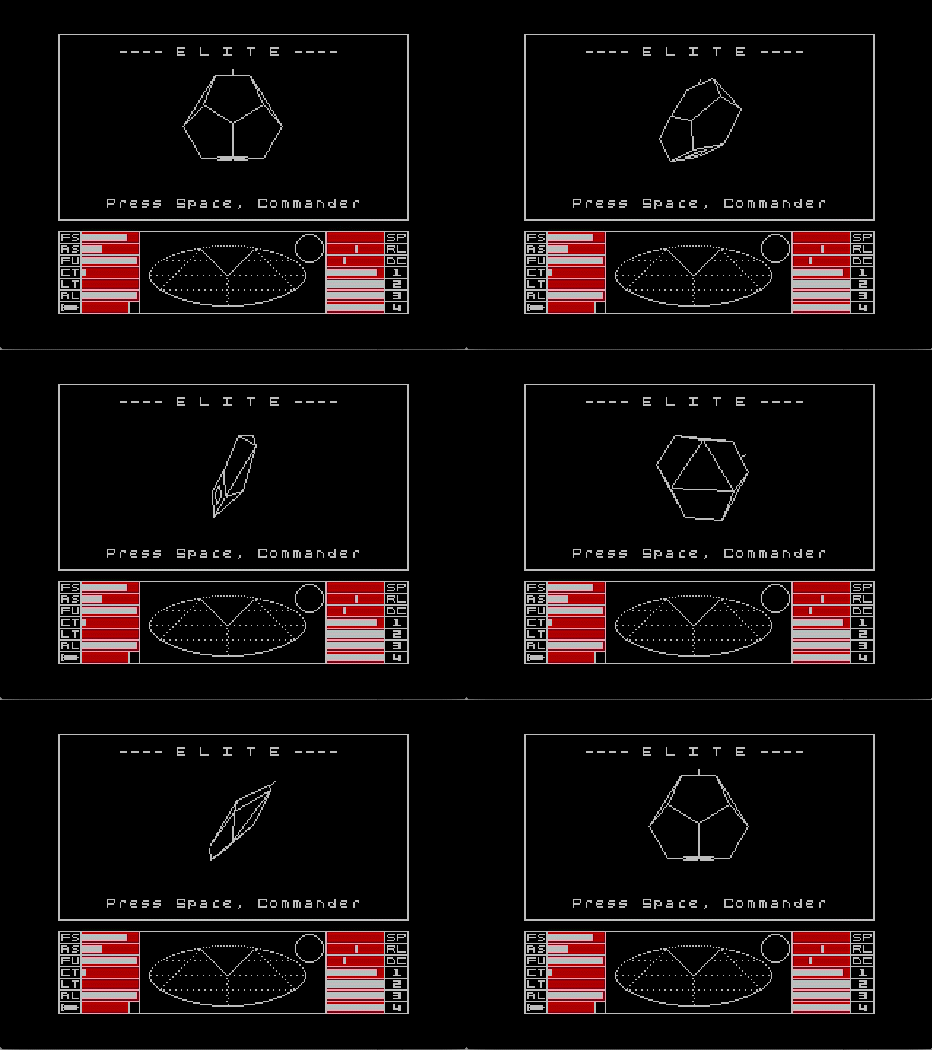
I recently sailed past my 18-year anniversary at Autodesk. Part of me finds this scary – in this world of post-millennial job-hopping – but then I really enjoy what I do. Long may it last. The company has grown a great deal since I joined (I had to look it up, but it seems that over this period we've gone from around 1,800 employees to around 7,500, with an additional 1,000 or so temps and contractors), so it should go without saying that I haven't met or interacted with the vast majority of the people who work at Autodesk. But…
-
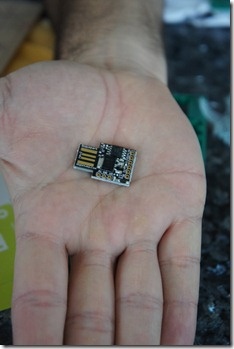
I talked about some of the fun I've been having with Arduino in this previous post. I eventually added a pushbutton and a potentiometer to that particular circuit, modifying the code to watch for a hardware interrupt – to blink the LEDs only when the button is pressed – but also to apply a variable delay to the blinking (speeding it up or slowing it down depending on the direction in which you turn the knob of the potentiometer). I've now ordered an edge connector that will fit my ZX Spectrum: my next stage for the Arduino-based work is to…
-

As mentioned in this previous post, I've been having fun with an old 16K ZX Spectrum that a colleague kindly gave me a few months ago. After getting it working with a modern TV set, the next challenge was to get some games loaded into it. Pretty much any game you've ever played or heard of for the Spectrum is available online in digital format, although it should be stated that most are still protected by copyright. World of Spectrum has a great collection, and if you go further afield you can find "complete" archives that people have posted. For…
-
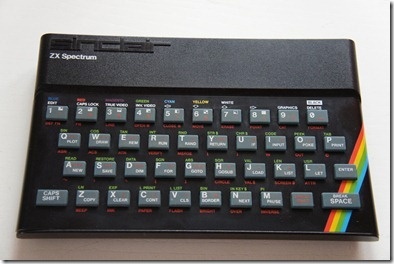
I had a fantastic surprise at the beginning of the week: a friend from work – to whom I'd shown my retro-foolings with the Raspberry Pi – brought a plastic bag to my desk containing an original Sinclair ZX Spectrum and power supply. He had talked about my project to a friend of his back home in Rome, who thought I'd like it (he was otherwise going to throw it away). The computer was in very good condition externally, at least: I was impressed by the condition of the keyboard, in particular, as these very quickly became dirty and damaged,…