Autodesk Research
-
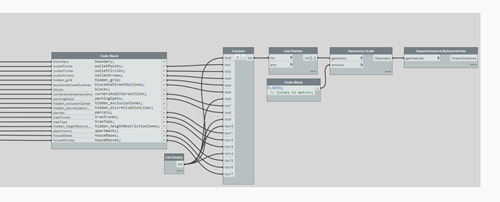
It's been a quiet week on the blogging front, mainly because of the May 1st holiday on Tuesday, but also because I've been heads-down on projects I can't really talk much about. One thing that does seem worth sharing is an approach we've been using to take geometry from Dynamo into Revit. The project itself relates to the use of Generative Design for urban planning. I can't yet talk about the generative aspect – which is extremely cool – but once the design is basically finalised there's a need to bring the geometry into Revit. The ideal scenario would be…
-
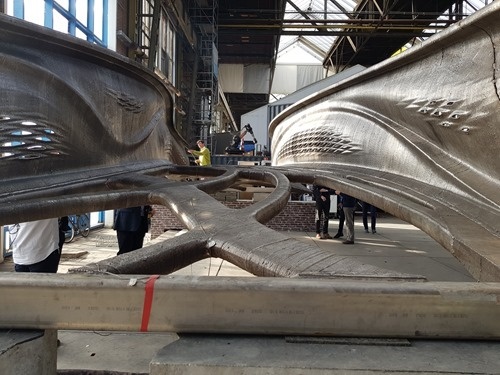
In a recent post I mentioned a trip to Amsterdam to visit with Van Wijnen and MX3D. The press embargo has now lifted on MX3D's bridge – as you can see from a slew of recent articles – so I can now share a bit more information about that part of the visit. During that week I spent 2.5 days at MX3D, mostly to participate in discussions about how best to instrument the bridge with sensors. Autodesk started our collaboration with MX3D around the vision of using generative design for the creation of the bridge's form… during the last year…
-

Colleagues in Autodesk's Office of the CTO (OCTO) – who work in the robotics lab on Pier 9 – have just released the code for a new tool called Mimic. Mimic is an open source plugin – with the Python code posted on GitHub – that allows you to simulate and control the use of a number of industrial robots (including various robots from ABB and KUKA). Here's a screenshot: I'm really happy to see OCTO releasing open source projects in this way. If you're interested in contributing to the project, be sure to check out the developer notes. There's…
-
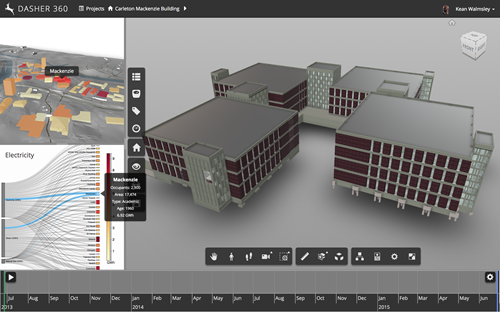
Those of you who have followed the progress on Dasher 360 will be aware that it currently works with a single building (or other) model. It's always been our intention to go "Beyond BIM" (both in terms of addressing the needs of other industries but also scaling up to look at sites and cities) but over the last few weeks we've made a big push, making our first real forays into this new territory. Here's a sneak peek at a campus view in Dasher 360 that integrates an additional Forge viewer control (this might also use a 3D mapping control…
-
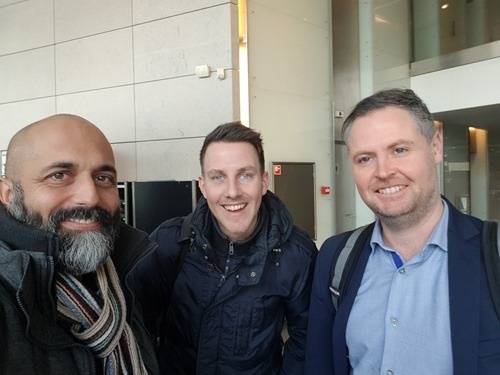
I was a little torn about my plans for this week: the Forge team is running a packed Accelerator in Munich, so it would have been great to have spent my week over there. As it happened I ended up coming to the Netherlands, instead, to meet with two incredibly innovative companies, Van Wijnen and MX3D. Despite missing the Accelerator the timing was actually pretty ideal: it proved possible to spend a day and a half with Van Wijnen at Autodesk's office in Hoofddorp before coming into the city to join some of my Autodesk colleagues – Alex Tessier, Alec…
-
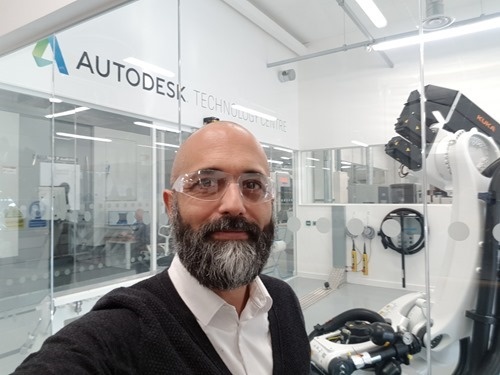
I didn't think, on Monday, that I'd be visiting the UK this week. So it came as a surprise that on Tuesday I ended up buying a flight to head across to Birmingham on Wednesday, coming back Friday. You're probably thinking, "ouch, that must have been expensive!" – which was exactly my expectation, looking into flights – but it turns out that at this time of year (probably due to the demand from skiers) EasyJet runs daily flights between Geneva and Birmingham. And – this week, at least – the flights were nearly empty: I managed to get a return…
-
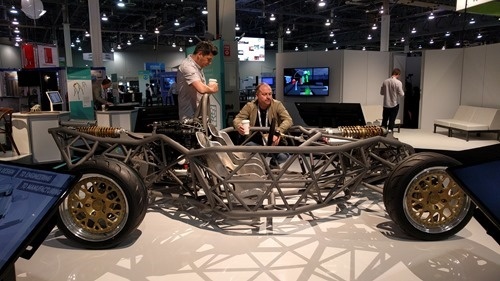
I was really excited to hear, over the weekend, that our friends at Hackrod have launched a successful crowd-funding campaign and that there's still time to participate. The campaign is being hosted on MicroVentures, which means investors should receive interest on their investment as well as equity in the project, assuming things work out. This admittedly seems a nicer model than getting a T-shirt or coffee mug saying you supported their Kickstarter. 😉 I haven't yet decided whether I'm personally going to get in on the action (so to speak) but I thought I'd post about it in case others…
-
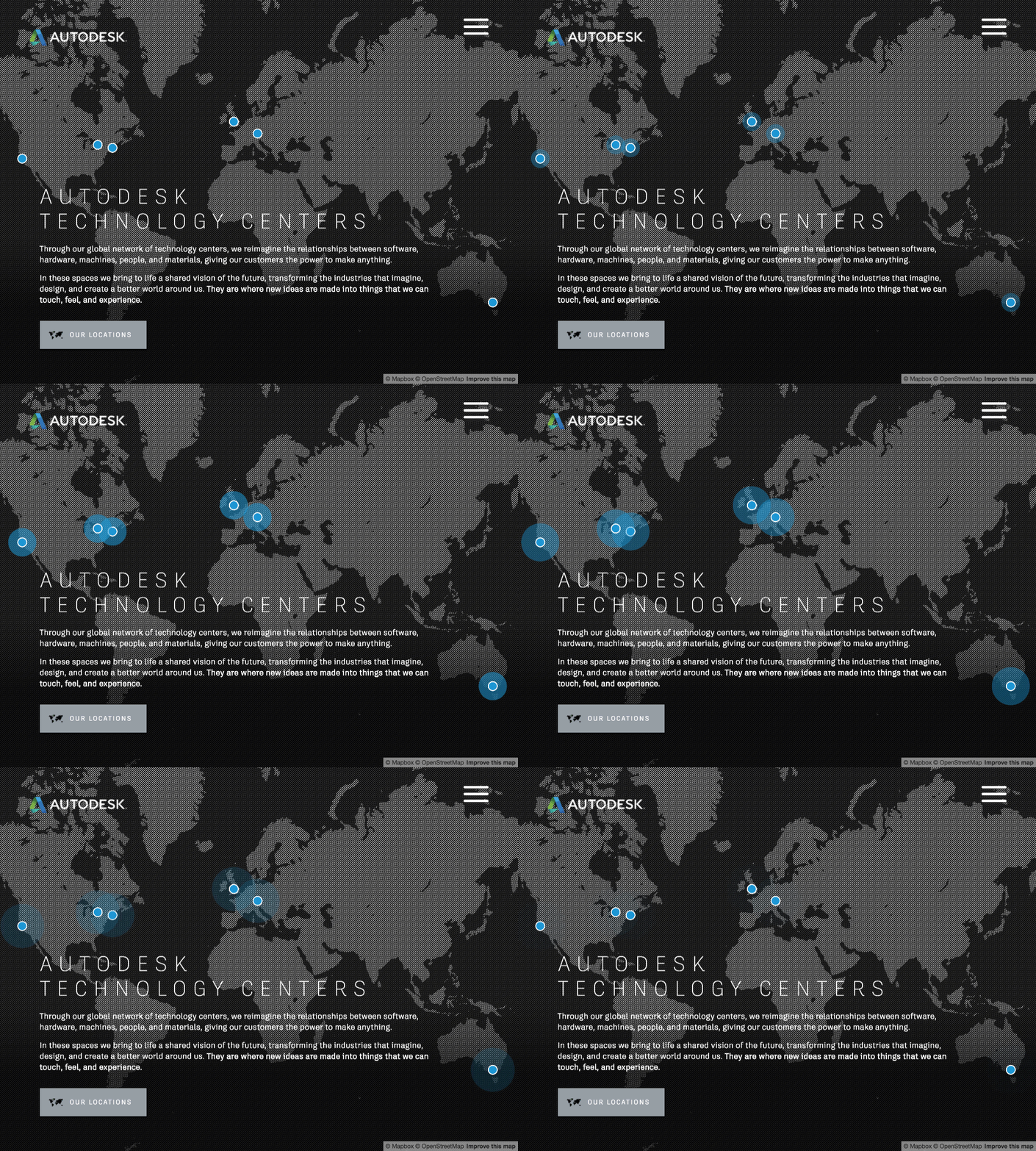
During a 3-day event, this week, Autodesk opened its Advanced Manufacturing Facility (AMF) in Birmingham, the UK's second largest city. Here's a video showing some information about this very cool facility. It's one of 6 technology centres that Autodesk is running at various locations around the world. The others are Pier 9 in San Francisco, the Boston BUILD Space, Autodesk Toronto's new MaRS office, the VR Center in Munich and the Materials Lab in Kilsyth, Australia. My team is proud to have been asked to provide technology to be showcased at the AMF: Dasher 360 is running there, providing access…
-
The project I'm currently working on fits squarely under the umbrella of "Generative Design for Architecture". We're using Dynamo Studio to generate layouts of residential housing – including both individual homes and apartment buildings – with the results quantified in a number of metrics that will be easily explorable by the user of the system. It's the approach The Living – the architectural studio in Autodesk Research doing pioneering work in the generative design space – has used for a number of projects, including Project Discover and the layout of the AU 2017 Exhibit Hall. I came across this video,…
-

As mentioned in a recent post, I'm currently working on a project using Dynamo Studio. It's fun getting back into Dynamo and DesignScript: I helped prototype the initial implementation of DesignScript inside AutoCAD about a decade ago, and I love seeing how the technology has evolved in the meantime. There are a few of us from Autodesk Research working on the project, which is also fun, but in a less literal way. Dynamo doesn't work especially well with source control, as far as I can tell, so there's a fair amount of manual merging of nodes into the master graph.…