Mobile
-
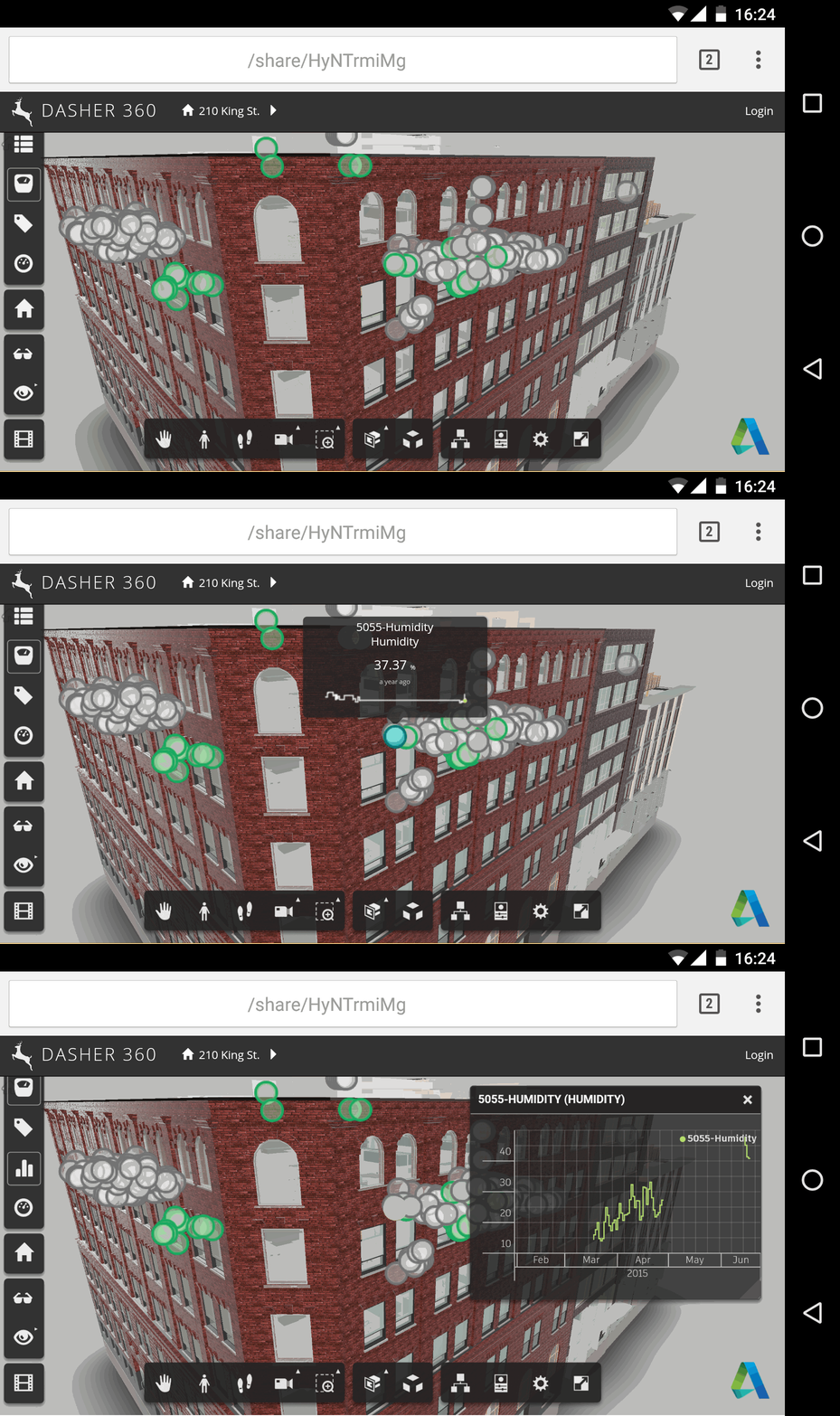
To follow up on the last post – where we talked about adding a custom tool to provide better support for pinch gestures – today we're going to talk about some other possibilities for supporting touch in the Forge viewer. Once again we're using Autodesk.Viewing.ToolController & ToolInterface. The Forge viewer uses Hammer.js internally to support touch, so that's one good place to look for clues on how things work. (Groan – I've just realised why it's called "Hammer"… "you CAN touch this!" 🙂 I was looking into how to support both "touch-capable" (i.e. they also have mouse & keyboard input)…
-
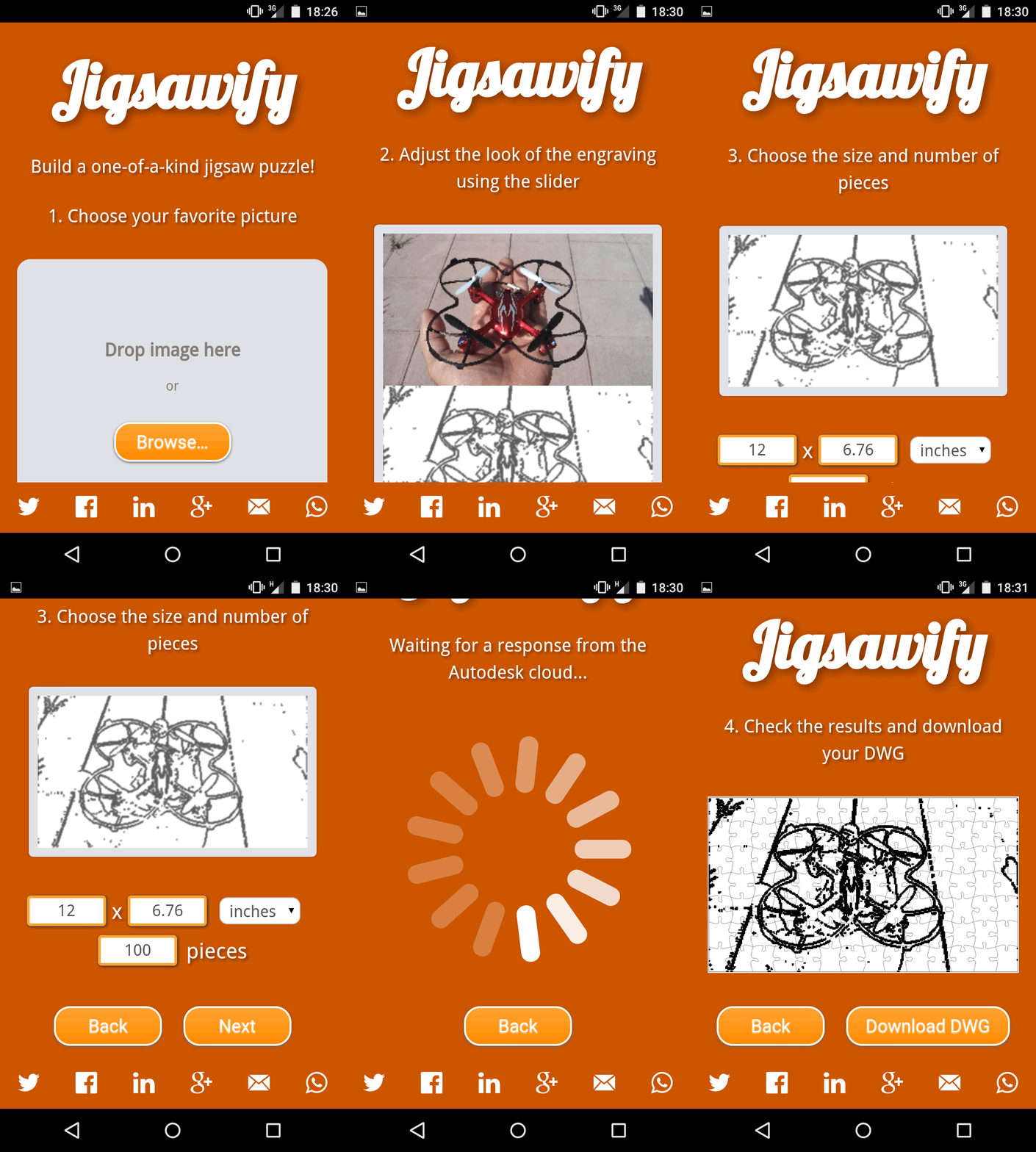
After going down the path of making this blog responsive, it made sense to do the same for Jigsawify.com: I think it's a really nice illustration of the potential for AutoCAD I/O to use the web-site from your mobile phone to generate a DWG in the cloud. The site itself was functional enough on mobile: the issue related more to making the UI usable without having to zoom in and out all the time both to see the results and then use the various UI elements. The "responsive" technology underpinning the Typepad template I used for this blog is Bootstrap.…
-

I mentioned this event – an excellent opportunity to kickstart your web or mobile application development efforts – late last year. The original submission deadline was last week, but this has been extended to January 17 – the end of this week! If you can put together a proposal (which shouldn't be more than 1,000 words) by then, you may still be able to participate. As a reminder, Autodesk is hosting the 2-week workshop in our downtown San Francisco offices from March 9-20, and will pay the hotel costs for 1-2 people per company. Get more information here.
-

This week has so far had an AU theme to it, just as last week we talked exclusively about Leap Motion and AutoCAD. Perhaps I'm sub-consciously shifting this blog to a weekly-themed format? Hmm. Like many of you, I'm sure, I received an email over the weekend to let me know that the recorded sessions from Autodesk University 2012 are now available online (for anyone with a valid AU online account). I wasn't sure which of my sessions had made it up there from this last year's event (thank goodness I rarely have to write cheques anymore), and so was…
-
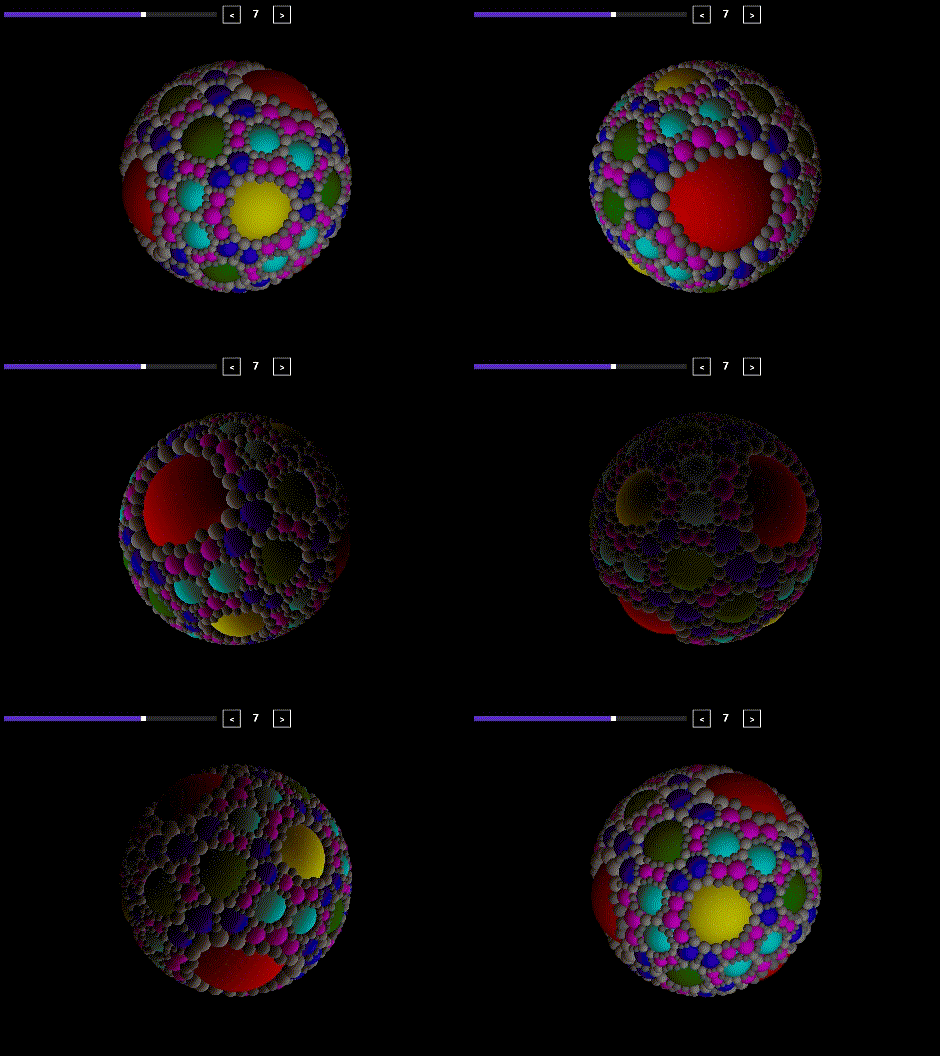
As part of my preparation for AU 2012, I've been working on updating the various Windows 8 samples I'll be showing to work with the RTM version of the OS. The first to be migrated was the Apollonian Viewer for WinRT, which is part of the cloud & mobile series from earlier in the year. The project was easy enough to get working: I mostly had to update to version 2.3.0 (or 2.3.1, as this was the latest available) of SharpDX and made a few minor code changes (there was previously a SafeDispose() function that seems to have disappeared and…
-
With my AUv recording out of the way, I've been starting to think more seriously about my AU sessions, over the last few days. The "big one" (with 100+ registered attendees and counting) is about moving code from a desktop application to the cloud, and will basically summarise the process I followed in my "cloud & mobile" series of earlier in the year. Which means I'll go through the process of pulling some code out of a desktop-based application and placing it behind a web-service, before calling the service from a variety of platforms/environments (AutoCAD via .NET, iOS, Android, WinRT,…
-
I'm hopefully sunning myself on the beaches of Brittany, at this point, but here's some information that Mikako Harada kindly brought to my attention. Adam Nagy has put together a fantastic series of posts on the AEC DevBlog that I think will be of general interest: Revit model viewer for iOS – part 1 Revit model viewer for iOS – part 2 Revit model viewer for iOS – part 3 Adam was apparently inspired by Philippe Leefsma's Inventor viewer for Android – something I'll also link to, once I see it's been published.
-
Last week, I received confirmation that I'll be presenting a few different classes at AU 2012, which will be held at the Mandalay Bay Hotel in Las Vegas from November 27-28. My main sessions, this year, are in some way focused on cloud & mobile technologies. The subject matter of the first lecture is the recently completed cloud & mobile series, where we'll look at moving desktop functionality to the cloud and using it from a variety of mobile environments: CP1914 – Moving code to the cloud – it's easier than you think! It has a companion roundtable session –…
-

To complement the DevBlogs for AutoCAD, Infrastructure Modeling, AEC and Manufacturing (and in case you missed them, here are their respective announcements), the ADN team has now launched a DevBlog focused on Cloud & Mobile development. You might consider this another "horizontal" blog, in the sense that over time it will prove to be a valuable resource for people using our products (and, I suspect, many people who don't) in all the industries we serve. I'll drop a note to Gopi, to suggest he adds a link to my own cloud & mobile series, for future reference. It seems like…
-

As we reach the end of this long series of posts on moving code to the cloud – and a look at ways to use the functionality from a wide variety of applications, many of them on mobile devices – I felt it was worth putting together a quick summary post to reinforce the overall message (which may have been a bit lost in the sheer volume of information). Firstly, here are the posts in this series, including those looking at the original creation of the "desktop" application functionality: Creating the core desktop functionality Circle packing in AutoCAD: creating an…