REST
-

A quick recap on the series so far… after introducing the benefits of moving application functionality to the cloud, we spent a couple of posts taking algorithms we'd previously hosted directly inside an AutoCAD and moving them to live behind a locally-hosted web-service. We then took a step back and talked about some issues around architecting applications for the cloud before we went on to make use of our web-service inside AutoCAD. And, most recently, we looked at how to move our web-service from a local system to be hosted in the cloud. And a quick aside, as I watched…
-
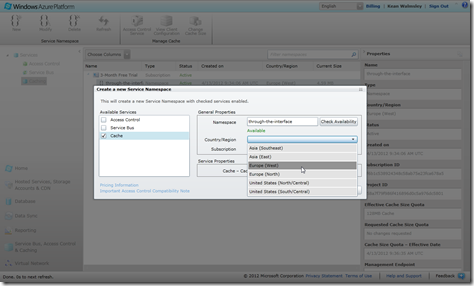
As mentioned in the last post, while working on deploying our web-site and its related services to Windows Azure, I started to chew on the economics of Azure hosting. This is especially relevant as I start to see my free 3-month subscription's resources being burned through by all of you checking them the links in the last post. 😉 Here's what I found… "extra small" instances are a mere sixth of the cost of "small" instances (not taking into account the 6-month pre-purchase discount on small instances, admittedly), which got me thinking: if I can reduce the resources needed for…
-
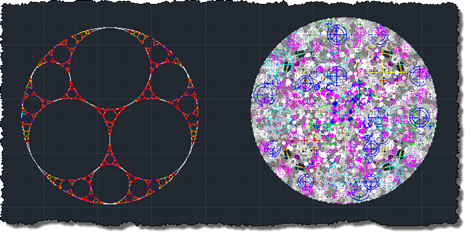
Consumption seems to be a relevant topic, coming after the long Easter weekend here in Switzerland… I was laid up with gastric flu on Monday: after having consumed large amounts of food with friends on Saturday and Sunday, I ended up eating nothing for the whole day. I managed to put the finishing touches on the previous post in this series, but beyond that I was pretty useless. Anyway, back to the point. We've looked at the trend of moving to the cloud, and the steps for creating and implementing a RESTful web-service using the new ASP.NET Web API. Now…
-
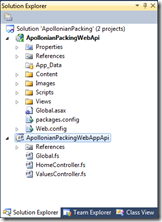
In the last post, we looked at the core technology we're going to use to expose our web-service, along with the basic project set-up. In today's post, we're going to flesh out this project and see the web-service in action. At this point, I should point out that I've switched back across for VS2010 for the purposes of this post (and its immediate successors), as it really will simplify the eventual integration with Windows Azure. Before we dive into the implementation of our web-service, here are a few words on what we're after… We want to implement two web-service APIs:…
-
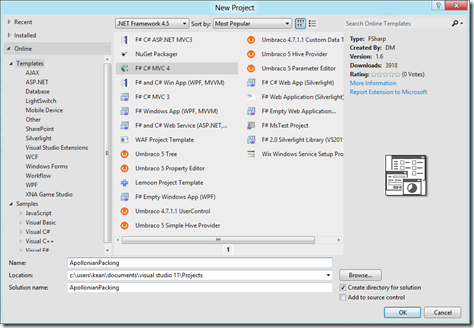
As promised, here begins the technical portion of the series on moving application functionality to the cloud. As suggested, we're going to take code from a couple of previous posts and put it in the cloud (although not immediately – first we're going to move it to a local web-service, consume that in AutoCAD, and then look at our various cloud-hosting options). So why did I choose these two pieces of code, in particular? A couple of reasons: firstly, they both implement "behind-the-scenes" algorithms that are independent of AutoCAD – a typical piece of business logic that companies might choose…
-
Actually, I wish that were true. I'm planning on taking some time off in October, but that seems a long way off, at this stage. What I've actually been doing is working with some REST-based APIs: firstly, I've been finishing up work on September's Plugin of the Month, TransTips for AutoCAD, Revit, Inventor, & 3ds Max (to be posted on Autodesk Labs in the next few days). TransTips makes use of the REST API for Bing Translator, to automatically translate tooltips in various products. Secondly, perhaps more excitingly, I've been coding against a possible future web service API for Project Photofly.…
-
I know, I know... I said I'd be posting on IronRuby, but yet again I got distracted <sigh>. Back to that next week, I promise. The good news is that, once again, I managed to get distracted by something pretty cool. 🙂 Earlier in the week I'd stumbled across an article mentioning the Bing API (currently in version 2.0), which allows you to perform programmatic web searches using various web-service related technologies, such as REST, JSON & SOAP. I played around with that, for a while, importing the Bing web service into different versions of Visual Studio (both of which…