Azure
-

This week has so far had an AU theme to it, just as last week we talked exclusively about Leap Motion and AutoCAD. Perhaps I'm sub-consciously shifting this blog to a weekly-themed format? Hmm. Like many of you, I'm sure, I received an email over the weekend to let me know that the recorded sessions from Autodesk University 2012 are now available online (for anyone with a valid AU online account). I wasn't sure which of my sessions had made it up there from this last year's event (thank goodness I rarely have to write cheques anymore), and so was…
-
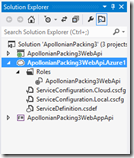
After introducing the topic – as well as creating our basic, local web-service – in the last post, today we're going to publish our MVC 4 Web API application to the cloud and see it working from a number of different client environments. Preparing to publish to Azure Now that we're ready to publish to Azure, we need to add a deployment project to our solution. Right-click "ApollonianPackingWebApi" in the Solution Explorer and select "Add Windows Azure Cloud Service Project". This will add a new project into our solution. We can now double-click the entry under the "Roles" folder in…
-
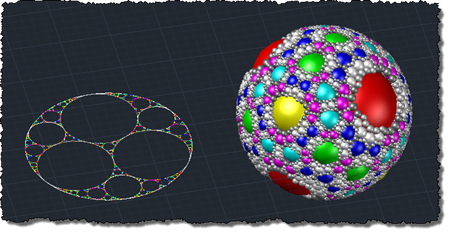
After posting the handout for my Wednesday class, now it's time to start the one for Tuesday's - CP1914 - Moving Code to the Cloud: It's Easier Than You Think (I have a lot else going on on Tuesday, but this is the only class on that day for which I needed to prepare material). Attendance for both classes is looking fairly good: there are currently 138 attendees registered for the Cloud session and 62 registered for the one on WinRT. Why all this talk of the cloud? The software industry is steadily adopting a model commonly referred to as…
-
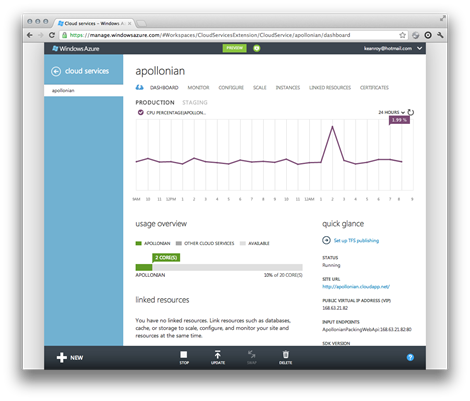
A few things have happened over the last week or so that have got me looking, once again, at Windows Azure: Firstly, there was an exciting release announced last week (I attended the webcast online from San Francisco, where the event happened to be taking place), prior to this week's TechEd. Among the key features were: Support for Linux instances These will presumably be cheaper, given the lack of OS licensing costs Virtual Machine capability IaaS for those that prefer it over PaaS (something no doubt learned from the popularity of AWS) Select from the online Image Gallery or upload…
-
As we reach the end of this long series of posts on moving code to the cloud – and a look at ways to use the functionality from a wide variety of applications, many of them on mobile devices – I felt it was worth putting together a quick summary post to reinforce the overall message (which may have been a bit lost in the sheer volume of information). Firstly, here are the posts in this series, including those looking at the original creation of the "desktop" application functionality: Creating the core desktop functionality Circle packing in AutoCAD: creating an…
-
In the previous post in this series, we saw the code for an initial, basic implementation of a 3D viewer for our Apollonian web-service developed for Windows 8 using WinRT. In this post, we extend that code to provide support for a few basic gestures, particularly swipe-spin, pinch-zoom and tap-pause. To properly show the gestures in action, I recorded the app working inside the Windows 8 emulator (which in turn was running inside Windows 8 running inside a Parallels VM, so fairly far from "the metal", as it were). Here's a quick video of the updated app in action: Unable…
-
After tackling the implementation of a basic 3D viewer for our Apollonian web-service using a variety of technology stacks – AutoCAD, Unity3D, Android, iOS & HTML5/WebGL – I felt as though I really needed to give it a try with WinRT, the new runtime powering Windows 8. All of the previous stacks had some "object" layer I could use above the base graphics engine – Rajawali provided it for Android/OpenGL ES, iSGL3D for iOS and Three.js for HTML5/WebGL – but for WinRT all bets were off. The general guidance for developing Metro-style 3D applications (typically that means games) is to…
-
To finish off our look at developing an HTML5-based 3D viewer for our Apollonian web-service, today's post integrates the trackball capability of the Three.js library. Many thanks to Jeff Geer for once again pointing me in the right direction on this. 🙂 The trackball capability allows you not to worry about manual implementation of 3D navigation inside your viewer: you simply set up some basic parameters to indicate the size of your model and the speed with which you want navigation to occur – as well as the keys for rotate, zoom and pan – and then you just let…
-
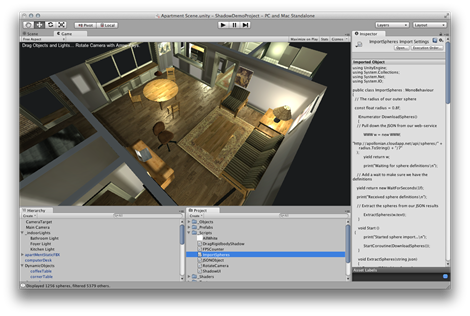
As mentioned in the last post, today we're going to have some fun pulling data from our recently-implemented, cloud-based web-service into the Unity3D game engine. My intention, here, is to reinforce the fact that exposing web-service APIs really does give you broader reach with your technology. In this case, we'll be calling our web-service – implemented using F#, which we could not have included in our Unity3D project – inside a game engine that could be hosted on any one of a wide variety of operating systems. A few words on Unity3D: according to its web-site, Unity3D is "a feature…
-
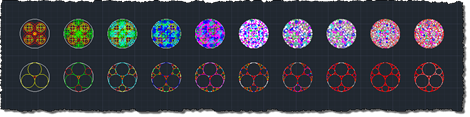
A quick recap on the series so far… after introducing the benefits of moving application functionality to the cloud, we spent a couple of posts taking algorithms we'd previously hosted directly inside an AutoCAD and moving them to live behind a locally-hosted web-service. We then took a step back and talked about some issues around architecting applications for the cloud before we went on to make use of our web-service inside AutoCAD. And, most recently, we looked at how to move our web-service from a local system to be hosted in the cloud. And a quick aside, as I watched…