REST
-
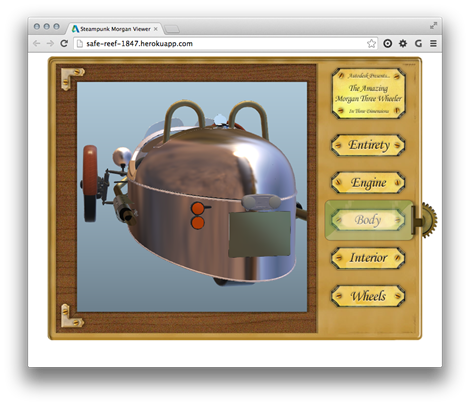
In the last post we saw the process for getting content uploaded to Autodesk storage and translated into the format required by the Autodesk 360 viewer. In this post we're going to show the steps to take that data and embed it in a "simple" HTML page. (Any complex capability in this page it's due to the UI code that Dan Wellman kindly allowed me to borrow for the sample: otherwise what it does is very simple indeed.) There are, of course, more complex samples that the ADN team has developed to demonstrate the richness of the new View &…
-
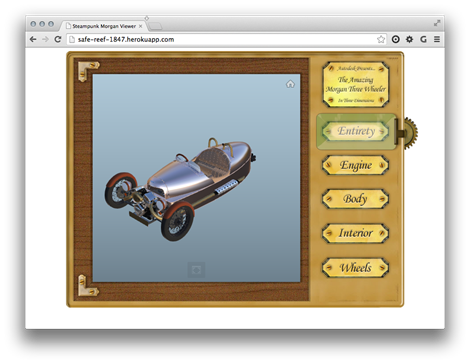
As mentioned last week, I've been having fun with Fusion 360 to prepare a model to be displayed in the new Autodesk 360 viewer. The sample is now ready to view, although I'm not yet quite ready to post the code directly here, mainly because the API isn't yet publicly usable. Here's the app for you to take for a spin, as it were. The Autodesk 360 Viewing & Data API is currently being piloted by a few key partners, and hopefully we'll soon be broadening the scope to allow others to get involved (we first have to iron out…
-
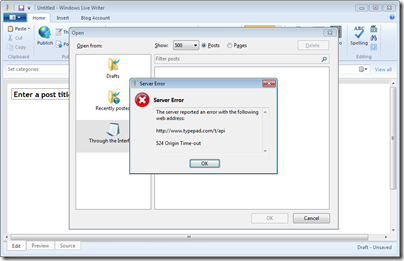
This one's mainly for my fellow bloggers – especially those using the Typepad blogging platform – to help address a problem related to editing old blog posts using Windows Live Writer, a tool I can honestly say I can no longer blog without. Incidentally I'm now working with Live Writer 2012. With that said, it may also be of interest for people who want to programmatically query their favourite blogs and create offline indices into their posts. Maybe. 🙂 I use Live Writer primarily to author blog posts – which it allows me to do offline, something I find incredibly…
-
It's Good Friday, so much of the world will be offline today, but I thought I'd post quickly on some (good) news that may be of interest to people. The ReCap team has officially launched a new partner program. This provides access to a number of mechanisms for integrating with or harnessing Autodesk ReCap products and services. The Capture Codec Kit is primarily for importing custom point cloud formats – something important for hardware manufacturers, particularly – into Autodesk ReCap on the desktop. Embedded ReCap OEM allows generated or post-processed point cloud data to be brought into Autodesk's design products…
-

Over the weekend I managed to complete the BerkeleyX Foundations of Computer Graphics class. This was really an excellent class, both in terms of the structure of the lectures and the homework assignments, which actually scaled in a non-linear way (the last assignment took as much time to complete as the previous three combined). But you were eased into it and didn't strictly need to do the last piece of homework (which was to write a ray-tracer from scratch) to get a "pass" on the course. What's nice about these MOOCs is that – in order to scale, putting the…
-

This week has so far had an AU theme to it, just as last week we talked exclusively about Leap Motion and AutoCAD. Perhaps I'm sub-consciously shifting this blog to a weekly-themed format? Hmm. Like many of you, I'm sure, I received an email over the weekend to let me know that the recorded sessions from Autodesk University 2012 are now available online (for anyone with a valid AU online account). I wasn't sure which of my sessions had made it up there from this last year's event (thank goodness I rarely have to write cheques anymore), and so was…
-
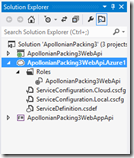
After introducing the topic – as well as creating our basic, local web-service – in the last post, today we're going to publish our MVC 4 Web API application to the cloud and see it working from a number of different client environments. Preparing to publish to Azure Now that we're ready to publish to Azure, we need to add a deployment project to our solution. Right-click "ApollonianPackingWebApi" in the Solution Explorer and select "Add Windows Azure Cloud Service Project". This will add a new project into our solution. We can now double-click the entry under the "Roles" folder in…
-
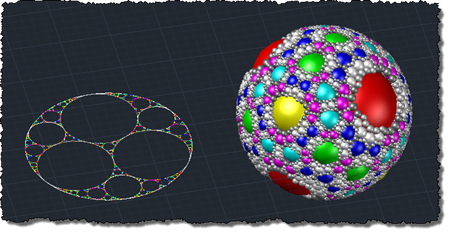
After posting the handout for my Wednesday class, now it's time to start the one for Tuesday's - CP1914 - Moving Code to the Cloud: It's Easier Than You Think (I have a lot else going on on Tuesday, but this is the only class on that day for which I needed to prepare material). Attendance for both classes is looking fairly good: there are currently 138 attendees registered for the Cloud session and 62 registered for the one on WinRT. Why all this talk of the cloud? The software industry is steadily adopting a model commonly referred to as…
-

As we reach the end of this long series of posts on moving code to the cloud – and a look at ways to use the functionality from a wide variety of applications, many of them on mobile devices – I felt it was worth putting together a quick summary post to reinforce the overall message (which may have been a bit lost in the sheer volume of information). Firstly, here are the posts in this series, including those looking at the original creation of the "desktop" application functionality: Creating the core desktop functionality Circle packing in AutoCAD: creating an…
-
After starting the sub-series focused on iOS, I held off completing it until I could actually test the code on a physical iOS device. A big thanks to Andy Chang from our Toronto office for getting me set up with the ADP membership and my iPad 2 added to the list of usable development devices. I won't talk about the steps needed to provision apps for iOS devices – there seems to be enough information available on the web for that – but I will say it ended up being less complicated than I expected. That's not to say it's…