Virtual Reality
-
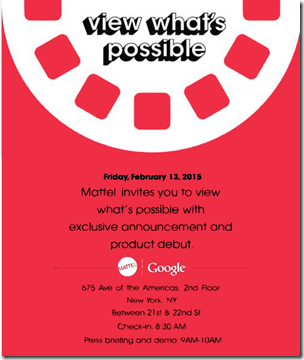
After the excitement around Magic Leap and HoloLens, on Friday of this week there's another big VR-related tech announcement being made. But wait… isn't CES finished? And Build doesn't happen for a few more months? That's right: this one is being made at the New York Toy Fair. Say whaaat? Mattel has owned the View-Master brand since their acquisition of Tyco Toys in 1997 (who had in turn acquired the brand in 1989). I now have probably twenty or so View-Masters – something I talked about recently – but there's nothing very interesting about the later models, in my opinion.…
-
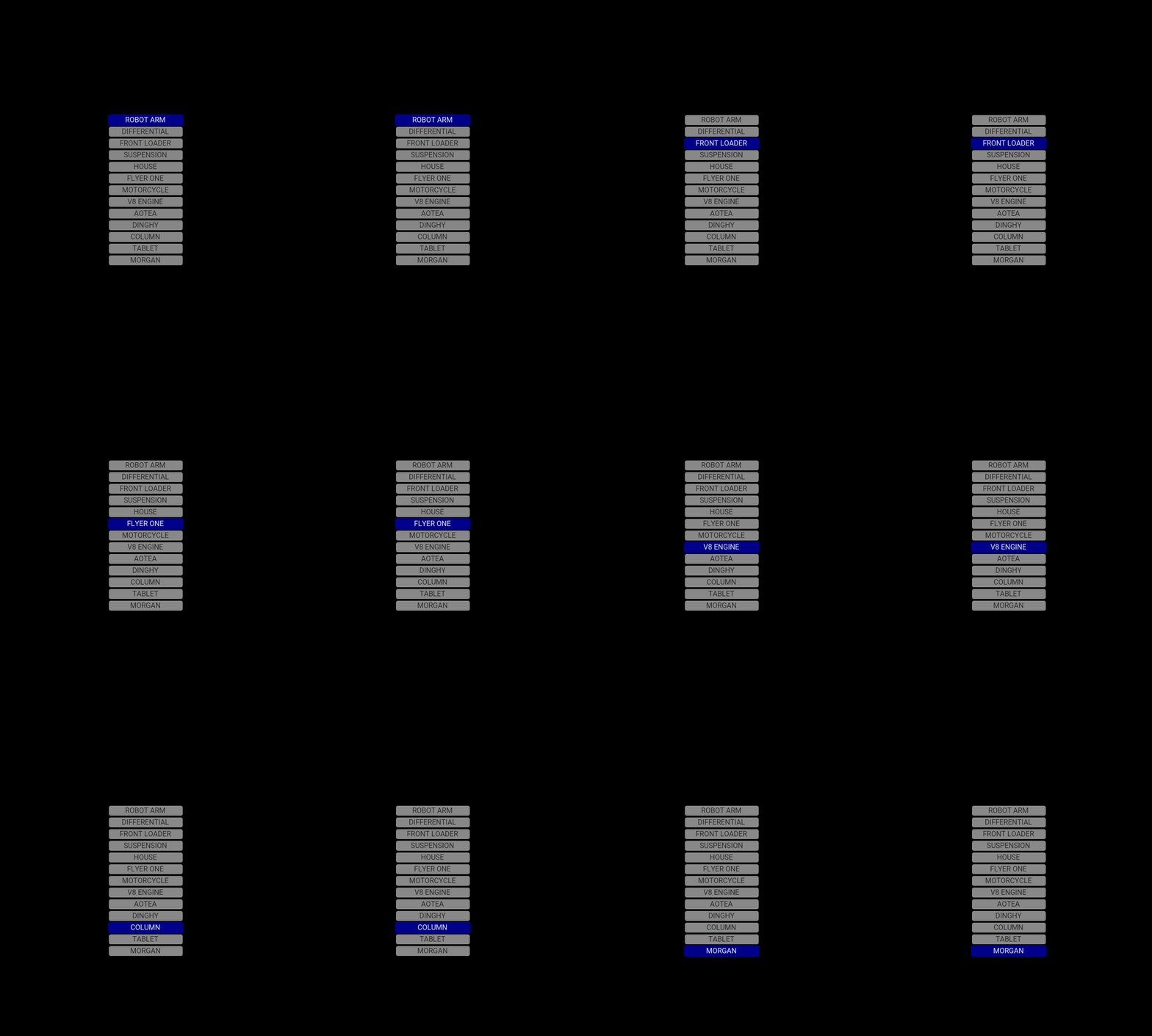
After building native Android apps for both Gear VR and Google Cardboard that embed our web-based VR samples using Autodesk's View & Data API, I really wanted to revisit the UI issue. After seeing the 3D UI capabilities of Gear VR – courtesy of the Oculus Mobile SDK – my own UI that I implemented in HTML felt, well, flat. The main problem seemed to be that it moved with your head, staying stuck to your view. It also suffered from the issue of visual degradation when the selection was away from the middle of the list. All in all…
-

There's a really interesting conference in San Francisco, later this month (groan). It's being held in Fort Mason on February 25-27, and covers all aspects of reality computing, whether relating to capture, compute or create: Autodesk is the main organizer of the event, but there are lots of other companies and institutions involved, too. Check out the list of speakers: there are executives and specialists from Autodesk lined up as well as several eminent names from the industry. Here's a quick video giving a sense of what the conference is all about: And in case you're still interested in registering,…
-
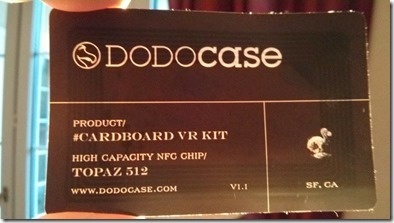
When I first got my Google Cardboard toolkit – in my case the DODOcase VR Toolkit V1 – I was fascinated by the NFC tag that came with it. I hadn't really played with NFC, prior to that, and only had a very vague idea of what it was about. It turns out that NFC is this important new(ish) technology that's enabling all kinds of local (hence "near-field") communications. Especially, it seems, in the area of mobile payments with technologies such as Apple Pay. Anyway, my first exposure to NFC was via this business card-sized sticker that came in the…
-
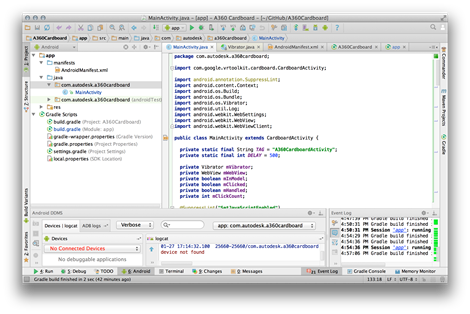
I mentioned this in last Friday's post: after building an Android app to bring our web-based VR samples to Gear VR, it made sense to do the same for Google Cardboard. It made sense for 3 reasons: Most importantly, I wanted to see what the additional capabilities of the Android SDK would bring to the web-based VR samples, particularly around the magnetic trigger button. Until the Note 4 gets its Lollipop update in "early 2015" – and WebViews support WebGL – there isn't much more to do with Gear VR. I've completed the plumbing but am waiting for the toilet…
-
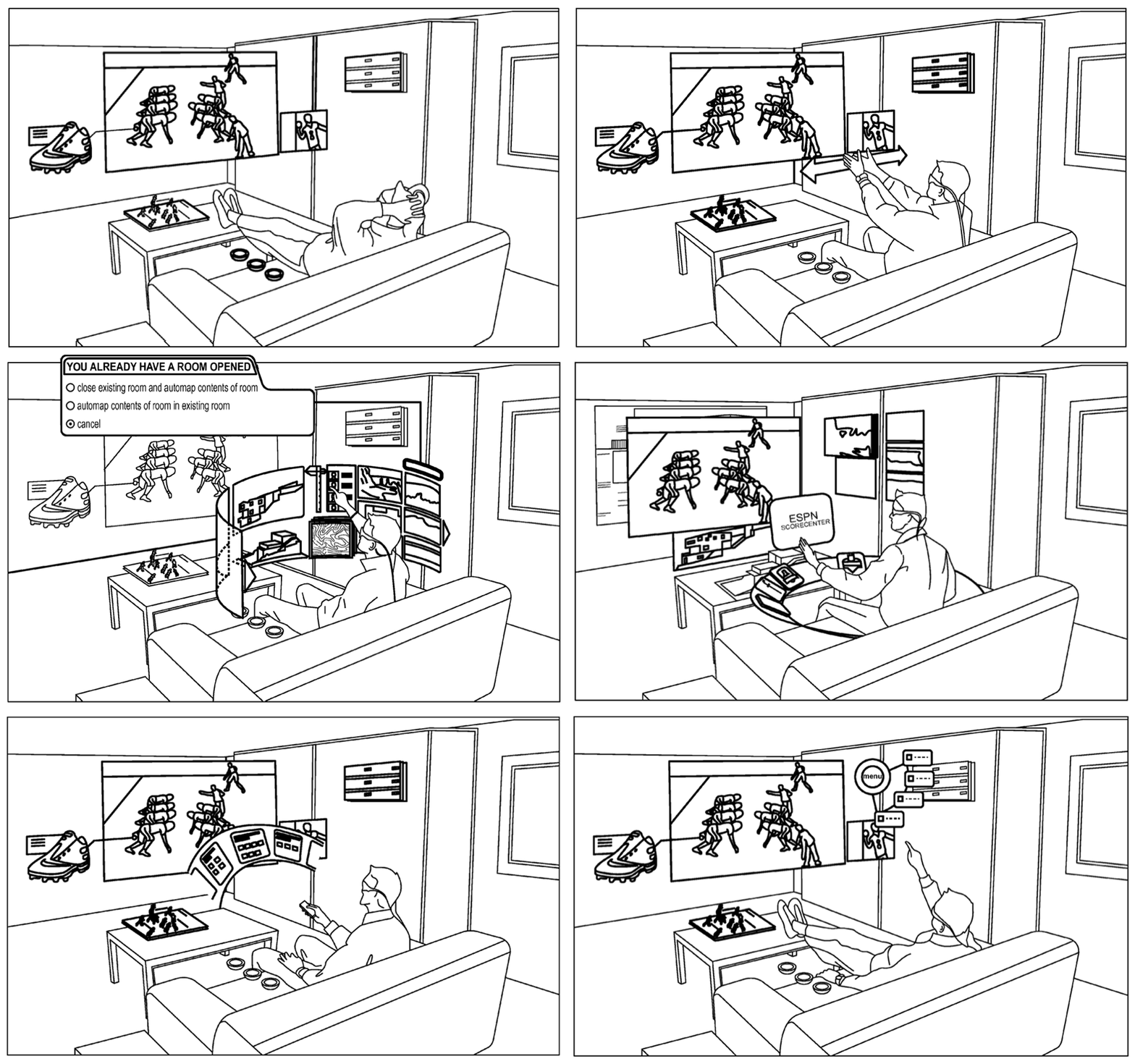
I'm down with some kind of stomach bug, so any thoughts I might have had of writing code today are out the window. But luckily there's plenty of juicy technology news buzzing around – especially in the AR space – that's worth reporting on. Interestingly this isn't the first time this has happened. I wonder if my sickness-addled brain has a tendency to gravitate towards "out there" technologies such as AR & VR (especially since reading John C. Wright's The Golden Age trilogy – a must for anyone interested in this domain)? I spent a fair amount of time working…
-
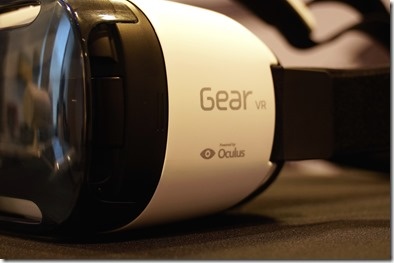
Today we're following on from last week's post introducing this project where we want to convert the Google Cardboard A360 samples to work in a more integrated manner with the Samsung Gear VR. The main purpose of the project is to see how we can hook up the existing, web-based samples to take advantage of the Gear VR's hardware. We definitely don't want to re-implement any of the visualization stack to be native; if we can use UI hardware events to control the web-based samples in a meaningful way, that'll be just fine for this proof-of-concept. It took some work…
-
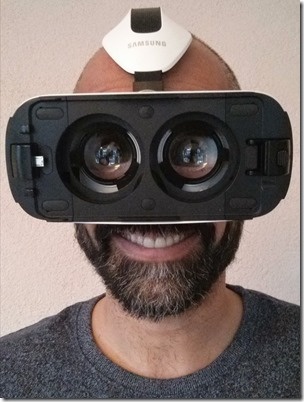
Back in October, I had a lot of fun developing some Virtual Reality samples using Autodesk's View & Data API. The samples instanced the A360 viewer component twice in a web-page and controlled the views on these two instances – maintaining a stereoscopic effect – as the mobile viewing device changed orientation. Here's a video we saw in a previous post to give a sense for how these demos work… The original samples were developed for Google Cardboard – which many of you will have received at the recent DevDays events around the world – but they're just as applicable…
-
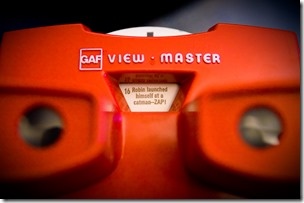
I've long been fascinated by stereoscopy, as I suspect is the case for most people lucky enough to have two functioning eyes. There's something magical about a device that immerses us in a three dimensional scene by hijacking that fundamental input mechanism of ours, binocular vision. I almost always get that "oh wow" feeling: it just never gets old. I also happen to like collecting cool bits of vintage technology, although in an admittedly haphazard and opportunistic way: I have printing blocks, a typewriter, a TI-57 programmable calculator, an Apple Newton, a Palm Pilot and an iPAQ, to name a…
-
One of the pieces of feedback I received from internal folk on the prototype VR app I developed for Google Cardboard and then added voice recognition to was "it'd be really cool to add ViewCube-like navigation commands". Which basically meant adding "front", "back", "left", "right", "top" & "bottom" to the list of voice commands recognised by annyang and have them hooked up to a function that changes the view accordingly. The main complication being the fact that some models come in with "Z up" despite the majority having "Y up". Hopefully none will come in with "X up", an eventuality…