2015
-

There's a really interesting conference in San Francisco, later this month (groan). It's being held in Fort Mason on February 25-27, and covers all aspects of reality computing, whether relating to capture, compute or create: Autodesk is the main organizer of the event, but there are lots of other companies and institutions involved, too. Check out the list of speakers: there are executives and specialists from Autodesk lined up as well as several eminent names from the industry. Here's a quick video giving a sense of what the conference is all about: And in case you're still interested in registering,…
-
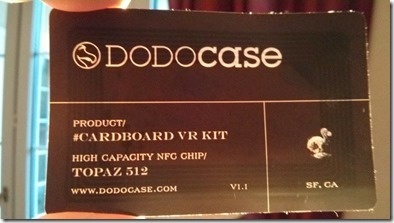
When I first got my Google Cardboard toolkit – in my case the DODOcase VR Toolkit V1 – I was fascinated by the NFC tag that came with it. I hadn't really played with NFC, prior to that, and only had a very vague idea of what it was about. It turns out that NFC is this important new(ish) technology that's enabling all kinds of local (hence "near-field") communications. Especially, it seems, in the area of mobile payments with technologies such as Apple Pay. Anyway, my first exposure to NFC was via this business card-sized sticker that came in the…
-
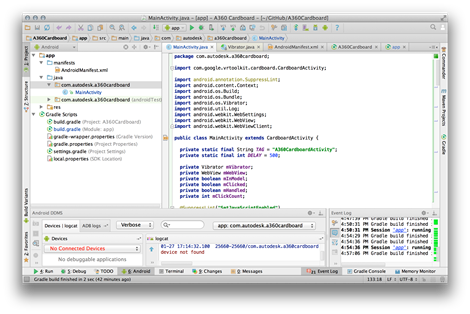
I mentioned this in last Friday's post: after building an Android app to bring our web-based VR samples to Gear VR, it made sense to do the same for Google Cardboard. It made sense for 3 reasons: Most importantly, I wanted to see what the additional capabilities of the Android SDK would bring to the web-based VR samples, particularly around the magnetic trigger button. Until the Note 4 gets its Lollipop update in "early 2015" – and WebViews support WebGL – there isn't much more to do with Gear VR. I've completed the plumbing but am waiting for the toilet…
-
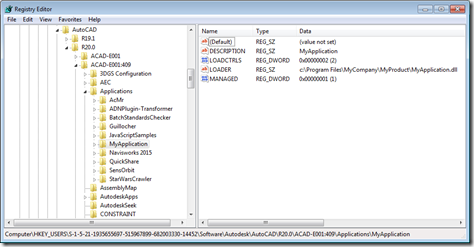
Operating System-level environment variables are a handy way to reduce redundancy or to simplify providing support for per-user settings. (I'm sure they're good for other things, too, but these are the ones that spring to my mind, at least. 🙂 One thing I only discovered recently – and thanks to Tekno and Dieter for discussing this – is that you can use environment variables in a number of places in the file path settings accessed via AutoCAD's OPTIONS command. The topic came up in the specific context of the TRUSTEDPATHS settings, but it seems to have more general support than…
-
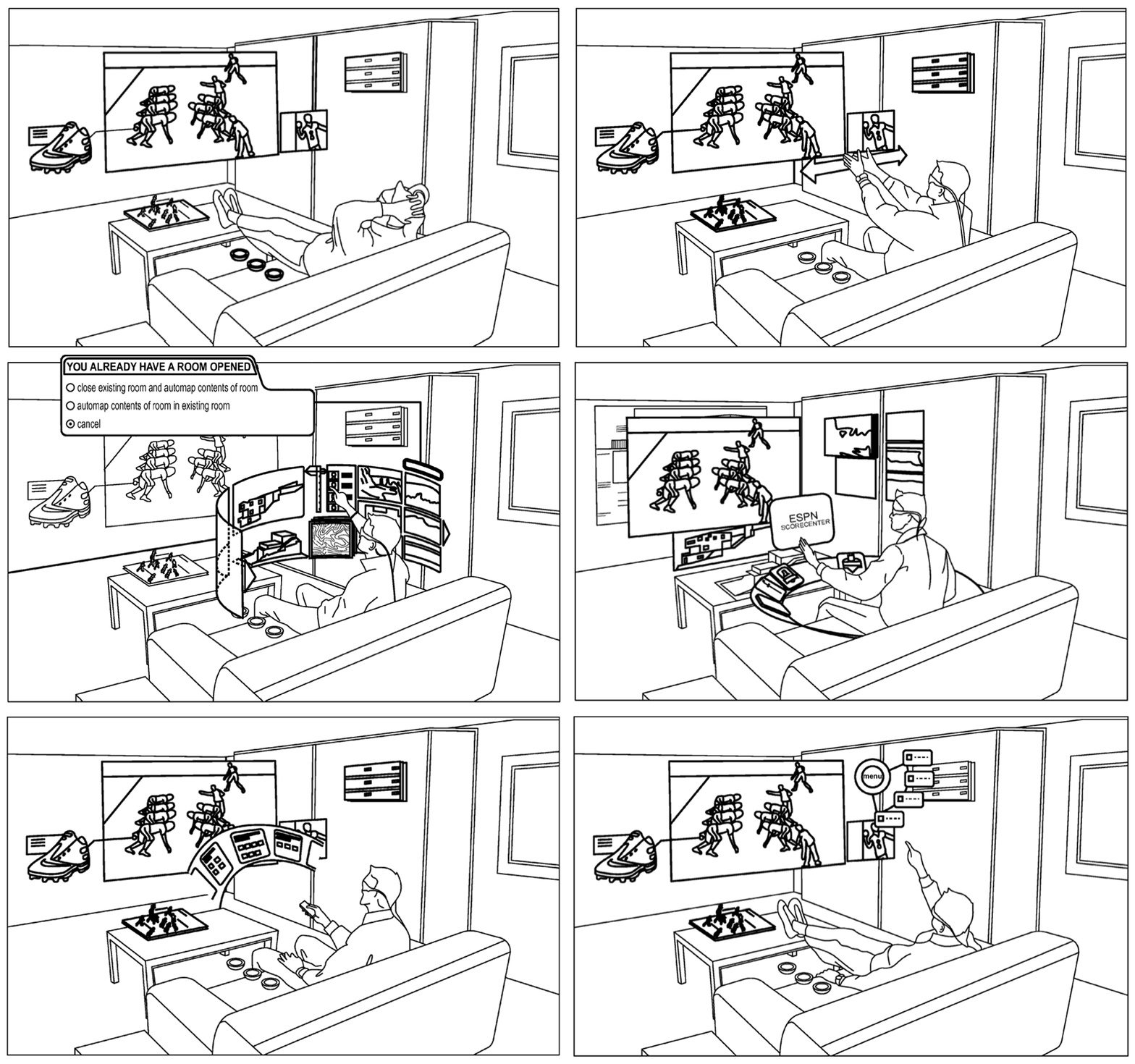
I'm down with some kind of stomach bug, so any thoughts I might have had of writing code today are out the window. But luckily there's plenty of juicy technology news buzzing around – especially in the AR space – that's worth reporting on. Interestingly this isn't the first time this has happened. I wonder if my sickness-addled brain has a tendency to gravitate towards "out there" technologies such as AR & VR (especially since reading John C. Wright's The Golden Age trilogy – a must for anyone interested in this domain)? I spent a fair amount of time working…
-
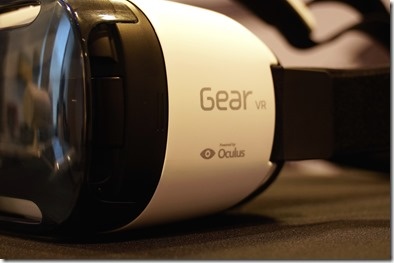
Today we're following on from last week's post introducing this project where we want to convert the Google Cardboard A360 samples to work in a more integrated manner with the Samsung Gear VR. The main purpose of the project is to see how we can hook up the existing, web-based samples to take advantage of the Gear VR's hardware. We definitely don't want to re-implement any of the visualization stack to be native; if we can use UI hardware events to control the web-based samples in a meaningful way, that'll be just fine for this proof-of-concept. It took some work…
-

An interesting query came into my inbox, last week. A member of one of our internal product teams was looking to programmatically modify the contents of an external reference file. She was using the code in this helpful DevBlog post, but was running into issues. She was using WblockCloneObjects() to copy a block definition across from a separate drawing into a particular xref, but found some strange behaviour. In this post I'm going to show the steps we ended up following to make this work. We're going to implement a slightly different scenario, where we modify an external reference to…
-
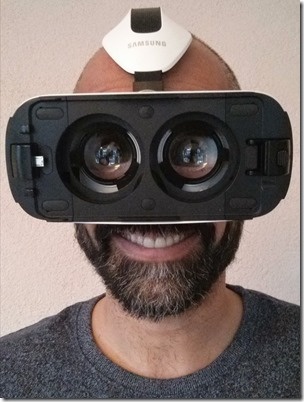
Back in October, I had a lot of fun developing some Virtual Reality samples using Autodesk's View & Data API. The samples instanced the A360 viewer component twice in a web-page and controlled the views on these two instances – maintaining a stereoscopic effect – as the mobile viewing device changed orientation. Here's a video we saw in a previous post to give a sense for how these demos work… The original samples were developed for Google Cardboard – which many of you will have received at the recent DevDays events around the world – but they're just as applicable…
-

I mentioned this event – an excellent opportunity to kickstart your web or mobile application development efforts – late last year. The original submission deadline was last week, but this has been extended to January 17 – the end of this week! If you can put together a proposal (which shouldn't be more than 1,000 words) by then, you may still be able to participate. As a reminder, Autodesk is hosting the 2-week workshop in our downtown San Francisco offices from March 9-20, and will pay the hotel costs for 1-2 people per company. Get more information here.
-
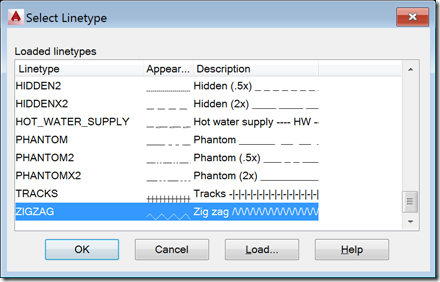
I received this request from Mateusz Andrzejczak, over the weekend: I have problem with LineTypeDialog. Your part of the code is working perfectly, but i have problem with modifying the values. I have a SelectionSet that holds all object that are selected with using a filter. I want to use LineTypeDialog to select linetype and then accept so all the object in selection set will change to selected linetype. I'm working with this for a few hours and it's not working. Any tip for me? The question related to this old post. I started by sending Mateusz a link to…