2015
-
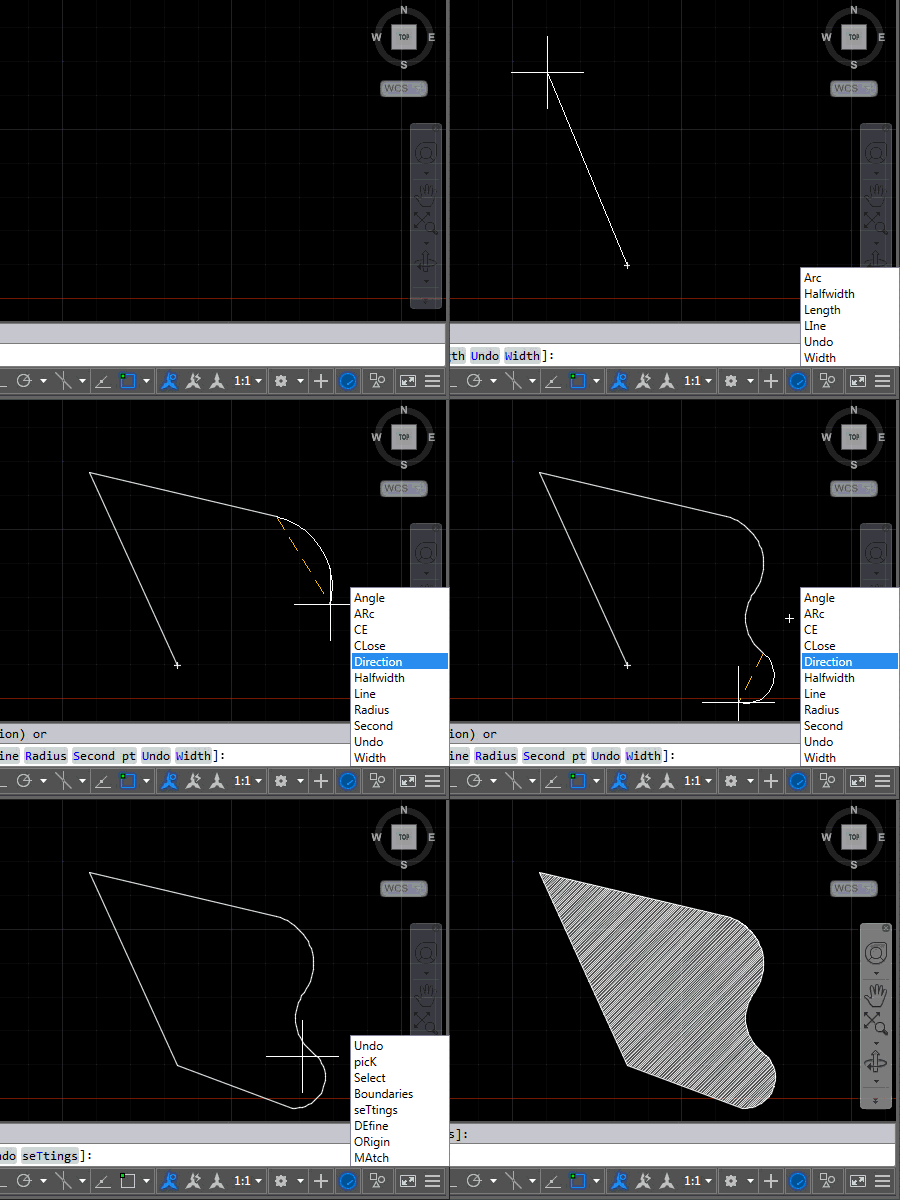
After introducing this project in the last post, now it's time to share some code. The project, as it currently stands, contains three source files: the first one relates to AutoCAD – it implements the various commands we'll use to attach event handlers to tell us when to display (or hide) keywords and the other two files relate to the UI we'll use to display them. We're going to use an invisible window which has a child popup containing a listbox of our keywords. Here's the application in action – for now in English AutoCAD, as that's what I have…
-
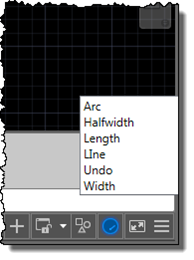
I'm up in the mountains, supposedly on vacation, but as one of our children woke up with a fever, I'm skipping the morning session on the slopes to stay home with him. Which gives me the chance to start writing up a little project I've been working on for our Localization team. Here's the idea… apparently it's relatively common in certain countries for AutoCAD users to learn the product in English but then end up working with a localized version of the software. While it's always possible to use global commands and keywords by prefixing an underscore, it's not always…
-

After yesterday's fun with creating an HTML5-based progress meter for AutoCAD, today we're going to have some more fun styling it with CSS. To recap, here's the progress meter that comes "out of the box", with the default styling from Chromium on Windows. The first thing we need to do for our various changes is to use CSS to disable the default styling, at which point we can then use CSS to override it. progress { width: 100%; -webkit-appearance: none; } Here's how our progress meter looks when unstyled: Now that it's stripped bare, we can…
-

This week I've spent quite a bit of time looking into future API features. For one of them I needed to create a progress meter, and thought to myself "why not create one in HTML5?" And as it's nothing specific to a future product release, I decided to go ahead and post it now. For context, here's the way AutoCAD's standard progress meter currently looks, displayed using the code from this previous post: So why would you go head and create your own progress meter? A few different reasons come to mind… yes, AutoCAD has its own, but perhaps you…
-

Back in September, Dyson announced their long-awaited entry into the robo-vacuum market with the Dyson 360 Eye. I was delighted to see an old friend of mine, Mike Aldred, in one of the launch videos: Mike and I were undergraduates at the University of Kent at Canterbury (UKC) together, back in the '90s. I was studying European Computer Science (which meant I was on a 4-year degree programme with the 3rd year spent studying Computer Science in Paris) while Mike was studying Computer Systems Engineering. I vaguely recall having common classes together with Mike, although as Mike started at UKC…
-

It's been several years since this blog received a redesign. I've tweaked the format from time to time, adding social buttons and various other widgets, but it's starting to show its age, especially as more and more people are browsing from devices with smaller form factors. And this blog does look pretty bad on mobile devices… The good news is that Typepad does have a number of responsive design templates which apparently look good on a variety of devices with a variety of form factors/resolutions. I've submitted a request to our creative team for an updated design, asking that whatever…
-
My esteemed colleagues over in the ADN team, Philippe and Balaji, have been working their magic, creating samples to show how to make use of JavaScript-based physics engines within Autodesk software. They've inspired me to have a go myself. Philippe's sample – which carried on from his preliminary research into JavaScript-based physics engines – shows how you can integrate ammo.js with the View & Data API to add some gravity to an A360 model. Really fun stuff! [Side note: I love that ammo.js stands for "Avoid Making My Own physics engine" as well as being an emscripten port of the…
-
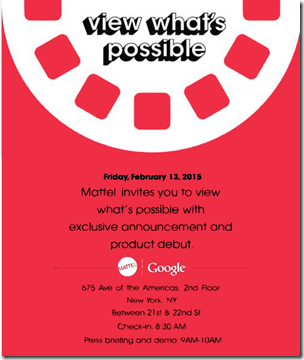
After the excitement around Magic Leap and HoloLens, on Friday of this week there's another big VR-related tech announcement being made. But wait… isn't CES finished? And Build doesn't happen for a few more months? That's right: this one is being made at the New York Toy Fair. Say whaaat? Mattel has owned the View-Master brand since their acquisition of Tyco Toys in 1997 (who had in turn acquired the brand in 1989). I now have probably twenty or so View-Masters – something I talked about recently – but there's nothing very interesting about the later models, in my opinion.…
-
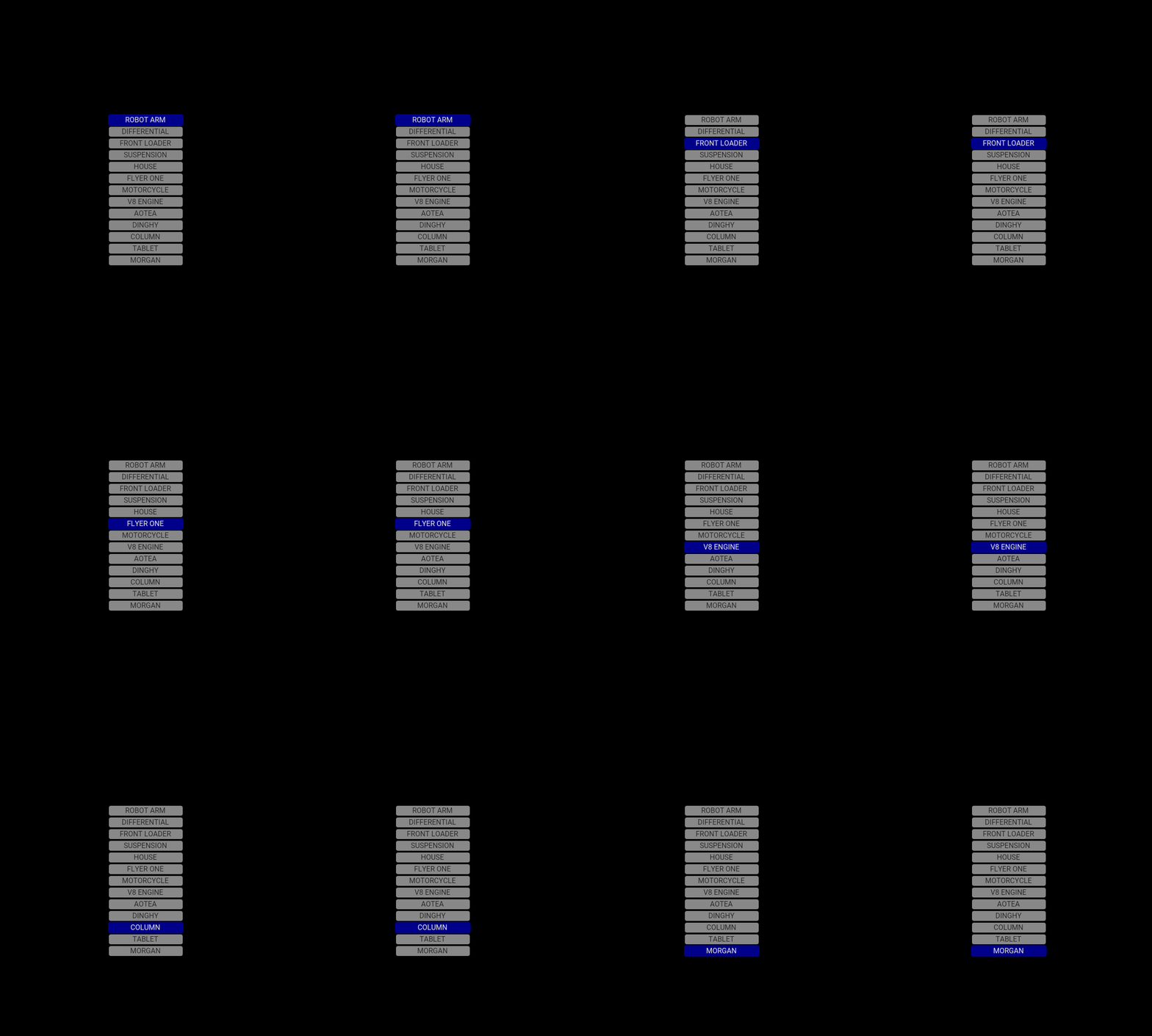
After building native Android apps for both Gear VR and Google Cardboard that embed our web-based VR samples using Autodesk's View & Data API, I really wanted to revisit the UI issue. After seeing the 3D UI capabilities of Gear VR – courtesy of the Oculus Mobile SDK – my own UI that I implemented in HTML felt, well, flat. The main problem seemed to be that it moved with your head, staying stuck to your view. It also suffered from the issue of visual degradation when the selection was away from the middle of the list. All in all…
-
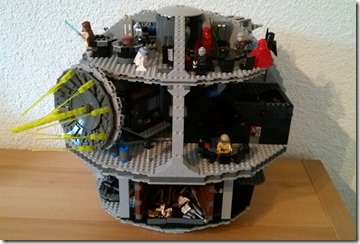
So yes, I like Star Wars. And my kids like Star Wars, too. In my office downstairs at home, I have the pride and joy of my modest collection of Star Wars-related goodies, a LEGO Death Star: It pains me to leave it downstairs and only let the kids play with it under supervision, but it was a hassle (albeit a very enjoyable hassle) to build and I'd hate to see it damaged. And if anyone thinks that makes me sound like Will Ferrell's character in the LEGO Movie, they'd be right: there's a lot that resonated in that film,…