AU
-
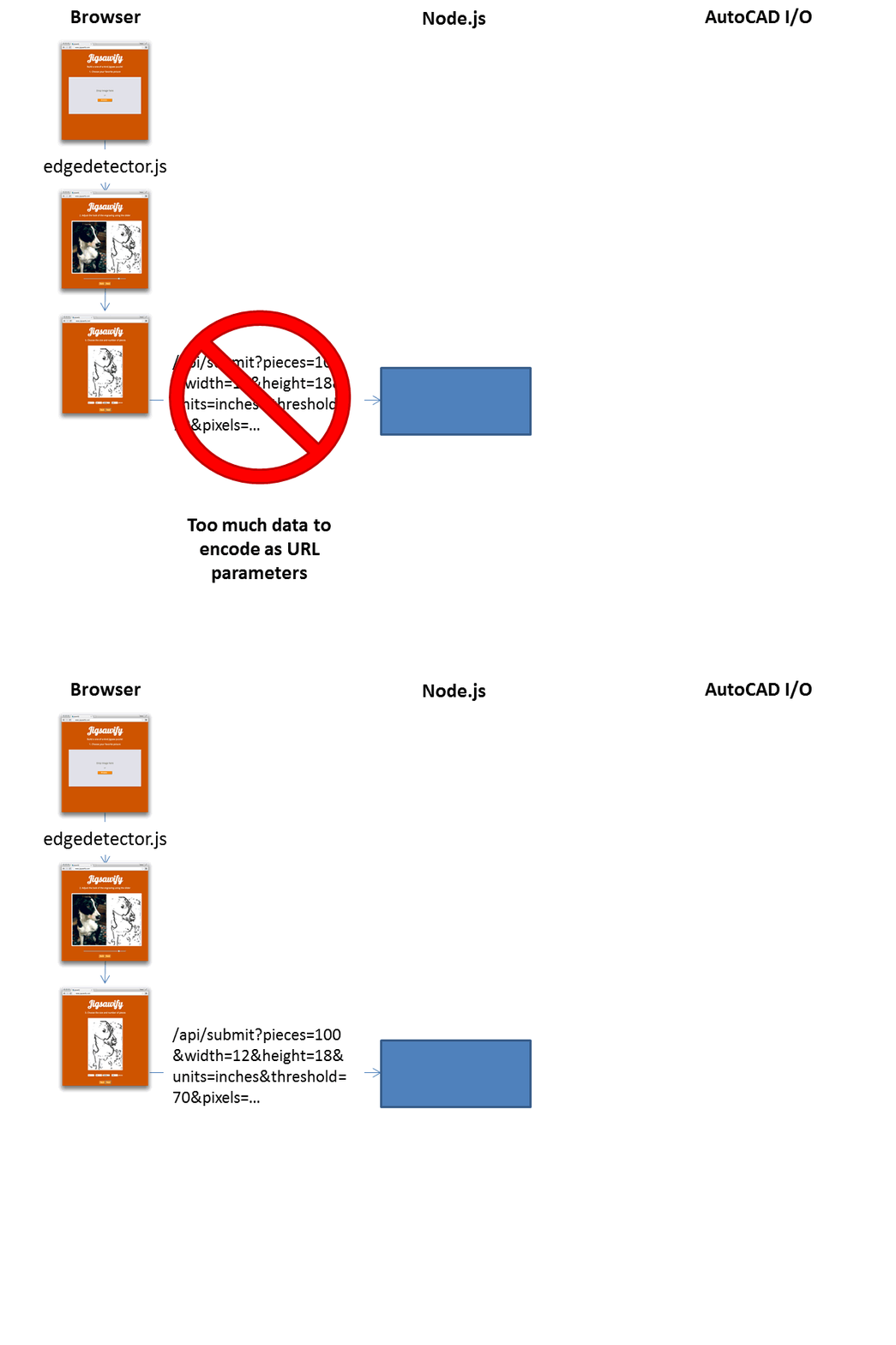
As mentioned in this recent post, I've been working on my AutoCAD I/O-driven web-site on and off for the last few weeks. Lately I've had to think beyond certain assumptions I'd made about its architecture, and I thought it worth sharing those thoughts here. The intention of the site is that you upload an image and then see some edge detection get performed on it, generating an engraving layer for a custom jigsaw puzzle. AutoCAD I/O gets used to generate a drawing that can drive a laser cutter, creating your 100% unique jigsaw puzzle. Basically making the world a better…
-
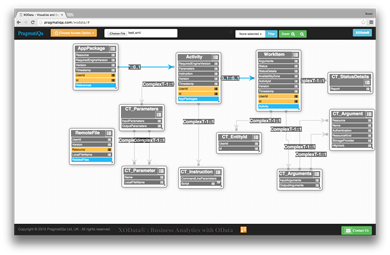
I've been working with AutoCAD I/O quite heavily over the last week or two – mainly spending time fleshing out my Jigsawify web application well in advance of AU2015 – and came across this helpful trick for visualizing an OData-based REST API graphically: you can copy and paste the XML schema for the AutoCAD I/O API into a file and then load it into the handy XOData tool. Here's what was generated (after a little editing from my side for layout): I'm making pretty good progress using AutoCAD I/O from Node.js – which is interesting as I can now run…
-

Over the coming weeks I'm going to be exploring – and blogging about – the ability to run custom .NET code inside AutoCAD I/O. After all, I've submitted an AU class on the topic, so I really do need to get my head around it. 🙂 I see this series being made up of the following high-level tasks, although each of these may end up requiring multiple posts to cover (and conversely there may be some that can be covered in a single post): Writing a CRX module that's I/O-ready Building an Autoloader bundle for the CRX module Defining an…
-

The title of this post is probably a bit misleading: I'm not actually going to show how this works, today, but I do intend to plot a path for addressing this topic over the coming weeks. I was spurred on by a tweet I received a couple of hours ago: @keanw Dear kean, I've been looking into AutoCAD I/O and it looks like it may only execute "scripts"; so no .NET API calls or LISP? — Cyborg (@CyborgEvilHam) May 13, 2015 The short answer to this is "yes, it's absolutely possible!". But readers of this blog are clearly interested in…
-

A reminder that proposals are open for AU2015 until May 26th. I've just submitted two, myself. Of the three topics I had in mind – relating to VR, AutoCAD I/O and TypeScript – I decided to submit proposals on the first two: I'll do my best to use TypeScript for one or both of the other two (assuming they get accepted) which will at least give people some exposure to how the technology works. And give some good fodder for blog posts, of course. Here are the abstracts I submitted: Virtual Reality viewing of 3D models using Autodesk's View and…
-
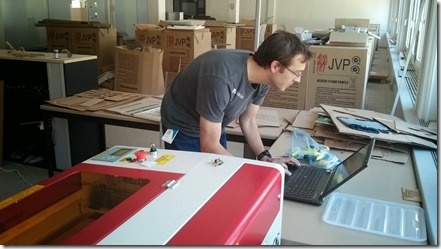
After introducing a rudimentary program to help build jigsaw puzzles, we needed to fabricate the design in some way. As mentioned originally, we quickly discarded the idea to 3D print it as too time-consuming and unreliable: we decided to at least investigate using a laser cutter, what I considered to be a more natural choice for this. Now I did have some experience of using the laser cutter at our local Fab Lab, but as we wanted to iterate quickly – and didn't have the fixed requirement of the larger cutting bed – we opted to use a slightly smaller…
-

The countdown for Autodesk University 2015 starts with the Call for Proposals opening on April 22nd. It will remain open until May 26th. I have a few ideas for possible topics to present at this year's event… Virtual Reality using Autodesk's View & Data API Developing JavaScript applications for AutoCAD using TypeScript Processing drawings in the cloud using AutoCAD I/O They all seem to be valid topics, but we'll see if I can find the energy and motivation to submit all three. If you have an opinion on what you'd like to hear me talk about – even if you…
-

I headed over to Geneva yesterday afternoon for the first press day of this year's Geneva Motor Show. I was there courtesy of our friends at the Morgan Motor Company who launched their new Aero 8 (it was actually nice being there as a guest, in contrast to last year's collaboration). Here's the launch video for this exciting car: I love this video, but I did have one minor gripe for the Morgan team: why was Jon Wells, Morgan's Head of Design, shaving a piece of clay rather than using Autodesk tools to develop the design? I was joking –…
-
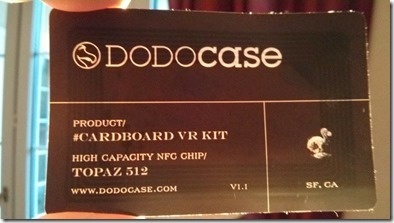
When I first got my Google Cardboard toolkit – in my case the DODOcase VR Toolkit V1 – I was fascinated by the NFC tag that came with it. I hadn't really played with NFC, prior to that, and only had a very vague idea of what it was about. It turns out that NFC is this important new(ish) technology that's enabling all kinds of local (hence "near-field") communications. Especially, it seems, in the area of mobile payments with technologies such as Apple Pay. Anyway, my first exposure to NFC was via this business card-sized sticker that came in the…
-
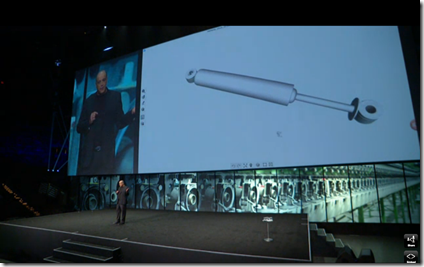
The Memento product got some well-deserved airtime at Autodesk University 2014: it had prominent mentions during both the opening and closing keynotes. A new version has now been pushed live to Autodesk Labs and comes with some really useful enhancements. Full details can be found on Scott's blog. I'll start by talking about three enhancements I made use of for a specific project. My goal was to take some OBJ files – which had previously been generated from photos and exported by Memento – and set the coordinate system correctly for viewing in A360. Well, for use with the View…