AutoCAD
-
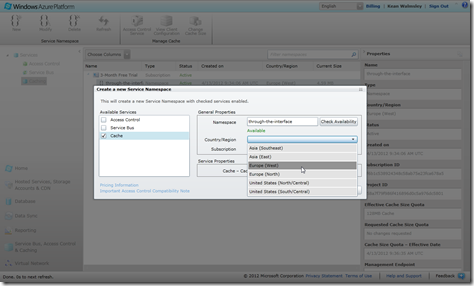
As mentioned in the last post, while working on deploying our web-site and its related services to Windows Azure, I started to chew on the economics of Azure hosting. This is especially relevant as I start to see my free 3-month subscription's resources being burned through by all of you checking them the links in the last post. 😉 Here's what I found… "extra small" instances are a mere sixth of the cost of "small" instances (not taking into account the 6-month pre-purchase discount on small instances, admittedly), which got me thinking: if I can reduce the resources needed for…
-
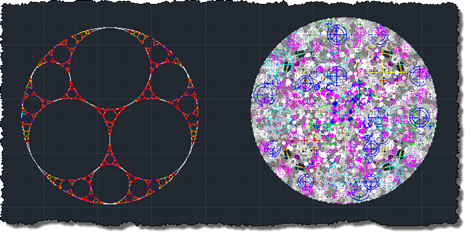
Consumption seems to be a relevant topic, coming after the long Easter weekend here in Switzerland… I was laid up with gastric flu on Monday: after having consumed large amounts of food with friends on Saturday and Sunday, I ended up eating nothing for the whole day. I managed to put the finishing touches on the previous post in this series, but beyond that I was pretty useless. Anyway, back to the point. We've looked at the trend of moving to the cloud, and the steps for creating and implementing a RESTful web-service using the new ASP.NET Web API. Now…
-
After introducing the (apparently somewhat charged, judging from the comments) topic of moving application functionality to the cloud, and then looking at the steps of creating and implementing an ASP.NET Web API project, we're now going to take a brief step back before looking at how we can effectively make use of the data provided by these web-services inside AutoCAD. If you're looking to assign blame (not that any is needed ;-), it's Scott McFarlane's fault we're taking this brief backwards step: Scott raised the excellent point – which really needs addressing sooner rather than later in this series –…
-
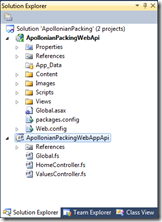
In the last post, we looked at the core technology we're going to use to expose our web-service, along with the basic project set-up. In today's post, we're going to flesh out this project and see the web-service in action. At this point, I should point out that I've switched back across for VS2010 for the purposes of this post (and its immediate successors), as it really will simplify the eventual integration with Windows Azure. Before we dive into the implementation of our web-service, here are a few words on what we're after… We want to implement two web-service APIs:…
-
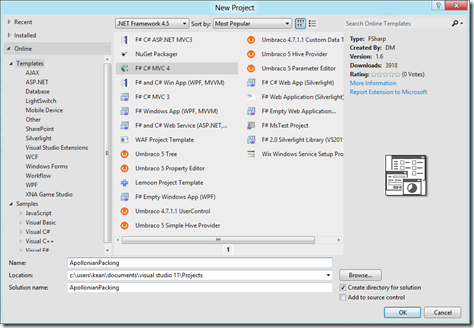
As promised, here begins the technical portion of the series on moving application functionality to the cloud. As suggested, we're going to take code from a couple of previous posts and put it in the cloud (although not immediately – first we're going to move it to a local web-service, consume that in AutoCAD, and then look at our various cloud-hosting options). So why did I choose these two pieces of code, in particular? A couple of reasons: firstly, they both implement "behind-the-scenes" algorithms that are independent of AutoCAD – a typical piece of business logic that companies might choose…
-
I visited another Windows 8-related conference in Zürich, yesterday. Despite much of the content being repeated from the last one I attended, I actually found it really useful: having spent time working with Windows 8 and WinRT over the last few weeks, I found I got more out of the demos and could also ask more intelligent questions of the Microsoft personnel in attendance (thanks for all your help, Ronnie :-). And there was some new content I hadn't seen, previously: I managed to sit in briefly on an Azure session (which was admittedly a bit too IT-centric for my…
-

This is all very exciting: given the recent launch of a number of "360" products by Autodesk – including Autodesk 360, Autodesk PLM 360 and Autodesk BIM 360 – it looks as though we're about to enter a strategic relationship with Microsoft to make Autodesk products interoperate seamlessly with their industry-leading games platform, the Xbox 360. It's as yet unclear exactly what this means for the two companies and their respective 360 products, although I'm hopeful that some of the work I've been doing to prototype the use of Kinect and Metro with our products is going to be relevant…
-

This is a topic I've been meaning to cover for some time. It concerns a transition we're seeing overall in the software industry, and is certainly one that the ADN team broached in depth during the last two DevDays tours. I don't think anyone is in real doubt, at this stage, that software is increasingly being delivered "as a service", rather than via locally-installed desktop applications. Some readers may understandably be skeptical about the near-term likelihood of powerful design tools working in the cloud… I personally believe it's an inevitable shift (whether we're talking about a timeframe of 2 years…
-

As part of my quest to understand WinRT more completely, I had a few goals for the MetroCAD application we saw in this previous post. Firstly, I wanted to add some contract support to the application, allowing it to participate in operations that Windows 8 has standardised across Metro-style applications. The main contracts I wanted to support were for search, sharing and settings. Secondly, I wanted to be able to launch AutoCAD – or another DWG editor – from within our Metro-style application. The three contracts I wanted to support are all accessible via the "Charms" menu in Windows 8:…
-
After seeing the feedback regarding this interesting feature in AutoCAD 2013, I decided to do a little detective work to establish which commands could be called from inside the AutoCAD 2013 Core Console. I hope this proves to be of use to at least some of the many people I expect to take advantage of this tool. Before I go into the details on generating the list – and then look at the list itself – it's worth mentioning some additional background regarding this feature. I certainly see the Core Console as being extremely useful to many people, but it…