Reality capture
-
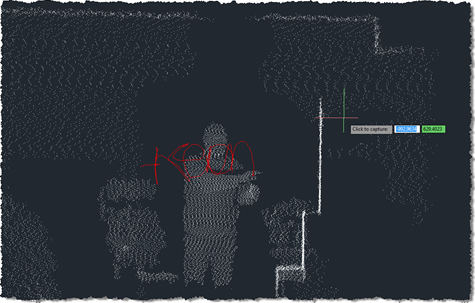
As promised in this previous post, I've been playing around with understanding Kinect gestures inside AutoCAD. My first step – after upgrading the OpenNI modules and drivers to more recent versions, which always seems time-consuming, for some reason – was to work out how to get gesture information via nKinect. It turned out to be very straightforward – as it's based on OpenNI and NITE, the user-tracking and gesture detection come pretty much for free. A few things I had to work out: We needed a "skeleton callback", which is called when body movements are detected Because this is fired…
-
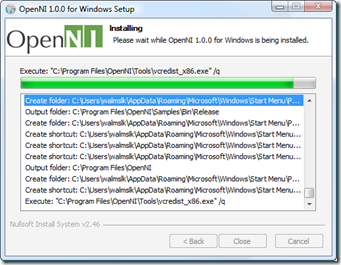
Now things are getting interesting. 🙂 It took me some effort to get this working, but looking at the results I think it was worth it. As mentioned in the last post, I've been trying to get a live feed from the Kinect sensor to display dynamically inside AutoCAD. This post shows how to do that. A huge thanks to Boris Scheiman for helping me get to this point: he not only extended his nKinect implementation to generate the point cloud data I asked for, he sent a number of emails explaining (and even providing) the various modules needed to…
-
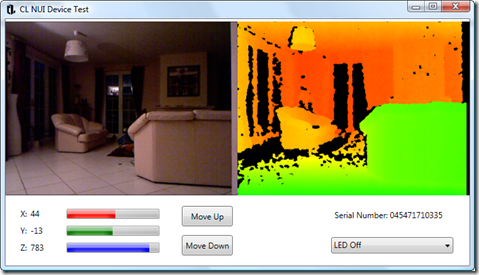
After a completely ridiculous wait of close to 4 months, I finally received my Kinect a few weeks ago. Apart from it being the fastest selling consumer electronics device in history, the delay was also due to the fact I was holding out for the very popular Xbox 360 250Gb Slim bundle (and also because the vendor I chose fumbled the order during the final few weeks, which just added insult to injury). I'd done my homework before receiving the Xbox, and realised that the bundled Kinect would not come with the external power supply needed to connect it to…
-
While in our San Francisco office, the week before last, I bumped into Brian Mathews and team as they were making their final preparations for the TED 2011 conference. I don't know how many of you know about TED: it's an amazing conference - and information resource - that I'm proud to say that Autodesk sponsors. It's a dream of mine to attend this event in person (maybe one day I'll get the chance) but at least the sessions are posted online for everyone to enjoy. The Autodesk Labs team has put together some really fun technology – as described…
-
As many of you may now be aware, much of the content recorded at this year's Autodesk University is now available on the AU website. You'll find the recording of my AU Virtual session, "Getting to Know the AutoCAD® Plug-ins of the Month", as well as material from the two physical sessions I presented, "Point Clouds on a Shoestring" and "Integrate F# into Your C# or VB.NET Application for an 8x Performance Boost". In fact, much to my surprise, the "Point Clouds on a Shoestring" session (which turned out to be my highest-rated session) ended up being recorded, and can…
-
I was hoping to post during the week from Las Vegas, but it didn't end up happening. My time just bled away between the various classes I recorded/ presented/co-paneled and the time spent catching up with old friends and making new ones – mainly from among the various people who took the chance to provide greatly appreciated feedback regarding this blog. All in all it was a great week – as it always is – but it wasn't all smooth sailing: my AU Virtual session on our Plugins of the Month – which I'd struggled to get into Vegas to…
-
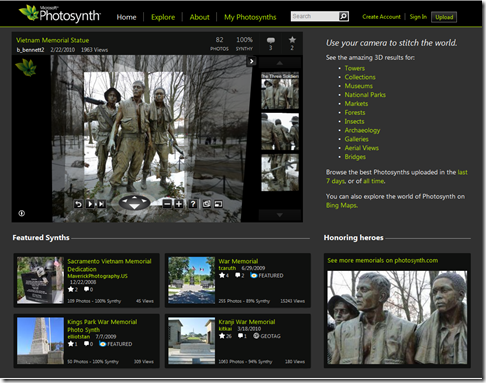
I've been a little slow getting my AU material together, this year (I've been called onto more pressing issues fairly consistently over the last weeks/months), so I'm very much up against Monday's content submission deadline. I'll certainly have the handouts ready, but the presentations will have to come later. As I've done in the past, I like to post my handouts here for people to take a look at (and provide feedback on in time for me to correct prior to the event ;-). Today's post is the handout for my AutoCAD user-focused class, "AC427-4 - Point Clouds on a…
-
As with the previous contest, the winner stands to win a tricked out iPad plus a signed (by Carl Bass, Autodesk's CEO) copy of 3ds Max or 3ds Max Design. See Scott's blog for details. The deadline for this competition is Guy Fawkes Night, November 5th. Apparently the iPad is one of a kind, but as this is the second such competition, I have my doubts. 😉 Oh, and yes, only inhabitants of USA and Canada are eligible to win these prizes, quite sadly, but that shouldn't stop people from entering for the fun and prestige.
-
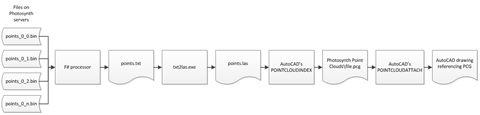
I just thought I'd report back on a few changes made to the BrowsePhotosynth Plugin of the Month during the course of this week. The updated version has just been announced on Scott Sheppard's blog and I thought I'd share some of the specific implementation details. The first one (in the 1.0.1 update) was a really interesting problem and I owe a big thanks both to Alberto Venturini for reporting it and to Marat Mirgaleev, from our DevTech team in Moscow, for helping test on a comparable OS. The problem was that on all the systems upon which Alberto had…
-
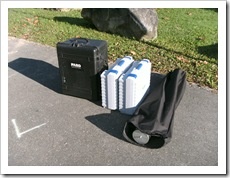
In this previous post I attempted to capture the geometry of a monument close to my home with approximately 500 photographs imported into Photosynth (and October's Plugin of Month to bring it into AutoCAD, of course :-). As promised in that post, I managed to find time this weekend to go back down with a FARO Photon 120 laser scanner (which I'd mentioned in this previous post) to capture the same monument using a different technology: a 3D laser scanner. The first thing to note was there was a lot more to carry: …