AutoCAD
-

Now that we've introduced the series and seen how to add some introductory text, theme music and a field of stars, it's time for the Star Wars logo. The initial blue text The theme music The star field The disappearing Star Wars logo The crawling text The logo came, once again, from the HTML opening crawl, which embeds some SVG content representing it. I copied this into a standalone SVG text file, ran it through a web-service to translate it to DXF and then opened that inside AutoCAD. The outlines of the letters (or groups of letters) were continuous polylines…
-
After introducing this series in the last post, today we're going to address the first 3 items on our TODO list: The initial blue text The theme music The star field The disappearing Star Wars logo The crawling text The following two items are fairly significant, in their own right, so they'll each take a post of their own to complete. Oh, and I've thrown in a surprise item 6, which I'll unveil when we implement the crawling text. Before we dive in, it's important to make some points about the code: because this is mainly just a bit of…
-
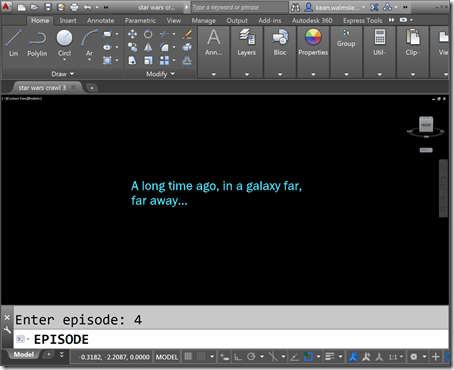
Happy New Year, everyone! As mentioned in the last post, I took a couple of weeks off over the holiday period, extending Autodesk's annual "week of rest" between Christmas and New Year to a full fortnight. This time of year clearly has religious significance for many. Some go to church, to temple or even to Stonehenge, some watch one or more of the Star Wars trilogies – arguably which they choose depends on how devout they are. I only ended up watching one Star Wars film, over the holiday period, and while it was from the Despecialized Edition, I don't…
-
This is really cool. Fellow architect on the AutoCAD team, Jiri Kripac – who originally wrote AutoCAD's "AModeler" facet modeler and is the driving force behind AutoCAD's Associative Framework – has written a really interesting ObjectARX sample to perform an associative fillet between two curves. Given Jiri's background, this is as close to a canonical sample for implementing an operation using the Associative Framework – in this case by creating a custom AcDbAssocActionBody – as you're likely to find. Here's a video showing this custom fillet in action, and how it can be used with parameters and expressions to do…
-
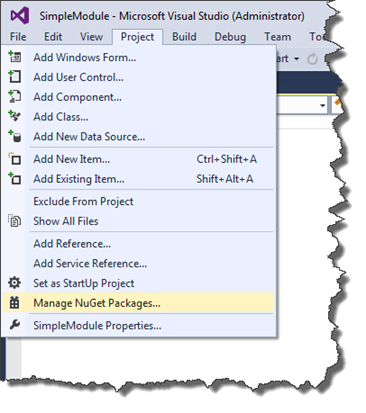
We've received this request a few times in recent years: .NET developers have asked to be able to add dependencies on AutoCAD's .NET reference assemblies – primarily acmgd.dll, acdbmgd.dll and accoremgd.dll – to their Visual Studio projects using the built-in package management tool, NuGet. For those of you unfamiliar with NuGet, it's well worth checking out: it's a really nice way to manage library dependencies in your .NET projects. Well, Christmas has come a few weeks early: the AutoCAD team has posted the 2015 .NET reference assemblies to NuGet. This is interesting to .NET developers for a number of reasons.…
-

[This handout is for "SD5013 - Using SensorTag as a Low-Cost Sensor Array for AutoCAD", a 60-minute class I'll be presenting at AU 2014. Here's the sample project that accompanies this handout.] Introducing SensorTag SensorTag is a $25 device containing a number of sensors – an accelerometer, a gyroscope, a magnetometer, a thermometer, a hygrometer and a barometer – that communicates to a monitoring system (whether an iOS or Android mobile device or a Windows or Linux PC) via Bluetooth 4.0 (also known as Bluetooth Smart or Bluetooth Low Energy – BLE). Texas Instruments have packaged their CC2541 sensor…
-
The C++ developers among you may remember the autoexp.dat file, which tells older versions of Visual Studio how to visualize custom C++ types during a debug session. Here's an ancient post showing how we extended it for some basic ObjectARX types and another showing how to do so via a custom plug-in. In Visual Studio 2012, a newer XML-based mechanism was introduced to do something similar. In today's post we'll look at a custom .natvis file that exposes some basic ObjectARX types to the Visual Studio debugger. This file was created by Davis Augustine in response to a query from…
-
It seems like I've been living in JavaScript land (and no, I deliberately didn't say "hell" – it's actually been fun 🙂 for the last few weeks, between one thing or another. But I think I've finally put the finishing touches on the last of the JavaScript API samples I've prepared for AU 2014. This sample was inspired by Jim Awe – an old friend and colleague – who is working on something similar for another platform. So I can't take any credit for the way it works, just for the plumbing it took to make it work with AutoCAD.…
-
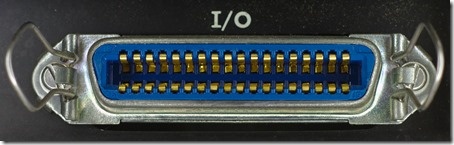
This is really interesting news I've been waiting to share for a while, now. And of course it's the answer to the question I posed in my last post (this is the service the dashboard has been monitoring). Once I get back home to Switzerland I'll go through the various comments on the post and LinkedIn, to see who wins the prize. 🙂 The AutoCAD team has been working hard on a cloud-based batch-processing framework that works with AutoCAD data. The current name for the service is the AutoCAD I/O API – Beta. The service is powered by AcCore, the…
-
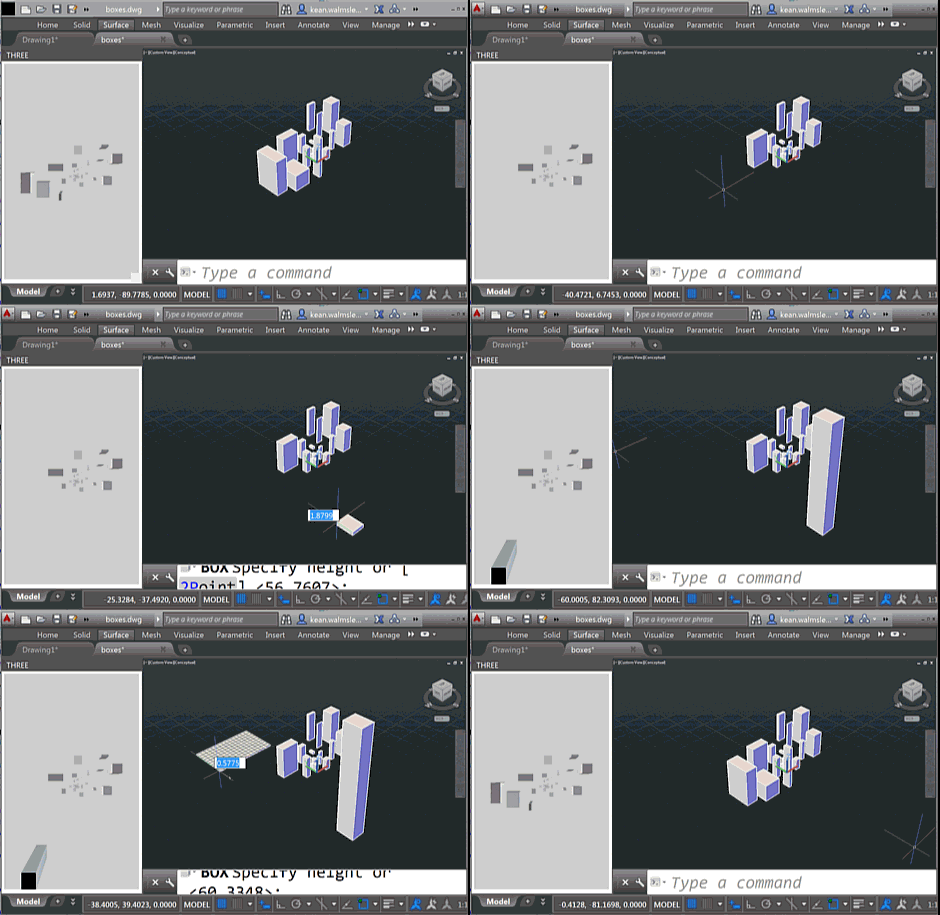
To follow on from yesterday's post, today we're going to look at two C# source files that work with the HTML page – and referenced JavaScript files – which I will leave online rather than reproducing here. As a brief reminder of the functionality – if you haven't yet watched the screencast shown last time – this version of the app shows an embedded 3D view that reacts to the creation – and deletion – of geometry from the associated AutoCAD model. You will see the bounding boxes for geometry appear in the WebGL view (powered by Three.js) as you're…