SaaS
-
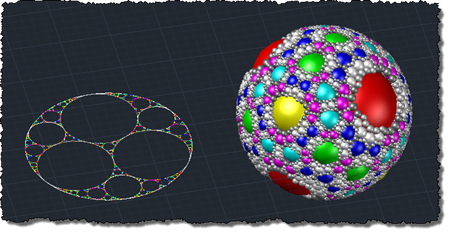
After posting the handout for my Wednesday class, now it's time to start the one for Tuesday's - CP1914 - Moving Code to the Cloud: It's Easier Than You Think (I have a lot else going on on Tuesday, but this is the only class on that day for which I needed to prepare material). Attendance for both classes is looking fairly good: there are currently 138 attendees registered for the Cloud session and 62 registered for the one on WinRT. Why all this talk of the cloud? The software industry is steadily adopting a model commonly referred to as…
-
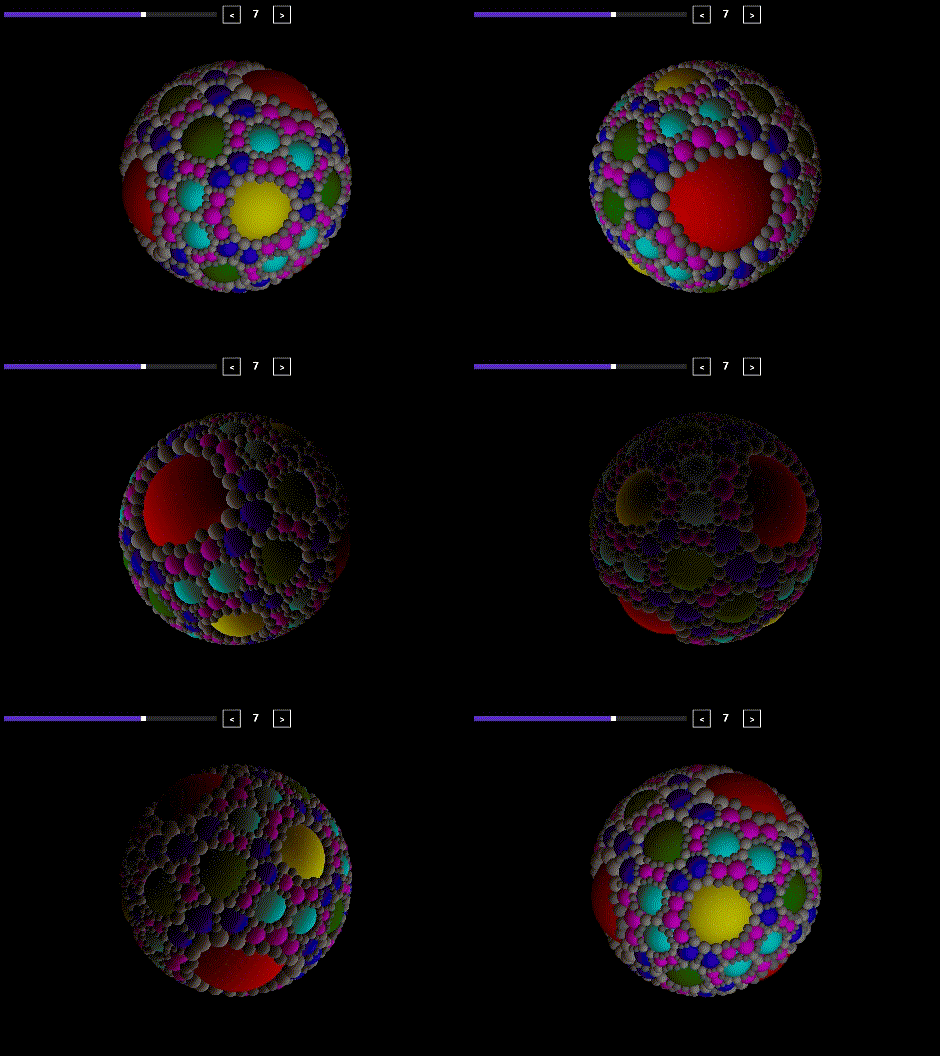
As part of my preparation for AU 2012, I've been working on updating the various Windows 8 samples I'll be showing to work with the RTM version of the OS. The first to be migrated was the Apollonian Viewer for WinRT, which is part of the cloud & mobile series from earlier in the year. The project was easy enough to get working: I mostly had to update to version 2.3.0 (or 2.3.1, as this was the latest available) of SharpDX and made a few minor code changes (there was previously a SafeDispose() function that seems to have disappeared and…
-
With my AUv recording out of the way, I've been starting to think more seriously about my AU sessions, over the last few days. The "big one" (with 100+ registered attendees and counting) is about moving code from a desktop application to the cloud, and will basically summarise the process I followed in my "cloud & mobile" series of earlier in the year. Which means I'll go through the process of pulling some code out of a desktop-based application and placing it behind a web-service, before calling the service from a variety of platforms/environments (AutoCAD via .NET, iOS, Android, WinRT,…
-
Last week, I received confirmation that I'll be presenting a few different classes at AU 2012, which will be held at the Mandalay Bay Hotel in Las Vegas from November 27-28. My main sessions, this year, are in some way focused on cloud & mobile technologies. The subject matter of the first lecture is the recently completed cloud & mobile series, where we'll look at moving desktop functionality to the cloud and using it from a variety of mobile environments: CP1914 – Moving code to the cloud – it's easier than you think! It has a companion roundtable session –…
-

To complement the DevBlogs for AutoCAD, Infrastructure Modeling, AEC and Manufacturing (and in case you missed them, here are their respective announcements), the ADN team has now launched a DevBlog focused on Cloud & Mobile development. You might consider this another "horizontal" blog, in the sense that over time it will prove to be a valuable resource for people using our products (and, I suspect, many people who don't) in all the industries we serve. I'll drop a note to Gopi, to suggest he adds a link to my own cloud & mobile series, for future reference. It seems like…
-
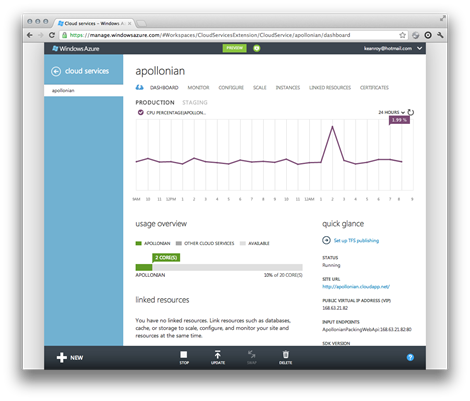
A few things have happened over the last week or so that have got me looking, once again, at Windows Azure: Firstly, there was an exciting release announced last week (I attended the webcast online from San Francisco, where the event happened to be taking place), prior to this week's TechEd. Among the key features were: Support for Linux instances These will presumably be cheaper, given the lack of OS licensing costs Virtual Machine capability IaaS for those that prefer it over PaaS (something no doubt learned from the popularity of AWS) Select from the online Image Gallery or upload…
-
Hot on the heels of my last post regarding this year's API wishlist surveys, Stephen Preston has announced on the AutoCAD DevBlog the launch of this year's AutoCAD API wishlist survey. The survey will remain open until June 22nd, but don't delay – you'll find it very quick to complete. This year's survey has a somewhat different format: it has a number of questions dedicated to understanding your needs around AutoCAD WS and developing for the cloud. This doesn't mean we're no longer interested in the desktop – nothing could be further from the truth – so be sure to…
-
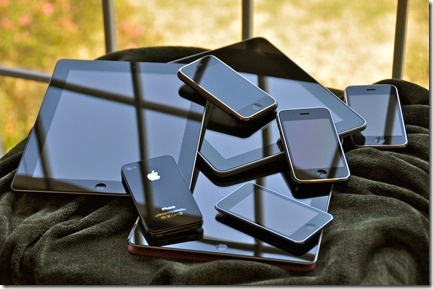
As we reach the end of this long series of posts on moving code to the cloud – and a look at ways to use the functionality from a wide variety of applications, many of them on mobile devices – I felt it was worth putting together a quick summary post to reinforce the overall message (which may have been a bit lost in the sheer volume of information). Firstly, here are the posts in this series, including those looking at the original creation of the "desktop" application functionality: Creating the core desktop functionality Circle packing in AutoCAD: creating an…
-
In the previous post in this series, we saw the code for an initial, basic implementation of a 3D viewer for our Apollonian web-service developed for Windows 8 using WinRT. In this post, we extend that code to provide support for a few basic gestures, particularly swipe-spin, pinch-zoom and tap-pause. To properly show the gestures in action, I recorded the app working inside the Windows 8 emulator (which in turn was running inside Windows 8 running inside a Parallels VM, so fairly far from "the metal", as it were). Here's a quick video of the updated app in action: Unable…
-
After tackling the implementation of a basic 3D viewer for our Apollonian web-service using a variety of technology stacks – AutoCAD, Unity3D, Android, iOS & HTML5/WebGL – I felt as though I really needed to give it a try with WinRT, the new runtime powering Windows 8. All of the previous stacks had some "object" layer I could use above the base graphics engine – Rajawali provided it for Android/OpenGL ES, iSGL3D for iOS and Three.js for HTML5/WebGL – but for WinRT all bets were off. The general guidance for developing Metro-style 3D applications (typically that means games) is to…