AutoCAD .NET
-
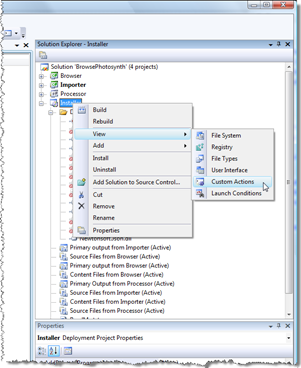
In the last post we created a basic installer to deploy our product files and source into a user-specified location. In this post we'll look at the Registry-related activities that need to happen from our installer. One of the files we added to the install project was the RegDL executable. We're going to add some custom actions which use this executable to create/remove our demand-loading Registry entries on install/uninstall. The advantage of this approach is that we don't need to duplicate information in an installation script that's already stored in our .NET assemblies: RegDL queries an assembly programmatically for its…
-
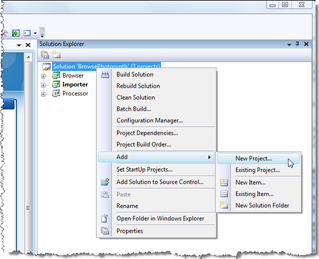
It's been a long time since I've dabbled with software deployment technology, which is absolutely fine by me (in my experience installation issues are some of the gnarliest to deal with, so – presumably like the majority of developers, with apologies to Install specialists – I prefer not having to care about them, myself). But last week I had to put together a few installers - as an internal test - for some of our Plugins of the Month, and ended up deciding the process was worth documenting, especially where it relates to the RegDL component I created and published…
-

After a break of a week, I thought it was time to take the QR Code application a little further, after our previous versions creating basic QR codes at a fixed location, using user-specified corners and using a jig. The code in this post adds quite a bit of functionality to the application: The ability to encode various types of data Calendar events Contact information Email addresses Geo-locations Phone numbers Plain text URLs The ability to edit QR Codes The data used to create the QR Code is attached to the raster image as XData and gets used for default…
-

Yesterday Scott Sheppard announced the availability of this plugin over on It's Alive in the Lab. We originally received a request for this Plugin of the Month some time ago. Fenton Webb, from our DevTech Americas team, developed the initial version using an ObjectARX custom entity – as the requester required support for versions of AutoCAD prior to 2010 – but for this public release, Stephen Preston went ahead and re-implemented the mechanism in a .NET application using the Overrules API introduced in AutoCAD 2010. This plugin basically allows you to see graphically when an AutoCAD drawing is digitally signed,…
-

The class catalogs for AU 2010 – for both the physical and virtual classes – have now been posted to the AU website: I have a few AU classes scheduled – thanks to any of you who took the time to vote for them. My first class is virtual… Getting to Know the AutoCAD® Plugins of the Month (CP212-1V) Tuesday November 30th, 6:00-7:00 am PST Tuesday November 30th, 11:00 am-12:00 pm PST The Autodesk Developer Network (ADN) team has been publishing "Plug-ins of the Month" on Autodesk Labs for over a year. Each of these plug-ins extends an Autodesk® product…
-
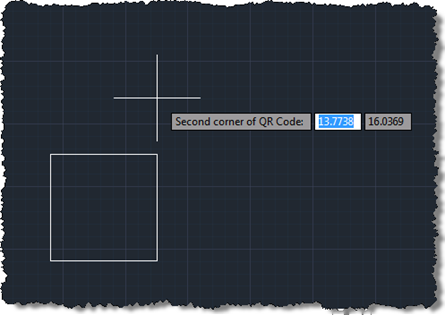
Following on from these two posts, we're now going to implement a jig to create our QR Code raster images inside AutoCAD. Today's approach isn't radically different from the previous one prompting selection of corners, but we do get to see the actual (square) boundary of the raster object as it gets defined. It would have been even better if the raster contents were displayed during the jig, but from what I can tell this has been disabled deliberately, no doubt for performance reasons (you see the same effect – only having the boundary visible – when you move or…
-
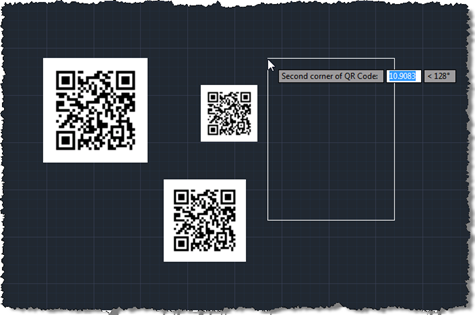
As promised, the code in this post extends that from the last post to add some user selection to the process of defining and placing a QR Code in an AutoCAD drawing. This version of the code also makes sure the raster is positioned in an "upright" orientation, irrespective of the order in which the corners are selected. Many images need to be positioned in such a way (although QR Codes are presumably more tolerant due to the positioning squares in three of the corners), so I expect this technique will be of interest to various people who need to…
-
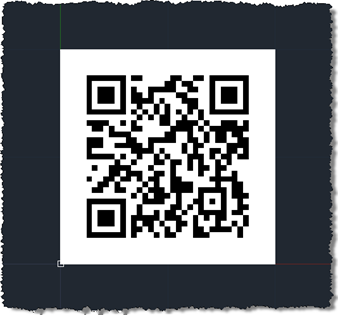
This week I decided to get started on the QR Code Plugin of the Month I mentioned in this previous post, and show a few interesting techniques along the way. The introductory post mentioned a few different approaches for creating/embedding the codes in a drawing. For now – as it's by far the simplest – I've chosen to insert the code as a raster image. In this post we'll show how to define and insert a raster image of a QR Code into the drawing – for now one with a hardcoded message string, placed at the origin – and…
-
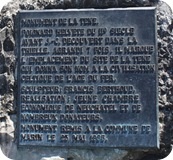
A couple of weekends ago, shortly after returning from our trip to the States, I walked down to the area of Lake Neuchâtel that's nearest our house, called La Tène (which is now also the name of our local commune (or municipality), which was recently created as a result of fusing Marin-Epagnier with Thielle-Wavre… thankfully they didn't call it Marin-Epagnier-Thielle-Wavre ;-). On the way I stopped off to take a few photos of a local monument. La Tène culture is apparently quite famous in archeological circles, and the monument itself is pretty cool. It's a replica of an Iron Age…
-
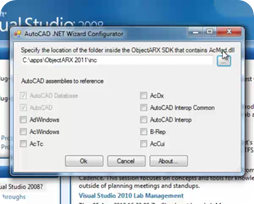
A new version of the AutoCAD .NET Wizard – compatible with AutoCAD 2011 and with Visual Studio 2010 – has been posted to the AutoCAD Developer Center (and you can also get it from this direct link (8.74 MB)). The download size has jumped from a little under a megabyte its current size: this is due to a very helpful screencast recorded by Stephen Preston and included in the Wizard's distribution. If you've been using prior versions of this Wizard – or are just interested in its capabilities – be sure to check it out!